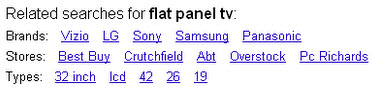
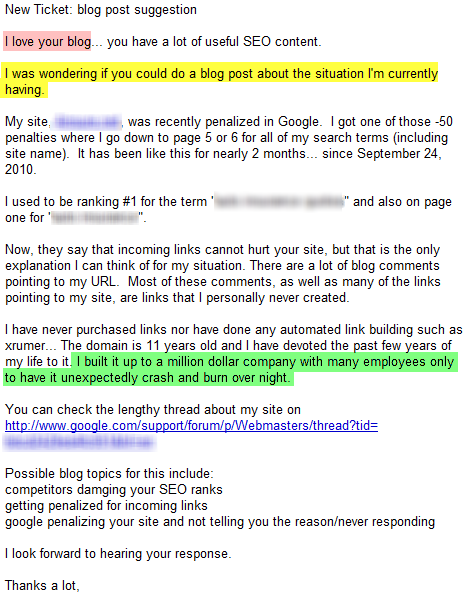
As Google started to reach the bulk of potential returns based on direct response they started to lean on brands as a signal of quality & recommend brands more in their search results. When you search for Amazon you might get 8 or 9 links from the official site & even on some generic keywords Google recommends associated brands.
Why Brand Creates a Sustainable Advantage
When you think about what brand is, it is a mental shorthand for a concept. It leads to increased recall, fatter sustained profit margins, and thus the ability to spend more on marketing. If Google is to put more weight on reviews and look at sentiment analysis then of course that will benefit the larger players who invested into establishing positive associations, even at a young age. The results of such branding efforts are quite powerful.
And even moreso if you don't use them for evil, Pepsi! :D
Affiliates Are Evil, Except When They Are Named Google
As Google is becoming the affiliate they are getting direct signals into what consumers like most & are able to serve them a personalized recommendation engine. New extended ad formats & using location data will allow Google to further drive down the organic results.
One of the leading features of Google's 'open' marketplace is DRM: "Publishers can choose whether or not to lock down their books with DRM. Google also says it will have a strict privacy policy that forbids it from using your book buying habits to advertise to, or profile readers." If you are outside of the United States the store is simply unavailable. That same article states that "Google hopes to layer on social features into the service in the near-future and says the infrastructure is in place to let people buy both a digital and paper copy of a book in a bundle."
Would that be Google moving from pushing bits & people to pushing physical products?
In much the same way that Google has captured most of the revenue streams they will be able to with direct response ads, I think they realize that they will need to work better at managing property rights of big media & other publishers if they really want to drive brand advertising revenues. This will likely lead to a decline of the "anything goes" web.
From 'Anything Goes' to Respecting Property Rights
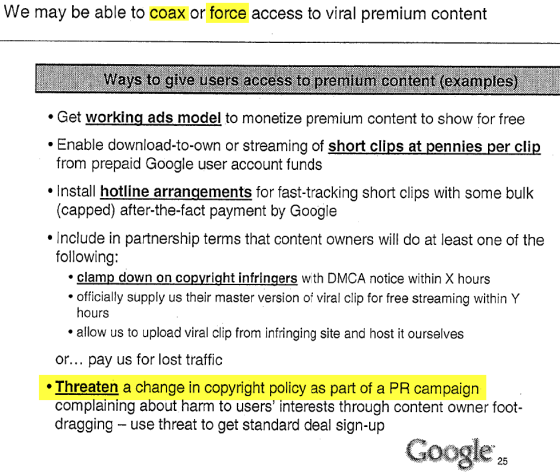
The whole reason Google was so liberal in their approach to supporting (and even funding) copyright violation it was so that they could weaken the positions of the companies that hold those rights, such that Google can eventually negotiate a deal with them. But the main thing holding back Google music is that based on Google's past performance the labels do not trust the idea of a digital music locker hosted by Google. After all, Google AdSense ads are what allow sites dedicated to downloading MP3s from Youtube to be monetized today.
Google offers promotional links on Youtube & knows how much money they are missing out on. Google's boondoggle of using public relations to paint a clean show publicly while using legal loopholes to circumvent the intent of the law was good for getting them into a strong market position, but if they want to have a leadership position in more big media markets they will need to get buy in from established players.
Google wants to get big into television ads. And that is going to mean having better respect for copyright. To some degree as we see the Google business model change we will see their approach of "paying anyone to steal anything & wrap it in Google ads" (to soften up copyright) change to a model where the put themselves as a gatekeeper on DRM content & push the "official" sources of the media (and try to make a cut of the profits). Already on Youtube if you view certain content from outside the United States they will tell you that it is unavailable in your area.
Part of such deals will ultimately rely on backroom payouts coupled with hard coded promotions. There will be a lot of collateral damage as entire categories become unprofitable for those who do not have direct access. I think we are seeing the organic search results take a page from the ad book: pay to play.
Google's old model of paying people to scrape content & wrap it in ads was leading to a market for lemons, where the top ranked piece of text might often be seen as relevant, but certainly wasn't useful.
This transition was driven by a watering down of online content through Gresham's theorem. Much like how the most fraudulent banks could afford to buy out less fraudulent ones, and how Chinese milk with melamine was cheaper than real milk sent real companies into bankruptcy, the search results were suffering from the age of scrape/mash/publish. Given the surrounding economic forces crushing newspapers, Google was making things worse than they needed to be.
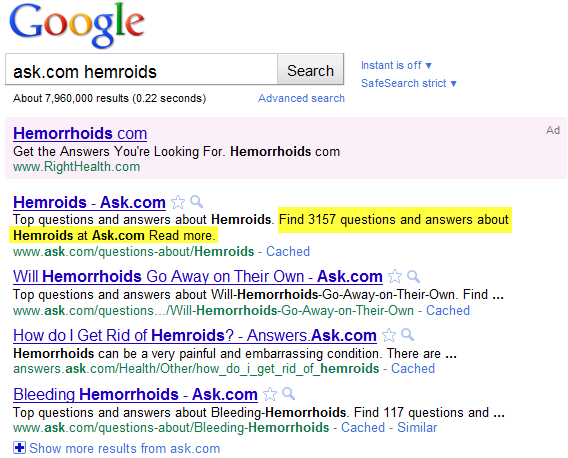
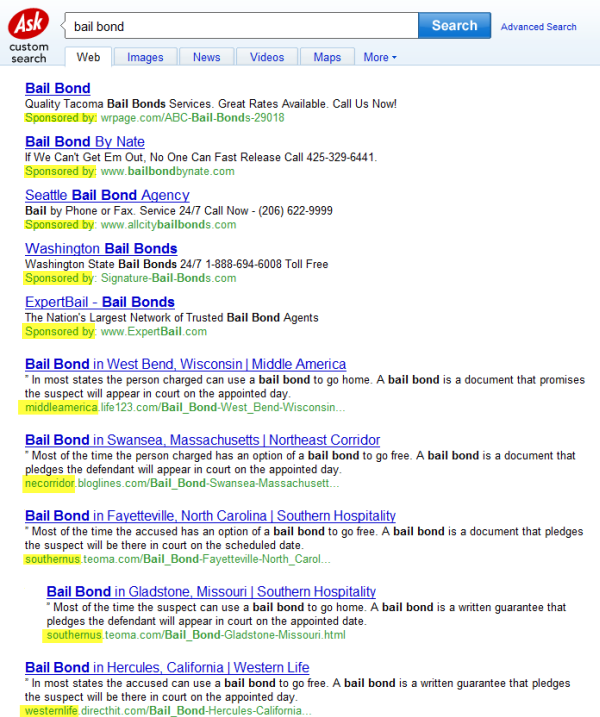
Those who are creating original high-quality content have real business costs. Google paying scraper sites like Mahalo and Ask to borrow your content & wrap it in ads means that you are sometimes getting outranked for scraped duplications of your own content. That drives down publisher margins and pushes marginally profitable publishers into losing money, and eventually, bankruptcy.
Slowly but surely the search results will fill up with official hotel sites, official music sources, official video sources, official ebook sources, etc etc etc ... with Google putting a big foot on the gas & accepting whatever cut they can get. If they wanttoavoidregulatoryscrutiny they need to work with the official sources (which are every bit as politically connected as Google is).
As that shift happens the longtail spam model will lose out on its profitability because it will be forced to compete with higher quality content that is automatically mixed into the search results. (The whole point of universal search was to allow Google to short cut certain types of information right into the core search results...as they start making money from micro-payments and such look for that trend to accelerate).
Ultimately what has doomed most portals was that they were willing to produce second rate holder stuff that filled out a vertical and was 'good enough.' What makes Google so powerful with the stealth backdoor portal approach is that it allows them to mix 3rd party content without forcing them to either absorb the cost or create low quality backfill stuff on their own. As they have success with 1 partner that creates the narrative which brings other folks to the negotiation table.
One area that is ripe for ad innovations is books:
I’m genuinely glad to have Google enter this market because it will be reaching potential customers at a unique point in their book-buying journey: at the point of web search, not at the point of searching the bookstore. This means many things you didn’t realize a book can help you with—overcoming depression, remodeling a bathroom, making friends and influencing people—will now be surfaced alongside all the YouTube and other results Google will offer. This is a net plus for books.
But the ultimate effect of Google e-books, if Google knows what’s good for it, will be the creation of an ad-supported publishing model.
Now that books are digital & Google has rights to sell them, I would expect in the next year or 2 that Google starts to display them in the organic search results more aggressively. The free samples can be monetized via ads & upsells of the whole book. That endless stream of editorially vetted content could put a dent in the content farm business model.
Page x can rank based primarily on the criteria for page y from that same site. So if you analyze the data behind the page which is showing up in the search results, in some cases you will be looking at the wrong data sets!
Google has aggressively pushed into regionalization and localization, but sometimes they miscategorize a website's target market or a user's location ... delivering irrelevant search results.
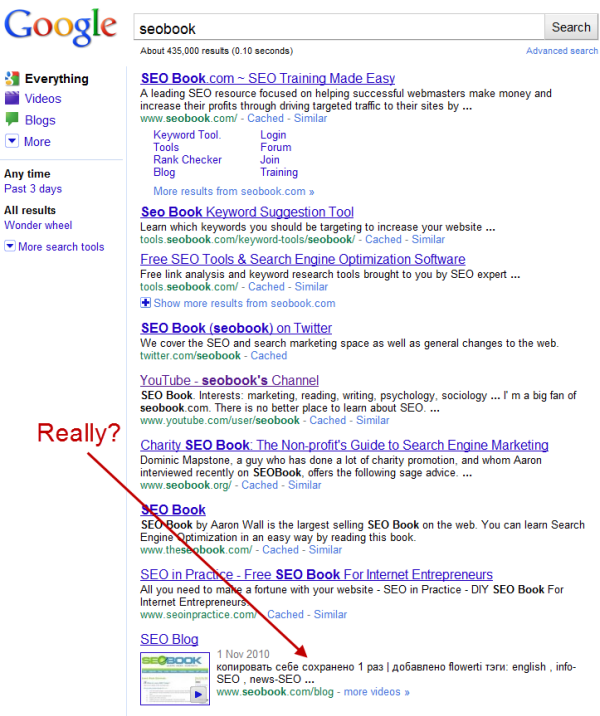
Sometimes Google pulls data from 3rd party data sources and lists that next to your listing. I mean, sure they have used DMOZ historically, but why exactly are they showing my site as having Russian text on it?
As Google grows in complexity, the number of bugs in their system multiply. Sometimes you don't rank because you screwed up. But sometimes you don't rank because Google screwed up. Typically Google sees minimal difference either way, as there will always be another website to fill up the search results. But as a business owner, when Google gets it wrong you can be screwed pretty bad, particularly if you stock physical inventory and have to tightly manage your supply chain & cash flow.
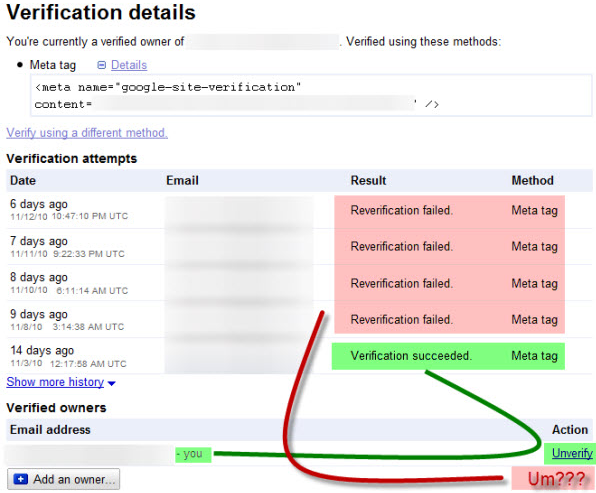
Consider Google's webmaster verification tags. One of our customers had an outing with an old webmaster who in turn did a sneaky change of location inside of Google Webmaster Tools over the weekend. After seeing traffic fall off a cliff, we figured out what happened & registered the site in Google webmaster tools. There are instructions on how to remove the former registered user, however the option does not appear in my client's account.
The redirect will allegedly be in place for 180 days! The only way to get around it is to ask for a review by the Google engineering team.
A big part of brand building in terms of SEO is not only to help you build up passive organic links (and to be able to charge a premium for your product), but it is also something which helps establish a bit of a competitive moat from algorithmic errors & makes it harder for Google to accidentally dump you. Further, if you have brand & catch a Google bug there is little risk to asking for a review. But if you do not have brand then even asking for a review could be risky.
Anyone who tells you that 'SEO is easy' across the board is either ignorant or exceptionally ignorant.
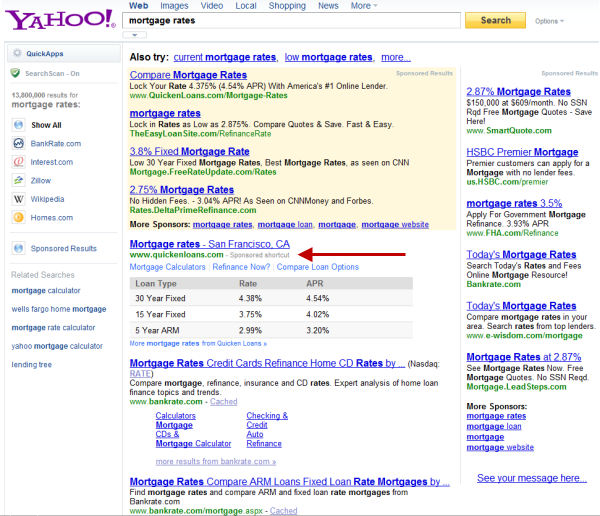
You need to be from the United States (or have access to a US IP address) to see this ad, but Yahoo! is testing monetizing their organic search results.
An ad in the "organic" results? A sponsored shortcut? Say it ain't so.
And that is *before* Google releases their vouchers program & other ad options which will frequently extend AdWords ads and further push down the organic search results.
A bit of home cooking for the fellow IAC company.
Not that long ago I highlighted how exact match domains are often over-stated as an SEO strategy. The above is another dimension as to why. When you have 3 or 4 ads above the organics AND in some cases the organic results are monetized too, then if you rank #2 algorithmically you might be below the fold.
If that ranking for that 1 keyword is your strategy for building your unique competitive advantage, then of course you are going to lose badly to those who are investing into building solid brand equity. They will be able to outbid you for the clicks, so you are toast.
Domainers are already getting killed by parking revenue drops, browsers that turn the address bar into a search box, and now resell values are further being diminished by search engines which are deciding to eat the 'organic' search results with more ads.
The golden rule: "Treat others as you would like to be treated."
A subset of that is: "If you don't have something nice to say... don't say anything at all."
What the Golden Rule Misses
That is a guiding rule which generally helps people prevent themselves from wasting time and/or causing an issue by offending someone. But there are a few things that are missed by that rule:
It is easy to tell someone not to internalize stuff, but the truth is if you don't respond at all then over time those sorts of people can start to wear you down
If you do not respond to someone they may think they are correct & then spread their misinformation further, as some of them attribute a lack of response to "the smoking gun."
Some businesses deserve it, however others have done nothing wrong other than being in front of an overly important individual. I am having trouble finding it right now, but a couple times people have threatened to smear my name and brand if I didn't give them a refund for some scammy crap they bought from someone else! They acknowledged that I wasn't associated with it, but they wanted their money back from someone & were willing to take it out of my brand if I wouldn't give it to them. And so I spoke French.
What Caused the Freetardation of the Web?
One time The Conumerist said they wouldn't link to our website because some other sites using infographics are spam, but then they ran our infographic (sans the attribution to the person who spend thousands of Dollars creating it and marketing it) and they got tons of awareness and exposure from our content. Sites like the Huffington Post do that sort of stuff all the time, and often become the canonical source for YOUR content.
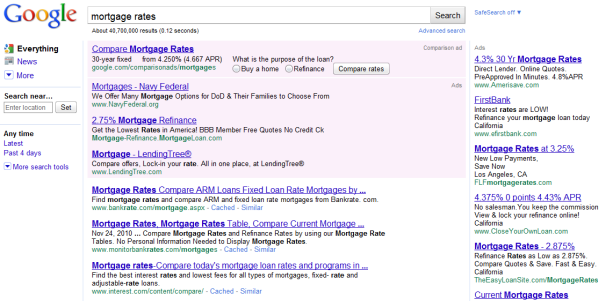
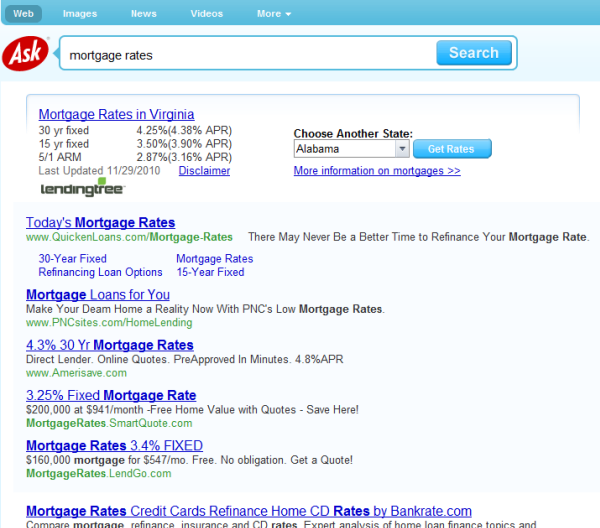
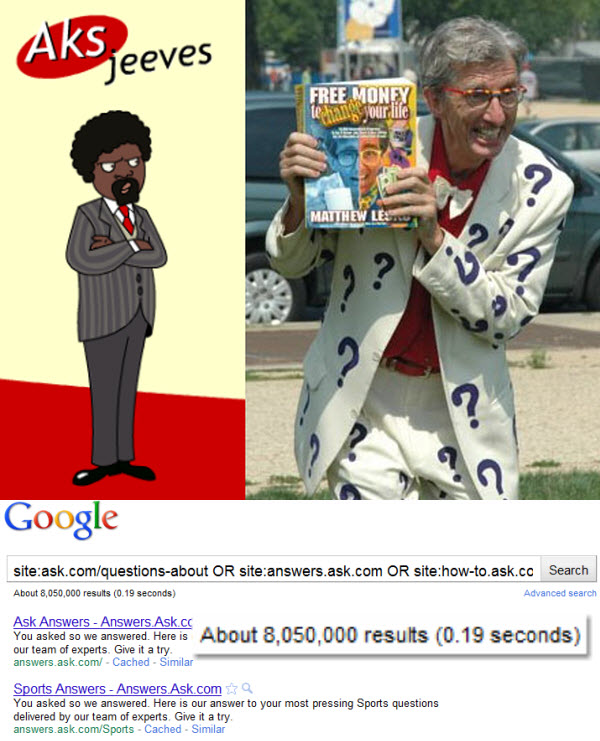
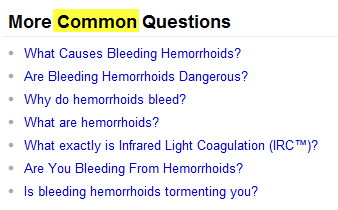
Not only are there business models built on paying users to steal other's valuable content, stripping attribution & make it free (like Youtube), but the model is so acceptable online now that you can simply program bots to do it (see Ask or Mahalo).
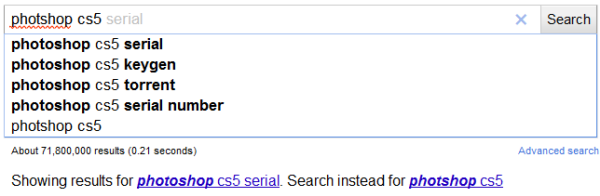
Google claims to make copyright better online, but if you search on Google they will recommend looking for torrents, cracks, keygens, and serial numbers. A friend of mine even showed me a YouTube video which shared a DreamWeaver serial code in it. As a person who has bought their software 4 or 5 times now I think that is just awful!
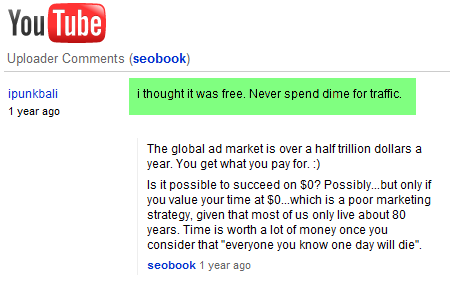
The penny gap is a concept where by charging *anything* for what you do you have to make it exceptionally better than anything which is freely accessible. Free is such a powerful psychological motivator that people will do irrational things for free. Such moves are largely driven by the fear of loss. If you turn down free you potentially lose out on something, but if you accept it there is no risk (that you are aware of, anyway) since it is "free." Anything that is paid not only has the risk of you being wrong, but it also has the risk of fine print.
The fine print isn't the only reason people get screwed though. The people who do the screw jobs via fine print techniques often pay a lot for exposure. And since the web (as a network) is optimized for generating maximum revenues it means that the people who eventually find you will likely become distrusting by the time they do, as they will already have got conned by someone else who is great at sales, but nothing else!
That will only reinforce the penny gap
Profitably Publishing in a World Dominated by the Penny Gap
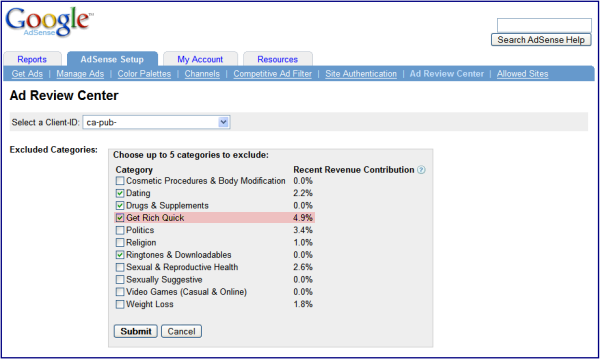
Since so many people chase free, a lot of publishing business models are built around tricking people to click ads rather than selling something. In some circles you are viewed as sleazy for having an affiliate link in your content even if you buy and use what you are promoting & spend hours writing in-depth reviews and tutorials. Many of the same folks who view any affiliate link as sleazy carpet bomb their own websites with AdSense ads. And lets not forget that AdSense even has an ad category for "get rich quick."
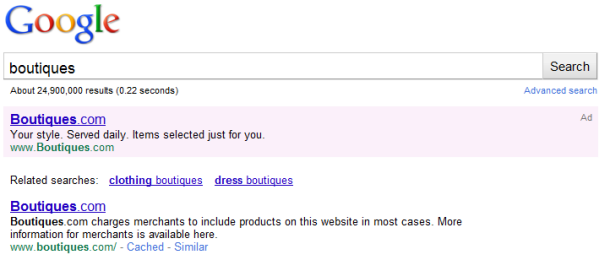
Further, with Google launching Boutiques.com, selling CPA product ads on their search results, offering comparison lead generation forms on their search results, and running the Google affiliate network it is safe to say that Google is easily one of the top 5 affiliates in the world. If being an affiliate is so sleazy (and tricking people into ad clicks is somehow any better) then why is Google such a big affiliate & why do so many of their AdSense ads carry links promoting affiliate offers?
do biased reviews of hyped junk that rip people off
encourage negative reviews and extort businesses (illegal, and the model of some sites like RipOffReport)
honestly review and promote the best products and services available and monetize some of those efforts with affiliate links (I include networks like OpenTable in this category)
add enough value yourself that you can offer a product or service for sale
Anyone can easily do the first 3 models, but the last 2 are more challenging. The 4th one is hard because its easier to convince naive people to buy products that are built around the sales letters than it is to convince people to buy things where the sales letter was built around the product.
The tricky part with the last category...actually adding enough value to be able to charge...is that it is far harder than most people realize. The minute you publish anything publicly there are forces pushing to commoditize it (most open source software is a remake of an existing paid software solution rather than an entirely new category unto itself). Also, if someone buys something from you and gets a great return they may not want to mention it to others precisely because they rely so heavily on you and they are getting such great returns from your product or service. And even if you sell physical products, Google selling CPA ads to the likes of Wal-Mart can still drive you under unless you turn it from a product into a service (like Zappos has done).
Aggressive Sales Techniques Yield Bad Customers
If you are aggressive in your sales tactics you get customers you do not even want. The guy who created the Product Launch Formula stuff highlighted how he saw 30% refund rates on it. If you are not aggressive in your sales tactics then you will find affiliates tend to promote the stuff that is more aggressive, typically optimizing for yield rather than promoting what is best. That is how self-interested economics works.
Why You Should Give Something Away
The way to get around with having to compete with that sort of stuff is to rely on a freemium model.
In spite of the negative impacts of freetards, giving something away is almost a requirement of online marketing today in many competitive markets, particularly if you do not want to scam people & you are not sitting on an established brand and a mountain of cash.
You give some stuff away and set up a sales funnel, while hoping to eventually sell something else. This, in turn, is the tricky part. As soon as you set up *any* barriers you will get tons of complaints. If you optimize for minimizing complaints you would have to stop selling anything and just get a job working at Wal-Mart being paid just enough to live on (after you add in your food stamp income).
What Are You Optimizing?
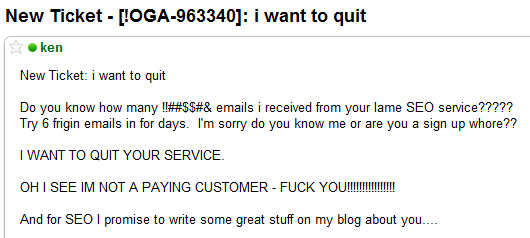
Support is *not* free. Especially after you become popular and the value of your time increases. If people are too lazy to read the instructions or are too incompetent to follow directions they need to eat that. If you try to 'help' them they will not only eat your time, but also make your employees want to quit:
In talking with other plugin developers, it seems fairly universal that the reward for a successful plugin is a deluge of support email that includes the worst kind of sense of entitlement, rudeness and ignorance. The community as a whole seems to expect to be able to pay nothing, yet received expert and individual help and support for free.
One of my goals with WordPress HelpCenter was to try to affect change in this area. My belief was that we could work with plugin developers to have them send support requests to WPHC, have WPHC provide commercial support services, and give a revenue stream back to the plugin developers. While WPHC has been successful overall, it has utterly failed in this effort. What we found was that regardless of the actual issue, users experiencing trouble with a plugin blame the plugin. They assume it’s a coding problem (even though it isn’t in most cases), expect free support and are so rude that we’ve lost people from our team as a result
I would say anyone who pays you nothing and then steals your time *AND* your employees is the exact opposite of a customer: a freetard!
To clarify, all people who use your free stuff are not freetards, but the people who use it incompetently then curse at you and demand phone support and such certainly are freetards.
Ultimately you are not optimizing for the 99% of people who come across your website and never spend a Dollar. You are instead optimizing for the people who are considering purchasing. This gives you a diametric view of the market, where the same content receives a wide range of responses, which range from...
... right on through to ...
If you optimize to make that first person happy it means you lack internal respect and are throwing away over half of your income, because the second person won't have a sales funnel to build trust in you.
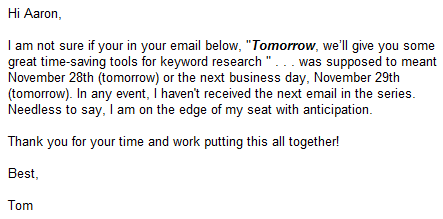
You can put an unsubscribe link in every email (we do), allow people to opt into the auto-responder or choose not to (we do), but you can't stop a person from taking steroids and/or missing their medication. A marketer who sets up a free email subscription on a site about marketing and then is angry about receiving free marketing tips is a complete idiot.
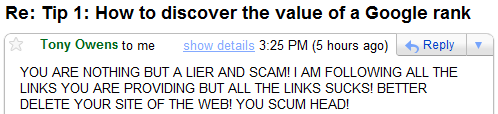
When people are polite (like the second example) I respond right back and try to help them as best I can. When someone acts like a steroid addicted enraged freetard who missed this morning's medications (like the first message, from K. Boostrom) I either ignore them or tell them to screw off. I usually ignore them, but when they provide curse words AND threats then they typically get a response. ;)
What constructive advice can you glean from
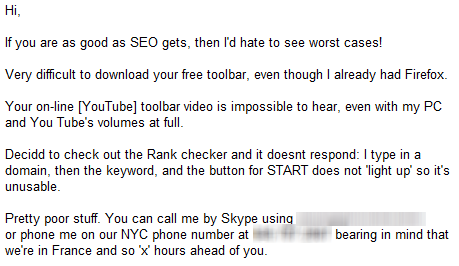
Because media and many software products have no cost to consumers people think that everything online (except whatever they sell) should be free. Not only should products be free, but so should services. Look at this lovely email from France
Note that it starts off with the obligatory insult, then complains about all the free stuff we offer AND the free content we give away. They then suggest I should SPEND my time and my money to give them a free consult. He also wants me to schedule my life around him being half-way around the world. The flip side of that is I have received numerous 3am wake up calls from people who looked up my phone number from our whois and decided I would like to have a chat about how incompetent they are.
I wish I could tell you that the above was a remarkable outlier, but sadly, such interactions are becoming more common. Hence using private registration.
The web is a great economic force. It makes information more accessible and for free. Many millionaires and billion Dollar companies are built on free open source software. But the reason open source software is free is that there are other means of monetization:
support is not free and/or
the site is a PageRank funnel to another monetized website (see Wikipedia/Wikia & Wordpress.org/Wordpress.com/Foodpress) and/or
the software builds network effects and/or awareness that builds stature, which can be monetized in other ways
the software acts as a recruitment tool to attract employees
etc etc etc
Help Wanted: Millionaire Seeking Free SEO Consultant
Some people might say that "well the freetards are just staring out, so you need to give them the benefit of the doubt." And part of why we offer so much for free is that I do remember where I came from and we do try to help people out. A lot!
But some of the freetards are anything but poor. Case in point:
Freetard vs Customer
How does Wordnet define a client?
Client:
a person who seeks the advice of a lawyer
customer: someone who pays for goods or services
Prospective customers can make absurd claims and announce desires that will clearly lose you money but they are NOT your customer until they pay you. And even then, if they are abusive you have the right to terminate the relationship.
Freetards ACT like they have paid you and want the benefits of your services without paying a cent.
In the years to come these trends mentioned above will only accelerate. And that means that you have to make a choice on who you want to work for and what you want your work life to be like. You can choose your customers or let them choose you. But part of the process needs to be filtering what you don't want, lest you end up with freetards threatening to give your paying customers a beat down.
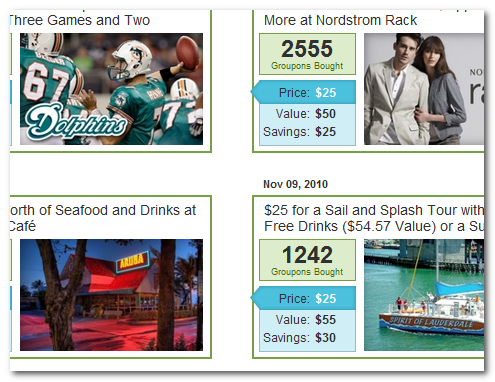
As a comparison, Yahoo! is worth about $21 billion, but that includes over $3 billion in cash AND equity investments in Yahoo! Japan + Alibaba that are likely worth close to $10 billion. In other words, Google might be offering to buy Groupon for 75% of the value of Yahoo! (excluding their cash on hands & foreign investments). $6 billion would be more than Google paid for DoubleClick and Youtube combined.
Groupon is a discount site that offers one major deal per day. Some are saying Groupon would be an unusual purchase for Google, as Groupon has no leading edge technology that Google is desperate to get their hands on. On the contrary, a Google employee could probably knock together a similar site in day or two.
Groupon offers something much more, however. Groupon offers something that has evaded Google, and every other search engine, for quite some time now.
Local.
Groupon has tentacles deep into local businesses advertising budgets, and on a massive scale. Groupon have a large sales force that hand-holds local businesses into online advertising, and reduces risk by offering win-win deals.
Contrast this with Google, who have found it difficult to get small businesses to spend up large on Adwords. The reality is that search marketing is just too cryptic and time consuming for a lot of small business operations.
Google has never really been able to do direct sales well at all," Ambrose said, citing Google's failed attempt to sell and market the Nexus One smartphone on its own site. And, he added, Google's revolutionary AdWords product is not intuitive for many of the small-town businesses that have caught the Groupon fever. "AdWords for a local business is really, really hard," Ambrose said and pointed out the number of AdWords "experts" and consultants offering their services to brick-and-mortar businesses
At the time of writing, nothing official has been announced, however.
Regardless if Google buys Groupon or not, Google's on-going march into non-traditional content arenas is unmistakable. There used to be a separation between search and state - heh - but there isn't anymore.
Google's recent moves should be a wake-up call to anyone involved in the following areas:
1. Coupons
If a company like Google combines coupon offers with local search data, they make local search a lot more enticing. Given Google Place-driven search results are already pushing other local results down the fold, expect to see the same thing happen in coupon searches, too, especially if the Groupon sale goes ahead.
One could argue local directories already do this, although Google goes one better and orients around maps. Again, this pushes a lot of locality aimed SEO below the fold.
Google launches Boutiques.com and there's no Google logo to be seen anywhere! There's nothing "Google-y" about it.
There is a tiny link at the bottom of the About Us pages which states:
"Boutiques.com charges merchants to include products on this website in most cases"
Retailers sign up directly, and Google gets rid of various middlemen in the process. Fashion is a fairly innocuous place to start. It looks like a test run, but expect Google to roll out a lot more vertical "affiliate/paid inclusion" sites, especially if Boutiques.com does well. It is not hard to do well when your public relations blitz means you rank in a day. And you can sell yourself free ads!
Common Themes
There are a few common themes in evidence here.
Google is making it easier for the small LOCAL retailer to get into search marketing by providing more options. There is a much greater degree of hand holding evident, especially if you compare this approach with the alternative up until now, which is building a site and then promoting it with SEO or PPC.
I suspect Google have learned a thing or two from Facebook i.e. you've got to make it click-and-point easy. The network effects take care of everything else, and Google will largely control those. For the rest, there may be a great deal more hand-holding. Increasingly, vendors will want to be part of the Google platform.
Is it all doom and gloom for SEO?
No.
Google can't own everything. It may be able to provide scalable tools and platforms, but it can't become a publishing house that covers every topic and every industry. The long tail of search is, well.....long.
SEOs need to stay away from competing directly with Google. Instead, they need to provide value that Google can't provide easily, but will still need to display in order to be considered useful i.e. deep content, relationships, customer service, community, and unique-ness.
And let's not even get started on this or that.....
If Google is smarter than humans, we must accept that it should be able to help us answer the difficult questions about life that are vital toward making humans reach their full potential, such that we may help computers become smarter, so that we may reach the singularity.
The folks who are doing it right seem to have the answer to everything. Millions and millions of answers. The modern day Matthew Lesko of the search world.
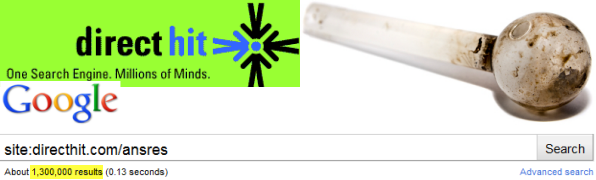
Even if you have redirected a site as a defunct relic for a decade, once you have your auto-generated content in place you can simply throw the domain in the hopper and generate a few million pages.
"The development of search as a technology has become commoditized. To continue to invest our own resources to do web search doesn't make sense because that development is expensive and doesn't give you a differentiated product," Ask President Doug Leeds said by telephone.
My contention is that their is no value spending the engineering resources to fight auto-generated spam if Google is paying you to create it. At some point one stack of money becomes much larger than the other.
Then again, speaking of differentiation, I wonder if Doug Leeds would care to comment on if answers content "has been commoditized" at all by them skirting around the intent of fair use laws (much like Youtube did to video content). Are they offering a "differentiated" service by turning tons of their sites into giant answer farms?
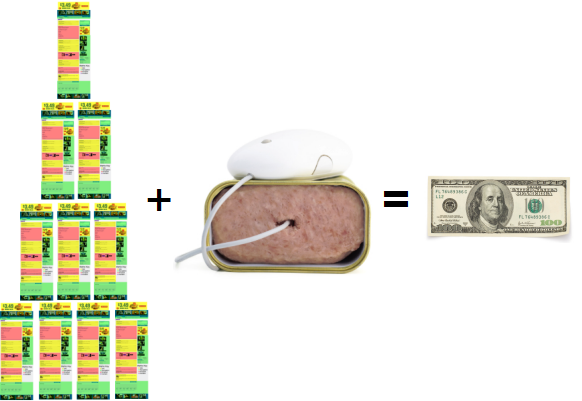
Ultimately this is much like Mahalo, but on a grand scale. At least they are not pointing expired redirects into their site (like eHow did) but if this trend continues look for thin answer sites wrapped in AdSense to become the equivalent of the auto-generated affiliate feed powered website of years gone by. The model is infinitely more scalable than content mills since the companies doing it don't actually have content costs: throw a keyword list in the hopper, send your scrapers out to "add value" & watch the money come in. Wherever something is working simply throw more related keywords in the hopper.
The lack of cost to the model means you can build thousands of pages around misspellings and yet still have it be profitable...the cost of creating each page is under a cent.
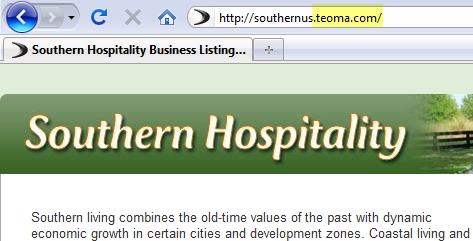
Who funds the creation of all this garbage? Google, via their AdSense program. It's a bit of Southern Hospitality from Google, if you will.
Own a forum website or answers website & are sick of seeing Ask outrank you by leveraging their domain authority + "fair use" of your content? Here is how to block their bot in robots.txt:
With great power comes great responsibility, however working on the Google spam team must feel a bit like the movie Brazil when watching this stuff unfold.
Remember how all kinds of affiliates were given the boot by Google for not "adding value"? How are lander pages like this one adding any value? 10 of 10 above the fold links are monetized. And it looks like their sites are using content spinning too!
The promise of the web was that it could directly connect supply and demand to make markets more efficient, and yet leading search engines are paying to create a layer of (g)arbitrage that lowers the utility and value of the network for everyone else, while pushing even more publishers into bankruptcy as the leeches grow in size & number.
My guess is that unless this short term opportunism changes, some of the star search engineers will leave in disgust within 12 to 18 months. Mark 2012 on your calendars, it will be a good year for clean search plays like Blekko and DuckDuckGo. ;)
I already mentioned this to our subscribers & affiliates, but we are pausing the ability to subscribe to our membership site so we can perform upgrades.
We want to update Drupal, launch the new site design, and switch out the membership management software from what has become sorta big and hairy to a platform that is pre-packaged & thus more manageable. Doing this will allow us to accept payments on-site, offer a couple different tiers of access, allow me to segment some aspects of customer support to make some of the account management stuff easier to do by staff.
The end goal of this upgrade is to make the site look more modern & cohesive, and make it so we are spending more of our resources on creating new content & tools and less on management of the underlying software & such.
When we shifted to a membership site a couple years ago I didn't appreciate the level of success it would achieve & I didn't realize how some of the smaller bugs would become larger issues as our site grew. Most of those bugs have been fixed, but there are still a few ghosts & we are sorta limited by spending resources on re-creating the wheel, rather than buying wheels & then layering more value on top. :)
I still intend to be involved in the site daily, but for my health (and sanity) it really makes sense to leverage division of labor on some of the administrative stuff, rather than burning myself out trying to manage every aspect of everything. Our employees are great & now we just need to implement systems that help them be greater(er). :D
We are aiming to open back up sometime in mid-January. The blog and site will still continue, but given the number of databases the site currently has & how it syncs up with Paypal it is likely best for us to close off new subscriptions while we are changing stuff around.
We could try switching stuff while keeping everything active, but the big issue there is if any weird anomalies happen then that is probably more stress than I would care to deal with. I love the site & I want to keep it that way (vs pull my hair out due to putting too much stress on myself). :D
If you want to be notified when we re-open please comment on this post & we will email everyone who commented once we have relaunched under the new system & tested everything out. :)
Hope the holidays go well for you & more to come when we make some significant progress with these changes.
According to Matt Cutts, speaking at a recent PubCon, Google will be looking at why exact domain matches rank so well. For example, if you have a site at blue-widgets.com it may rank a bit too well for the keyword phrase [blue widgets].
Curious.
Don't Google know? ;)
More likely, Matt would not make a concrete statement, one way or the other. "Yes, exact Match domains rank better!", is not something Matt is likely to say.
Secondly, the implication is that exact match domains are a problem.
Why Use Exact Match Domain Names
Exact match domains names, as the name suggests, are domain names that match the search keyword term. i.e. Hotels.com, shoes.net, planetickets.org etc.
Is it a good idea to adopt this strategy for SEO? Ask ten different SEOs and you'll likely get ten different answers.
On the plus side, an exact match may help you target one, specific keyword phrase. Your link text and domain name match up naturally. The domain name will likely be highlighted in Google's search results, thus giving the listing more visibility. There may be ranking advantages, depending on who you ask.
On the negative side, an exact match only "helps" you target one keyword. It may be too generic for wider applications, such as brand building. Exact match domains may be over-hyped, and not worth a premium. There are, after all, many domains ranking #1 that aren't exact match, so it is debatable how much SEO advantage they actually provide, particularly as Google keeps pushing brand.
Is There A Problem With Exact Match Domains?
So why would Matt imply exact match domain names might be a problem?
It is understandable that some in the SEO community - perhaps an SEO working on client sites, or those who don't own any exact match domains and see others ranking above them - would have a vested interest in making a noise about the competition. If webmasters make enough noise about it, then Matt Cutts may feel a need to respond.
The supposed ranking power of exact match is probably a red herring. The problem Google may be hinting at is that exact match may be more likely to be involved with spam, thin affiliate, or other low value content than other types of domains. In other words, it becomes a quality signal.
If that is the case - and I'm not saying it is - then that may be the reason Google would look closer at exact match domains, not the fact that a domain matching a keyword is somehow evil.
Because it isn't.
There is nothing wrong with owning an exact match domain.
It comes down to business fundamentals. If you're trying to build a unique brand, and resulting keyword stream, then an exact match domain name will be a hindrance rather than a help. You'll forever be competing with generic search traffic. Keyword domains names aren't particularly memorable.
The premium that an exact-match domain name commands, when sold on the after-market, may not be worth it. You don't need an exact-match domain name to rank well, so the money may be better spent getting a new $10 domain name to rank. Or, alternatively, you could buy an existing site that already ranks well for your keyword, and others, for similar money as an inflated exact match domain.
Finally, if you're competing with a clear market leader, then generic isn't going to help you much. i.e. owning searchengine.com isn't going to make Google lose any sleep. You may also be over-looking an opportunity to differentiate your offering against the market leader in terms of brand. Think Blekko vs searchengine.com.
"Matt recommends SEOs do not “chase the algorithm” and instead try to predict where Google will be going in the future". Matt was addressing PubCon.
Good advice, methinks.
Trying to predict where Google is going is something we do a lot of at SEOBook.com. Whilst no one has a crystal ball, it's good practice to keep one eye on the search horizon.
So, where do we think Google might be heading?
Google Will Continue To Dominate Search
Easy one, huh.
Their biggest competitors appear clueless when it comes to search. Bing may make some inroads. Maybe. It's hard to imagine anyone eating Google's lunch when it comes to search, for many years to come.
Is Facebook a threat? I doubt it. Search is difficult, and I can see no reason why Facebook - which has a media focus - could own the search channel any more than Yahoo could.
Search is, after all, an infrastructure problem. Google's infrastructure would be very difficult to replicate.
Google Won't Be Doing All That Much About Blackhat Sites
A search result set only really contains spam if the Google users think it contains spam i.e. they don't see the answer they were expecting.
The fact a website may fall outside Google's guidelines might get competing webmasters' knickers in a knot, but it probably doesn't matter that much to Google, or anyone else.
Even though Matt Cutts says Google will devote more resources to this, I suspect Google's efforts will largely remain focused on outright deception i.e. misrepresentation, hijacking and malware.
The Web Reflects Power Structures
We can forget the San Fran techno-hippy ethos of the web. It will not be a free-for-all democracy, if it ever was. History shows us that power tries to centralize control in order to maintain it.
Google may try to keep users on Google for longer. They do this by owning more and more verticals, and extracting data and reformatting it. When they send visitors away from Google, they'll try to do so more and more on their own terms. Watch very carefully what type of sites Google rewards, as opposed to what they may say they reward.
Expect less competition in the market as a result. Some people are already getting angry about it.
Be Where Your Users Are
Google follows users. So does Facebook. Anywhere your users are, you've got to be there, too. On Google Maps. On YouTube. Wherever and whenever. Think beyond your website. Think in terms of getting your data out there.
Social media can drive tons of attention, awareness and traffic. But the search box is the best way to navigate to stuff you want. Now what will drive those results - if I type in "pizza", what should I get? The answer can be very different depending on whether the results are coming from the web, Yelp, or Facebook. So I guess my answer is that I still see search being the core way to navigate, but I think what gets searched is going to get a lot more structured and move away from simple keyword matches against unstructured web pages
A Shift To Localization
Microsoft Research found that people tend to organize their memories in geographic terms i.e. where they were when something happened.
If you want to know where Google is heading, then watch Marissa Mayer. Marissa has been responsible for much of what you see in Google in terms of how it is organized. Marissa has just moved to head of Geographic and Location Services.
Google Earth. Google Maps. Google Local. Google Street View. Mobile location data and targeting. Expect more data to be organized around locality.
SEO hasn't changed all that much in years. We still find an audience (keyword research), we publish content, we build links to the content, and then we repeat it all over again.
The changes come around the edges, especially for big companies like Google. There is a lot of risk to Google in making radical changes. Shareholders don't like it. Why risk breaking something that makes so much money, and is so popular?
The biggest changes in the way we do things on the web are probably going to come from the upstarts. They're probably hard at work in their garage right now.
[When] we roll[ed] out Google Finance, we did put the Google link first. It seems only fair right, we do all the work for the search page and all these other things, so we do put it first... That has actually been our policy, since then, because of Finance. So for Google Maps again, it's the first link. - Marissa Mayer
If they gain certain privileges in the marketplace by claiming to not abuse their power and that their algorithmic results are neutral, but those algorithmic results may be pushed below the fold, then is it "only fair" for them to put themselves in a default market leading position in any category they feel they can make money from by selling ads in? Or is that an abuse of power?