'google' Archive

Improve your rankings, traffic, and profits today. The SEO Book training program offers you:

  • Over 100 training modules, covering topics like: keyword research, link building, site architecture, website monetization, pay per click ads, tracking results, and more.
  • An exclusive interactive community forum
  • Members only videos and tools
  • Additional bonuses - like data spreadsheets, and money saving tips
  • Every order comes risk free, and with the best selling SEO Book as a free bonus

Watch this video to learn more.

Improve your rankings today!

May
04

Google, which has arbitrarily forced its will to use nofollow on the web (and declared link buyers and sellers who do not use the tag as spammers) is buying a PageRank 7 link from SEMPO.org.

You would think that if Google wants to set new proprietary standards they would follow them as well. And what better spot to start following them than with a trade organization promoting search engine marketing?

May
01

I just wrote a ~15 page article aimed at helping SEOs estimate how much a top rank in Google is worth.

I would appreciate any feedback you have on making it better. If you like it please hook me up with a Del.icio.us or Stumble. Any and all mentions are appreciated. :)

Apr
29

Welcome to GoogleNet!

Hitwise recently mentioned that Google controls over 1/3 of UK web traffic.
Upstream uk internet traffic from google properties to other websites in the UK 2007 2008  chart.png
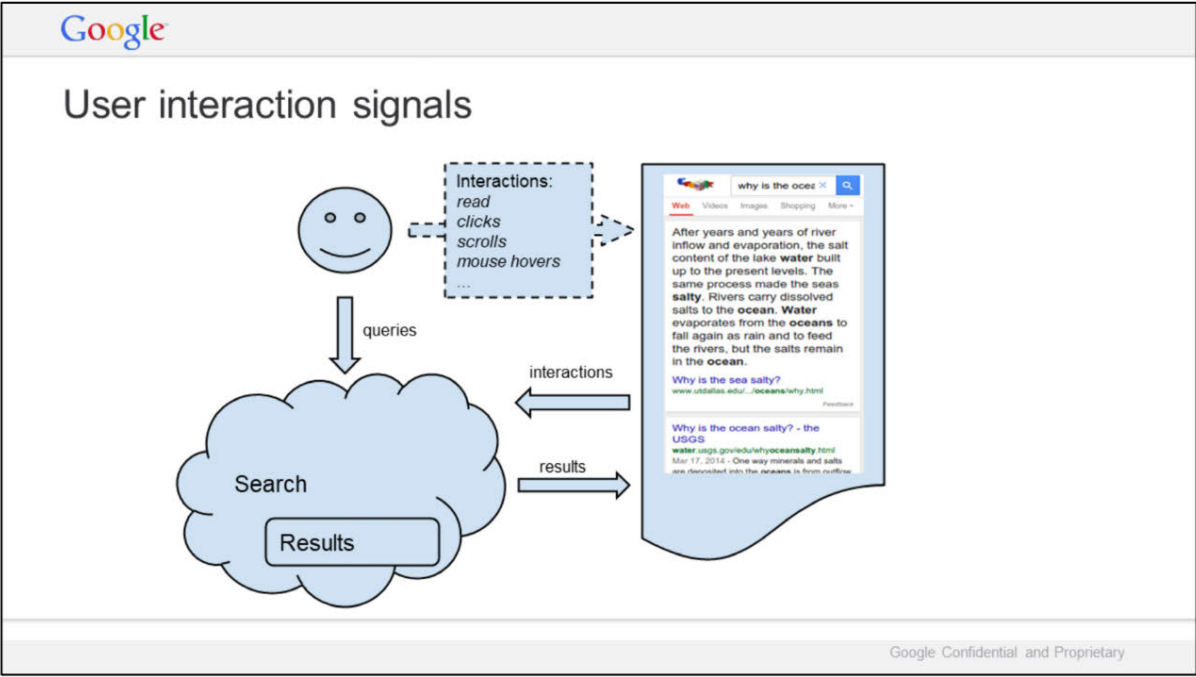
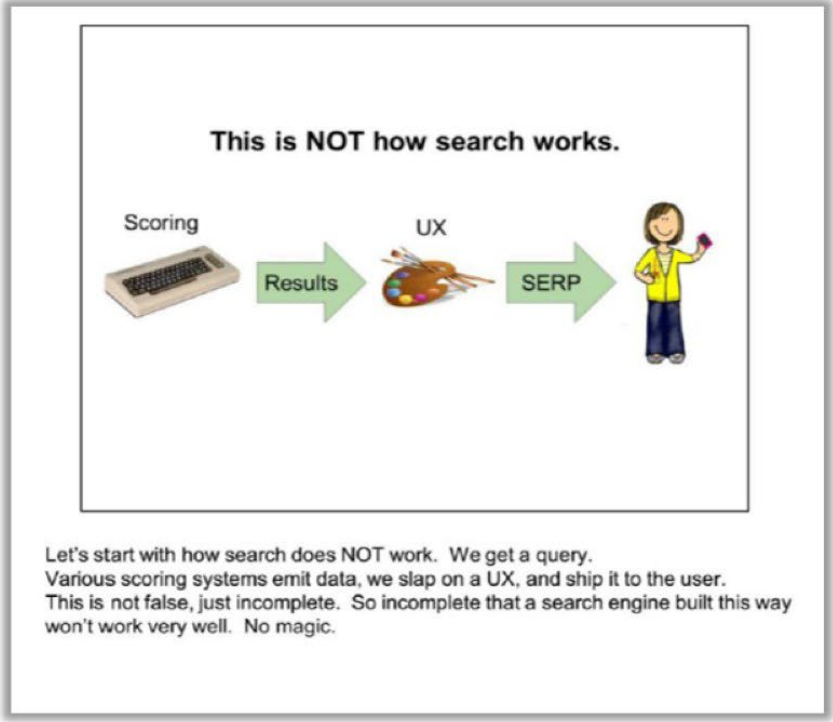
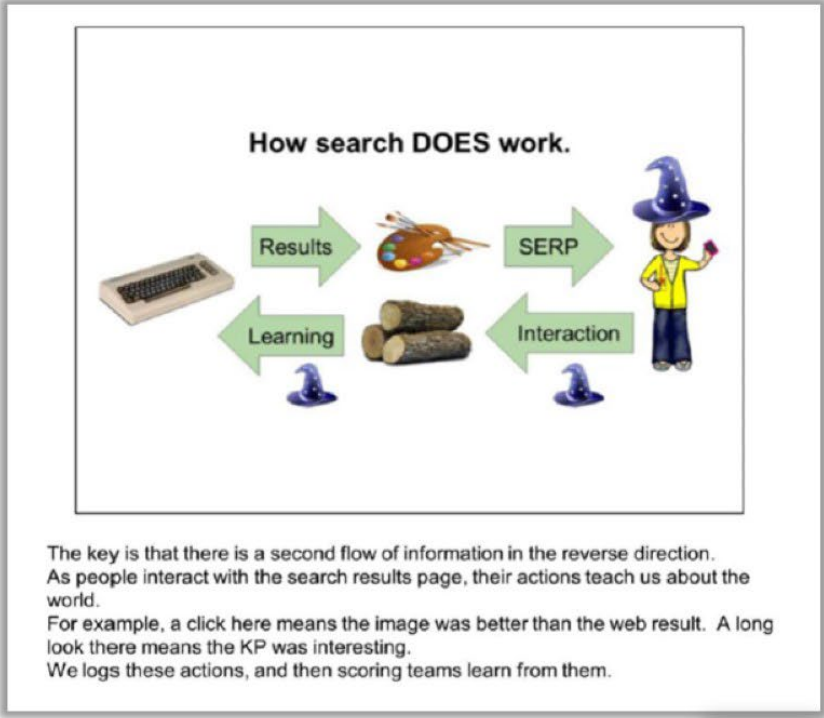
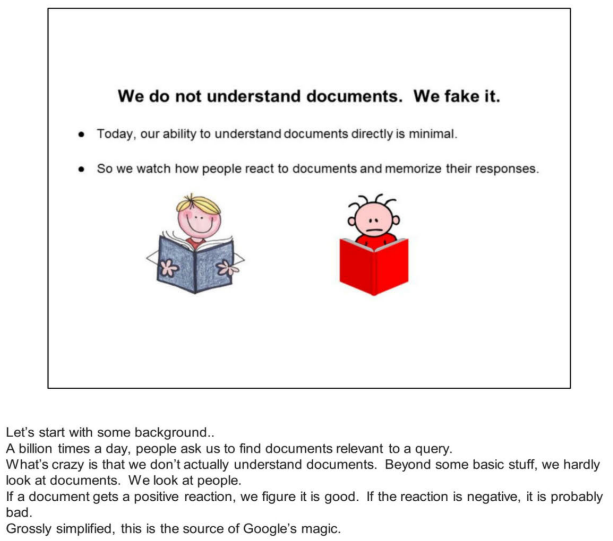
With that much usage data, if you were Google, would you use usage data in your relevancy algorithms?

An Army of Google Search Editors

They could easily use algorithms to detect

  • sites that they send a lot of traffic to relative to its total traffic (comparing ratios between toolbar data and search traffic)
  • sites which have seen a rapid spike in traffic from Google
  • sites which people quickly bounce away from (and do not later return to)
  • sites which get a lot of traffic from Google but get few navigational queries

and flag anything out of the ordinary for human review. Marissa Mayer stated they have 10,000 reviewers.

Does Your Site Look Good to Google's Relevancy Algorithm?

As the web keeps getting richer and deeper, and Google increasingly uses human review for demoting spam, all the aesthetic things matter:

  • domain name
  • site design
  • content formatting
  • branding and public relations

As search evolves so too will spam. Some spam sites will LOOK and FEEL better than most non-spam sites. And so the remote quality raters will be given more data to look at - perhaps eventually even a sample of backlinks or other related data.

False positives will occur - sites and careers built around Google without proper support stilts will crumble. Unless your site is of social significance (you are a big corporation, a non-profit organization, a government institution, an educational institution, a top blogger, an official Google partner, or Youtube/Google house content) then part of the optimization process revolves around not only creating sites that pass a hand review, but also trying to create sites that do not get flagged for review - especially if you are a thin affiliate site.

How do you not get flagged for review?

  • Build enough quality signals and direct traffic that your site looks like a real part of the web.
  • Build something people keep coming back to.
  • Do not make drastic changes to your site unless you are comfortable with it going under review.

How do you pass a review?

Short term I think the aesthetic things matter a lot. Longer term it is best if your site satisfies a few criteria

  • exclusive content that people value and keep coming back to (Google loses if they remove the best content from their index)
  • a brand that people care about and search for (Google looks dumb if they do not rank your site)
  • a meaningful and reliable traffic stream outside of Google (many quality signals may stem from this exposure, which will help keep your overall profile more organic)
  • you could cause public relations harm to Google and diminish their brand value in the eyes of thousands of people (removing your site has real opportunity cost)

Usage Data for Algorithmic Site Promotion

Creating Fake User Accounts is Harder Than it Sounds

If usage data was ever used to promote sites, they could look at regional data and help promote sites based on what is popular locally. Searchers reveal their location by IP address and the queries they search for.

The Trusted Few

Google could use a subset of their users when using usage data to affect relevancy (perhaps users with 6 months account history, credit card on file via Google Checkout, and a normal email profile).

Why Usage Data is Tricky

Much of the signal from usage data is likely mirrored by PageRank, so the lift might not be that great until they really refine the technology.

Some tricky parts with promoting sites based on usage data are:

  • usage data is quite noisy, and
  • it may not favor informational sites over commercial intent the way that PageRank does. That informational bias to the organic search results is a large part of why AdWords is so profitable.

Microsoft recently presented a paper on finding authority pages based on browsing habits.

Apr
16

TechRepublic asks "Will the Google revolution engulf IT departments?" Each time I write a newsletter, about 80% of the items are about Google. They keep innovating faster than other companies their size. Here are some examples of things they have done over the last ~ 2 months.

  • Changes organic search results based on prior search query.
  • Added a search box for site search inside the search results, giving Google a second taste at displaying ads even on navigational queries for a specific website.
  • Started crawling site search forms on trusted sites, which (along with sitelinks, universal search, Youtube, and branded video ads) distributes more traffic to large trusted sites and business partners, with less traffic going to smaller websites (search keeps getting more editorial).
  • Offered App Engine, which provides free hosting to developers (in exchange for being stuck on their network and letting them spy on your usage data and growth).
  • Created a marketplace for people building on the Google network.
  • Begun policing widgets not on their network, a topic that deserves its own post.

Not only are dumb companies buying into the everything Google strategy, but even some semi-intelligent ones are. After logging into Dreamhost recently I was shocked to see them integrating Google apps and email on all customer domains. What happens if/when Google buys GoDaddy? How does Dreamhost compete when Google gives away hosting as a loss leader?

There is big risk to Google consuming the web. The issue is not only information diversity and innovation, but what happens when your Google account gets hacked? I regret my reliance on Gmail, but am unsure how to fix it.

Mar
24

After they bid low and lost the C block of wireless spectrum Google has started talking to the media about using unlicensed whitespace. From the WSJ:

Google said that the white space, located between channels 2 and 51 on TV that aren't hooked up to satellite or cable, offer a "once-in-a-lifetime opportunity to provide ubiquitous wireless broadband access to all Americans." In addition, opening up the spectrum would "enable much-needed competition to the incumbent broadband service providers," Mr. Whitt wrote. Google has done its own white-space testing and submitted its results to the FCC in December. Philips also submitted a testing device to the agency last year, which returned satisfactory results.

Cheaper (or free) nationwide connectivity = more web users. More web users = more searches.

The other (big) piece of this, is that if Google works this deal, they will likely end up with a lot more usage data - and a strong starting point to triangulate other usage data against. With links becoming a commodity, how hard would it be for Google to find a better signal? In 5 years will they still rely on links and have 10,000 people rating content? What if they could somehow get everyone to start rating content (through usage data), and place more trust on natural looking Google user accounts with years of a natural usage profile. If they slowly mixed it into the relevancy algorithms over time who would even know they did it?

If Google does set up a free ISP think how much usage data they would have.

  • Google ISP (usage data, geo-specific relevancy)
  • Google Android (more geo-data)
  • Google accounts (which users can we really trust, what do they buy, etc.)
  • Google toolbar
  • Google search
  • social applications (Gmail, Google Talk, Orkut, Google Gadgets)
  • Google AdWords
  • Google Checkout (track sales volume, return requests, etc.)
  • Google AdSense
  • DoubleClick (thanks for the reminder Dan)
  • Google Analytics
  • Google Feedburner feed distribution
  • Google reader
  • iGoogle homepage (along with Google Gadgets)
  • Google YouTube (embeds, views, subscribers, etc.)

In that type of market, effective SEO morphs into marketing. Until that day comes keep link spamming building!

Mar
11

Sometimes people think I am a cynic when I mention things like "avoid Google Analytics," but you never really understand how Google perceives the web until they chose to try to wipe you out. Jay Weintraub recently posted about how he was permanently banned from AdWords because one of his employees accessed his company account AND their personal account from the same IP address.

A person who has access to the company's AdWords accounts has their own AdWords account. They are a good employee and don't work on their personal project at the office, but as a good employee they do work on your business while at home. By accessing both AdWords accounts on the same machine, Google decides both accounts are the same person despite their being different. Worst case, the employee breaks the rules with their personal account. The employer finds their campaigns stopped and can't get them back online.

There was a point in time when some people who practiced PPC claimed that it was safer than SEO, but in the face of

it is certainly a bit harder to claim that PPC is a safe and effective long-term marketing strategy.

Worse yet though, if Google is willing to ban people paying them millions of dollars, what happens to those who publish AdSense ads and are dependant on Google for revenue as well? What happens to those who are dominating the organic rankings without paying their Google tax?

If Google connects up all that data to use against their advertisers, surely they are using the same data to hand out punishment to other parties as well. Just by using AdSense you make your business more reliant on Google (and eventually more likely to be penalized by Google). Just by using Google Analytics you are leveling the competition field for everyone except yourself. And the problem there is that you can't get away with many of the things that your competitors do.

How many emails like this could I send out before my site would get banned?

My threshold and the threshold for Sallie Mae are two different numbers. I wonder if I offer PageRank 6 (and above) bloggers a free membership to my site if they linked to me (like Demand Media does) if I would be deemed a spammer?

As Google's stranglehold on the web grows (Google just closed the DoubleClick deal - giving them access to a lot more affiliate data) the solution to remove yourself from risks associated with Google's influence is to create a business that is not reliant on Google...a brand and a destination. But to do that you really need to ignore Google's advice.

And if you are an end consumer and searcher, you are hosed already. Ads already track you and know who you are, and Google has patents to target ads to leverage and exploit your mental weaknesses:

Examples of information that could be useful, particularly in massive multiplayer online RPG’s, may be the specific dialogue entered by the users while chatting or interacting with other players/characters within the game. For example, the dialogue could indicate that the player is aggressive, profane, polite, literate, illiterate, influenced by current culture or subculture, etc. Also decisions made by the players may provide more information such as whether the player is a risk taker, risk averse, aggressive, passive, intelligent, follower, leader, etc. This information may be used and analyzed in order to help select and deliver more relevant ads to users.

Hat tip to Andy for the link to Jay's post.

You can read a lot about what search engineers want by looking at how the search results change. You can learn a bit more by listening to how they try to guide / influence / manipulate the market while engaging in discourse. And you can learn a lot more by reading their guidelines for how they expect people to rate search quality.

The reasons that the internal communication documents are so powerful are

  • they do not discuss search from "in an ideal world" approach, but cover the current marketplace from a pragmatic standpoint solving real issues
  • the documents may display algorithmic holes that require manual intervention
  • the documents may show clues as to the hints search engineers give raters to quickly infer quality and relevancy
  • the documents show issues or relevancy infractions that merit a lower relevancy rating
  • the documents show how ratings change based on the quality and availability of information on the topic
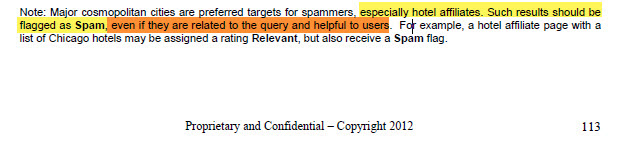
  • how something that is considered spam in some instances is considered fine if it is associated with a large well known brand
  • how things that are relevant in some verticals are irrelevant in others if Google runs a competing offering
  • the current documents are the result of years of back and forth communication between quality raters and search engineers

For organic search junkies the Google Gods have tossed us another gift. An SEO Black Hat member discovered an April 2007 Google Evaluation Guidelines document, referenced here.

In April 2007 Yahoo! Music did offer lyrics, but the official Google query evaluation guidelines from that time-frame stated

Exceptions (Scraped Content that is not Spam) Lyrics, poems, ringtones (that the user programs rather than downloads), quotes, and proverbs have no central authority. When you see pages with this content, you cannot judge it to have been copied, and the pages should not be assigned a Spam label. Unfortunately, some content is written specifically for Spam pages and you will not find it on another source.

Although you may be convinced that the intent is to deceive, if the content makes sense and appears original, you will not be able to label such pages Spam.

In a sense, if a spammer or copyright violator is the only person providing the information online for free it is not considered spam, even if it would have been deemed spam by the traditional guidelines. The same is likely true if Google is trying to work on business negotiations to own that content directly (how could they state there are no central authority sites for music lyrics when sites like Yahoo! Music offer them?).

Because Google has not partnered up with the record labels to create a Google database of lyrics somehow those copyright violations are deemed acceptible even if they would have been judged as spam under Google's typical guidelines. And, of course, after Google creates a relationship to get those lyrics hosted on Google.com, many of those lyrics sites will indeed be deemed as spammers.

In other words, spam is only spam if it does not help Google achieve its business objectives. Who cares about the laws. Good to know.

You can compare the current query evaluation and rater document to the 2003 versions I referenced here and here. And the 2007 document has been leaked online.

Feb
25

Following last year's pillage of general web directories, Google reset the PageRank on many article syndication directories to PR3 or PR0. EzineArticles did not get edited, perhaps because they have more stringent editorial guidelines, they were a known market leader, or they were a Google case study. Just about every other article syndication directory did.

About 3 years ago I create a directory of directories so I could keep track of new directories. But very few of the directory owners considered editorial quality. Eventually they started polluting their directories with site-wide links to payday loan websites.

On the paid side some people who had success creating one low quality directory decided to create a dozen more pay for inclusion websites, often cross promoting them with discounts...after you buy one they thank you and offer you the ability to buy inclusion in the other dozen at half price.

And on the cheap end, it got to the point where lots of companies like Directory Maximizer do directory submissions for a dime to a quarter each, allowing you to space out the submissions, mix anchor text, and mix listing descriptions. And while many of these services claim to be "SEO friendly" and offer services in bulk, you can see that a search engineer might not hold the same opinion. :)

By the time a technique is cheaply and reliably outsourced the value has already been diminished or will soon become worthless.

  • lower cost and automation means more people will use the technique
  • the lower cost often appeals to those making lower quality websites
  • the more people who use a technique the more likely it is for search engineers to kill it

Andy Hagans used to charge $900 for doing a couple dozen article submissions, and back when he did it, it was probably worth it. He marketed it to highbrow clients who used it to promote quality website. Lower end webmasters probably could not justify paying $900 for that service.

And you could get a hand rolled product of similar quality to what Andy charged $900 for, but at a price $870 cheaper from We Submit Articles. About a month after I showed Andy that We Submit Articles website, where someone was selling services similar to his for $30, he changed his model to promote linkbait stuff, moving himself up the value chain, creating something that is much harder and more expensive to replicate.

Article submission software and article remixing software came out, only making the issue worse. Andy probably could have continued his old model for another year and been fine, but he knew that Google would eventually pull the rug out from under it. It took a while, but the article directories had their PageRank edited.

Search engineers can't stop everything, but by the time a technique is cheaply and reliably outsourced the value has already been diminished or will soon become worthless.

  • lower cost and automation means more people will use the technique
  • the lower cost often appeals to those making lower quality websites
  • the more people who use a technique the more likely it is for search engineers to kill it

When you think of the web from that perspective it is easy to see why my current business model is so much better than the old model. The community interaction allows for deeper understanding, and helps people move past using just the techniques that are quick, cheap, and easy.

Parasitic hosts and upload sites, social media sites full of spam, endless cross-referencing internal tagging, blog carnivals...all are quick, cheap, and easy. What do you think is the next quick, cheap, and easy marketing technique that Google will kill?

Jan
25

When the Google #6 filter rolled out I did not notice it until after I read about it from the WebmasterWorld thread about it. But after I saw the thread I thought of my site that recently lost a couple positions. Then I searched for related low traffic queries where the site typically ranked #1 for, and it was still ranked #6 for virtually everything. Here is a ranking chart for the site going back a few years

Jan
15

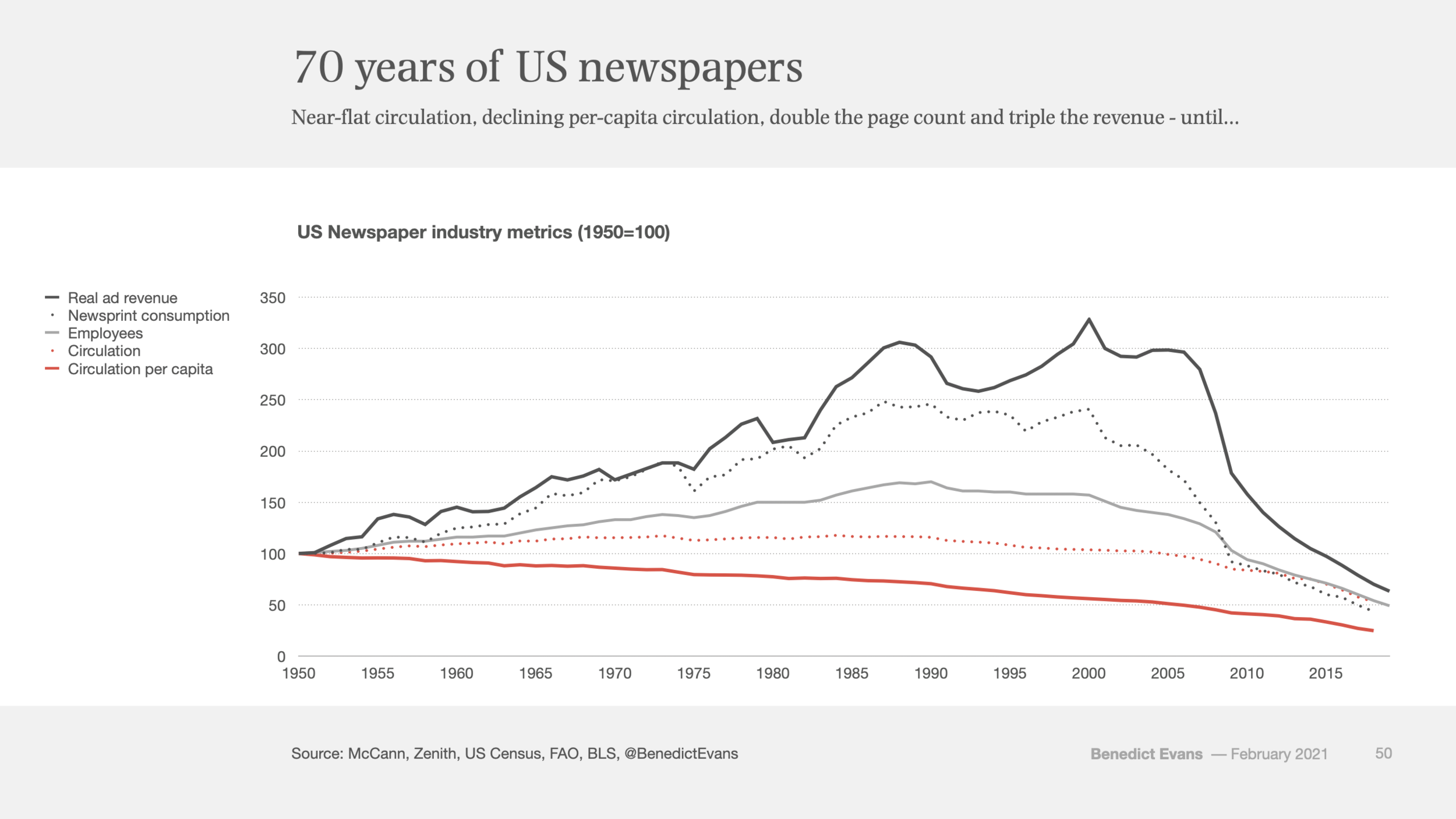
Mediapost referenced a 66 slide powerpoint by The World Association of Newspapers, titled Shapping the Future of the Newspaper.

Each bulleted list below is a slide from their presentation. I grouped some of them together to discuss how/where I think they relate.

Product Packaging

  • Broken information asymmetry: Information is easy to charge for as long as only a few have access to it. Today's information symmetry makes it increasingly difficult to charge for regular news/information.
  • Losing loyalty: Consumers are increasingly grazing media. If they don't like it, they immediately move on to greener pastures.
  • Increased individualism: As we see a strong trend of individualism in the society, mass media has the downside of offering the same message to everybody.
  • Design Hype: 50-70 percent of buying decisions are made in the store means more focus on design.

They realize they are no longer able to sell what they once sold and they are losing loyalty each day. Eventually they won't even be able to pay people to take what they once charged for.

They see that consumers want an individualized focused product. They realize that buying is largely a game of taste and packaging. And yet they do not realize that they are selling news, even if it is free. If packaging matters for products it also matters for information. Niche brands are a good thing. Niche bloggers get this. NTY got this when they bought About.com's blog network. Why doesn't the rest of the media get it? Probably because actually changing to give the market what it wants feels risky, and the only niche they appeal to is local.

Authenticity

  • The search for authenticy: In a world of fake stories the authentic and real becomes important.
  • PR and marketing merging: Editorial content has higher impact than ads, which turns PR into a sales activity.
  • Online transactions a new revenue source: As media goes online, transaction revenues for services become an increasingly important revenue stream.
  • New revenue models: Newspapers need new revenue models to keep being profitable. New technology offers endless options to reach the future customers (e.g. rich-media ads, virtual worlds, viral marketing, product placement, parasite distribution, maglogs)

They realize that the perception of authenticity is becoming more important, but their journalistic rules will keep their content too vanila to create it, and they are fine with promoting public relations and looking for new business models including affiliate marketing, product placement, and parasite distribution. Eek.

Complexity & Depth of Coverage

  • Simplified news: "News snacks" are becoming the norm as customer needs are oversaturated. Simplification means a newspaper can only afford to be good enough.
  • Analytic journalism: Newspapers will offer deeper analysis, opinions and explanations of the news in a larger context to help people navigate in an increasingly complex world.

I can't see news organizations being as efficient as blogs on the news snacks angle. And the in depth reporters are not going to be able to beat out subject matter experts unless they focus on a niche. If they focus on a niche and get a following then they don't need the news organization behind them. Google or Federated Media or some other ad network can do the selling for them.

Jan
12

Many SEO Book readers have seen Google Trends before, but did you know that Google Checkout also has a trends feature? Google has those touch-points, email data (now with a mailing list feature), AdWords bid data, conversion data, analytics data, and search referral data.

A recent research paper reviewed Google's internal Prediction Markets [PDF]. Three key quotes from that research...

Biases

Google's prediction markets are reasonably efficient, but did exhibit four specific biases: an overpricing of favorites, short aversion, optimism, and an underpricing of extreme outcomes. New employees and inexperienced traders appear to suffer more from these biases, and as market participants gained experience over the course of our sample period, the biases become less pronounced.

Arbitrage opportunities

As further evidence of short aversion, in order book snapshots collected each time an order was placed, we found 1,747 instances where the bid prices of the securities in a particular market added to more than 1, implying an arbitrage opportunity (from buying a bundle of securities for $1 and then selling the components). In contrast, we found only 495 instances where the ask prices added to less than 1 (implying an arbitrage opportunity of buying the components of a bundle for less than $1 and then exchanging the bundle). The median duration of these arbitrage opportunities was about 2 minutes.

The effect of proximity

An important caveat to our results is that they tell us about information flows about prediction market subjects, many of which are ancillary to employees' main job. this may explain why physical proximity matters so much more than work relationships - if prediction market topics are lower-priority matters so much more than work relationships - if prediction market topics are lower-priority subjects on which to exchange information, then information exchange may require the opportunity for low-opportunity-cost communication created by physical proximity. Of course, introspection suggests that genuinely creative ideas often arise from such low-opportunity-cost communication. Google's frequent office moves and emphasis on product innovation may provide an ideal testing ground in which to better understand the creative process.
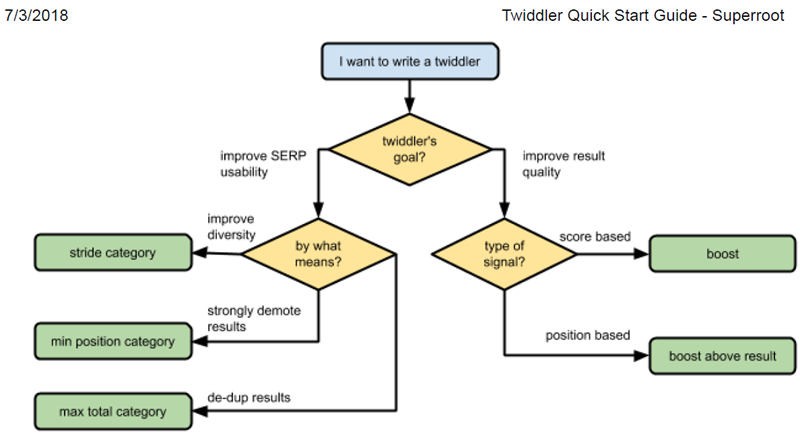
Google's new mailing lists wipes out the need for many boutique email services. They know what features they are going to roll out before anyone else does. And they have market moving data before others do. Google's AdSense is the fuel that drives web innovation. And they can decide at any time if a competing service is no longer viable to push it toward its demise.

Virgin real-time data + arbitrage identification algorithms + understanding investor flaws + algorithms to target mental flaws + direct and indirect market influence = $

As I see it, competitive forces between traditional publishers, market saturation from the bottom, and market influence from the likes of data hoarding companies like Google are going to quickly commoditize anything that is sold as information. To survive you need emotional touch-points that consumers share.

A friend of mine was a leading affiliate for an information product, selling over $300,000 worth of someone else's service. How did they reward him? They cloned his sales channel and killed his business model. Everything that is not a memory, brand, or experience is becoming a commodity. What prevents you or I from becoming a commodity?

You become what you surround yourself with, and when you push out you attract the right people or the wrong people. Threadwatch, for example, attracted the wrong people, or perhaps the wrong mood and tone from the right people. But you could also engineer the silicon valley in your industry if you work hard enough.

In the information age, where marketers

  • have granular controls
  • can remain anonymous
  • can market brands in minutes
  • leverage reverse billing fraud and computer destroying viruses
  • can distance themselves from the fraud via affiliate programs or pushing blame on algorithms

there are a lot of scams to be wary of. Especially when there is so much information being produced to where content is published in biased sound-byte format to whore for attention. The stakes for calling someone out are big, because you need attention to profit, and unfortunately, the structure of the web has changed:

Google and it's copy-tition were designed 10 years ago. But the web has changed significantly in the past decade. Google was built to index a web that no longer exists... a web where people still engaged in social linking behavior, for one thing.

But there are lots of experts who keep learning and change with the markets. Some people give because they like to learn and they are not driven by short term profits. Teach a man to fish, etc.

Each day we chose who we want to listen to, who we want to be like, who we want to like us, and why we want them to like us. Those relationships are the only thing that prevents us from becoming commodities.

"You're lucky in life if you have the right heroes. I advise all of you, to the extent that you can, pick out a few heroes. There's nothing like the right ones." - Warren Buffet

My web heroes thusfar are Tim Berners-Lee and Seth Godin. Who are yours?

Jan
02

A New Google Filter is Born

In early December some astute webmasters noticed that some of their longterm (in some cases many years) #1 or #2 ranking pages in Google now rank at #6. Just like with the Google -30 and the Google -950 penalties, some people will maintain this is fiction, but too many smart people experienced the same thing at the same time for it to be such.

Background Information

Tedster started a WMW thread on the topic on December 26th. From Tedster's post, some of the sites that were hit:

  1. Well established site with a long history.
  2. Long time good rankings for a big search term - usually #1
  3. Other searches that returned the same url at #1 may also be sent to #6, but not all of them
  4. Some reports of a #2 result going to #6.

My Site That Got Hit

My site which saw a ranking dive on December 18th had the homepage hit, and interior pages hit for some (but not all) related phrases. Here are some noteworthy conditions with my site that was hit:

  • The site was entirely ranked on SEO. There is no ad budget outside of PPC ads or link buying, and no brand recognition outside of the search results. Outside of one linkbait there is nothing remarkable about the site.
  • The homepage did not get any new quality links in over a year.
  • Much of the link building was done years ago when I was far spammier and far more aggressive with anchor text than I would be today, though I did use some semantic variation to pick up rankings for many different keyword permutations.
  • The internal pages still rank #1 for some semi-related longer queries, while they are also filtered and ranking #6 for some more obviously connected shorter search queries.
  • The site continues to buy PPC ads and gets decent conversion rates for the keywords that were hit, and gets great conversion rates for more focused related terms, some of which the site was hit for and some of which the site still ranks great for. This conversion data is being sent to Google via the AdWords conversion tracker.
  • This affected alternate permutations of acronyms (letters strung together or pulled apart).
  • For my site this affects rankings on alternate versions of words (ie: single vs plural). For at least one person on WMW they did not see it affect both single and plural versions of their keywords.
  • This affects words if mixed into a different order.
  • This affects many longer search query containing the core words or closely related words.
  • This did not affect obvious domain name or brand related queries, even if the brand contained one of the words overlapping with the penalized set. If a filtered word outside of the domain name / brand name is appended to the query then the rankings are killed, and the site is stuck at #6.

Usage Data or Improved Phrase Relationship Detection of Anchor Text?

Why I do Not Think it is Usage Data

Based on feedback in the WMW thread it is hard to isolate this to any one variable with certainty. Two possibilities that have been thrown out are rolling more usage data into the search results or a better understanding of word and phrase relationships. It is easy to think of usage data as a possibility given my site's lack of marketing and lack of integration into the organic web, but that would not explain why some pages and queries were hit while some similar pages and queries still rank, with Google getting strong conversion data via AdWords on some of these pages. Also, for that homepage I wrote an aggressive page title and meta description that draws in many clicks, and the landing page is exceptionally relevant for the query.

Why I Think it is Phrase Relationships

I think this issue is likely tied to a stagnant link profile with a too tightly aligned anchor text profile, with the anchor text being overly-optimized when compared against competing sites.

The fact that some related queries were hit, but not all, makes me think that rather than being about usage data this is about word and phrase relationship improvements. I think if Google got better at understanding word relationships, many of the pages that once fit the criteria to rank may now have anchor text that is too focused and too well aligned with the target keywords, especially if they compare your anchor text to the anchor text of other sites competing for the same phrases. Once possible manipulation is identified via artificial anchor text your rankings across the site can be suppressed for a basket of semantically related terms, as noted in some of Google's phrase based indexing patents.

Matt Cutts Does Not Know What Happened

This filter was also called the minus 5 penalty, but many of the sites that were hit still rank at #6 even if they were ranking #2 or #3 before they were hit. When Barry posted about this Matt Cutts said "Hmm. I'm not aware of anything that would exhibit that sort of behavior," but some past SEO issues, like the famed Google sandbox have been accidentally introduced as a side effect of Google upgrades:

What's a sandbox, Matt?

"Some people have asked, "does this apply to newer sites?" Essentially, the way to think about it is, around 2003 Google switched to a new method of updating its index. Before that we had monthly Google dances. So as a result, new data is always being folded into the index. It's not like there was one pivotal moment when anyone can say, "Hah! This is the change!" In fact, even at different data centers we have different binaries, different algorithms, different types of data always being tested.

"I think a lot of what's perceived as the sandbox is artifacts where, in our indexing, some data may take longer to be computed than other data."

Great Comments About the Filter

3 great posts from the WMW thread:

Your Feedback Needed

With my sample set of one site my current hypothesis might be out to lunch. If you have any sites that you feel were hit and want to share them for helping everyone figure out what is going on please do so in the comments below. If you have any ideas or feedback on what happened please leave a comment with that too.

Dec
16

With the announcement of Knol, Google displayed their desire to become a publisher. Why? To make free information more accessible. It doesn't hurt that publishers dominate other industries, like music - where in some cases giving artists nothing, while some artist get less than nothing, even if they made millions in sales.

Danny Sullivan had some reservations on Knol, as does Rich Skrenta, and just about every other successful results oriented independent web author.

While claiming Google will not make any editorial judgements of quality, and Google will treat Knols like any other web pages, Google's Udi Manber had this to say:

A knol on a particular topic is meant to be the first thing someone who searches for this topic for the first time will want to read. The goal is for knols to cover all topics, from scientific concepts, to medical information, from geographical and historical, to entertainment, from product information, to how-to-fix-it instructions. Google will not serve as an editor in any way, and will not bless any content.

They desire it to be a starting point for searchers and yet they will not promote it?

Think back to the YouTube purchase. After Google bought the site, did they start blessing / featuring any YouTube content? Yes they did. Google's Uinversal Search integrated YouTube so tightly in their search results that now people add YouTube to the search query for many music searches . Don't believe me that they shifted user behavior? Try using Google Suggest for music searches and see where YouTube shows up.

Manber wrote not to worry about spam, as Google has that issue covered:

Our job in Search Quality will be to rank the knols appropriately when they appear in Google search results. We are quite experienced with ranking web pages, and we feel confident that we will be up to the challenge. We are very excited by the potential to substantially increase the dissemination of knowledge.

Sure they will filter out some of the garbage people submit, but the good stuff will rank better than it should. I am not a betting man, but if I were I would bet that Knols get ranked right at the top, next to Youtube. As John Andrews describes it:

As TrustRank (the Google version, not the Yahoo! version) takes hold as the #1 or #2 ranking factor for SEO, this Knol thing steps in and bingo… who could be more trusted than Google itself?

Wikipedia has amazing momentum in Google, and is poised to rank for everything. How will Google compete?

How can Google come late to the game, offer no pay, desire to throw their ads on it right out of the gate, and expect to win marketshare UNLESS they rank this content better than it deserves to rank on merit? Put another way, what person who gets paid to create content is going to prefer putting it on Google Knol for free UNLESS Google gives Knol preferential treatment? If you are producing content out of passion with no profit motive, why would you put it on Google instead of your own server? If you desire peer review with your name attached to it why not publish it on YourName.com?

Offline media has always been biased and aggressively consolidated, it looks like the web is going to suffer the same fate, but worse, unless you are a Google stakeholder. Or, if Google gets too aggressive with this cross integration maybe they will hurt their relevancy enough that people search elsewhere.

Dec
07

In the past any large company could use subdomains as an effective reputation management strategy. As eBay and others have aggressively used subdomains to dominate branded AND unbranded search results, and Google has improved their sitelinks technology, any relevancy gain by treating subdomains as a separate site has gone away. Google is going to start treating subdomains like subfolders, and limit the number of results from any site to two.

There is still an upside to using subdomains because they allow you to feature standout content, but that upside relates to how marketable the content on that subdomain is, whereas in the past using lots of subdomains allowed eBay to get 20 of the top 30 listings for some queries, even if the subdomain was recycled garbage.

This move adds value to regionalizing sites and creating niche brands (like MobileCrunch), since currently I believe ebay.ca and ebay.com will be seen as two separate sites. If sites are too aggressive with regionalization or creating niche brands and start double dipping that way then Google might eventually look to devalue that move as well, although that will be more of a challenge because it would create a lot of collateral damage.

Official announcement by Matt Cutts at Pubcon, reported first by Barry.

Nov
27

Post by Giovanna Wall

I really like Google's Gmail program. It's truly my favorite email service. They also do a great job scanning through my emails for relevant keywords and phrases that they match with their advertisers. However, recently they have fouled and have gone out of bounds. In my recent emails to friends and family, I've used the terms "wife", "husband" and "happily married" a lot referring to my recent marriage.

This was Google's response:

google promtes infidelity

Perhaps I'm a little sensitive or maybe it's because I was raised as a conservative Catholic. But regardless of anyone's background, why would Google, with their "Do No Evil" policy promote cheating and infidelity? It's also ironic that the Google founders recently got married (I think one will wed next month).

It is an issue of money vs. morality when exposing disturbing ads to married people for ad revenue.

Google, already has a near infinite number of data points to compute relevancy for the active parts of the web, and is looking to gather even more user data information. The WSJ has background on the story:

Google is preparing a service that would let users store on its computers essentially all of the files they might keep on their personal-computer hard drives -- such as word-processing documents, digital music, video clips and images, say people familiar with the matter. The service could let users access their files via the Internet from different computers and mobile devices when they sign on with a password, and share them online with friends.

They also mentioned the C word:

Google will likely have to address copyright issues. Allowing consumers to share different types of files such as music with other users could trigger the sort of copyright complaints the company already faces over videos on its YouTube video sharing site. One person familiar with the matter says Google is discussing with copyright holders how to approach the issue and has some preliminary solutions.

This is going to move Google up the value system by

  • giving them a unique data source

  • giving them unique relevancy signals
  • keeping users locked into their services and using their services longer
  • shift power from copyright holders to Google
  • eventually allow Google to sell content (if they want to - the Google Video trial did not work too well)

But there will also be a big upside, especially to marketers and content creators who are willing to give away high value content to gain mindshare and marketshare. By creating content that people would want to store and share on Google, you get cheap or free exposure for your business interests.

As DaveN said, Google eventually has to move away from links because links are too polluted. What better relevancy signals can they come up with than attention data and how often people cite and share data ON THEIR NETWORK? Feedburner, Google Reader, iGoogle, Gmail, and Youtube are already part of the Google network. Soon your hard drive will be too.

Nov
13

If...

  • people would not notice it when Google removes your site from the search results

  • Google can clone your business model without paying writers to produce content or carrying physical inventory

... then your site is spam. Maybe not by today's standards, but eventually.

As the web evolves, a once whitelisted site can become a site that is easy to penalize. Evolve with the web, or grow irrelevant by the day.

This could sound like a scaremongering post, or it could be taken as a sign of the importance of connecting with people on an emotional level, and offering an experience worth sharing.

Oct
31

If your Google AdWords quality score is too low, Google will allow you to compete in the auction with reasonable ad pricing ONLY if you give them your conversion data:

The arguement from my representative was that your pages are terrible so if we can’t see how well you convert our users then we will need you to pay $10.00 per click to make up for your low QS (my average keyword price was $2.75 at the time). That of course would have put me out of business.

Once I caved and allowed them to snoop on my conversions they allowed me to keep buying at or near my original keyword price.

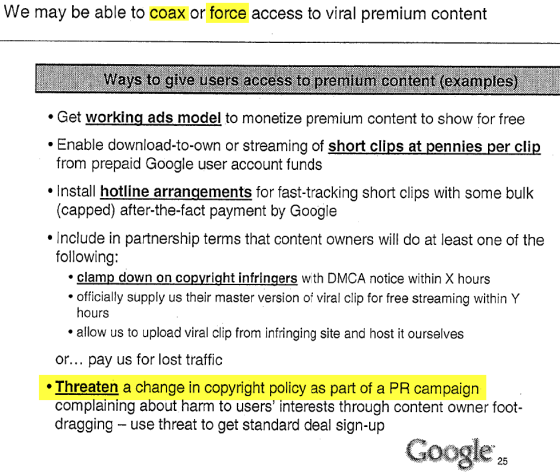
If your copyright content is being uploaded to YouTube, Google will protect you if you upload your copyright content to Google:

I see a monetization in the works.

a) All of the big companies will make the effort to supply Youtube with good qualities of their videos. Movies, Shows etc.
b) YouTube gathers all that stuff, and builds the largest database of top quality videos.
c) Youtube offers the media companies to enter into a partnership. “Hey guys, you already have the stuff uploaded…why not sell the premium content to our millions of users?

If people are scraping and stealing your content Google will eventually allow you to rank for your own work if you sign up with Google Webmaster Central and register your copyright work.

After all your sites are registered with Google, how easy will it be for them to force compliance on smaller webmasters? Given the indiscriminate attitude exhibited when Google recently hand edited PageRank scores, it seems there is good reason to not register with the borg.

Oct
28


Tips on How to Use Google Indexing Date Filters

  • The Google advanced search page allows you to search for pages that were recently indexed, letting you filter through days, weeks, months, and years. Here are pages from SeoBook.com indexed in the last week.

  • In the URL they place as_qdr=w as_qdr=d (day) as_qdr=w (week) as_qdr=m (month) as_qdr=y (year). You can also search for multiples of these units, like search for pages indexed in the last 2 weeks by placing as_qdr=w2 in the URL string.
  • If you change your content management system or add new sections to your site you can see how quickly they are getting indexed, and look for any duplicate content issues as the new pages are getting indexed by looking for pages indexed under multiple URLs.
  • If you have never checked your site for duplicate content issues, but recently published content, that might also show any content duplication issues or Google indexed pages that you do not want in Google's index.
  • In addition to using date based filters to find how well your site is getting indexed, you can search to see who is mentioning an idea with a footprint, or use date based filters for doing link research.
Oct
24

Search Engine Land recently listed a bunch of sites that had their PageRank scores manually edited for selling links. Of course, if you are the publisher of one of these sites, you don't care about an algorithm relevancy score so meaningless that it is edited by hand. You care about traffic.

Rankings Never Changed

SERoundtable was on the list of sites which saw their toolbar PageRank scores reduced, but I just looked at some of the terms they were ranking for, and they are still right at or near the top of the results for everything they were ranking for, even the competitive terms.

Traffic Matters, PageRank Does Not

Watch the Compete.com traffic stats for the sites listed in that Search Engine Land post. Google even provides large sites like the NYT over 20% of their traffic, so if these sites were really penalized you will see a plunge in traffic. If you do not see a plunge in traffic across these sites then toolbar PageRank scores are proved irrelevant as a measure of quality and trust.

Since When Are Publishing Networks Bad?

Many network blogs had their PageRank scores dropped too. Again, you can simply check the traffic stats to see if there is any real impact, or if Google is just polluting their Toolbar PageRank scores.

Since Google is demoting PageRank's viability as a site's global authority score perhaps this is a time for Yahoo to bring back WebRank, or Ask to launch something like CommunityRank. The Google-webmaster relationship is fraying. This presents an opportunity for whoever wants to take it.

Publishing is About Networks

If Google is penalizing blogs for being part of a network of sites, how long until they penalize IAC for owning 20 travel sites? Or Monster.com for owning 100 thin lead generation education sites? Or BankRate for owning white label sites with similar names? Networks have always been a part of publishing based business models.

It seems someone or something inside of Google is melting down. Choppy times ahead for webmasters worldwide.

Oct
17

SEL highlighted that Google is correcting domain spelling errors. Which works to block some typos, but in some instances is pushing traffic away from smaller domains toward more authoritative websites.

Good Job Google

Here is an example of the spell correction working right...

Lets say you want to go to my blog located at www.seobook.com/node, but misspelled node as nodd. When you search for www.seobook.com/nodd they offer the correct URL as a suggestion.

Bad Job Google

Now lets say that I misspell a filename. What if I typed www.seibook.com/bok (If you add a second o to the word book in the filename this URL exists). What does Google do? Even when I am not signed in, Google STILL recommends people go to SeoBook.com, to the URL www.seobook.com/blog instead of recommending they go to seibook.com/book/

In that last case correcting the URL and keeping the people on the same site only took changing 1 letter, but Google decided instead to change a letter in the domain name, and change 3 in the filename!

Why Not Fix This?

What about errors in the domain extension? If you type in ASP.nt (leaving out the e in net) Google does not correct that spelling error. If you type in ebay.cm (ebay.com leaving out the o) Google does not correct that error. Why launch a feature such as this without correcting the most common errors?

Oct
16

A friend of mine recently emailed me to ask if his site was penalized for selling links. The same email went on to say that he is ranking better than ever in Google, even for his core category single word query, but his toolbar PageRank score dropped by one.

Google Stats Are Wonky

Many of Google's webmaster stats are rarely updated and/or intentionally inaccurate. And many stats change on a whim, while reflecting no real change in the structure of the web.

PageRank is the Wonkiest Stat of Them All

Toolbar PageRank scores are only updated about once every three months. In between updates hundreds of millions or billions of web pages are added to Google's index. These new pages absorb PageRank and generally cause the PageRank of existing pages to be lowered. Pages that were a high PR 7 might become a low PR7, pages that were a low PR7 might become a high PR6, and so on. The one exception to this rule is that if your site's inbound link authority grows faster than the web does then your PageRank score goes up.

PageRank is recomputed in near real time and toolbar PageRank scores are perpetually outdated. If you are starting from a PR0 and get a few quality links then of course you should expect a PageRank greater than 0 on the next update, but even the fact that your pages are getting indexed means you have some share of PageRank even if the toolbar does not show anything. In some cases the toolbar not only shows outdated data, but sometimes it even sticks, showing you the PageRank score of another site or showing all pages as 0.

It is no coincidence that Google chose not to update toolbar PageRank scores in a great deal of time before spreading more propaganda against paid links, and then launched a partial data push (how often do they do that)? This way when they finally update PageRank and many pages have a slightly lower PageRank score many webmasters will wonder "was I penalized?"

Why the Hate for Paid Links?

As Michael Gray rightly points out:

If Google wins what’s going to happen is the market will go underground. You’re going to have to "know a guy" to get you links. For a lot of people that removes any options, leaving the only option being Google. Does anybody really believe that the PHD’s at the plex haven’t applied any "gaming theory" to this model and figured out this will make them even more profitable? (c’mon we’re googly we’d never do that) Once the advertisers are underground, market forces of scarcity will take effect, and prices will skyrocket. So even if you don’t believe in paid links, you should still get involved in the debate, if for no other reason than to keep the advertising market free and open instead of under the control of Google.

If making PageRank function requires hand editing isn't that an indication that PageRank is irrelevant? Why not change they relevancy algorithms rather than trying to scare people?

Deflecting Blowback

Danny Sullivan posted about Google's latest battle against paid links. I followed up on the absurdity of the situation, and in response to our posts Danny and I were both called liars. Which might seem like a fair assessment of the situation to a person new to search marketing.

Why would Google make an official webmaster announcement, but provide no quotes for the story and not publish it on any of their own websites? Probably because they know what they are doing is illegal, and want to be detached from the story to not look like overzealous dictators.

What Google Can't Cloak

The two things Google can't cloak are the visitors they are sending you and how much they charge you for a click. Sure their ad auctions have a hidden "quality" factor to them, but that is just an indication of how much they trust your ad account and your site. If Google is sending you more traffic and ranking your site better then you have nothing to worry about.

My friend's lower PageRank score was an anomaly. It was irrelevant, because at the core, his site is ranking better and Google is sending him more traffic. At the end of the day Google can put smoke an mirrors wherever they like, but if your search traffic trend is up you are not penalized.

Why Search Traffic Can Go Down Without a Penalty

  1. Competition: if the competition is out-marketing you then your site might slip.

  2. Seasonal traffic patterns: if you go out of a high demand season it makes sense that your traffic may drop even if rankings improve.
  3. Automated filters: In some cased individual pages might get automatically filtered for being too closely aligned with a particular term, but they can usually overcome that by loosening the focus of those pages and their inbound anchor text. That is why it is important for an SEO to track their statistics, to know where they are and how reliant they are on each phrase. In some cases I have seen sites which ranked for many additional new queries but got filtered for one of their highest traffic terms. The page focus and anchor text was loosened and the page came back ranking better than ever.
Oct
15

I just found another Google webmaster guideline worth sharing...

According to Matt Cutts, the FTC thinks you should clearly mark paid links. If you do clearly mark paid links Google editors will penalize you for buying / selling links, then they will pay an AdSense spammer to steal all your content. Don't worry though, as Google doesn't clearly mark their own ads.

Look at how closely timed the above posts were. Why would any webmaster mark their own sites to be penalized and stolen? Clear language is a wonderful thing.

Oct
08

Alan Greenspan was recently interviewed on the Daily Show.

Explaining his old job, he stated:

I have been dealing with these big mathematical models forecasting the economy, and I am looking at what is going on in the past few weeks and say, you know if I could figure out a way to determine weather or not people are more fearful, or changing to more euphoric, and I have a third way of figuring out which of the two things were working, I don't need any of this other stuff.

I could forecast the economy better than any way I know. The trouble is that we can't figure that out. Forecasting today is as good or bad as it was 50 years ago. The reason is human nature hasn't changed. We can't improve ourselves.

Economic Trends Are Caused by Emotions

The prices of commodities often change without any underlying change in value, just a change in perceived value. After all, what is money backed by and why did the dollar lose 25%+ of its value over the last few years? If it is supply and demand related, why did we need to sharply increase the supply of currency? Once a trends start heading in one direction, just the creation of the trend (or perception of the trend) causes a following.

Investments are based on risk to reward ratios, and if people are afraid they are less likely to take risks. People like what is familiar, but by the time something has no perceived risk there is little upside potential, and then eventually the bottom falls out of the market, like what happened with real estate recently.

Tracking Real Estate

Paul Kedrosky recently posted about real estate predicting broader market trends, the mortgage market meltdown destroying a town, and using Google trends to predict real estate markets.

Letting Google Share Other's Emotions With You

Google makes communication faster and cheaper, advertising more relevant and trackable, and audience aggregation more efficient. They also create a lot of cool tools that evolve the web which allow publishers to layer value over the top of them. Not only can you use Google to predict real estate trends, but you can use them to

Trends Are Increasingly Fast

There is already a college course on making Facebook applications. Facebook applications are less than a year old, and colleges are typically years behind the market.

With Google's mass storage of usage data, huge reach, analytics and conversion tracking code they can track the changes of sentiment and demand faster than anyone else can. They can buy out competitors before anyone else understands their full value.

Classifying Fear & Euphoria

Just like Google can classify queries as being informational or transactional in nature, how hard would it be for them to

  • track searches and classify them as pessimistic or optimistic?

  • track searches of people who visit Google Finance often (or any other finance site, given the Google Toolbar) and classify them as pessimistic or optimistic?
  • track changes in outlooks from people who are known thought leaders, have old trusted accounts, and/or have spent significantly through Google Checkout?
  • track search volume and link it to economic activity?
  • assign an economic value to each query based on ad value?

Right there Google is already a better economic predictor than anything the Fed could hope to be, but what happens if Google decides to also buy and sell securities?

How Google Can Influence Markets

Answers.com

A couple years ago Google switched their definitions link partnership from Dictionary.com to Answers.com. Earlier this year Answers.com announced they were buying the competing Dictionary.com, and a Google update caused Answers.com's traffic to plunge.


When Answers.com announced their Google traffic was cut their stock plunged, which indicates two things:

  • Answers.com has a weak business model

  • Google has leverage to make Answers.com do whatever Google wants

In spite of Answers traffic increasing and a recent stock market rally, their stock is still down quite a bit from its highs. Answers recently did gain a bit of value though, when they announced they renewed their Google ad syndication partnership.

Syndication = Spam?

In the same way that an algorithm adjustment can kill the profitability of a site, so can a new Google business partnership with a competitor, as newspapers are figuring out right now. If syndication is a large part of your business model look for that stream of revenue to dry up soon.

Flawed Self Analysis

We are bad at self analysis, but we tend to like / trust / believe what is familiar. If we let machines know us well enough they will find the holes in our personalities and egos that are easy to exploit for profit.

Personalized search helps highlight what is familiar, and makes us trust Google more by reinforcing our worldviews. Not only can Google bring back things you liked in the past, but they can recommend new stuff, guide your thoughts, and share ads as content.

Predicting the Future With 99%+ Accuracy

Not only can Google update algorithms or add features to stun competitors, but they also could easily see real trends first hand (like cuts in marketing budgets, search related product demand, or organic mentions) and trade securities or derivatives in near real time. They also have a pretty good idea of the types of sites their next filters are going to take out.

What more for predicting market trends if Google buys DoubleClick (a leading online ad server) and become a free international Internet service provider? Cory Doctorow recently covered how Google can go wrong, but until more people think along those lines Google is going to grow to be the single largest economic engine in the world, and the best predictor of micro and macro economic trends.

In a recent post about paid links, Danny Sullivan wrote about how Google's army of engineers are going to start hand editing PageRank scores if they think you are selling links, which is a move that wreaks of desperation.

Google is only decreasing the PageRank for a subset of the sites they actually know about. ...

Google stressed, by the way, that the current set of PageRank decreases is not assigned completely automatically; the majority of these decreases happened after a human review. That should help prevent false matches from happening so easily.

In contrast, if you're a smaller site not deemed as important to relevancy, a harsher punishment of a ranking penalty may be dealt out.

Introducing the New, Corporate Web

If they actually follow through with any of this then Google, which touts the value of PageRank, clearly no longer believes in its value. They already show stale data in their toolbar, and might as well scrap the whole thing and start fresh. Their mind control exercise is getting a bit obnoxious.

Now they are editing PageRank and relevancy scores. They don't edit based on quality of information but based on method of promotion. And if it is a corporation breaking Google's arbitrary shifting ruleset then Google simply decides not to edit, or only fakes that they care.

Google is Wikipedia, but Worse

With this news of more hand editing, Google also shows that they are biased against small webmasters are and actively trying to screw over small webmasters to increase their corporate profits.

Google is becoming much like the Wikipedia, where generalists wrongly assume topical knowledge greater than that of the real topical experts. In some cases Wikipedia is saved by talk pages and community participation that allow the experts to be heard. Google has no talk page though, which means that Google search results will become a dried out and dumbed down version of the web.

The Real Problem With Half Truths & Hand Editing

The response to every move is a counter move. So if they actually try to squash link buying then webmasters will look for indirect ways to purchase links. Google also offers tips on how to sculpt PageRank, but sculpt to much and suddenly the intent is changed, and you are banned.

Why leave such a thing up to a single Google engineer making a judgement call? If they want to increase the quality of the web they need to be more innovative in encouraging the creation of good content, not make people afraid to invest into creating content only to watch a Google engineer kill it.

Link bait is good when you are a large corporation or are syndicating Google spin, but if you are too successful at link bait they will ban your site for it. They did it to one of my sites and they even banned one of their own site.

If you are a small webmaster and get judged by Google don't expect compassion. They have no talk page, and they already paid an AdSense publisher to steal all your content. They don't need you.

How to Do Well in Google

If you are a webmaster assume that Google is lying to you and ignore them. If their view of the web and webmaster advice are reduced to half truths and lies then we can only hope something a bit more honest will come out of their downfall.

Oct
07

Frank Schilling and Shoemoney recently had two great posts about Google. When combined I think they paint a picture of Google that skips past the rhetoric and double talk. Frank said:

As a publisher, I've always viewed Google as a bit of a predator in this context.. taking publishers in, convincing them to serve Google ads, and then allowing those publishers to toil for Google, working sites into their algo to serve the beast, all for increasing revenues, finally to have Google's algorithm scrub you from the index if you become too successful at punching ad converting pages to the top.. Good publishers take on the role of sacrificial lamb to show the algo guys where the holes are and they get to ride the express elevator to the street as a reward.

Shoemoney's video about avoiding getting hit by Google stated that the key is just don't do things that make Google look stupid or undermine the perceived magic that occurs at Google.


My site that Matt Cutts hand removed from Google's search results got too much exposure and Matt killed it not because the site was spammy, but because it was mine and it was getting too much mainstream traction and exposure. My marketing was too appealing, aggressive, and effective. In another year that site would have been untouchable, and that thought made Matt Cutts feel uncomfortable.

The Changing Desires of the Magical Fictitious Average User

How Relevancy is Defined

With Google, the whole concept of relevancy is a shifting mind control game. As long as you do not get the wrong types of exposure you can make a lot of money without them doing anything about it. Go too mainstream with something a little sketchy or something with the scent of smart SEO to it and they will try to kill you out of resentment, jealousy, and to try to protect the lies that their business model are based on.

Sep
27

Google tries to scare you away from renting links, but their paid link detection algorithms are at best laughable. Which is why Matt Cutts puts so much effort into trying to scare you about bought links.

_________.com has repetitive and near machine generated sounding content, like

Loan calculators are made of different calculation types. In fact, for calculating the same type of loans, a large number of different calculator programs exist that will help you think about your loan and analyze your loans from different angles.

and that QUALITY content ranks in Google for thousands of search phrases. It looks like someone rented hundreds of thousands of links, with sitewide links on _______ and many other high authority sites.

I thought about making this post, but then decided it is bad karma to out the site I menioned, so I edited out the identifying details. You understand the lack of validity of Google's paid links scaremongering techniques by reading Jim Boykin's great post about quality sites never getting penalized for selling links and by looking at some of the places sketchy links are popping up.

If Google is deceptive, misleading, and self serving with the data they share (which they are) why should we expect anything different with their general advice for webmasters?

Sep
26

Having searched hundreds of times on google.ca and google.com.ph I see some subtle differences in how the top ranked global / US results are mixed into international results.

  • High authority sites do not tend to rank as well internationally as they do in the US. Domain trust counts less. As an example, Matt Cutts recently posted about his favorite omron pedometer. He is right near the top on Google.com, but it a bit lower internationally.
  • Low authority sites that were near the top of the global search results tend to rank a bit better internationally. My mom has a lower link authority weight loss blog and has also posted about her favorite omron pedometer, and ranks better internationally than she does in the US results.
  • Exact match domains ("mykeyword.com" matches [mykeyword] and [my keyword]) seem to get a bit more love in international search results than in the US results.
  • The domain love is even moreso if it is a local domain extension.
  • Trusted local sites are aggressively mixed into the search results, especially for queries that would hint a local preference. In one local market I saw a local thin affiliate site ranking in the top 3 for a core mortgage term, and the site was only PageRank 2.
Sep
20

Many people wonder why Google hand editing seems random or incomplete, and why some of the best channels get edited while worse stuff is left untouched. Here are some of the reasons Google does a poor job equitably policing the web:

  • The web it too large to police and engineer time is expensive.

  • Policing certain segments produces unwanted blowback. How often do large corporations or influential bloggers get policed? (It is rare, and when it happens, it is sold as a side effect of feature for users.)
  • When issues become popular they get prioritized. Many times Google won't react unless they feel they are forced to. Sometimes they will lie and say they care, and then do nothing. Back in April I highlighted the Netscape search results in Google. Matt Cutts thanked me, but guess what...those Netscape lolita preteen search result pages are STILL ranking in Google, along with a bunch of other search results.
  • If they edit in an incomplete or random fashion they evoke fear
  • It is easier to control people through fear than to create a perfect algorithm
  • They have no need to hand edit the worst offenders. If they are competent programmers the algorithms should take care of those sites. They sometimes edit a leading sites in a field to send a signal. They may throw in a group of other sites if they need to create cover, but their goal is to send a message and alter behavior.

To appreciate how hard it is to police the web read Eli's recent post on how to create an SEO empire. How can Google compete with that?

Sep
08

As a public facing SEO who has many thousands of customers at the beginning of the SEO learning cycle many of my most common questions I get asked come as a result of Google half truths. I thought it would be worthwhile to write a few of these down to save myself time answering the same emails each day.

It may be inappropriate to label Google as a liar for doing the following. A more appropriate and more fair label would be an intentionally deceitful organization.

Want Link Data? Go Elsewhere

Google offers a link: function which shows a sampling of inbound links to a website. A few years back they had a much smaller allotment of machines for handling link queries, so they used to show mostly a sample of the most authoritative inbound links to a site. Then they started showing mostly lower quality inbound links, while filtering out most of the better ones. But they explain that they doubled the size of the sample, and showed more links to smaller mom and pop websites that lacked high authority inbound links, so it was a good feature for users.

When you hear some people at Google talk about this they talk about it, they tend to talk about "from a historical perspective" and explain how they used to be limited, but they still use virtually ALL link data in calculating result relevancy. Given that last statement then the "from a historical perspective" is self serving positioning about not providing a useful feature because they want to make SEO harder.

Want further proof? If you sign up for Google Webmaster Central and verify your site they will show you all your linkage data. I don't trust Google Webmaster Central because they profile SEOs and hand edit the search results. Signing up is probably an unwise decision.

Google does offer us a free tool to estimate link authority though: PageRank.

Google PageRank

For as hyped as Google PageRank is, Google sure goes out of their way to ensure the values are inaccurate. They only update the Google Toolbar display about once every three months. Even then, when they update it that is not fresh for that day...those stats might be from a week, two weeks, or a month ago. Also sometimes the toolbar is buggy and shows the wrong PageRank values, where viewing the same page multiple times in a row will yield different PageRank values each time.

The only reasons they still place PageRank on the toolbar is because they get free marketing out of it, and it helps them collect more usage data. Years ago Apostolos Gerasoulis, the search scientist behind Teoma, said Google doesn't rely heavily on PageRank to score relevancy. Gigablast's Matt Wells said similar:

PageRank is just a silly idea in practice, but it is beautiful mathematically. You start off with a simple idea, such as the quality of a page is the sum of the quality of the pages that link to it, times a scalar. This sets you up with finding the eigen vectors of a huge sparse matrix. And because it is so much work, Google appears not to be updating its PageRank values that much.

Any webmaster with an old URL that ranks exceptionally well with almost no PageRank knows that PageRank didn't drive them to outrank people with 10 times their link equity.

PageRank is important for one aspect of information retrieval though: crawl depth. If you have a lot of PageRank then you will get crawled deeply and more frequently. If not, then they will crawl shallow, and perhaps place many of your pages in the supplemental results.

Are My Pages in Google's Supplemental Results?

Want to know what pages from your site are rarely crawled, cashed, or updated? Want to know where your duplicate content issues exist? Want to know what pages from your site we don' t trust links from or trust enough to rank well for many search results? Look at the supplemental results. Oops, they took that label out of the results, but here is a more complicated search you can use to find your supplemental results, at least until it gets disabled. Jim Boykin and Danny Sullivan also offered tips on finding supplemental pages.

Right now a Google search for Google supplemental results provides low quality search results because most of the top results (including my #1 ranking at the moment) do not discuss how to find supplemental results. Unfortunately if you only heard of the supplemental results AFTER they took the label out you likely will have no way of telling if any of your pages are supplemental, which is good for seasoned marketers but bad for mom and pop. If I don't edit my post then people will think I am a liar or an idiot because Google is deceptive.

If they truly wanted to make the world's information universally accessible and useful why would they remove this label? At the very least, if webmasters paid attention to this label they would structure their sites better and help Google save bandwidth by not having Google crawl as many low quality pages.

The easiest way to get out of the supplemental results is to clean up site structure issues and build more high quality link authority. Cleaning up site structure issues is much harder now that it is harder to see what is in the supplemental results, and each day it gets harder to build honest links due to Google spreading FUD about links...

Organic Linking Patterns

With all the FUD Google spreads about paid links they make many webmasters afraid to link out to other sites, which reduces the quality of information available on those sites, and prevents some quality sites from ranking where they should. Nofollow is not about being organic. In fact, it was a tool created to directly manipulate the public's perception of linking. To appreciate how out of hand it is, consider the following situation.

A friend's business got covered by a mainstream media site. They wrote an entire article about his business but did not link to him because they felt linking would have made the article too promotional. Imagine being the topic of an article and the source of content for other sites without attribution for it. That is the side effect of Google's bought links FUD.

Instead of promoting quality content current relevancy algorithms support information pollution. Google goes out and scares you about keeping your link profile natural while letting proxies hack your rankings. And they have known about this problem for years, just like 302 redirect.

Since Google's link guidelines are self-serving and out of nature with the realities of the web, what happens if I get aggressive with link building and eventually get busted for doing the same things my competitors are getting away with doing?

Lose All Your Link Equity (and Your Content and Your Brand, Too!)

Your Site Goes to Jail, You DO NOT Collect $200

Many webmasters have suffer the fate of hand editing recently. The site of mine that they hand edited had about 95% of its links cleanly built by me, with the other 5% coming before I bought the site. Because it was my site they wiped away ALL of its link equity via a hand edit (simply because I bought a site that had some link equity). What makes hand edits worse is when they follow up a hand edit by paying an AdSense spammer to steal all of your content and then rank his site where you ranked prior to the hand edit.

When sites are hand penalized, they typically do not even rank for their own brand related keywords unless the webmaster buys their own brand name in Google AdWords, which means Google is even willing to sacrifice their relevancy to punish webmasters who fall outside of Google's evershifting rule-set. Unfortunately that punishment is doled out in an uneven fashion. Large corporations can own 10 first page rankings, or use 100 subdomains, but if you do the same with a smaller website expect a swift hand edit. Even programmers who support Google's API get a hand edit from time to time.

Rank Checkers & Google API Keys

Were you one of the early programmers to build a tool that use the SOAP version of Google's API? Sorry, but they no longer offer Google Search API keys. Their (formerly useful) API has came back as an academic only project which they can use to recruit college students studying information retrieval.

Anyone who built a tool based on Google's old API now has to explain to people why their tools broke. Google wanted the tools to break so they could replace the useful API with something worse. In fact, Google is pulling back more data in other spots, even when third parties create tools to add features that should have been core to Google's products. Let's take a look at AdSense.

Google AdSense Stats

Google does not tell smaller webmasters what their payout percentage is, what keywords triggered the ads, or what ads get clicked on. Some third party tools were created to help track the ads and keywords, but Google disabled those.

If you think about this, Google is directly undermining the profitability of their partners by hoarding data. If I know what sections of my site perform well then it is easier for me to create high value content in those areas. The more profitable my site is the more money I have to reinvest into building more content and higher quality content.

It doesn't make sense that they ban high quality content just because it is owned by an SEO, then fund the growing dirty field of cybersquatting. I invested nearly $100,000 into building an AdSense site, until it got hand edited and I realized how AdSense really works, cannibalizing the value of content and making your site too dependant on Google as a traffic source.

Summary

If Google was honestly interested in creating a maximally efficient marketplace they wouldn't disable third party tools, hold back information, and keep changing their systems to confuse webmasters. They wouldn't hand edit real sites that thousands of webmasters vote for. And they would not be spreading FUD amongst the market. They would simply find a way to monetize the markets, push out inefficiencies, and grow additional revenue streams.

In some cases, if you register your site with Google they may give you a few more crumbs of info, but unless you have scale they want you to fail. What they really want, like any for profit power hungry authoritative system, is control of your attention and information, so they can ensure as many dollars as possible flow through them. Look no further than their position on the health care industry to see their true vision for making information universally accessible and useful. Ads are a type of information:

We can place text ads, video ads, and rich media ads in paid search results or in relevant websites within our ever-expanding content network. Whatever the problem, Google can act as a platform for educating the public and promoting your message. We help you connect your company’s assets while helping users find the information they seek.

Looking Forward

In a few months Google will launch Claim Your Content.com, which is yet another way for them to get you to register your work with them so they can more easily profile webmasters and hand edit SEO owned sites. Allegedly it will make help prevent content theft, but once it comes out, expect duplicate content filters to stagnate or get worse unless you sign up for their service. Dirty? Yes, but so is deceiving people to increase corporate profits. The above 7 examples are just a small set of the whole.