We've discussed in the past about how our brand is "everything we do".
As an SEO provider, business owner, or service provider, your brand is more than your logo, website and advertising. It's also what you say, what you do, how you act, and how you treat people.
Today, let's look at the benefits of using fairness as a way to add value to your brand.
The Importance Of Reciprocation
We all know about "win-win" deals.
The best deals leave enough on both sides of the deal so both parties can prosper. A deal where one party takes all and the other party gets very little isn't desirable for many reasons, one being it just isn't fair.
Rational business theory often overlooks this point. If a client "wins" by screwing you down to the very last cent, and concludes the deal, then supposedly everything should now proceed through to delivery and conclusion. But humans are emotional. The aggrieved SEO is hardly going to act like a true partner. More likely, they'll look to reciprocate the treatment they've received.
What is the cost of negative reciprocation?
We are social animals. If someone treats us well, and is fair, we feel we should treat them likewise. If someone screws us over - well - they can't expect us to give 110%. What they can likely expect is negative reciprocation, which can manifest itself in many different ways. It's not quite "revenge", but such ill-feeling can end up costing a lot more than any savings the customer made on the deal.
The same is true of your customers.
The Process Of Fairness
It is important that your dealings with customers be:
Fair
Transparent
Honest
If you commit to being fair, and be seen to be fair, you can still get more out of the deal than the other party - win-win deals don't need to be, and most often aren't, 50/50 - but the other party is unlikely to resent you for it if they feel the process by which the deal was arrived at was a fair one. Psychological studies have shown people often care more about how a decision was arrived at, rather than what the final decision actually was.
Fairness of the process colors people's perception of the outcome.
What Does It Mean To "Be Fair"?
Be seen to be fair in the eyes of the person you're dealing with. This can be difficult to make concrete, but if you don't have a genuine intention to be be fair, you almost certainly won't achieve it.
In practice, it means not making arbitrary decisions, listening to all parties and considering their view. It also means making making the rules transparent. A game where only one party knows the rules breeds resentment.
An outcome should be reached where each party can see each step taken, and why it was taken. People may not even like the outcome, but they are much less likely to reciprocate in a negative manner if they feel they have been treated fairly, in a fair process. A sense of fairness runs very deep in our psyche- it's tied up with ego, self-respect, status and recognition.
This attitude of fairness can run across all aspects of business, not just in deal making and sales. It also applies to customer service. If a customer highlights a problem, how do you react? Do you see it as an opportunity to build brand? Do you seek an outcome that will advantage only you, or do you aim to arrive at a fair outcome for all? I'd wager aiming for the fair outcome is the better long-term bet.
But what happens if a customer is being unfair to you?
Of course, this can and does happen. Some people will take advantage. Again, seek to make the process fair and transparent, even though they might not like the outcome you seek.
Hard But Fair
Yes, yes - this all sounds very nice, but it's a shark-fest out there! That may be so, but you can still play hard whilst also using fair process. You've heard the phrase "hard but fair". The fairness makes the "hardness" acceptable. "Hard and unfair" tends to result in lawyers. In this respect, a fair process itself can add value, rather than destroying it by incurring extra costs.
Brand And Fairness
Proctor & Gamble have an internal set of "Ten Commandments" and the very first commandment is "Do The Right Thing". Their employees must demonstrate" rectitude, integrity and fairness". Sure, all companies say that, but the companies that actually do it build stronger on-going relationships, and strong brands. Do you return to companies who you felt treat you unfairly?
Your brand incorporates relationships with all those who you deal with, and may of those people you'll deal with over and over again. Great brands aren't just about the outcomes they achieve. They are also about how the process by which they achieve those outcomes, and if that process adds emotional value, as opposed to destroying it - by being seen to be fair - then your brand becomes stronger.
I was chatting with a friend today about one of our projects and he mentioned how he stopped liking a few other internet marketers recently due to their negativity. Him stating that gave me a bit of internal reflection, and I think it comes down to a few things...
When people get from a certain level of success to say 5x or 10x, many may feel guilty about making the money and become negative about others to justify their own behaviors (after all, in *many* cases, when you grow income beyond a certain level it can require either moral flexibility and/or the ability to sharply change your internal values).
Some people forget where they came from and become arrogant.
Market forces force you to value your time. If you don't the market will set it at $0. And so (the people they used to help for free) they now tell to screw off simply because their time is valued more and they keep having less of it to spread around to a larger pool of people. This is also a learned behavior because the neediest people are often the laziest, rudest, and least appreciative. If a person is not willing to pay you for your time they simply DO NOT VALUE IT.
That third point is worth thinking through from an economic perspective. The law of marginal utility states that the first x is worth more than the second x (be it Dollars, hours of free time, video games, pieces of food, etc). But if you are becoming abundant in one resource (cash) and scarce in another (time) the impact on the required rate of conversion is multiplied...not only is your time worth more, but even at a higher price you still have less of it to spread around.
I look to pass off some consulting projects I would have loved to have done years ago just because I have no time. (Or perhaps I lack the creativity to be able to derive sufficient yield from those projects). And, at the same time, in spite of having plenty of money to hire them I have been rejected as a potential customer. Rejection sucks, but trying to please everyone is a sure path to failure.
What is Popularity?
In Clay Shirky's Here Comes Everybody he described popularity as basically being an imbalance between the attention you garner and the attention you can give the market. Sure you can reach out to a few dozen people. A few hundred? Maybe. Thousands? Not a chance.
You Can Never Give Enough
In this interview Bob Dylan talks about how he can never do enough, and how the media distorts a lot of what he does in a negative frame:
On a micro-level, consider how a person who suddenly became popular may have been happy (and excited) to do an interview or 2 felt after about a dozen AOL robo-reporters contacted them in a single day. Suddenly it doesn't feel as exclusive, important, or exciting. Wait a week or 2 and see that 90% of the interviews they did never got published and it feels at best wasteful.
And people who are popular (even in small niches) have people try to give them false complements and try to goad them into doing free work. That is part of the reason I love our current business model. I can respond with "Great question. Feel free to ask that in the member forums!" It not so subtly tells them that if they value my time they are welcome to it, and if not then they are not.
Does the above always work out perfectly? Not always. I have been told I was rude from people who had questions about things with our site (and were alleged potential customers) but most of them were from people who were too lazy to read the publicly accessible information BEFORE trying to dip into my time. If someone needs a lot of your time to become a customer they are not likely to become a customer. And if you sell consulting then they are likely going to waste a lot of your time if/when they actually become a customer (as they will be the type of person who reads nothing, ignores responses, and has about 40 questions in their first day).
*(Perhaps the only exception to that is large slow moving corporations which need a sign off from many people. But even then I never do RFPs just because it means you are being shopped and they are not serious about hiring you).
Just a Quick Question ... (or 10)
You have to filter or else you are valuing your time at nothing. This is especially true if you run a small company and have heavy load on yourself day in and day out.
The big issue with email (especially with non-customers) is that you can never give enough. Even if you give your time away for nothing many of them try to use the "just one more quick question" approach. A recent freeloader asked "what do you recommend for an internet business?" and my response was "sell your time and expertise to people who value it enough to pay for it, and forget the rest of em."
And he got the message :D
But while mentioning the above about the perceived negativity of some other internet marketers to a friend, I wrote "the thing is, if we didn't chat and you didn't see me helping on the forums and just read my blog, sometimes I would sound quite negative right?"
A person who read the last dozen blog posts but didn't know the background context on Mahalo would certainly think that way. But those posts were made out of love for the industry. You just need to share the love to understand it. ;)
Deciding what goes where bit is also where selling information becomes tricky. There are tips worth 3, 4, 5, or even 6 figures (based on results) that have been shared in our community. And I have also shared many such tips on the blog here too. But it is tricky to figure out what to post where. You want to post enough publicly to maintain relevancy and audience and awareness, but you want to keep a lot of your best tips private so the people who are paying you get far more than their money's worth. That is the only way to keep subscribers happy. And it is far more efficient to keep current subscribers happy than it is to churn through a ton of members & hunt for more.
It is amazingly hard to have enough time to keep learning, come up with original stuff, and keep adding value in a saturated marketplace for a few months straight. And it is infinitely harder to do it for close to a decade. But we try our best, in spite of the fact that expectations from us and pressure on us never lower.
When Doing Charity Work...
Once you go from helping everyone because you think you have to & feel it is your duty ... to a person who realizes 95% of people are useless (and won't even listen to the advice they claim to NEED, but need for free) ... well it makes you more cynical when helping the needy and resource-less, and keeps you focused on productively spending your time on the 5% who do matter :D
There is a large segment of people who think they can act like dirtbags just because you are a small business, but trying to help those types of people will just pull you down rather than lifting them up. Their lack of perceived value in others is a reflection of an internal perceived lack of value. The best marketing techniques are often a reflection of the passion of a business owner. Its very hard to make a career out of providing marketing services to people who lack self-esteem (unless perhaps you are selling a get rich quick package).
The fact that you cant help everyone forces you to filter. And if you want to do charity work you may as well monetize your time at market rate then use some of that income to feed a bunch of poor children in the third world, rather than give your time away to pikers who don't value it.
Insecurity / Peter Principal
Many people who are successful are not any smarter or more gifted than everyone else. They are not superheros. In most cases they just work harder and are more focused. Timing helps too.
And in some cases if people become popular too quickly they may fear that their reputation has got ahead of them. Any time they interact with others is some level of risk of being exposed. And if they interact with people quickly and hastily then those people will be far more likely to misquote them or try to tear them apart...so sometimes it is better to be non-responsive than to respond, especially when the opportunity offers little to no upside to counterbalance the associated risks.
A relevant example:
Bullying Freetards
One time a guy on Twitter complained about our conversion flow and he was too lazy to click the "don't show again" link on a pop up...while being too lazy to click that link he was willing to go to the length to write a feature attack post on his blog.
Another time on Twitter a girl threatened that she would no longer recommend our site because we require people to set up accounts to download our free tools. I explained that the email option is primarily so we could give the people who would potentially care to convert another path / chance to. But she stated that I needed to state what all promotions I intend to email for the next x months/years upfront to collect an email. Meanwhile you can't buy a server from her company without going through multiple high pressure sales calls with multiple final offers, etc. Freetards *always* demand more transparency from you then they provide themselves (or offer at their place of employment).
After reading a post on why I thought making Google Chrome SEO extensions was a bad idea that would cost me money while providing 0 yield one guy wrote a blog post about how evil I am for only offering Firefox extensions. He then explained how he thought all SEO stuff should be free. Meanwhile he is a programmer who has done exactly nothing useful for the SEO industry and has already heavily wrapped his blog in cheesy ads, promoting some of the very paid tools he stated should be free ... (and the ads were often promoting the scammiest end of the market, too).
Summary
Lots of great things are free. And its awesome that there are so many cheap or free options. But figuring out how to combine them all into something profitable is valuable. Having the courage to invest heavily (in marketing, in education, in content, etc.) is crucial in a market saturated by noise. Food and rent are not free, and neither is our time (when you consider that we all eventually perish). When some people filter out noise they may be seen as negative, but in most cases if you were in their shoes you would probably do the same things they do.* ;)
* Except for the cheesy mo-money rapper photos. Nobody likes that crap. NOBODY
Relevancy is a good thing. It makes search and the world more efficient. Many attempts at relevancy, like search is getting more social, may just create more noise. But computers are getting better at understanding language is a good thing "our measurements show that synonyms affect 70 percent of user searches across the more than 100 languages Google supports."
But it seems each increase in relevancy justifies additional increases in irrelevancy to increase monetization.
'Accidental' Hijacking
Each individual piece sounds useful and helpful, but the end effect (and goal) is hijacking and misdirecting traffic to display more ads.
Even when you claim your own business listing, Google will show your customers recommendations of other competing businesses on your business profile page. One of the best advertising based business models is extortion. And while the sum of the pieces may amount to that, certain ad networks are clever in how they tie it all together to *appear* innocent, even when acting like a shark.
What does a spam site do? Scrape content, misdirect visitors, and hope to get an ad click. Look at the above sequence through the same lens. It is the same thing - eeeeeeeeeevil.
SEO is Evil, Except When I Am Selling It!!!!
And yet a lot of the largest online spam publishers / scraper websites are taking a page out of Google's book...call SEO professionals scammers selling snake oil, while building search arbitrage businesses based on stealing third party content and wrapping it in ads. Perhaps the goal of charlatan douchebags like Dave Sifry and Jason Calacanis are to promote the Google anti-SEO public relations messaging in hoping that Google will not burn their sites to the ground. It may well work.
A popular SEO figure who sold a content management system based on cloaking mentioned at a secret meeting amongst Google's spam team and top SEOs that he loves turning in spammers. If he didn't promote Google's misinformed view he probably wouldn't get away with a business model built on cloaking.
What are Technorati and Mahalo but glorified scraper websites? And yet to promote such trash they claim to be search evangelists fighting for the purity of the search results (while they scrape scrape scrape).
While publicly those people trash SEO, they sell SEO services, and a friend told me that they are even using high pressure telemarketing and email spam to pitch "services" ... one such message I was forwarded stated:
Thanks for taking the time to review our new and improved demo. I'm glad you liked it and I'm forwarding you the PowerPoint version for you to truly experience the animation. Once you've distributed to the right parties I can always hop on a quick call to go through the demo really quick to really emphasize the value as an SEO component which is what the end result really is. Along the way you reap the benefits of having great content, a social media platform that all work to SEO and drive traffic. So even if up front the value is hard to fit into the normal SEO purchase, think of it as SEO with bells and whistles.
And as long as Google continues to rank the main scraper websites from such companies, that provides the proof of value which sells the garbage content to big brands. And so the above pitch was made by you-know-who, and Demand Media is going to start selling content to old media sites "One example Kydd mentioned was Demand’s partnership with the travel section of the Atlanta Journal-Constitution, which, like most newspapers, is strapped for cash."
Quick question: what is to prevent Demand Media from partnering with hundreds of such media sites to leverage the combination of cheap labor, keyword earnings data, the media site's PageRank, and really just doing some serious damage to the search results? Unless the trend is altered, within 3 years almost any midtail to longtail keyword of value will have at least 7 of the top 10 results recycling the same poorly researched semi-legible informationless information.
All of the top Google search results say it is true. SO IT MUST BE!!!
searchers who may presume stuff in the search results is factually correct
publishers which actually do real research and ensure their content is factually correct
individual artists and authors who are experts but who are not hype driven & not self promotional enough to outrank dumbed down rewrites of their content heavily wrapped in Google ads
“The basic idea of this contract,” he writes, “is that authors, journalists, musicians and artists are encouraged to treat the fruits of their intellects and imaginations as fragments to be given without pay to the hive mind. Reciprocity takes the form of self-promotion. Culture is to become precisely nothing but advertising.”
The above has been highlighted many times on this blog, but its damage has been far faster and far more widespread than even I anticipated.
The lingering effects of the economic recession, coupled with an expanding supply of efficient, and highly targeted online advertising networks, is reshaping the way big advertisers and agencies perceive the value of online media outlets. The result has been a pronounced polarization of the online advertising marketplace, with perceived demand rising for both the high-end of the most premium publishers and the low-end of ad networks and aggregators. This has caused perceived advertising value for the muddled middle of the marketplace - all but the most premium publishing sites, and the major online portals like AOL, Microsoft and Yahoo - to erode, as the ad industry focuses its attention on the top and the bottom players.
Those ad networks are (of course) full of fraudulent distribution which helps make them seem cheaper than they are, while leeching off the legitimate publishers and driving down CPM rates on legitimate media.
But as Demand Media saturates their site the returns lower and they are in need of more links to get more "content" indexed. And so they are promoting a business model based on incentivized publishing, which includes both "The more high quality links to your article there are on the web, the more highly a search engine will rank it" and "Your family and friends are probably curious about what you are writing anyway. Send them links and invite them to take a look!"
Given that those author's articles are hidden in the bowels of a large site (and that they are already being encouraged to build exposure), how big of a jump is it to assume that some of them will search for this or this? How many of them will create unofficial click rings? How many will ask friends to click an ad while they view it? How will Google be able to detect such activity given the big smokescreen such a large site provides? They can't.
Who does the rise of content scrapers help? Those who are involved in the manufacturing of bulk misinformation, search companies which pay people to steal content and wrap it in their ads, and those who sell subscription content (well, up until some of the above outfits buy subscriptions to those sites to re-write and dumb down the content). In some markets (where the market leader is clear and obvious and oftenly referenced on the garbitrage websites) the backfill junk content might also help develop a competitive moat between the top brands and weaker competitors. It might also help some people involved in analytics, as more businesses need to squeeze every ounce of profit to stay alive.
Success from scratch in many polluted markets will require more grit, more scars, and better differentiation. As robotic content fills the search results, people will likely gravitate toward the expression of emotions. At the same time some employers are trying to prevent employees from having the opportunity to get their hands dirty, leaving an opportunity for competing businesses who want the additional exposure.
Today I get to interview one of my favorite reads in the SEO blogoshpere, Andrew Shotland. Andrew runs the Local SEO Guide blog and has graciously taken some of his time to share with us his thoughts on Local SEO.
1. You have an enjoyable, albeit unique, writing style. Lots of people write about things worth reading but much of what they write, or how the present it at least, makes it pretty forgettable. How much has your style helped you in acquiring and keeping visitors to your site, landing clients?
With the blog I just try to be myself and talk about what I think is interesting - and let's face it local search, while often interesting, is not always interesting - so if I need to talk about doing keyword research for personal hygiene products to get my point across, so be it. It's no different in how i interact with my clients. I think half the reason my business works is because maybe I know what I am doing and the other half is because I am totally myself with my clients/readers.
While I am serious about helping my clients succeed, I try not to be too serious about much else. I have a friend who ran a pretty cool web start-up. His wife was a phd focused on the palestinian situation in gaza. I remember her asking him when he was going to stop wasting his life and do something serious. That stuck with me. I used to think building companies was a meaningful way to spend your life, and I still do, but compared to trying to solve Middle East peace problems, SEO is not exactly ghandi-type work. So you better enjoy it.
2. In reading your Local Search Predictions for 2010, I found the point about Google not allowing "agency accounts" with respect to their Local Business Center pretty interesting. I imagine it would make it harder on small businesses, who likely don't have time to manage their entire marketing campaign, to do the proper things within the LBC to make it work for them, thus make them less loyal to Google.
Do you think they will eventually implement that? They do that on the Adwords side and you can give agencies access to Analytics so what is with their reluctance with LBC? Do they want to engage the business directly and cut out the middle-person?
I really think they need to do this. First off, let's face it, a huge number of businesses would rather have an agency deal with their LBC account. But agencies have to trick Google into getting control of their clients' LBC accounts. It's really just ridiculous.
Even worse is that there are so many businesses that have problems accessing their LBC accounts when they part ways with an agency. That's a big problem. So it would make a lot of people's lives much easier to have a system that solves these problems.
That said, Google's POV on this is quite interesting. Googlers that work on LBC will tell you that the reason why many businesses would prefer an agency to manage their LBC account is not because these businesses have better things to do than figure out how to use the LBC, but rather because the LBC software design is not optimal. So if they come up with a better software design, then more businesses will use the service and there won't be a need for agencies. I like the apollo-13/mcgyver-like thinking here, but i think that flies in the face of everything I've ever experienced with how SMB's operate.
So I am optimistic that we'll get some kind of agency user thing happening this year. But then again I thought health care reform would get passed in '09 so what do I know?
3. Some marketers entering the "local" scene have preconceived notions about local SEO/PPC not being worth the effort because "most small businesses are cheap, they don't want to listen, and there is no search volume anyway". How real are the concerns and was/is that something you've experienced?
A. There's a ton of local search volume and Google, for one, has made big efforts to drive more web search traffic to local businesses (e.g. the 10 pack).
B. A lot of small businesses are definitely gun-shy about spending $ on SEO and search in general, but they are not stupid. The past year was a real watershed moment in terms of the number of SMB's jumping on the SEO bandwagon. The number of companies selling these services has gone through the roof and there are plenty of success stories out there. So the questions from a lot of these SMB's has gone from "wtf is SEO?" to "I know i need to figure this out. How can you help me?" While it's still a tough pitch to get a lot of these smaller co's to make the investment, all I can say is that there are plenty who are willing to step up and these are the ones who get great results and then help bring their peers into the market.
4. You mentioned a lot of small business can be gun-shy from an investment standpoint. Is getting a commitment on the dollar amount you need to make the campaign work the biggest hurdle in dealing with local SEO clients? If not, what is?
In my experience it's not very hard to get money out of the clients who understand the value of SEO, or at least those who understand that they need to understand the value. If they don't get it, then they are probably not worth pursuing. In my experience, the biggest challenge with these guys, big or small, is getting them to work on their sites to make sure that they are set up to convert. I am constantly surprised at businesses that know how to put together a TV or print ad that is designed to drive people into the store but don't bother to apply the same rigor to setting up their web pages. This is a big reason why so many of us in the SMB marketing world use pages other than the client's website to drive leads.
5. There are lots of places to advertise a site outside of search from a local marketing standpoint. what is your opinion on twitter, Facebook, and/or MySpace for local companies? The buzz seems to be Facebook is great for local businesses and local events, Twitter can be hit or miss, and MySpace is ehhhh.
The consensus in my little corner of the search marketing world is that Facebook is the place to be these days. Lot's of cheap, highly qualified, easy-to-target traffic. I have found Twitter to be an interesting source of traffic, but you have to be pretty creative about it. You need to be a lot more socially engaged in Twitter to get a lot out of it. I think Twitter and Facebook are going to get a lot more locally-oriented over the next year so it should be fun to watch. Nothing against MySpace, but it's not really a factor in my work.
6. Have you experienced any discernible difference between using the free listings vs paid listings/premium services on some of the big IYP's you mentioned in your Top IYP's for SEO 2009 post like Citysearch, Yelp, etc?
one of the biggest opportunities for local businesses is to understand how to optimize not just for Google, yahoo & Bing, but also for the big IYP's the traffic that comes from these sites is uber-qualified and most of the time businesses that are advertising on these sites usually just set it and forget it. if you learn how to optimize your ad on say yellowpages.com, you can probably get just as much if not more business than from a well placed Google maps listing. for some of these sites there's no discernible benefit to having a paid v. free listing, but for a few of the biggies, the paid listings allow you to manipulate your listing so that you can better optimize for the site's internal search as well as for Google
7. What is the best way you find for targeting local keywords, since keyword tools aren't so good at it? Checking the popular variations of broader terms and tacking on local modifiers or just jumping right into Adwords upfront when you take on a client?
Adwords is really the best way to test if there is traffic for a locally modified keyword, but of course most SMB's would rather not spend the $ to figure that out. Most RBB's (Really Big Businesses) won't spend the bucks to figure this out either so why should the little guys be any different? That said, I have done enough of these projects for both big and small local search clients that I have a pretty good handle on what the queries are like for the big categories. And once you have done one in a market, the variation from market to market is usually not too big so you can kind of cookie cutter it a bit for those clients in new markets that don't want to invest the time/money to test. This will likely cover 90% of the good queries.
---
Thanks a bunch Andrew, great stuff as usual. To read more about Andrew and get more great local SEO tips and techniques please visit and subscribe to his blog over at LocalSeoGuide.Com
Mark Cuban recently talked about how search engines and content aggregators are vampires.
There is no reason to be indexed in Google. ... You haven’t gotten anything back
But he failed to disclose how his Mahalo investment loots content.
If Google is a vampire (while sending away billions of Dollars of traffic for free) then what does that make Mahalo (which borrows your titles and abstracts as content to pull search traffic into their ad cluttered pages pages, while placing your content below the fold (while using nofollow on attribution links))?
Is the following accurate?
If you think otherwise, then please explain. ;)
Danny Sullivan TORE UP Mark Cuban in a must read article which only Danny could have wrote. It is well worth a read for anyone who wants to understand the hypocrisy behind the Mahalo position on content scraping / vampiring.
HOPE is perhaps the single most lucrative thing to sell.
There are so many people in need of direction, while so few actually want to do the work required to achieve the end goal. Thus many scammers sell the end result up front while glossing over the hard work required to get there.
I was over at a friend's house in the bathroom and saw a copy of "Your Infinite Power to be Rich" sitting on the floor & flipped open to a random page...page 102
THE UNIVERSAL BANK
A salesman needed an automobile for his new job, but he had no money with which to purchase one. However, he knew how to draw a check on his mental bank.
He told me that after he got the job, he went back to his room and formed the mental image of the car he wanted, with the positive certainty that it would be given him.
...
He struck up an acquaintance with another man in his apartment house who was going to Europe for six months and who said to him, "use my car until I return, and by that time you will be able to buy a car of your own."
If you ever read crap like the above please make sure to burn it, as it is useless.
Anything that requires you to close your eyes while listening to a marketer should make you assume they are preparing to work on another one of your orifices.
Many people who become rich are still unsatisfied by material possessions. And they often let the important things around them fall apart because they are too singularly focused.
Irrational Tweet From a Rich Man
A couple years ago a somewhat well known VC wanted to invest in us, but we had a bad gut feeling right from the get go.
Fast forward to December of 2009 and the guy who did that was Tweeting about a hate site he made for his wife, who he is now going through the divorce process with. Not once, but something crazy like a half dozen times. And in between these Tweets he is Tweeting...
asking if anyone knows a bulldog divorce lawyer
about his new self published book which contains the word Peace in its title
how he needs some new executives for some projects
Who is the desired audience there? I mean after a person knows you will put up a hate site for your own wife, that you would be the type to sick bulldog lawyers on them, and that while you are doing so you are talking about Peace and are trying to recruit business partners ***in the same channel***
Crazy irrational.
But that is what happens when people are emotionally charged and lack balance.
Greed is justified by more greed and nothing else matters.
Ryan Healy recently pulled back the curtains on many internet marketing gurus, the lawsuits amongst them, and the general damage they inflict onto the market. Fake retirements used to cloak legal restraining orders against certain business practices, not paying affiliates, credit cards shutting down payment processors, etc etc etc.
The people who sell the image of the perfect lifestyle to suckers are the exact same people doing business deals with "partners" in the court room and going through divorce...something so scary sounding that I couldn't imagine it.
If you are already drowning in cash, but can't be honest with yourself and your loved ones, then why the need for a few more Dollars? What will they buy? Some hookers and a few STDs?
The Big Banks Are Just as Bad
This sort of crap happens at all levels though. It is so ingrained that many people just assume that if you make a lot of money you must be criminal or doing something morally reprehensible.
And from an affiliate perspective, when you look at the market segments that pay the most it is often the seediest ones (or the ones that are propped up by systemic fraud). A few years ago the mortgage market would pay a lot for leads because that is where the systemic fraud was.
Imagine if you had key market insights and could trade on unreleased government information. A guaranteed source of easy profit exploited by some (especially when those people in government used to work for your company). And yet it is not enough. They need to steal more. There is a sickness in society that stems from our broken model of capitalism & materialism...where the central bankers flat out lie/cheat/steal to make even more money.
Despite the housing bust and financial crisis, very many of the people whose poor choices generated the housing bubble would make the same choices over again if circumstances repeat. Many industry participants, even those whose firms eventually went bust, were very well remunerated for their poor practices and, whatever their regrets, they kept the money. No one wants to create a catastrophe. But financial professionals want to remain free to make money in the ways that they know, and those are not good ways.
In July of 2007 former Citi CEO Charles Prince said, "As long as the music is playing, you’ve got to get up and dance. We’re still dancing."
And now that those people crashed the economy, the opportunity is to sell get rich quick at home doing nothing in your underwear overnight guaranteed. And there is money to be made in helping you fix your credit (since the above mentioned criminal elite class got a free pass while stealing your money and devaluing your savings while robbing the country blind).
Time vs Character
In an environment where such bubbles are core to the economy there is a lot of uncertainty. What is the best strategy? Who should I trust?
One of the best strategies I have found is simply time. Give a shady person enough time and they will reveal their character (divorcing their wife over money, etc). Granted I haven't always been perfect (and especially not when I was in the military), but you can't find many (any?) blog posts about me ripping someone off. Likewise with the people I look up to. Where is it shown that Seth Godin or Eric Janszen or Danny Sullivan took someone for a ride? Nowhere. In spite of a a decade+ of experience.
Every day there is an opportunity to max short term revenues or long term staying power. Each choice and each interaction is somewhere on a continuum. Focus too much on short term revenues and a lot of the things that set you apart disappear.
One of the things Google does with their relevancy algorithms is to trust older and more established websites. You can fake a lot of things, but it is a bit harder (or more expensive) to fake age. And age is what sets apart a lot of the legitimate businesses from the above listed "entrepreneurs" who only need time to reveal their character.
Business vs Base Jumping?
Starting a business is a lot like more like base jumping than it is just following a hope map. Most the stuff you do won't work, but you only need to stay in one piece until you safely reach the ground. Sure you must have hope to get through the bad patches, but you also are forced to constantly improve to keep up with the market. Which is why a site called SEOBook.com sells an SEO training program (rather than an ebook) in 2010. ;)
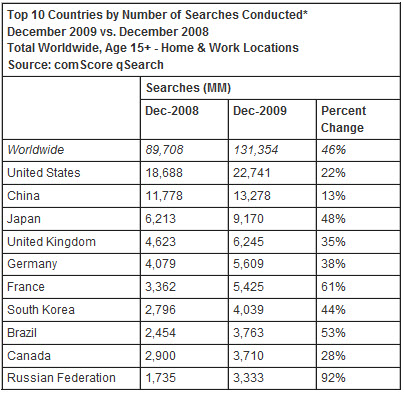
That was the growth of search volume last year. STILL over 20%!
Years ago my mentor told me that SEO is a marathon, not a sprint.
In the longrun thin won't win, but (so long as you care) you can start off bad on low volume and get somewhere pretty quick when your field is growing at a 20%+ rate. And if you are new to the field you should be able to grow faster than the market because many business inputs have multiplier effects. You increase your growth geometrically as you
learn to optimize your traffic flow
increase your knowledge
increase the value of your knowledge
refine your strategy
refine your product or service
improve your conversion rates
Slow and steady isn't sexy. And it doesn't sell well.
But it works. :)
A further benefit to slow incremental growth is that as you grow your tribe and focus on their needs your customers become salesmen...helping attract more people just like them. And these are people who are pre-sold on what you have to offer, and why it is valuable. To a jaded audience testimonials from friends are far more valuable than sales copy. And almost everyone gets screwed into buying junk at least once before they find you.
Sales copy will likely push the quick returns no matter what (because that is what people want), but pay special attention to if someone is trying to use an aura of mystique on a brand new discovery as a marketing angle, while having little history. If they don't have much history the odds of buying a bag of smoke are much greater.
And if the recommendation comes with a big loud launch sequence then the chance of it being crap are even greater. And even if it starts out pure, the aim to "optimize" revenues at any cost often causes many partnerships to dissolve. Starting off slow and steady keeps things balanced and prepares you for growth.
Why Heavily Hyped Launches Are Often a Bad Idea
Wealth that comes quickly and easily often disappears the same way. Everyone has their hands in the cookie jar of success until the cookies are all gone.
When you are new to a market there are so many things to learn, refine and improve. Typically customers driven by hype are the most demanding (because an affiliate often oversells the product to get the commission) and the least qualified to succeed (since they want to rule the world in a day). The customers sold on a whole lot of hype and a whole lot of hope are basically set up to fail, trying to go too far too fast. They tend to buy on impulse, lack follow through, have a far higher rate of churn, a far higher rate of refund requests, and a far higher rate of chargebacks.
Further, every piece of a business can be optimized - from choosing who you want your customer to be, to who you don't want it to be, to what types of interactions to build, to what prices to charge, to balancing time spent on servicing customers vs growth, etc etc etc ... right on through to managing your personal load and fixing programming bugs (when we first launched our membership site the programmer made it such that if a person canceled they couldn't rejoin (even if the cancelation was due to an expired or stolen credit card))! But if you keep accepting feedback and incrementally improving you prepare yourself for heavy load by the time you build it.
Whereas a pull the cord and hope this works approach with lots of hype will almost always lead to disappointment and frustration. You probably want to test the equipment before jumping off the mountain :D
Even if the claims about non-payment in this lawsuit are NOT correct, it doesn't make a business look professional if they have publicly accessible lawsuits claiming that the fulfillment partner of choice is incompetent.
Long after the launches details leak out and experiences are shared. And that is what builds your reputation...good or bad. The slow and steady growth model offers time to fix errors and refine strategy. The launch and hope model doesn't.
Publicly Jason claims to be ignorant about SEO because it allows him moral flexibility and makes Google less likely to torch his site (even though he is blatantly violating their search quality guidelines, and has for *years*).
It includes a slide which highlights how well Mahalo Answers questions rank in Google titled "SEO value," as well as the following statements (followed by my comments):
Questions are imported from Partners’ Answers Community into Mahalo Answers, enabling 100% share of voice and high SEO value. (filling Google with duplicate content)
Category Selection Based on Keyword Intelligence and Customer Goals (doing keyword research, an SEO service)
Community seeded with high-value questions and answers (does the word "seeded" mean asking fake questions?)
By carefully policing the site, Mahalo keeps out inappropriate content, thus increasing engagement and utility. (no mention of the half million+ pages indexed in Google which contained scraped 3rd party content?)
We can help our partners increase their search engine rankings with these high quality pages. (that is the actual text from their slide titled "HowTo")
Mahalo’s team of editors will find the most highly-trafficked search terms and keywords for your brand, industry or product and build corresponding high-quality pages that will rank well. (isn't that exactly what "scummy" SEO companies do Jason?)
Given that Mahalo is now branded as an SEO play (in their own words), and that they scrape millions of content listings to publish on their pages, are creating tons of other duplicate content, have actively engaged in link farming, and are not above "seeding" questions based on keyword value, why should Google trust *any* of their business practices going forward? Especially when their SEO services enterprise was launched on the back of calling SEOs scumbags.
How can the Google web spam team members look themselves in the mirror each morning hunting smaller webmasters and ignoring operations like Mahalo? It must begin to feel arbitrary at some point, no?
I was talking to a friend yesterday who was at a conference where Demand Media's CEO spoke, and he stated that nobody asked the big question: "what if google decides they don't like you anymore?"
Then I got thinking about how Google torched Squidoo after Jason Calacanis went on his public campaign to rebrand it as spam. But today under the same level of scrutiny, how is Mahalo (which scrapes millions of 3rd party content listings *without any editorial filter*) not spam? Squidoo at least donates $10,000 a month to charity. Mahalo just "borrows" your content without permission and keeps all the cash.
In the chat room, I said hello to teeceo, but I know the stuff that he was doing and it’s shoot-on-sight. I think anyone who is blackhat knows (or should know) that I’m happy to talk to anyone, but that we’ll still take action on the spam we find.
Imagine taking that approach to hunting search spam all day long, and then ignoring the *fact* that Mahalo is scraping millions of third party listings and using them as content with no editorial filtering.
Then I started thinking about why the Google spam team could ignore something as outrageous as Mahalo, especially when it was built by a guy who was a false anti-spam evangelist. Is it because Jason is a good guy? No. Is it because there is some actual editorial vetting of the content? no. Is it because Google is getting a cut of the AdSense revenues? Google doesn't need the short term cash flow (look at all the affiliate AdWords advertisers they just torched), so that is too cynical of a view.
Yes Google wants display inventory (their biggest opportunity for 2010 according to the quarterly call), and these "content" websites have already given themselves over to Google as inventory. But it must be something deeper than that. So I started thinking about it from a longterm strategic level...
Google won't penalize sites like Mahalo (even though they blatantly violate Google's guidelines) because Google *wants* to use the works of companies like Mahalo, Demand Media, and Aol to lower the value of other content and bankrupt a lot of the traditional media companies.
Why would Google want to do that?
There is excessive duplication in the marketplace. The faster that duplication is driven out of the marketplace the more desperate companies will be to cut deals with Google. And while there is a down market Google can drive companies out of the market and just claim that it was the economy that did it (much like how Mahalo used the down economy as an excuse to fire most of their editorial staff and replace them with content scraping robots).
Once a lot of media companies are bankrupted, the market is far more efficient, and there are fewer mouths to feed, that means Google can squeeze greater profits margins out of the media ecosystem by getting a fatter cut of the ad revenue.
Currently this shift is risk free because almost nobody understands how the marketplace works. Sure Paul Kedrosky and Mike Arrington blogged about the search results getting spammier, but until you frequently read the above listed sequence on sites outside of the SEO industry there is no damage to the Google brand in them turning the internet into a cesspool.
Once it starts harming the Google brand then I suspect them to act quickly and decisively. And sites like Mahalo will see a sharp drop in traffic. Jason better milk it while he can. The clock is ticking.
On Hacker News, Melvin, from Web Design Company, had a great analogy on the Mahalo business model:
Let's use a different industry to illustrate what is happening.
Let's say a band named The Beatles records a new album. The local radio station gets a copy of their album and plays their song. The listeners love it so they play it more often, but they don't mention who the band is and on their website, they put up a link to download the song... but without any credits. Their audience grows. They get advertisers to advertise to their audience. They say, "hey, playing good songs gets us more listeners and more listeners gets us more advertisers, which gets us more $$. Let's do this more often." So they go do this 500,000 times, and each time never mentioning who the artist is. They grow and prosper while the artists starve.
Oh, in the mean time they call the artist scum.
In the above metaphor, the artists are the bloggers whose content Mahalo is using. The radio station ripping off the artist is Mahalo. The Federal Communication Commission is like Google, who is allowing all this to continue because the radio station is giving them a cut from the advertising revenue.
Hope this helps make it a little more clear why what they are doing is wrong, needed to get exposed and needs to get fixed.
The analogy isn't 100% perfect...but it *is* pretty darn close. :D
Jason is not 100% Jim McCormick, but he isn't 0% either.
Ben Edelman: "Although I had asked that the Google Toolbar be "disable[d]," and although the Google Toolbar disappeared from view, my network monitor revealed that Google Toolbar continued to transmit my browsing to its toolbarqueries.google.com server"