Somewhere at MountainView

Somewhere at MountainView.

Late afternoon.

Google Guy: Sigh. Our algo really does suck, sometimes.....

Other Google Guy: How so, dude?

GoogleGuy: It keeps returning low-quality farmer garbage

Other Google Guy: Mahalo!

Google Guy: Huh?

Other Google Guy: Sorry, just shouting out "Thanks!" to Marissa. She left me a cup cake this morning. You were saying?

GoogleGuy: Our algo, it keeps returning low-quality farmer garbage

Other Google Guy: Ah, right. We're gone all "Alta Vista" a bit lately, huh. People are noticing....

Google Guy: Hey! No one mentions the AV word around here, OK!

Other Google Guy: Sorry dude. So, what shall we do?

Google Guy: We could invent a cool new algorithm, like Sergey and Larry did all those years ago

Other Google Guy: Hahahaha....you ain't Sergey or Larry, dude. Anyway, they're more concerned with self-drive cars these days, aren't they? Search is so 2001.....

Google Guy: Look, we've got to do something. The technorati are getting uppity. They're writing blog posts. Tweets. Everything. And let's not forget the JC Penny debacle. The shareholders could get angry about this. Well, they would if they understood it.....

Other Google Guy: Do they?

Google Guy: Probably not.

Other Google Guy: So, what's the problem? My data is showing most of our users couldn't give a toss about the farmer stuff. Some of them like learning about how to pour a glass of milk. It's just the valleywags getting grumpy, and no one listens to them.

Google Guy: Right, but this has the potential to filter out. It might get on FOX! Too many people might get the wrong end of the stick, and suddenly we're not cool anymore.

Other Google Guy: But we're not cool n.......

Google Guy: Shut it. We're still cool, OK.

Other Google Guy: Anything you say, boss

Google Guy: Hmmm.......what we could do is go "social media". So hot right now. We could crowdsource it! We'd look very cool with the hipsters.

Other Google Guy: Mmmmmm.....sauce.....

Google Guy: We'll give 'em a Chrome extension. Yes! Make them do all the work. At very least, it's going to shut them up. They won't have to look at anything they don't want to look at. It will make them feel superior, and we can collect some data about what sites techno dudes don't like

Other Google Guy: Brilliant! Superb! One problem - won't content farmers use this against each other in order to take each other out?

Google Guy : Nah, it's just a "ranking signal". We have hundreds of 'em we apply to every search, don't you know ;)

Other Google Guy: Hahahah..."ranking signal". Nice one, Google Guy. You can add it to the other two hundred! Or was it three hundred? Shareholders love that stuff.

Google Guy: Laughs. Oh...kay.....almost finished this extension. It'll push it out there.....

Ten seconds pass.....

Google Guy: Hey! The first data is in already!

Other Google Guy: People use Chrome? Opps...I mean "People use Chrome!" Which sites are they blocking?

Google Guy: Wikipedia....

Other Google Guy: It figures.....

Google Guy: Oh, and Google.....sigh......

Satire. It never happened. Not really :)

Bing Sending More SEO Traffic Than Yahoo! Search?

With some lower traffic smaller sites it is easy to get outlier data that is skewed & somewhat irrelevant (especially true if you have a website which happens to have relevant content in a category that Ask is spamming the heck out of Google in), but one nice thing about comparing Yahoo! and Bing against each other is that they are generally driven by the same relevancy algorithm. Of course Yahoo! and Bing may have different promotions added to their interfaces for certain query types, but if you take websites that are ranking for a wide basket of keywords you can generally see how the search engines are doing against each other at driving traffic.

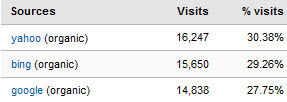
Some categories (think mom from the mid-west who is a casual internet user) might have a bias toward using Yahoo! Search, but outside of areas where you might expect that sort of skew, I am seeing Bing drive more organic search traffic than Yahoo! is. Here are analytics images from 3 different websites so far this month that get quite a significant search traffic stream. These sites target different demographics from people in their 20's to 30's to 40's. And all 3 of them are getting more search visits from Bing than Yahoo! Search. And, looking at the data, this shift has been fairly significant over the past couple months.

This site gets tons of longtail traffic & ranks across a wide array of keyword.

This site is primarily driven by a few popular keywords & ranks #1 in both Bing and Google for them.

The reason this 3rd one is so Google heavy is because the Google algorithm likes the older site more & it does not have as many fresh links (which Bing seems to like more). It is primarily focused on a few core keywords where it ranks #1 to #3 in Google and #4 to #7 in Bing.

I suspect that Bing is still somewhat more selective with showing search ads than Yahoo! is (as Microsoft's online operation has been losing billions of Dollars per year & Bing is trying to win marketshare from Google, whereas Yahoo! is all about maximizing revenues per search). Yahoo! ads likely get a greater portion of the search clicks due to...

  • ads being shown more frequently & more aggressively
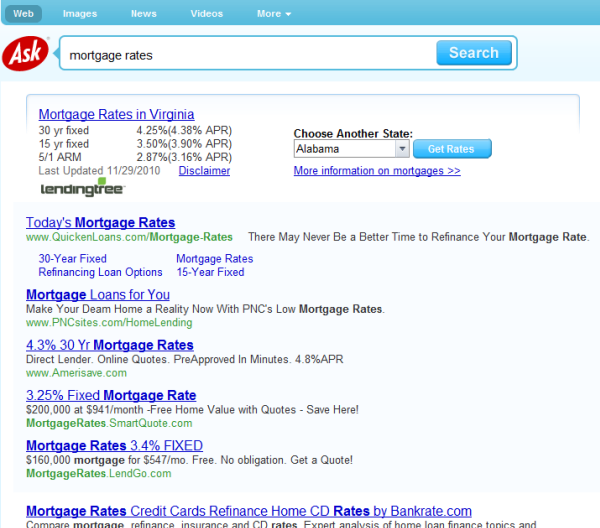
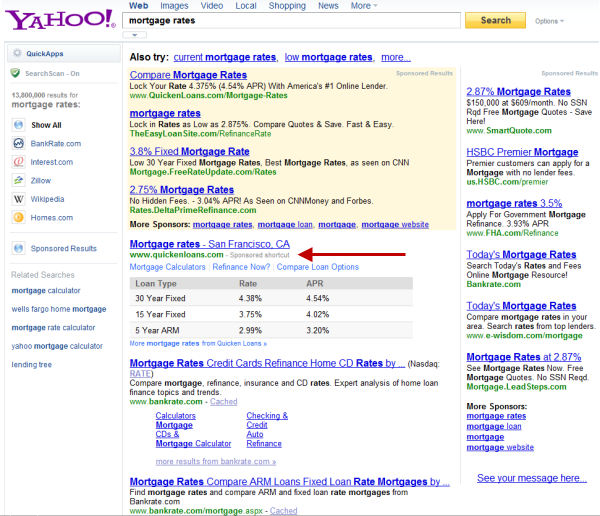
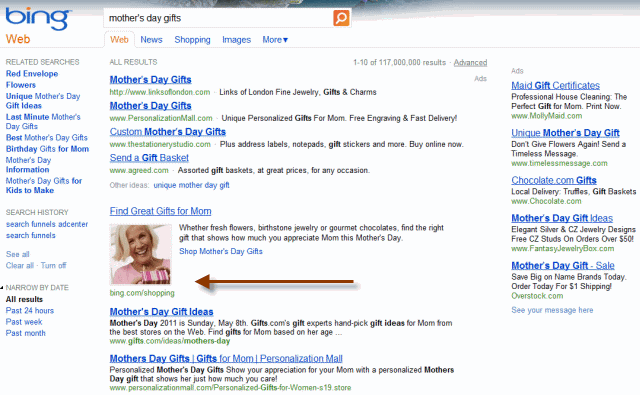
  • ads taking up more visual space (when Bing puts 4 ads above the organic results they put the URL and the description on the same line, whereas Yahoo! spreads them out across multiple lines)

Since Bing is sending more searchers onto the organic search results it means their real search share is over-represented if you look only at organic search visitors, but then as an SEO that is the main thing you are looking for - opportunity. It is a bit of a shame that on the above sites Google is still driving ~ 84% of search visitors, whereas Bing is still in the 16% range.

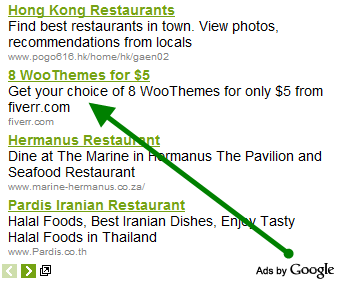
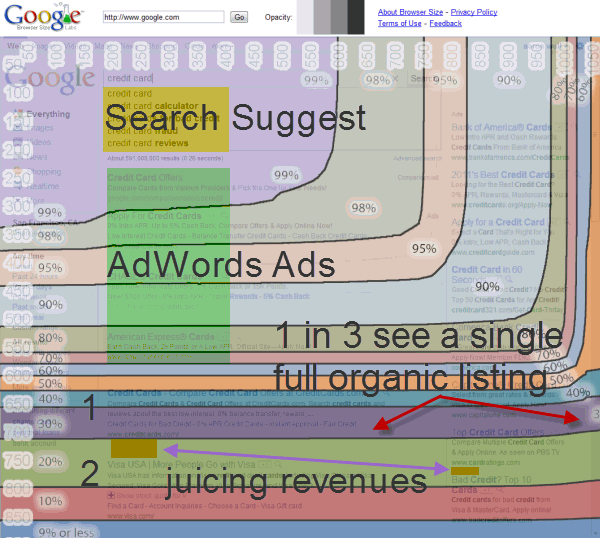
As Google comes over the top to bury the organic results by...

  • expanding the default AdWords ad units to have longer headlines and a boatload of extensions
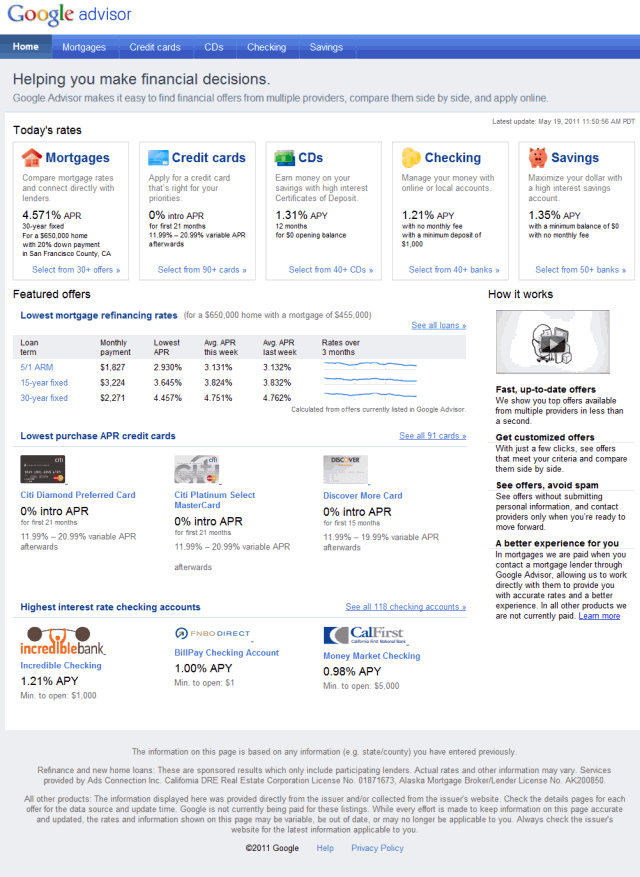
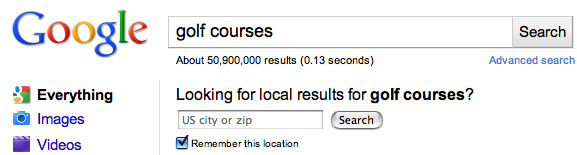
  • entering broad consumer verticals like books and finance and offering customized local results
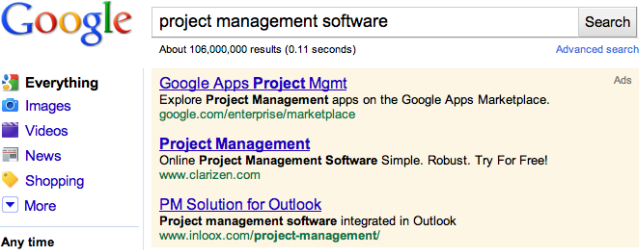
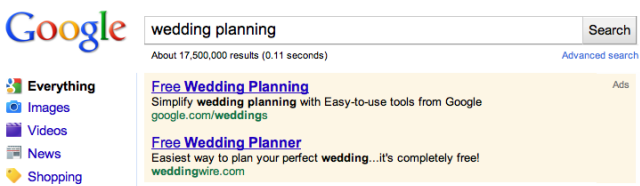
  • running self serving ads in a bunch of categories like project management and even wedding planning

...they kill a lot of opportunity as their ecosystem becomes more closed and perverted.

If the trends hold true, then in some cases it seems like Google might drive SEOs below the fold for core keywords while still pushing strong traffic into tail. Bing still doesn't have the index depth to match Google's relevancy on longtail keywords, but at least they are not crowding out the organic results anywhere near as aggressively on core keywords.

How are you seeing Bing fare against Yahoo! & Google? Are you seeing growth from Bing? What sorts of sites are you seeing Bing do well on & what sorts of sites are you seeing Bing do poorly on?

Update: It appears this sharp increase in Bing traffic over the past month has been driven by a partnership with Conduit.

Shoestring Budget SEO Tips for Small Businesses

Starting the Process

Cash (lots of it). Work in PJ's from Home. Fame. Fake Twitter Friends. For many folks who decide to give SEO the good ol' college try those are likely some of the major reasons why they decide to dive into the industry.

Those same tenets are typically reinforced by slimy internet marketers most new entrants run across in their travels around the SEO world. They are strong selling points, no question about it, and they hit on the times we are currently living in.

Who wouldn't want to work from home, or work for themselves, or work whenever they want?

Unfortunately, by the time someone willing to do the work and learn about the business reaches a solid source of SEO information they might already have been taken for thousands of bucks by Joe Blow Internet Marketing Guru or Joe Schmo the Social Media Guru. In this economy most folks cannot afford to lose that amount upfront and either:

  • have enough resources to continue
  • have enough resources to continue + enough trust to continue

Or maybe someone really wants to get started in the industry but needs some tips on how to keep initial costs down while getting their feet wet and learning without losing their shirt.

For more on the exploits of some of the more well-known internet marketing folks, I'd suggest visiting the Salty Droid.

Run a Lean SEO Project

So to start an SEO project you need a couple of basic things (assuming you don't already have these and/or a business you are doing SEO for):

  • an idea of what your site is going to be about
  • product(s) to sell either yourself of via an affiliate program

You could also build a site about a topic or specific topics and utilize Google AdSense as a means of revenue.

You can even create your own product based on your knowledge and sell it via monthly e-newsletters, a video training series, consulting, and by sharing your knowledge via a community forum.

This model would likely be a bit more costly based on software needed, programming help you might need, etc. However, it is something you can eventually build towards as you earn revenue from other activities.

Places to Find Products

You can try applying to a variety of affiliate networks like:

Those are some of the bigger ones so you may not get accepted without a site or a referral. No worries though, you can try smaller networks like:

  • Epic Direct
  • Affiliate.Com
  • Hydra Media
  • Neverblue
  • XY7

sidebar: Be aware many of the smaller affiliate networks are known for using their publisher data to compete directly against their publishers. Some also go so far as finding out where the publishers are buying ads to try to cut the affiliate out of the loop that way. Here is a short tip for how trustworthy an affiliate network is: if their leading offers are the types of offers that you will likely see covered by the FTC in 6 to 12 months (like the reverse billing fraud stuff for vaporware "products") then it might be worth skipping them, as any company which is built on pushing scams likely scams business partners as well.

Also, you can use Amazon Associates or Clickbank to find a variety of products to promote.

So far, you've spent $0.00 and you should have an idea of what you want to build a site about and ideas on what kind of products you'll be promoting (or how you will monetize the site).

Keyword Tools

There are a variety of keyword tools on the market. You can utilize a slew of Google tools for free:

Wordtracker is a well-known paid tool and it powers our free Keyword Tool. This can be helpful as an alternative to Google-provided data.

Many keyword tools sold by internet marketers are powered by Google, so all you are really paying for is a different UI and some (usually) useless metrics layered on by the marketer as a way to differentiate their tool from Google.

So now you've got an idea for a site, products to sell, and keywords to target. Your total cost = $0.00.

Domain Registration & Web Hosting

There are lots and lots of choices here. For the sake of simplicity let's look at some common options for both. For domain registration:

Sometimes you can find coupon codes for domain registrars simply by searching for them online. Inside our community forums members routinely share coupons they receive from domain registrars :)

Let's say you went with Moniker for your site, which at first glance offered the lowest initial price of a com as of this writing, and you opted for domain privacy for an additional cost.

Now you are up to roughly $14/year in costs.

Typically it is a good idea to keep registration and hosting separate for the sake of portability and reliability. For web hosting when first starting out you could certainly get by with hosting from reliable shared hosts like:

All these hosts are suitable for a new site that you are going to develop and grow judiciously. As traffic grows and grows you may want to upgrade to a dedicated server or a larger shared plan but for now a basic plan on these hosts is just fine.

Hostgator is a shared host you can scale up with, with respect to dedicated or virtual servers and such. So as of this writing you can snag one year's worth of hosting on their basic plan for approximately $66.72 ($5.56 per month if you prepay for a year).

So now you've got hosting, a domain, keywords to target, and products to sell for your site all for the annual cost of around $80.

Link Research Tools

There are link research tools that sell for upwards of $500 per month! Now, they might be just fine for enterprise level stuff but you can get a fair amount of data from some free tools and free accounts on paid services:

  • SoloSEO will give you a list of search operators you can use to find link opportunities in your niche (based on keyword entered) for free
  • OpenSiteExplorer.Org a intuitive link research tool with lots of features and data points. As of this writing a free trial is available and then it's $99/mo for access to SeoMoz's complete toolset.
  • Yahoo! Site Explorer a free tool which returns backlinks to a url, typically sorted by strongest top to bottom.
  • Blekko gives backlink data as well as anchor text information for free
  • Majestic SEO has perhaps the largest database of links and link data on the publicly available market. Plans vary from starter packages to enterprise solutions.

Naturally, our SEO Toolbar and Seo4Firefox both link through to free data sources within Open Site Explorer, Majestic SEO, and Yahoo!. :D

You can also access Majestic's paid data as part of a subscription to Raven SEO tools (which does a lot more than link research as you'll see).

Since you are starting/running one site you can take advantage of Raven's $19/mo pricing and access a ton of helpful tools and up to 10 Majestic reports (which is plenty on a monthly basis).

Link Tracking

As you build links and acquire links, you'll want to track the status of those links and make sure the ones you've acquired are holding up their end of the bargain (not disappearing on you). You can track link building efforts manually with Word/Excel or through a CRM or through some other method. That gets old fast. Tracking links is something you don't want to do manually (making sure the links are still pointing to your site).

Raven's toolset has both of those bases covered. With their $19/mo plan you can monitor up to 500 links and manage up to 1,000 link records (managing new opportunities, pending links, etc). Raven's toolset is 100% in the cloud so all of the heavy lifting gets done on their servers.

Advanced Link Manager is a tool that is spoken highly of by many members of our community. You can get the basic account for just $99/year and get the ability to track a ton of links from within the program (software).

Alright so let's say you decided that while Advanced Link Manager is a great piece of software, you don't need the full power just yet and you decide to hit up Raven for link tracking, monitoring, and research at $19/mo.

So your annual recurring tab is $308 and you've got the following items covered:

  • keywords to target
  • link tracking
  • link monitoring
  • link research
  • links to target
  • domain
  • hosting
  • stuff to sell

Analytics Tools

You can use Google Analytics which is free, save for the cost of your data :)

Some other analytics providers you can use for free or for a low cost are:

Piwik is free and you need to install it on your server, much like Mint. Mint is $30 per site, as a one time fee. Clicky has free plan but it has ads and lacks some of their better features.

Mint doesn't have some of goal tracking and custom functionality of Clicky and Clicky can be had for $29.99/yr if you prepay. You can scale up with Clicky and place more sites in your account as you start to develop more sites and such.

I like the additional features of Clicky and I'd rock either Clicky or Mint when first starting out. You can certainly choose Google Analytics, which is feature rich and free.

As a new site, with likely no branding while trying to monetize, I'd probably wait a bit until I started handing over data to Google. This post on why Google Analytics isn't really "free" is a must read.

As a side note, Raven integrates with Google Analytics in case you decide to go with GA. So now your running an annual bill of around $338 (if you choose Clicky or Mint).

Rank Checking Tools

We offer a free rank checker tool, which is also accessible via our SEO Toolbar, via our free firefox extensions. If you are looking for ways to make graphical charts via the data you get from our rank checker you can follow the tips listed here.

Advanced Web Ranking can be purchased as a standalone program or in conjunction with Advanced Link Manager as a bundle. Both programs are solid but they do have a slight learning curve, however the functionality of the software makes the learning part worth it. The basic packages do not include customized reports but you can easily export the data. The package deal is $149.

Even though AWR/ALM are fantastic options, since we are assuming you are already paying for Raven's suite of tools (and we are being cost-conscious) we can move ahead with rank checking from either Raven and/or our free Rank Checker.

Raven's rank checking runs once per week so it's handy to have another tool to spot check once and awhile (our Rank Checker can be run at anytime). So you are still at roughly $338. :D

Building the Site

Now that you've got most of the back-office stuff set up you can get your site on the web. Wordpress.Org is free, powerful, easy to use, and used by most web marketers that I know. Sometimes free themes can be dangerous so you have to be careful when installing those types of themes.

Smashing Magazine generally has some decent themes and you can pick up affordable themes from a place like ThemeForest.

There are also premium Wordpress themes like Thesis and StudioPress where you can get a single license and theme for around $80. These themes have solid support and strong, built in design and SEO options (which reduces your reliance on plugins to some degree, at least the basic SEO-type ones).

If you are unfamiliar with Wordpress or HTML (if you decide to build your site outside of Wordpress) then you better become familiar with them. All the tools in the world, free or paid, won't help you if you aren't willing to learn how to use them or the underlying engine that drives them.

Lynda.Com has some solid training that covers just about everything and there are free online resources you can use like:

If you go with a free theme, or one that doesn't have SEO controls built in, then you'll want to consider the All In One SEO Pack for your SEO needs.

You can also find competent, affordable Wordpress developers or designers on sites like Elance or Odesk to help design or tweak the design of your theme.

Ok so you found a nicely designed, free theme over at Smashing Magazine and you've got the All in One SEO Pack ready to go. How about logos and content?

Logos and Content

If you want an icon for your business you can look around on a site like istockphoto.com for ideas and icon sets or you can get a ready made logo from the 99 Designs Logo Store for $99, which you can customize or have customized.

It's important to note that you don't have the rights to trademark either of these (or claim them as your own) and as time goes on and you start to brand your site, it would be wise to invest in a customized logo which you own the full rights to, can trademark as a symbol of your business, etc.

You can write the content yourself or use a service like TextBroker or the aforementioned Elance or Odesk.

For site graphics (buttons, icons, etc) you can use GraphicRiver (owned by the same folks at ThemeForest.Net) for nicely designed, affordable graphics.

You could easily budget a couple hundred bucks here for a logo, some graphical pieces, and some content (and even some stock photos from istockphoto.com) and probably have what you need to get started. Assuming that, your current cost for a 12 month period would be $538.

Promoting the Site

In just about any industry you enter, there are many ways for you to promote your site for free (minus the cost of your time of course). Twitter, Facebook, online forums, blogs, and so on are all ways to reach people in your market or niche. Using the SoloSEO link tool we mentioned before, you can find all sorts of blogs and communities related to your niche (by keyword).

You may want to hold off on monetizing the site if you are using AdSense and/or affiliate products until you've earned some semblance of trust within your market. Otherwise, you risk being shunned as someone who is just looking to make money and is not adding value or whatever.

Funny thing is, most people who'd shun you are online to make money too (weird how that works) but I digress. Point is to earn some trust (and links) before you start selling stuff or clicks.

For Twitter, you can use a site like Twellow to find people and businesses by categories and markets.

Time Cost vs $ Cost

Some of these "free" options are free in terms of $ but not in time. That's the trade off and there's no real way around it. You can likely outsource quite a bit of this stuff but then you risk losing the personal touch associated with your site or business that you are trying to brand.

Think of how often you are marketed to in a given day online.....whether its in your email, on Facebook and Twitter, those creepy ads that follow you around the web, etc. If you come out of the gate ready to add value and can hold off on monetizing for a bit (and integrate it smartly when you do) then your ahead of many other people that just want to come online and SELL SELL SELL!

Hopefully you can avoid a lot of unnecessary costs upfront which should help you with holding off on going commercial. We covered most aspects of getting started and ongoing tracking here, with a total 12/mo cost of less than $600!

Clearly if you are going into SEO on a shoestring budget, you don't want to compete for mega-competitive keywords but you can certainly take this approach with less competitive markets and scale up as needed.

The Bad Ol' Days Of Search...What's Next?

Interesting post from Matt Cutts, talking about how Google is so much better now than it was in 2000.

But it’s a misconception that there was no spam on Google back then. Google in 2000 looked great in comparison with other engines at the time, but Google 2011 is much better than Google 2000. I know because back in October 2000 I sent 40,000+ queries to google.com and saved the results as a sort of search time capsule

40,000+ queries! I'm guessing he wasn't using the WebPositionGold Reporter! Little joke for the old-timers, there ;)

SEO's will notice Matt's yeark 2K SERP consists of some old skool domain spamming, with hyphen-loaded domains, which were de rigueur at the time.

How times change.

Since 2000

Whilst tempting to think the golden days of opportunity are behind us, the internet, and search, is still a baby.

Adwords, launched in 2000, and has created a multi-billion dollar industry. Adsense was launched in 2003. The affiliate market has grown in breadth and depth. Domain name acquisition, solely for the purposes of search positioning, is a more recent development. There has been a lot of opportunity for search marketers since 2000.

What's next?

The Revolution Won't Be Televised

By the time most of us hear about the next big thing in internet marketing, the low hanging fruit will be gone.

The next money making opportunities in search, and internet marketing, will remain underground, because shouting new opportunities from the rooftops invites unwanted competition. A sure sign the horse has bolted is when someone launches an "all-new" get-rich-quick scheme on Clickbank. Consider that the mainstream media thinks SEO is new and exciting!

If we're going to continue to profit from internet marketing, then it helps to keep one eye on the future, rather than passively waiting for it to arrive.

How To See Around The Corner

Predicting the future is, of course, impossible.

However, by reading, watching and speculating we'll be less surprised when things do change. The only thing certain is change, and in internet marketing, the only thing certain is rapid change.

Here's a few ideas. If you've got some more, please share them in the comments.

Trendwatching Sites - Read beyond search. Get a feel for what is coming about in a broad section of related industries. Check out Trendspotting, Google Trends, Trend Hunter, Trendwatching.com, Springwise, Pew Research Centre and Tech Crunch.

Patent Filings - Bill looks at patents filed by Google and other search services. These often provide interesting insights into Google's future direction, although the filing of a patent is not an indicator that Google is making use of these ideas. Yet.

Product Announcements - watch out for new product announcements from companies related to your area of interest. Make use of Google News Alerts, and other automated news monitoring services.

BTW, Google are now into weddings.

Acquisitions & Mergers - Who is buying what and why? Figure out why Google wanted Groupon, and how Google's own search service could change as a result of launching a similar service.

There are a few red herrings, of course. Google acquired Blogger, and haven't done much with it. Recently, they've bought up companies who have developed speech synthesis, voice recognition, DRM, ebooks, and social gaming. At the time of writing, they're (still) interested in acquiring Twitter, as are Facebook.

History Repeats - history tends to work in cycles. The same things happen again, with a twist. Is Facebook that different from AOL, really? What previous tech trends may return, now that their time is right?

Not Typing Queries

Matt wrote what seemed like a throw-away line, or maybe he's just winding us up:

Wow, most queries were only a few words back then. And we had to type queries. How primitive!

Hmmm........not typing queries, huh.

Two Diametrically Opposed Google Editorial Philosophies

An "Algorithmic" Approach

When it comes to buying links, Google not only fights it with algorithms, but also ran a 5-year long FUD campaign, introduced nofollow as a proprietary filter, encouraged webmasters to rat on each other, and has engineers hunting for paid links. On top of that, Google's link penalties range from subtle to overt.

Google claims that they do not want to police low quality content by trying to judge intent, that doing so would not be scalable enough to solve the problem, & that they need to do it algorithmically. At the same time, Google is willing to manually torch some sites and basically destroy the associated businesses. Talk to enough SEOs and you will find stories of carnage - complete decimation.

Economics Drive Everything

Content farms are driven by economics. Make them unprofitable (rather than funding them) and the problem solves itself - just like Google AdWords does with quality scores. Sure you can show up on AdWords where you don't belong and/or with a crappy scam offer, but you are priced out of the market so losses are guaranteed. Hello $100 clicks!

How many content farms would Google need to manually torch to deter investment in the category? 5? Maybe 10? 20 tops? Does that really require a new algorithmic approach on a web with 10's of millions of websites?

When Google nuked a ton of article banks a few years back the damage was fairly complete and lasted a long time. When Google nuked a ton of web directories a few years back the damage was fairly complete and lasted a long time. These were done in sweeps where on day you would see 50 sites lose their toolbar PageRank & see a swan dive in traffic. Yet content farms are a sacred cow that need an innovated "algorithmic" approach.

One Bad Page? TORCHED

If they feel an outright ban would be too much, then they could even dial the sites down over time if they desired to deter them without immediately killing them. Some bloggers who didn't know any better got torched based on a single blog post:

The Forrester report discusses a recent “sponsored conversation” from Kmart, but I doubt whether mentions that even in that small test, Google found multiple bloggers that violated our quality guidelines and we took corresponding action. Those blogs are not trusted in Google’s algorithms any more.

One post and the ENTIRE SITE got torched.

An Endless Sea of Garbage

How many garbage posts have you seen on content farms?

When you look at garbage content there are hundreds of words on the page screaming "I AM EXPLOITATIVE TRASH." Yet when you look at links they are often embedded inline and there is little context to tell if the link is paid or not, and determine if the link was an organic reference or something that is paid for.

Why is it that Google is comfortable implying intent with links, but must look the other way when it comes to content?

Purchasing Distribution

Media is a game of numbers, and so content companies have various layers of quality they mix in to make it harder for Google to find signal from noise. Yahoo! has fairly solid content in their sports category, but then fluff it out with top 10 lists and such from Associated Content. Now Yahoo! is hoping they can offset lower quality with a higher level of personalization:

The Yahoo platform aims to draw from a user’s declared preferences, search items, social media and other sources to find and highlight the most relevant content, according to the people familiar with the matter. It will be available on Yahoo’s Web site, but is optimized to work as an app on tablets and smartphones, and especially on Google Android and Apple devices, they said.

AOL made a big splash when they bought TechCrunch for $25 million. When AOL's editorial strategy was recently leaked it highlighted how they promoted cross linking their channels to drive SEO strategy. And, since acquisition, TechCrunch has only scaled up on the volume of content they produce. In the last 2 days I have seen 2 advertorials on TechCrunch where the conflicting relationship was only mentioned *after* you read the post. One was a Google employee suggesting Wikipedia needs ads, and the other was some social commerce platform guy promoting the social commerce revolution occurring on Facebook.

Being at the heart of technology is a great source of link equity to funnel around their websites. TechCrunch.com already has over 25% as many unique linking domains as AOL.com does. One of the few areas that is more connected on the social graph than technology is politics. AOL just bought Huffington Post for $315 million. The fusion of political bias, political connections, celebrity contributors, and pushing a guy who promoted (an ultimately empty) promise of hope and change quickly gave the Huffington Post even more link equity than TechCrunch has.

Thus they have the weight to do all the things that good online journalism is known for, like ads so deeply embedded in content you can't tell them apart, off-topic paginated syndicated duplicate content and writing meaningless posts devoid of content based on Google Trends data. As other politically charged mainstream media outlets have shown, you don't need to be factually correct (or even attempt honesty) so long as your bias is consistent.

Ultimately this is where Google's head in the sand approach to content farms backfired. When content farms were isolated websites full of trash Google could have nuked them without much risk. But now that their is a blended approach and content farms are part of public companies backed by politically powerful individuals, Google can't do anything about them. Their hands are tied.

Trends in Journalism

Much like the middle class has been gutted in the United States, Ireland (and pretty much everywhere that is not Iceland) by economic policies that gut the average person to promote banking criminals, we are seeing the same thing happen online to the value of any type of online journalism. As we continue to ask people to do more for less we suffer through a lower quality user experience with more half-content that leaves out the essential bits.

How to build a brick wall:

  • step 1: get some bricks
  • step 2: stack them in your workplace
  • step 3: build the brick wall

The other thing destroying journalism is not only lean farms competing against thick and inefficient organizations for distribution, but also Google pushing to control more distribution via their various data grabs: Youtube video & music, graphical CPA ads in the search results, lead generation ads in the search results, graphic AdSense ads on publisher sites that drive searches into those lead generation funnels, grouping like data from publishers above the organic search results, offering branded navigational aids above the organic search results, acquiring manufacturer data, scraping 3rd party reviews, buying sentiment analysis tools, promoting Google maps everywhere, Google product pages & local review pages, extended ad units, etc. If most growth in journalism is based on SEO & Google is systematically eating the search results, then at some point that bubble will get pricked and there will be plenty of pain to go around.

My guess is that in 3 to 4 years the search results become so full of junk that Google pushes hard to rank chunks of ebooks wrapped in Google ads directly in the search results. Books are already heavily commoditized (it's amazing how much knowledge you can get for $10 or $20), and given that Google already hard-codes their ebooks in the search results, it is not a big jump for them to work on ad deals that pull publishers in. It follows the trend elsewhere "Free Music Can Pay as Well as Paid Music, YouTube Says."

It's Not All Bad

The silver lining there is that if you are the employer your margins may grow, but if you are an employee & are just scraping by on $10 an hour then it increases the importance of doing something on the side to lower your perceived risk & increase your influence. A few years back Marshall Kirkpatrick started out on AOL's content farms. The tips he shared to stand out would be a competitive advantage in almost any vertical outside of technology & politics:

one day Michael Arrington called and hired me at TechCrunch. "You keep beating us to stories," he told me. I was able to do that because I was getting RSS feeds from key vendors in our market delivered by IM and SMS. That's standard practice among tech bloggers now, but at the time no one else was doing it, so I was able to cover lots of news first.

Three big tips from the "becoming a well known writer front" for new writers are...

  • if short form junk content is the standard then it is easier to stand out by creating long form well edited content
  • it is easier to be a big fish in a small pond than to try to get well known in a saturated area, so it is sometimes better to start working for niche publishers that have a strong spot in a smallish niche
  • if you want to target the bigger communities the most important thing to them (and the thing they are most likely to talk about) are themselves

Another benefit to publishers is that as the web becomes more polluted people will become far more likely to pay to access better content and smaller + tighter communities.

Prioritizing User Feedback?

On a Google blog post about web spam they state the following:

Spam reports are prioritized by looking at how much visibility a potentially spammy site has in our search results, in order to help us focus on high-impact sites in a timely manner. For instance, we’re likely to prioritize the investigation of a site that regularly ranks on the first or second page over that of a site that only gets a few search impressions per month.

Given the widely echoed complaints on content farms, it seems Google has a different approach on content farms, especially considering that the top farms are seen by millions of searchers every month.

Implying Intent

If end users can determine when links are paid (with limited context) then why not trust their input on judging the quality of the content as well? The Google Toolbar has a PageRank meter for assessing link authority. Why not add a meter for publisher reputation & content quality? I can hear people saying "people will use it to harm competitors" but I have also seen websites torched in Google because a competitor went on a link buying spree on behalf of their fellow webmaster. At least if someone gives you a bad rating for great content then the content still has a chance to defend its own quality.

With link stuff there is a final opinion and that is it. Not only are particular techniques of varying levels of risk, but THE prescribed analysis of intent depends on who is doing it!

A Google engineer saw an SEO blog about our affiliate program passing link juice and our affiliate links stopped passing weight. (I am an SEO so the appropriate intent is spam). Then something weird happened. A few months later a Google engineer *publicly* stated that affiliate links should count. A few years later Google invested in a start up which turns direct links into affiliate links while hiding the paid compensation in the background. (Since Google is doing it the intent is NOT spam).

Implying Ignorance

Some of the content mills benefit from the benefit-of-doubt. Jason Calacanis lied repeatedly about "experimental pages" and other such nonsense. But when his schemes were highlighted he was offered the benefit of the doubt. eHow also enjoys that benefit of the doubt. It doesn't matter that Demand Media's CEO was the chairman of an SEO consulting company which sold for hundreds of millions of Dollars. What matters is the benefit of the doubt (even if his company flagrantly violates quality guidelines by doing bulk 301 redirects of EXPIRED domains into eHow ... something where a lesser act can put you up for vote on a Google engineer's blog for public lynching).

The algorithm. They say. It has opinions.

What Other Search Engines Are Doing

A Bing engineer accused Google of funding web pollution. Blekko invites end users to report spam in their index, and the first thing end-users wanted booted out was the content mills.

But Google need to be "algorithmic" when the problems are obvious and smack them in the face. And they need to "imply intent" where the problems are less problematic & nowhere near as overt.

Makes sense, almost!

Free SEOBook Wordpress Theme

Since switching over our site design some folks have asked us what we were doing with the old design.

I spoke with Chris Pearson (of Thesis fame) who made our old site design and he said it was cool if I turned it into a free Wordpress theme. And given the number of folks liked our old site design enough to use it without permission, we decided that we may as well turn the theme into a free Wordpress theme, so that everyone can benefit from it.

Theme Preview

Here is an image of what the theme looks like

Download It Now

You can download the theme here.

Editing The Logo

Currently the theme shows the old SEO Book logo in it (as logo.gif in the theme's files). You can easily change that out with a custom logo from the likes of 99designs, CrowdSPRING, or Logo Design Works.

A couple notes of caution with that:

  • The dimensions of the current logo are 720 wide by a height of 154 pixels. If you change the height of the logo then you would want to adjust the height of the space above the top navigation. Currently the header div has a height of 173px, so it is set to logo height + 19 pixels.
  • If you order a logo you may want to color match it to the existing site design colors. For your convenience, there is a color swatch to the right & you can grab HTML colors using an extension like ColorZilla. The HTLML color code for the green is roughly #9bdc1d and the blue is roughly #5bacd8 (though both have a bit of gradient to them).

Editing the Site's Colors

Given the reliance on white in the design, it is fairly easy to change the design's colors simply by changing the color of a few images in the design. You can replace the green and blue with a wide variety of colors and still have it look good. I believe we did red and gray on PPC Blog for a while and it looked pretty good. This tool is a good tool for making gradient images. Then you can use something like SnagIt to size the images similar to the old design's images. Of course Photoshop experts should have no problems with editing the colors either. ;)

Editing the Site's Width

The white content area with a white page background makes it easy to change the theme's width in the CSS if you are pretty knowledgeable about CSS. The divs are pretty easy to understand. Container wraps around the content area. Each post div is within the content div & the sidebar is named sidebar. :)

General Disclaimers & Whatnot

First and foremost, since the theme is free it does not come with any sort of support. If you have doubts or concerns with using it then we suggest testing it out on a secondary site & customizing it as needed before putting it on your primary website.

Although we are an SEO website, I do not claim that the theme is "SEO optimized" or anything like that. As a best practice, I believe there is value in making the page titles and post titles different from each other (especially in light of this). But that best practice is not something Wordpress does by default.

There are a wide variety of other themes & Wordpress plugins that offer more granular SEO control. When using a theme like this one on our sites then typically we would use SEO title tag and a related posts plugin to help with SEO. If we are aiming for a fairly flat site structure then we would show excerpts on archive pages and use a different posts per page plugin to put something like 100 posts on each category page. But there are many other themes and plugins that do those sorts of things.

The template has a credit link in it. I would prefer you leave that there so others can find out how to get the theme, but if you do need to remove it all I ask is that you instead link to a charity you believe in & donate whatever you can to that charity. :)

Why Did We Switch Site Designs Here?

The above design was live on our site for nearly 5 years. And I would have kept rolling with it if our site didn't become so complex. One of the leading complaints about our old site was how navigation was inconsistent in different parts of the site.

The site started off as a blog which happened to sell an ebook, but over time as it grew to have dozens of tools, 100+ training modules, thousands of blog posts, etc. Given all the various user rolls and login permissions it was important for us to tighten up our navigation and make it more consistent (with the use of sitewide drop downs and such). I plan on using our old design on a few of our other websites that are less complex and more bloggy. And I hope you like it too! :)

Content Farms Vs...

Is the following an SEO strategy?

  • Research keywords
  • Select keywords that have existing traffic
  • Write pages based on those keywords
  • Publish pages
  • Get those pages ranked against those keywords

How is this different to what a Content Farm does? So, if Content Farm pages are undesirable, so too is SEO content?

Low Quality Content?

Perhaps people take issue with low-quality content.

The problem with arguments about quality is that such arguments are subjective. Is Wikipedia quality? How about the Huffington Post? Wikipedia is full of inaccuracies, and the Huffington Post is not above fixating on trivia, like what - or who - Charlie Sheen did in the weekend. These exact same criticisms are often leveled against Content Farms.

One could argue that those two sources at least attempt to provide a high degree of quality, most of time. However, quality is in the eye of the beholder. eHow may not be to everyone's taste, but it isn't true to say eHow is all worthless, to all people, all of the time. Perhaps some people don't want to wade through the dense academia of Wikipedia. They simply want someone to tell them what that weird spot is on their cat's mouth.

How One Content Farm Describes Other Content Farms

What is a Content Farm, anyway? Is a magazine a Content Farm? Wikipedia's own definition of a Content Farm displays the same level of trite fluff often found on eHow:

  • "The articles in content farms are written by human beings but may not be written by a specialist in the area" The same could be said of many newspapers, websites and magazines. So what?
  • "Content farms are criticized for providing relatively low quality content as they maximize profit by producing just "good enough" rather than best possible quality articles". If that criteria was applied to all publishers, most would disappear overnight.
  • "A typical content writer is a female with children that contrasts with sites expecting voluntary unpaid contribution for the sake of idea....." . Seriously, WTF?

Economics Drive EVERYTHING

Now, I'm not saying I like the fact that Google searches often return fluff content. But that problem is a direct result of the economics of the web. It's difficult to publish "quality" web content that provides a return to the writer, so it shouldn't come as any surprise that publishers either drive down the cost of production, erect pay-walls, or simply never publish in the first place.

Who Hates Content Farms?

Criticism regarding Content Farms appears to be coming from two camps.

One camp consists of professional journalists and established publishers. This is hardly surprising, as the Content Farms are undermining their publishing model. If the reader doesn't care much about standards, then it's difficult to charge a premium for them.

The other camp is SEOs, which is odd, given that Demand Media appears to be built around an applied SEO model. Perhaps some people just don't like the competition.

I guess the important aspect, as far as SEOs are concerned, is how Google defines a Content Farm, and what they intend to do about them.

"As “pure webspam” has decreased over time, attention has shifted instead to “content farms,” which are sites with shallow or low-quality content. In 2010, we launched two major algorithmic changes focused on low-quality sites. Nonetheless, we hear the feedback from the web loud and clear: people are asking for even stronger action on content farms and sites that consist primarily of spammy or low-quality content."

Matt's definition of spam has been reasonably consistent over the years, and is detailed on Google's Webmaster Guidelines. The interesting bit is Google's definition of "low-quality content". Well, it would be if they would tell us, but they don't.

Six of One, a Half Dozen of the Other

Put it this way. Any algorithm that takes out Demand Media content is going to take out a lot of SEO content, too. SEO copy-writing? What is that? That's what Demand Media do. As I outlined in the first paragraph, a lot of SEO content in not that different, and any algorithm that targets Demand Media's content isn't going to see any difference. Keyword traffic stream identical to title tag? Yep. A couple of hundred words? Yep. SEO format? Yep. Repeats keywords and keyword phrases a few times? Yep. Contributes to the betterment of mankind? Nope.

SEO's need to be careful what they wish for.

Barry reports Google hasn't rolled out their Content Farm algo, if indeed there is such a thing: "After we spoke with Matt Cutts today, we learned that the new algorithm that went live last week is related to blocking low quality content scraper sites and not content farms".

Watch this space :)

Google vs Bing

Quite Similar Results

A few months back I was running Advanced Web Ranking and noticed that Google and Bing were really starting to come in line on some keywords.

Major Differences

Of course there are still differences between Bing and Google.

Google has far more usage data built up over the years & a huge market share advantage over Bing in literally every global market. Microsoft's poor branding in search meant they had roughly 0 leverage in the marketplace until they launched the Bing brand. That longer experience in search is likely what gives Google the confidence to have a much deeper crawl.

That head start also means that Google has been working on understanding word meanings and adjusting their vocabulary far longer, which also gives them the confidence to be able to use word relationships more aggressively (when Bing came to market part of their ad campaign was built on teasing Google for this). The last big difference from an interface perspective would be that Google forces searchers down certain paths with their Google Instant search suggestions.

Who Copied Who?

But the similarities between the search engines are far greater than their differences.

  • At the core of Google's search relevancy algorithm is PageRank and link analysis. Bing places a lot of weight on those as well.
  • Google also factors in the domain name into their relevancy algorithms. So does Bing.
  • Google has long had universal search & Bing copied it.
  • Google has tried to innovate by localizing search results. Bing localizes results as well.
  • Bing moved the right rail ads closer to the organic search results. Google copied them.
  • Bing put a fourth ad above the organic search results. Google began listing vertical CPA ad units for mortgages and credit cards above the organic search results - a fourth ad unit.
  • Bing has a homepage background image. Google copied them by allowing you to upload a personalized homepage logo.
  • Bing offers left rail navigation to filter the search results. Google copied them by offering the same.
  • Bing innovated in travel search. Google is trying to buy the underlying data provider ITA Software.
  • Bing included Freebase content in their search results. Google bought Metawebs, which owns Freebase.
  • Bing offered infinite scroll and a unique image search experience that highlights the images. Google copied it.

Oh, The Outrage

Off the start Bing was playing catch up, but almost anything they have ever tried which has truly differentiated their experience ended up copied by Google. Recently Google conducted a black PR campaign to smear Bing for using usage data across multiple search engines to improve their relevancy. The money quote would be:

Those results from Google are then more likely to show up on Bing. Put another way, some Bing results increasingly look like an incomplete, stale version of Google results—a cheap imitation.

Perhaps why Google finds this so annoying is that it allows Microsoft to refine their "crawl" & relevancy process on tail keywords, which are the hardest ones to get right (because as engines get deeper into search they have fewer signals to work with and a lot more spam). It allows Microsoft to conduct tests which compare their own internal algorithms against Google's top listings on the fly & learn from them. It takes away some of Google's economies of scale advantages.

Of course, Google uses the same sort of data to help refine their own search algorithms. The brand update was all about ranking related resources from subsequent related searches higher in the initial result set. YouTube's video recommendation engine was built on ideas from Amazon's recommendation algorithm (but Google *accidentally* left off the citation).

Is Google Eating Its Own Home Cooking (And Throwing UP?)

Here is what I don't get about Google's complaints though. Google had no problem borrowing a half-dozen innovations from Bing. But this is how Google describes Bing's "nefarious" activities:

It’s cheating to me because we work incredibly hard and have done so for years but they just get there based on our hard work,” said Singhal. “I don’t know how else to call it but plain and simple cheating. Another analogy is that it’s like running a marathon and carrying someone else on your back, who jumps off just before the finish line.”

Yet when popular vertical websites (that have invested a decade and millions of Dollars into building a community) complain about Google disintermediating them by scraping their reviews, Google responds by telling those webmasters to go pound sand & that if they don't want Google scraping them then they should just block Googlebot & kill their search rankings.

When a content site compiles reviews, creates editorial features to highlight the best reviews (and best reviewers), and works to create algorithms to filter out junk and spam then Google is fine with Google eating all that work for free. Google then jumps off their backs just before the finish line and throws the repurposed reviews in front of Google searchers.

But if Bing looks at the data generated by searchers who are performing the searches on Google and uses it as 1 of 1,000 different relevancy signals then Google is outraged.

Clickstream Data & You

This public blanket admission of Microsoft using clickstream data for relevancy purposes is helpful. But outside of the PR smear campaign from Google there wasn't much new to learn here, as this has been a bit of an open secret amongst those in the know in the search space for well over a year now.

But the idea of using existing traffic stream data as a signal increases the value of having a strong diversified traffic flow which leverages:

  • search advertising (to get your foot in the door)
  • other forms of advertising that lead to exposure
  • making noise on social sites
  • cross promotion of featured network content
  • ranking in search verticals (which are sometimes incorporated into Google's core result set)
  • beautiful web design which looks good...

Recently we tested adding ads on one of our websites that had a fairly uninspired design on it. After adding the ads (which make the site feel a bit less credible) the new design was so much better fitting than the old one that the site now gets 26% more pageviews per visit. Anytime you can put something on your website which increases monetization, sends visitors away & yet still get more user engagement you are making a positive change!

If You Can't Beat Em, Filter

I was being a bit of a joker when I created this, but the point remains that as larger search engines force feed junk (content mills and vertical search results) down end user's throats that some of the best ways for upstart search engines to compete is to filter that stuff out. Both DuckDuckGo and Blekko have done just that.

The Future of (In)Organic Content Farming

Demand Media is currently worth $1.74 billion, but it remains to be seen what happens to the efficacy of the content farm business model if & when Google makes promised changes. And given that Yahoo! is Bing's biggest source of search distribution, it would be hard for Microsoft to crack down to hard without potentially harming that relationship (since Yahoo! owns Associated Content), but Google & Microsoft are the only game in town with search ads. The DOJ already blocked Yahoo!-Google. Trying to win marketshare from Google, Microsoft is burning over $2 billion a year.

Search as a Wedge to Influence & Corrupt Other Markets

Search can be used as a wedge in a variety of ways. Most are perhaps poorly understood by the media and market regulators.

Woot! Check Out Our Bundling Discounts

When Google Checkout rolled out, it was free. Not only was it free, but it came with a badge that appears near AdWords ads to make the ads stand out. That boosts ad clickthrough rates, which feeds into ad quality score & acts as a discount for advertisers who used Google Checkout. If you did not use Google's bundled services you were stuck paying above market rates to compete with those who accepted Google's bundling discounts.

And there is no conspiracy theory to the above bundling. Here is a video on how quality score works & this Google Checkout page states it plain as day

And all the while Google was doing the above bundling (as they still are to this day) they were also lobbying in Australia about Paypal's dominant market position. eBay (which owns Paypal) is one of Google's 5 largest advertisers.

This Brand is Your Brand, This Brand is My Brand

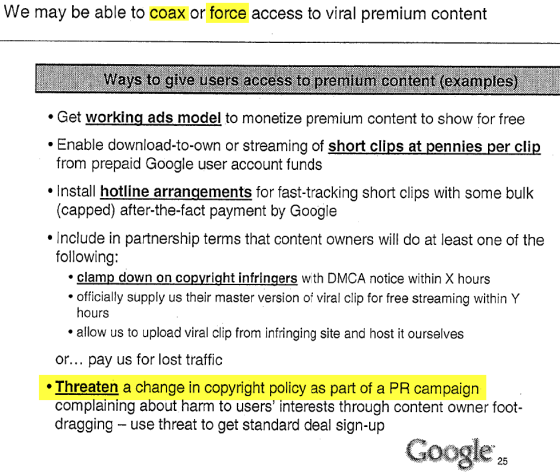
Companies spend billions of Dollars every year building their trademarked brands. But if they don't pay Google for existing brand equity then Google sells access to that stream of branded traffic to competitors, even though internal Google studies have shown it causes confusion in the marketplace.

The Right to Copy

Copyright protects the value of content. To increase the cost of maintaining that value, DoubleClick and AdSense fund a lot of copy and paste publishing, even of the automated variety. Sure you can hide your content behind a paywall, but if Google is paying people to steal it and wrap it in ads how do you have legal recourse if those people live in a country which doesn't respect copyright?

You can see how LOOSE Google's AdSense standards are when it comes to things like copyright and trademarks by searching for something like "bulk PageRank checker" and seeing how many sites that violate Google's TOS multiple ways are built on cybersquatted domain names that contain the word "PageRank" in them. There are also sites dedicated to turning Youtube videos into MP3's which are monetized via AdSense.

Universal Youtube Search

Google bought Youtube and then swiftly rolled out universal search, which dramatically increased the exposure of Youtube. Only recent heat & regulatory review has caused Google to add more prominent links to competing services, nearly a half-decade later.

A Unit of Obscurity

Knol was pushed as a way to revolutionize how people share information online. But it went nowhere. Why? Google got caught with their hand in the cookie jar, so they couldn't force the market to eat it.

Scrape You Very Much

Philosophically Google believes in (and delivers regular sermons about) an open web where companies should compete on the merit of their products. And yet when Google enters a new vertical they *require* you to let them use your content against you. If you want to opt out of competing against yourself Google say that is fine, but the only way they will allow you to opt out is if you block them from indexing your content & kill your search traffic.

“Google has also advised that if we want to stop content from appearing on Google Places we would have to reduce/stop Google’s ability to scan the TripAdvisor site,” said Kaufer “Needless to say, this would have a significant impact on TripAdvisor’s ranking on natural search queries through Google and, as such, we are not blocking Google from scanning our site.”

From a public relations standpoint & a legal perspective I don't think it is a good idea for Google to deliver all-or-nothing ultimatums. Ultimately that could cause people in positions of power to view their acts as a collection which have to be justified on the whole, rather than on an individual basis.

Lucky for publishers, technology does allow them to skirt Google's suggestions. If I ran an industry-leading review site and wanted to opt out of Google's all-or-nothing scrape job scam, my approach would be to selectively post certain types of content. Some of it would be behind a registration wall, some of it would be publicly accessible in iframes, and maybe just a sliver of it is fully accessible to Google. That way Google indexes your site (and you still rank for the core industry keywords), but they can't scrape the parts you don't want them to. Of course that means losing out on some longtail search traffic (as the hidden content is invisible to search engines), but it is better than the alternatives of killing all search traffic or giving away the farm.

Should You Use Third Party Logins?

There are pushes to minimize the need for passwords, but after the Gawker leak fiasco who wants to have a common shared single point of failure for passwords? Sure managing passwords sucks. But friction is a tool that helps cleanse demand & make it more pure. It is why paid communities have a higher signal to noise ratio than free for all sites. Any barriers will annoy people, but those same barriers will also prevent some people from wasting your time. If they are not willing to jump through any hoops they were never going to pull out the credit card.

37 Signals recently announced they were retiring their support of Open ID. At the opposite end of the spectrum, eHow just announced they are requiring Facebook logins:

We have some exciting news to share about eHow.com. Beginning in February 2011, Facebook Login will be the exclusive means for login to the site. You’ll be able to use your new or existing Facebook username and password to connect with the eHow community. We’ll also be removing eHow member profiles to help you streamline friend lists and eliminate the work of managing multiple online accounts. Additionally, we’ll be closing forums on the site. We want to hear from you directly, so moving forward, we encourage you to communicate us through the “Contact Us” section of eHow.com.

We’re excited to introduce these updates! Get started and click on the Facebook Connect button in the upper right corner of the home page to login. We want to keep in touch, so also remember to Fan Us.

My guess is they might be trying to diversify their traffic stream away from search & gain broader general awareness to further legitimize their site. But the big risk to them is that Facebook is an ad network. So now competing sites will be able to market at their base of freelance employees. What's worse, is that there was a rumor that Facebook might plan to launch a content mill strategy. There are plenty of ways for that third party login to backfire.

My believe is that you shouldn't force logins until you have something to offer, but that when you do you should manage the relationship directly. Does that mean you have to reply to every message? No. But it does mean that if there are ways to enhance value through how you interact with your established relationships you are not stuck under the TOS of a 3rd party website which may compete against you at some point. Sure that means some upgrades will be painful, but it means that you get to chose when you do upgrades rather than letting someone else chose when your website breaks for you.

I view third party comment systems the same way. If the person providing the service changes business model it does not mean you are stuck paying whatever rate they want or starting over. This is one of the big advantages of owning your own domain name and using open source content management systems. You don't have to worry about a Ning pivot or a Geocities shut down. Sure this approach means you have to deal with security, but then leaving that sort of stuff to Facebook might not be great anyhow.

Pages