Comments are Easy Marketing Opportunities

People talk about things everyday. When most people talk about SEO (especially those who have never tried to understand anything about how search engines work) they typically tend to spew out biased ignorant garbage that needs corrected.

Of course I don't want to make it sound like I never make mistakes or do stupid things. They both happen all the time. And people have corrected me as well.

The error I tend to have a distaste for is one of intent...the people talking trash about SEOs...what percent of them even tried to learn anything about the industry before they paid a scammer and got mad, or just posted some hate speech with no knowledge on any level?

It is the equivalent of me saying all PHP programmers or web designers are scum because I was cheap and lazy and hired a bad one. I try to go out of my way to make sure I express my name and brand as being a person not being afraid to call a spade a spade. Sometimes people like it. Sometimes they hate it.

Sometimes I intentionally piss people off. One of the most effective ways to do that is to change the frame of reference of the conversation to use their own words 100% against them to make them look silly. The beautiful thing about the web is that you can take a few minutes to craft your response. You don't even have to be immediately good with words to drive a point home.

You can also do well being exceptionally polite to people if you prefer not to be known for calling people out. Any way you slice it, each ignorant post is a marketing opportunity for hungry SEOs. Sometimes even when well respected people outside the industry make positive comments about members of the industry (or reference their content) someone will come along and quickly denounce their posts.

Here is a quote from Andrea, who tends to think Todd is a bad person because his is guilty of being a knowledgable SEO:

BS. That guy is a SEO consultant, most of which are purveyors of snake oil to the unwary. And that's putting it politely. Traffic comes from content, from passion and from something, anything that actually means something to people. If you haven't got something worth talking, nobody will be talking about it, SEO optimized or not.

to which I replied (not sure if he will post it there, so I will post it here):

Andreas,
Anywhere that there is $$$$ and confusion sleazeballs will follow and sell snake oil. But for you to write off the entire industry is ignorant at best. And that's putting it politely.

I recently wrote an article about some of the reasons the SEO industry has a black eye. seobook dot com/archives/001561.shtml

Part of it was that sleazeballs sell snake oil. Another part of the equasion was that most clients are lazy.

>If you haven't got something worth talking, nobody will be talking about it, SEO optimized or not.

People talk about stupid crap all the time. Some people even talk about things they know nothing about. Take yourself, as an example.

You really believe that quality content and passion are the only thing that makes pages rank?

How come I have pages ranking in Google right now that are only page titles, waiting for me to develop and place ad filled content on them? For terms that are worth thousands of dollars a month?

In fact, I have ranked domains where the site was not even up. One of my sites was ranking #6 for "search engine marketing" when Google's cache showed no content at the URL. Since the site was not even up clearly it was ONLY links that made it rank.

The term it was ranking for? search engine marketing.

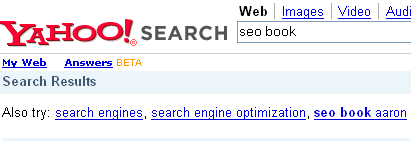
Here are a few screenshots. This is the search result:
seobook dot com/images/no-page-1.gif
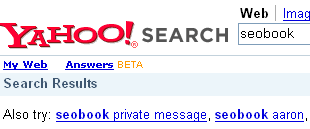
Here is the cached copy of the site not existing:
seobook dot com/images/no-page-2.gif

>I can tell you first hand that SEO only works for sites with great content since building link popularity is nearly impossible for sites without great content.

I have made thousands of dollars off sites that were of such low quality that I was ashamed to have owned them...some of which now only exist as trophies for how to make bad sites.

You can get links to ANY site if you are creative enough. Links are just citations or references.

Look at this page, published today no less:
problogger dot net/archives/2006/03/24/pixel-ad-site-targeting-bloggers-with-deception/

Also some people will sell a link to anyone. And as shown from that Problogger post, some people get links exclusively because their content quality is so low.

MetaFilter and MSNBC even referenced an auto content generator
www dot metafilter.com/mefi/41549

Content quality typically does not get much lower than that which is automated or machine composed.

Whenever people talk in absolutes they are easy to shoot down, because the array of human emotion and human activity is so broad. Those who speak in absolutes typically (although not all the time) do not consider much beyond their own perspective.

For anyone who thinks Andrea had any credibility on any level to talk trash about SEO, check out what Google sees as their home page. As of writing this it has no text, no links, and the even the word BIG in the page title is ran together with numbers with an underscore separating them BIG_v1.02 (so Google sees the page title as two words - BIG_v1 and 02). That is literally the single worst SEOed page I have ever seen in my life.

Lowering Search Conversion Rates as You Increase Visibility

Generally longer search queries indicate more implied demand and a higher qualified visitor than short queries. Thus they tend to convert better, but sites that lack strong visibility for terms outside of their core brand may convert visitors exceptionally well, because often their sites are so hard to find that visitors have already they wanted to buy from them before they got to the site. As your site gets more exposure your conversion rate may drop since you start getting industry focused leads, and not just leads for your official branded name.

As you build out a PPC account you can find cheaper terms if you think peripherally and laterally. Odds are that some of these terms may not convert as well as the core brand or industry standard terms, but the discount offered by a lack of competition typically more than offsets this, especially in hyper competitive markets.

Similar could be said for organic search. Lower competition means lower cost to get to the top of the results, although related terms may not convert as well as the core term set.

If you start an aggressive SEO campaign your overall conversion rates may drop because an increase authority score will make your site relevant for some terms where your site is not one of the most relevant resources. Due to less qualified visitors finding your site your overall conversion rates may go down, but eventually if you make your sales process more efficient you can help offset that and raise your conversion rate on your core terms.

If you rank well enough to be seen over and over again and do heavy contextual advertising you can also help boost your brand visibility, which can lead to more search volume your strong converting core branded search terms.

Why Goog is a Buy: Killer Value Per Inch / Pixel / Second

Hehehe. So I know nothing about the stock market, but I recently revived the ads on a low profit site that is in a general and low profit category.

What ad unit that provided the most value per unit space? My AdSense search box. BY A LOT!

Moderate to high traffic publishers are probably screwing up if they litter their sites with ads and don't have a profit share search relationship with a major engine.

As search eats more of the web many publishing models are getting chewed up. Those who are good at monetizing usually do one or more of the following:

  • create content late in the buy cycle;

  • find uncovered niches that are easy to compete in;
  • leverage viral non commercial ideas to give their site an unfair authority advantage over competing sites;
  • are good at mixing in a few affiliate advertorials (if you can spend 12 hours creating a page that makes a few hundred a month for years on end that is a nice ROI and passive income stream);
  • use their market position to make money in other ways; or
    negotiate strong ad prices directly.

Those who lack every piece of that skill set may still make a decent living off the web by just making it easy for their visitors to search for more information.

If the next major OS and browser release gets people to view the web differently (ie: search is ALWAYS done from the browser) that may change, but for now the search box is the easiest loose money waiting to be collected by most content publishers. (Millions of dollars a day are waiting to be collected).

Also when advertisers opt out of contextual AdSense ads their ads usually still show up in publisher partner search ads, so that advertiser depth can still be rather appealing to publishers that do not fear losing their visitors (and typically the feel for the need to keep visitors misses what the web is about).

Another nice benefit of the Google search box on your site is that most people view it as a service instead of an ad, so it is an effective way of cramming another ad or two on your site without your site looking any spammier or ad cluttered. People also sense that THEY are in control when they search, so they find the ads there more acceptable. Provide search inline with content and you will be surprised at how many people use it.

Cough

Web 3.0: Google as the Web

Peter D thinks Google = web.

The basic web unit is no longer a site, or even a page. It's a piece of data. And that piece of data can appear anywhere.

Like in Google Base.

Or at least I chose to literally interpret his post that way.

If your sites don't have any of the following:

  • access to a specialized database that is hard to compile or gain access too

  • a strong brand
  • tools that save people hundreds or thousands of hours a day
  • a human voice
  • original ideas
  • a history of creating and sharing value
  • a reason to visit your site or channel daily

and make your living off the web, you may want to read this post to see the trend, and look to quickly develop one or more of the above.

The trick for Google as they consume verticals is for them to find the balance of what they can take while fostering relevant efficient business models (ie: turning legacy publishing business models into always on web friendly models). Until legacy models are reformed or displaced Google will promote some trashy stuff as a casualty on the way to their end goal. Each new market Google creates will have holes that act as a marketing mechanism to market the marketplace.

Some articles highlight that content ads should have more value since they are around for more time than search, but the quicker you can solve my problems the more value you create. That is the point and power of search.

The problem with the traditional ad model is that most content ads are still a distraction. Yahoo! remains clueless on this front - optimizing ads for earnings instead of relevancy - which will only work until stupid advertisers stop overpaying for ads and calling it brand spend.

Most quality content is not produced to let ads become an important part of the content. Writers do not trust the ad networks well enough, and there is a long standing belief that ads and content need to be separate. Heaven forbid the ads are allowed to become actionable content. Advertisers are scared at the idea of integrating ads into active channels.

Think of Google as a market maker with search being at the top of the market, and most of their secondary goals and markets being based around making their primary goal better. With Google's cheap computer cycles and their ability to organize information they have the ability to make many markets far more efficient, then take a cut of the profits from the efficiency they created.

Google Base will make the real estate market more efficient, then as categories grow Google will charge for listings a la Craigslist. Google also plunged into the financial market.

As consumers become engaged content creators they will become more educated about the world not being sustainable and will demand more corporate accountability. Many business models will shift from one time sales to recurring subscriptions based largely on relationships. Items, relationships and outcomes will become easier to track.

As more of the offline world goes online they will be the default inventory management system for many consumers, retailers and wholesales.

Think of Google as the ultimate CRM system. Sure my business is web only, but I have regularly used Google's search, email, chat (easy to use - free voice to anywhere), advertising, contextual, and tracking systems. That is pretty much everything but hosting, payment, packaging and order fulfillment. They also offer hosting via Blogspot and Google's page creator, and payment via Google Base. For electronic content they will also do order fulfillment. Given enough time they will probably create extensible hosting and operating systems that allow you to create and store ideas and software.

They don't take any money off the value add from many layers because they are not yet dominate enough in them and they want to take more value off search...and vertical search. Many of Google's other layers are about keeping competing models honest to keep business costs low.

I think that within 20 years they will become the default commodities trading platform worldwide. Not only do they tie historical performance to news, but they also have the largest database of intentions and allow anyone to look at historical performance or compare brand strength and trends at the keyword level. What sort of bets, spreads, and prices could Google offer compared to others when so many people are willing to share their dreams, desires, consumption habits, needs and fears with them.

Give Me All Your Monies: the 12 Sins of SEO's Black Eyes

Via SER the latest SEO scam marketing technique is to cold call and threaten well ranking sites that their site will be banned if they do not pay you. If you say no, they threaten to turn you in for spamming to get your site blacklisted quicker.

According to David Wallace the firm that is allegedly doing this is Paramount Webmasters. A funny detailed email exchange is posted here.

Important to note that this blackmail issue is not any of the arbitrary black hat seo vs white hat seo crap. Search spamming actually has the ability to teach you algorithmic criteria for ranking well in the engines. Many of the best SEOs are also search spammers. Think of them as field tested experts. But search spamming is not the problem here.

This problem is purely a business ethics issue. In any market where business owners are uninformed some sleazeballs will come along and try to bilk a few hundred or few thousand dollars out of businesses. Those people are just like the pieces of garbage that mail me domain monitoring, domain registration, and trademark monitoring scam mail.

I think the reason SEO gets more of a black eye than domain registrars, hosts, and web designers is largely determined by roughly 12 criteria (3 here and the rest later on):

  • legitimate SEO services may have a fairly high price point due to their great value

  • most people seeking SEO preclude honest service providers because they think in terms of free traffic
  • many people only hear of search engine marketing WHEN a scammer contacts them

Because you notice registrars have a practical function BEFORE scammers contact you, if you ever get ripped off by a bogus bill you don't associate that with registrars, you associate that action with scammers. You have to have a certain sense of curiosity or an analytical mind to naturally want to think about how and why search engines determine relevancy. In SEO all too many webmasters discover the topic WHILE a scammer has contacted them offering to blackmail them. Thus their mental frameset is first determined by their interaction with scammers.

Worse yet, after getting scammed once or twice a business owner might feel beat down and never have enough trust in the field to be able to spend enough to afford someone who would do honest quality work, so they keep going back to

  1. scammers OR

  2. new SEOs who do not know the value of their services, which are also likely to have many of the following downsides:
    • limited experience

    • spreading themselves too thin because they need to do too much work to get by
    • limited self confidence
    • poor communication skills
    • such a low price point that massive algorithmic updates could cause their service prices to go into negative margins
    • a lack of understanding how SEO fits into the broader marketing spectrum
    • a margin based business that undercharges off the start is doomed to fail as the medium grows more competitive (Some businesses may change their prices, but the odds of finding one that is deeply undercharging which raises their rates prior to a huge algorithm shift almost destroying their business is probably next to none. If they raise their rates after an algorithm has caused your traffic to diminish your business relationship stands a good chance of ending.)

Either way, after a business is burned once or twice they are likely to keep getting burned due to a fear of committing too many resources.

Other issues that give SEO's a bad rap are:

  • many business owners are lazy and want to outsource the blame for their own failures and lack of ability to adapt to evolving technologies

  • some updates cause bad algorithms to roll out and screw with even well establishes sites
  • while new updates are rolled in SEO's may get contacted by nearly all of their customers at the exact same time, and until things settle down sometimes it does not make much sense to make any changes
  • SEO is a game of margins. Unless you are creative or really understand social networks creating a future proof well ranking site costs much more than satisfying the current ranking criteria.
  • many people carpet bomb the web with marketing messages. some of those messages are used to manipulate search results. blogs are viral in nature and blog software makers were slow to adapt.
  • some people scraping by at low price points seeing more of their budget getting turned toward search instead of design or other services are chuck full of envy
  • SEO is largely an invisible process to the average business (ie: they don't see the link building or much of anything until they see the results weeks or months after a campaign starts), but if it works most businesses are not likely to share that information. Would you share the secret to your success? If it doesn't work people are far more likely to share a complaint. With so many people chasing the top results most of them are going to end up disappointed. Not everyone can rank #1.
  • Competition: With the algorithms advancing and the field getting so hyper saturated it is getting harder for any one SEO or SEO company to stick out in a good way and get noticed. Often one of the best ways to create new buzz is to mention controversy or when things go awry elsewhere. Thus for the sake of interest or plublicity we - as an industry - eat our young. The media also prefers to paint the controvercial angle - because it sells more news print.
  • Competition: Search is an easy concept to like. Google has a strong brand. It hurts their relevancy and revenue when people manipulate their index. As recently as a week ago Matt Cutts was quoted in the Economist saying renting links was unethical. Financially Google is primarily a link broker, making roughly 99% of their revenue from selling links. Google is worth over $100 billion and makes roughly 99% of their revenue by selling links. By their own standard Google must be exceptionally unethical, especially since they sell links promoting child prostitution!

In the same way I would like to disassociate Paramount Webmasters from the SEO field, it is also worth noting that a business can use direct mail or the phone for marketing (even Yahoo! cold called me asking me to join their ambassador program) and be an ethical business, but it is important to look for independent signs of quality and do a bit of research before buying from anyone who first contacts you. It is usually better to chose your business partners than to let them chose you.

Google AdWords Opens Up Keyword Research Tool, Adds Seasonal Data

Google recently opened up their AdWords keyword research tool by allowing it to be accessible from outside AdWords accounts. They also added seasonal search volume data for global and local searches, and allowed it to be accessible by match type (ie: broad, phrase, exact).

That will likely just about kill off most of the paid keyword research tool market.

I told MSN that I thought one of the ways they could possibly catch up a bit with Google on the SEM front is to make the default keyword research tool. Google's now is feature rich, shows seasonal data, data by match type, and the data is easy to export. As Google, Yahoo! and MSN jocky for position you can bet that their keyword research tools are only going to get better - although I don't think Yahoo!'s crusty old tool has changed in about a decade hehehe.

Google Transfering Domain Trust to Spam

On Strike Point today DaveN noted that subdomains are doing well in Google again.

SEO Blackhat posted about a site making big $$$$ by getting indexed as framed content off a well established .gov domain.

It is easy to find those sorts of sites by searching for something like [inurl:.gov frameredirect]. Although Quadzilla said Google is already plugging that hole I am sure there are others still open.

Although the links are in javascript, it really shows what a scam in general the web filtering concerns and the Ready.gov site are when you realize just how easy it is to have Ready.gov reference your site or a porn site or an Al Queda site of your choice.

How pathetic is that?

A Hard Rain's A-Gonna Fall!

Why I Think Most SEO Software is Trash

Recently the Pittsburgh Post Gazette quoted a person offering tips to ranking in MSN:

Mr. Sweet, who is senior sales consultant for Nauticom Internet Services in Sewickley, posted several paragraphs, trying not to use the term "yellowware" more than 4 percent of the time so it wouldn't be classified as spam but also to include enough content to lure the search bots.

Within three weeks, his listing showed up at the top of MSN.com's "yellowware" search -- at no cost.

Now when you look at the page ranking in MSN you notice the following problems:

  • the page title is one word, and thus generally not very compelling, having no modifiers (to pick up related traffic or appeal to prospective clients) and no calls to action in it

  • the URL has ID in it twice, with a long variable string after each one
  • many search engines would not want to index URLs like that if they thought those stood a good chance of being session IDs. In fact in Google's guidelines state "Don't use "&id=" as a parameter in your URLs, as we don't include these pages in our index."
  • not sure if the page may be indexed in Google AFTER I linked at it, but in spite of the site being around for at least a few months and already showing PageRank the example page is still not cached in Google yet.
  • Google is the biggest search engine. Not even being in their index is a brutal miss for an example SEO page.
  • the content reads like it was crafted with search engines in mind, which is not the type of content that tends to convert well if you are selling stuff on your site (though ugly content like that might be great for getting people to click off onto PPC ads)

One of the biggest advantages of mixing PPC in with organic SEO is that it forces you to appreciate lead value, and to create content that converts.

Most SEO software gives you an arbitrary framework which prevents you from focusing on conversion and profits. Not every site is for profit, but you still want to create content that people would like to read and perhaps share.

Here we have a newspaper quoting a guy who has a site that messed up from a SEO and conversion perspective, and his tip for people is to focus on keyword density, in spite of keyword density losing its relevance years ago.

Imagine a conversation inside a shop selling junky outdated SEO software that has been rendered irrelevant by improving search technology.

Worker: Hey we are giving people some bad information here. Our software is kinda bogus and without purpose now isn't it?
Boss: It makes us $70,000 a month. It clearly has a purpose.
Worker: But doesn't it gives people bad advice and outdated tips that actually hurt their businesses?
Boss: It makes us $70,000 a month. It clearly is a valuable piece of software.

And so people continue to chase keyword density, getting ripped off along the way.

Creating the Ultimate Resource

I recently took another peak at Rand's Beginners Guide to SEO, and think this is one of the most useful points to SEO (worth noting over and over again):

One Great Page is Worth a Thousand Good Pages
While hundreds or dozens of on-topic pages that cover sections of an industry are valuable to a website's growth, it is actually far better to invest a significant amount of time and energy producing a few articles/resources of truly exceptional quality. To create documents that become "industry standard" on the web and are pointed to time after time as the "source" for further investigations, claims, documents, etc. is to truly succeed in the rankings battle. The value of "owning" this traffic and link source far outweighs a myriad of articles that are rarely read or linked to.

Rand's point there is exceptionally valid. As the amount of information available increases what is link worthy changes. I am sure there will always be exceptions to rules, but in a new market a link list may be link worthy, then as it gets more established a directory might be useful, but then as it gets even more competitive people like editorial content, quotes and specific reasons why cited resources are important. Then some may eventually expect focused regularly updated channels.

While the core message of most internet marketing information sites may be exceptionally similar (containing the following ideas)

  • be original

  • be interesting
  • it is all about the reader

it helps to come up with something that defines success on your own terms from your worldview. For example, Brian Clark recently gave a free viral copy report, trying to define viral content in the terms of a copywriter who understands blogging. It helped to add the with blogging part to his idea because Seth Godin already snagged the free viral content market position with Unleashing the Ideavirus.

Once you grab a market position it is hard to lose unless you become lazy and/or uninspired, or create massive barriers to distribution.

Digg the Wikipedia Editors: a Bunch of Flamers!!!

Since running Threadwatch I realized I am probably not the strongest community leader, generally having a hands off mentality. I tend to find the most entertaining threads at Threadwatch are very flamy in nature. As the person running such a site it is hard to derail flames while they are causing active heated discussion. While Brett Tabke has never done anything wrong to me personally (in fact he has generally been rather cool with me multiple times) TWers roasted Brett pretty bad in this thread and it even caused the following comment love this thread, everyone can sigh in relief, the old TW is BACK baby!

I think in small niche communities flames cause more people to cite more resources and better information to try to prove their points. Sure it is easy to get irrational, but that thread linked to above has links to and quotes from so many useful topical resources. But as decentralized communities widen out it seems it is easier to get more irrational quicker. Things seem to become more of an overgrazed commons fast.

My old roommate tended to view information on the web with a sense of purity, but when you look at Danny Sullivan needlessly getting flamed on Wikipedia and then again at Digg it makes you wonder if leaderless community sites only obviously fail in topics you know well, or if they are bad across other topics as well.

Without flames and emotions can communities exist? Can people debate without occasionally going after each other? Can people get past their differences if the communities are rather broad in scope? If communities get too broad can we get past our lack of trust?

Surely the controversy offer link opportunities that should have their motives questioned, but when the Wikipedia editors flame Danny Sullivan and naturally cite this site as a resource for their Free Republic page (which is a political ideology that is not mine) and do not cite it for the SEO topic isn't something screwed up? How pure is the information? How well does THAT scale?

And I am not whining about not being able to get a link, I already have a few and know some of the workarounds, but the point is more that if they drive away people like Danny Sullivan (a guy referenced by Larry Page & Sergey Brin when they were founding Google) then who - other than novices or self promotional spammers - do they expect to contribute to the Wikipedia search section?

Pages