Anita Campbell Interview

Since 2003, Anita Campbell is perhaps best known as the Founder and Executive Editor of Small Business Trends, a website bringing over 1 Million readers annually a clear focus on small business news, trends, advice and everything small business. A multi-award-winning site (including a 2010 SEMMY Award), Small Business Trends has remained a dependable and provocative resource of relevant, small business-related content where expert opinions fuse into passionate, intelligent user discussions.

Anita's journey includes a variety of senior executive positions in the corporate world, as well as being an executive and associate counsel for a regional bank working on lending, credit cards, bankruptcy, real estate, large contracts and financial transactions. Her move into several successful years online could easily be seen in many ways as a model of entrepreneurial success. An outspoken, passionate advocate of all things small business, Anita Campbell has an opinion that has been widely recognized and celebrated by her peers, colleagues and the various pillars supporting the small business community.

We were recently lucky enough recently to get Anita's thoughts on a few things surrounding her success, the current state of small business, and what it takes to make a website meaningful and effective...a powerful force that commands attention.

Daily, you are having one-to-one communications with business owners around the world. This allows you a uniquely intimate perspective. Kindly share your general thoughts regarding:

  1. How do you see prime-time media's perspective differ from the way conversations trend on your web sites? On which topics do they tend to be more in-synch? The media tends to portray the economy and the condition of small businesses as more negative than they are. If you only watched TV news, you might get the sorry impression that the typical small business owner is some sort of loser who couldn't possibly succeed in business without government "help. " We portray business owners as being in control of their own destinies. The people who participate at Small Business Trends are for the most part optimistic (entrepreneurs are the world's biggest optimists!). They're much more self-sufficient and "can do" in attitude. We give them advice and tips they can use to solve their own problems.
  2. How do you see the general confidence level of business owners today, compared to five years ago? What are the short-term factors that offer sway? It's hard to tell, because the media colors our perceptions so much. And the media tends to focus so much on the negative - they emphasize 7 out of 6 problems. How much is truth? How much perception? I would say that throughout this recession the small biz experience has been mixed. I've heard everything from "this is the worst we've seen it in 30 years" to "business is booming. " Why such vastly different confidence levels in this recession? In part it depends on how strong the business was before entering the recession - the strong were better equipped to ride it out and even grow...no surprise there. It also varies by industry. For instance, online businesses and service providers to online business are doing well, or have experienced only a small drop in results from 2008-2009 and are bouncing back already in 2010. That's largely due to the growth of the Web as a business channel. Example: online advertising and publishing are growing in 2010, even as their print counterparts are declining rapidly. So ask a print publisher how business is doing and you hear a tale of woe. Ask an online publisher and you hear a different story.
  3. What, if any, is the common cry among business owners regarding:
    • Finance: There's a lot of lawmaker blather about the "credit crunch" being a huge problem for small businesses. Some give the impression that there's nothing ailing small businesses that a loan wouldn't cure (whether we need a loan or not!). Here's the reality: only a minority of small businesses need or want loans. Sure, for those who do need loans, conditions are tight and some businesses will fail if they don't get desperately-needed credit. But loans are hardly a silver bullet. Take, for instance, SBA loans. I'll be the first to say SBA loan programs have been good for the small business community. But remember that they touch a small percentage of businesses - last year there were fewer than 100,000 new SBA loans made (and 27 Million small businesses). What would help the majority of small businesses far more is for consumers and B2B customers to have the confidence in the economy to buy from small businesses and pay them promptly. But it's much harder for lawmakers to convey leadership and inspire confidence than to simply spend the people's money on another banking bill.
    • Opportunity: Capitalizing on opportunities has a lot to do with your attitude. Even in difficult economies enterprising entrepreneurs spot and seize opportunities. Some quick examples: recently we saw TechCrunch, a 5-year old blog-based business, being acquired by AOL for anywhere from $25 to $40 Million, depending on which report you believe. In other words, an entrepreneur created 8-figure value in 5 years, part of which was during a recession. It was during the recession that Zappos, a 10-year old company, cracked $1 Billion in sales. So far in 2010, Google has made 24 acquisitions of small companies - meaning 24 startups have created enough value to get a big payday at the tail-end of a recession. Success stories are all around us - especially in the online space.
    • Government relief programs: Being of a free-market capitalist bent, I am not a fan of most government programs, for 2 reasons: (1) Someone has to pay for them in the form of taxes, and the tax burden usually hits successful business owners hardest. (2) Government programs are contrary to the entrepreneurial mindset. Successful small business owners aren't looking for government help. They just want the government out of their way.

Small businesses generally tend to be the most limited in terms of resources. What made you decide to focus on helping that market?

I have always kept my ear to the ground, and could tell that large companies were increasingly interested in the small business market, so I took a risk that would be great advertiser support - and it has paid off. Plus, I myself am proud of being a self-sufficient, responsible business owner. We Americans dream of being entrepreneurs. It's a high calling - who better for me to serve?

You have had years of success with your business-related podcasts and audio downloads, but the market is continually changing as computers can handle larger bits of information, faster. There is now a veritable cornucopia of loosely related, potentially strategic media buys. What would be your general advice for someone looking to invest in broadcasting business information in 2010, and perhaps having it go beyond? What type of format has been the most cost-efficient, and/or scaled the best for you so far, when measured over time? Any new ones you are trying?

Text-based information forms the bulk of our published content, and in the future will constitute 80% of our content. I think that's true for most B2B sites. Text is easy to consume quickly. It's easy to quote and cull statistics or other biz info from, and is capable of getting readily indexed and ranked in the search engines.
We do podcasts but find that only about 10% of our audience who read information will listen. Not everybody has the time to listen - it's faster to read. And some people simply don't absorb information in an auditory fashion - they have to SEE it. However, people who listen to podcasts download them to their iPods and take them with them while working-out, on trains and planes, while driving in the car - in short, away from their computers. So you are reaching people well beyond their computers, and you get more of their mindshare during those times. For that reason, some of our most rabidly loyal audience are our podcast listeners. With podcasts you exchange breadth of audience for depth of attention.

We haven't done as much with video up to now. We plan to do more. It takes more technical know-how to create quality videos, than write an article. And there's a bit of a learning curve we haven't made time for, to figure out how to optimize online video for YouTube and search engines. But video certainly deserves attention by entrepreneurs in their content strategies.

You have a variety of guest authors, and it keeps the content on SmallBizTrends and your other sites fresh, unique, and diverse - and perhaps most importantly, relevant. How would a smaller player attract any level of talent or look to fill a website without resorting to a "content-mill" approach of adding semi-legible filler to try to compete? To avoid staffing, how have you found it effective to generate unique, user-generated content? Is it volume, depth of expertise, or unique style that seems to be the biggest and most consistent draw?

To attract contributors you have to first create a credible site people want to be seen on. If you fill it with "content-mill" type content, what person would risk their good reputation by guest posting on your site? Webmasters and site owners may not want to hear this, but it takes time and a bit of money to create a credible site. To jump start the guest posting, try recruiting paid authors who already are known in their fields - find some good ones, especially those who also amplify their own articles on social media - and make them an offer they can't refuse. Emphasize quality over quantity.

Also, make sure you have the infrastructure and staff to support guest authors - they need a lot of care asnd feeding. You won't notice this with just a couple of guest authors, but as your site scales up, it will eat up more and more time.

It's a misperception that guest posts are a free source of content for your site - nothing is truly free in business, and you pay one way or another. I am not blowing my own horn when I say we could have 50 times the number of guest authors as we do - after 7 years on the Web with a laser focus on the small business space, it's the truth. But we don't have the internal capacity to answer their questions, get them set up in the CMS system, review and copy-edit their submissions, find and add images to their posts, etc. All of that takes time, and you have to have staff to handle that. Some sites let almost anyone post - as in "if you have something to say, say it on HuffPo." But few sites have the wherewithal of a Huffington Post to pull that strategy off. For most sites, quality will inevitably slip and it becomes a race to the bottom. Your most loyal audience fades away, your best guest authors get disgruntled because quality is going down, and advertisers don't want to pay premium rates to be seen on a low quality site.

We deal with this issue via a multi-tier strategy to include as much of the community as possible to share their content, yet still maintaining quality control. We have different levels/types of sites. On Small Business Trends, we accept a (relatively) small number of guest authors - right now around 100. There, we focus on original articles of roughly 500 words. Then we have a smaller blog that takes guest posts from those who we don't know as well. If they get a good response, we invite them to post on the larger site. We also run a social bookmarking site, BizSugar.com, that anyone can share their small-business related blog posts on - that site is tightly moderated by a global team of moderators 24/7, but as long as your content is relevant and informational in nature, anyone can post there. Finally, we do a hand-curated (by our editors) recap of 10 small biz news articles and high-quality blog posts, daily M-F, from around the Web. This way, we keep control over quality, but highlight as many voices of the small business community as we can. Our motto is: be INclusive, rather than EXclusive - but still maintain quality.

How much is visibility worth? At some point, the traffic and credibility of your site increased, and likewise I assume, did your negotiating power with both content producers and advertisers. Was there a specific point when you recognized your traffic stream and potential as a meaningful bargaining chip and realigned your thinking and negotiations?

Visibility is priceless for marketing - you just have to remember that it's not a business model. Visibility (brand recognition, followers, traffic) is much more critical to actively go out and seek when you're first starting out. A lot of entrepreneurs barter services in exchange for visibility. But at some point you should start scaling back on the bartering as your visibility grows, and make sure you're not spending all your time trying to get visibility, but rather are making money. So think of your efforts in two stages:(1)early on, do guest posts, appear at events, etc. in exchange for visibility, without expecting to be paid. (2) Later, as your brand gets its legs, scale back on the barter activities, and start reaping the benefits. This is when you can command money for speaking engagements and require payment for your writing.

How much of the success you've measured fits into any original plan you had for it? What is the best thing that happened to you (in this regard only) that you never saw coming?

I knew the small business market was hot. What pleasantly surprised me was the level of advertiser interest, which has only grown during the recession. The single best thing that happened was getting recruited by Federated Media, which brings blue-chip advertisers and sponsors. It's been a strong partnership that I value. That partnership has funded the hiring of staff and numerous independent small businesses as service providers. Looking back it seems like a no-brainer to have signed with FM, but at the time FM was an untested startup and I agonized for two months before signing a contract.

According to Alexa.com regarding SmallBizTrends.com, "Search engines refer approximately 17% of visits to the site." Given your knowledge of SEO and the contextual depth of the site, this number seems rather small. Care to comment on its relevancy? How do most people find the site?

The Alexa number is off - the search traffic is higher than that. But I can tell you that search accounts for less than 50% of our traffic. Much of our traffic comes from:

  • RSS feed
  • direct referral (people typing in the URL or coming from bookmarks);
  • social media (Twitter is our single largest social media referrer, with Facebook, LinkedIn, OPENForum, Business.com Answers, BizSugar and BusinessExchange following);
  • third-party newsletters and syndication (we're in a traditional B2B space where a lot of information is distributed via email newsletters and private intranets);
  • and other sites including other business blogs.

While search traffic is important, having multiple sources of traffic de-risks your business - you won't be driven out of business if some Google change cuts your search traffic.

You are an outspoken advocate and user of social media, and were recently recognized for your Twitter influence. Which 4 tools do you now find essential for managing an active social media presence? Has this changed much over time?

I must be different from most, because I prefer the experience of actually visiting the Twitter site. Tools like TweetDeck to access Twitter have a lot going for them, but I find they immerse you too deeply into the stream of your tweets, and isolate you with tunnel vision. I tend to graze sporadically during the day, on Twitter - jump in, jump out. Plus, I like to click through links that people share on Twitter, so it brings me back to the Web anyway. That said, I do recommend some tools:

  1. SocialOomph.com to schedule tweets in advance - sometimes if I come across something I'd like to share on Twitter, but it's 10 pm, I will just compose a quick tweet and schedule it for the next morning so I don't forget. Or when I know I'll be tied up in meetings or traveling, I will schedule some tweets in advance. SocialOomph does a lot more, but I use it mainly for scheduling. Hootsuite is a similar tool.
  2. Postling.com is a tool I am playing around with right now. It sends a daily email roundup of social mentions.
  3. Twitter search - use the Twitter search function to find like-minded people and information relevant to your business. This is the tool I use most often.
  4. Bit.ly - I have the Bit.y URL shortener button on my browser so I can quickly shorten a URL in one click, to share on Twitter or another social site.

How much SEO infuses into your strategies today when compared to two or three years ago?

For one thing, I appreciate the power of SEO much more today - and it's all because I know more. I still use an outside SEO consultant and an SEO copywriter (both are members of the SEOBook Forums). But together we get more done as a team, because we speak the same language, without too wide a knowledge gap. And I just feel more confident with more knowledge. Confidence is such a huge part of success. Lack of confidence makes you slower to jump on opportunities and hesitant to take calculated risks. As far as our publishing business, we do some things differently today as a result of understanding SEO better:

  1. create better titles for articles, with better use of keywords
  2. target niche content so we can leverage long-tail searches
  3. use more text along with individual podcast recordings to help them get found better by people searching in Google or Bing

Even writers and editors now need to know a little about keywords and how they affect traffic. Bloggers tend to be savvier about the how social media and search can bring a bigger audience for their writings. Professional journalists, on the other hand, tend to think their job is done when they submit their article for publishing, and tend not to think about how a publisher gets traffic (although they should).

In your experience, is content truly king, or can algorithm knowledge routinely trump quality?

There's a glut of content on the Web today. It's much much harder today to attract attention to good content than it was just 2 or 3 years ago. I've heard other small publishers say they are publishing more content than ever before, yet their traffic has barely increased. I just think the competition is greater - so you have to work harder just not to lose ground. What that means, I think, is that if you want to grow a website and keep competing strongly and attract more clients/customers, you can't just "create it and they will come. "

Bloggers especially got a little spoiled thinking SEO was easy. Many got used to thinking that if they just put up a routine blog post they'd attract traffic. That strategy worked better when there weren't as many blogs - but as the number of blogs and content sites exploded, more than content is necessary.

When competition is tough as it is today, you have to have more arrows in your quiver. What's the answer? Today it's 2 things. Search is one. I'd add social media as the other. If you don't at least know the basics of SEO and social media, you'll have a harder time growing your website and your business, especially if you have the itty-bitty marketing budget most startups have.

I see a lot of ads around the web where fortune 500 brands are paying to market you. How did you build into those types of relationships?

These are relationships built on mutual respect and benefit. The advertiser, quite honestly, is leveraging off of my name and site's recognition and our following in the small biz space, as much as we are leveraging off of their sponsor support (which is what pays our many talented service providers who do a great job keeping the sites going).

We (and in particular, I) had to first build-up visibility and a reputation in the small business space before we could even think of those kinds of relationships. That was not an overnight thing. First, I'm a bit older than some Web entrepreneurs and bring a lot of business experience to the table, having been a senior executive in a publicly-traded company. Second, I've also owned businesses with my husband, so I experienced business ownership before I started the site and could speak with authority. And third, Small Business Trends has been around for 7 years, with me working 12 hours a day on it most of that time (I admit to being a workaholic). The first few years I toiled in blissful obscurity. It wasn't until 2005 that things started to pick up, and then they ratcheted-up another notch in roughly 2008, and they are now ratcheting-up yet another notch, here in 2010. I am glad I stuck with it - persistence is vastly underestimated as a success driver!

Anita Campbell is the Founder of Small Business Trends which has been following trends in small businesses since 2003. She is host of the weekly Small Business Trends Radio Show, with over 300 interviews logged; and owner of BizSugar, a social media site for small businesses. Reach her over at Twitter: @smallbiztrends.

Marty Lamers is an SEO Copywriter with a Freelance SEO Copywriting company you can visit at Articulayers.Com. Since 2001, Articulayers has been fixing the world, one word at a time.

Integrating Demographic Data Into Your Search Marketing Campaigns

I recently came across an interesting stream of search traffic.

The demographic using this search stream was one I had no direct experience of previously. I was amazed at the high level of site interaction this group engaged in. It was related to the wedding of two people I'd never previously heard of - Ti & Tiny. From the names of the people who responded, I determined the traffic was mostly African-American. Pretty obvious given the topic, right.

What was interesting was this group engaged and responded at a much higher level than other groups I was targeting on similar campaigns. It was a reminder of the different ways some demographics choose to participate online, especially when the marketing pitch reflects them.

Target Marketing

Target marketing, otherwise known as market segmentation, is marketing focusing on specific groups of people.

Marketers use demographic profiles to break down groups into a series of traits, such as gender, race, age, income, disabilities, mobility, educational attainment, home ownership, employment status, and location. This helps marketers determine the correct pitch, language and approach to use when trying to appeal to a given audience.

When we use search keyword lists, it's often easy to lump people who use the same keywords together. However, if we add demographic information into the mix, our marketing can become more focused, which can translate to higher conversions, and higher returns.

For example, according to a recent demographic study, the African-American market makes up 13 percent of the U.S. population and spends more than $600 billion every year. African-American buying power is expected to reach $1 trillion this year. 26 percent of African-American households had incomes of $50,000 per year. 64 percent of African Americans—versus 51 percent of Caucasians—spend more on products they perceive as being “the best”. That last piece of information is very useful if you were designing a page to appeal directly to this market.

How about the gay market. This market tends to be affluent. The average annual income for a gay household is $61,000, 20.4 percent higher than in a heterosexual household. This group tends to have a high level of education. Some 83 percent of gays and lesbians have either attended or graduated from college. This market is also brand-loyal. Approximately 89 percent of gays and lesbians are brand-affiliated and are highly likely to seek out brands that advertise to them - i.e. advertising that depicts gay lifestyles and models, for example.

How about women. Women make up 51 percent of the US population and influence at least 80 percent of all spending on consumer goods in the United States. By 2010, women are expected to control $1 trillion, or approximately 60 percent of the nation’s wealth. Retail stores are designed around women, and it would be interesting to note how women and men may respond differently to the online retail equivalent.

General marketing one-size-fits-all messages may miss such groups. How much advertising language is geared towards white, middle class family groups, for example? That's fine if a white, middle class family group is the target market, but it pays to be aware of groups we may be missing.

Relevance

Relevance is more than matching a search keyword to page topic.

"Know they customer" and reflect your audience in your site design, language and pitch. Do your pages reflect your world view, or the world view of your customers? Is there a difference? Can you use keyword terms to identify and segment specific demographic groups? Are there keywords that women are more likely to use than men? Keywords that Hispanics are more likely to use than African Americans? Think about the ways different groups in our society use language.

Your website should hold up a mirror to your target audience, using their language, depicting their lifestyles, and speaking directly to their wants and needs.

Research

In my Ti & Tiny example, the demographic was pretty obvious. It was easy to picture the fanbase, and adjust the language, and pitch, accordingly.

For more in-depth demographic information, you could look at census data, available at the US census beureau, or your regional equivalent. Check out the Country and City databook.

Using keyword research tools, look for broad keyword associations to get a feel for language use and associated areas to target.

The Inside Facebook Blog often provides interesting snippets of demographic data about Facebook usage and trends, which will likely be reflected in the wider online community.

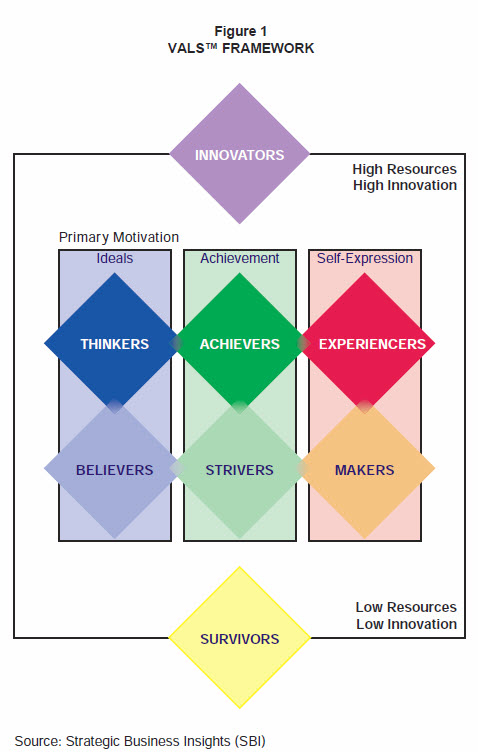
Professional data mining companies, such as Nielsen, are great sources, if you have the budget. And if you want to dig even deeper, check out the VALS survey.

VALs.

BOTW Promo Code

BOTW emailed a coupon out good for July of 2011 for 15% off.

Promo Code: SAVE15
Valid through July 31

BOTW emailed a coupon out good for all of April 2011 which saves you 25% off your listing fees. If you do the one-time submission the price is $399, but this coupon will save you $100, making it a $299 one-time submission fee. If you prefer to spend less upfront, they also offer an annually recurring listing for only $112.

BOTW doesn't hand out promotional codes as often as some other directories do, so if you were considering listing your site there I recommend taking advantage of this promotion. BOTW is one of the top directories and I try to submit almost all of our websites there because it is a great source of a highly-trusted link. Their editorial review process tends to be a bit stricter than directories like the Yahoo! Directory, but once you are in you only have to pay the one-time fee.

Forbes.com - Home to The Best Press Releases in the World!

Forbes AdVoice, a new Forbes editorial strategy that does away with the traditional barriers between advertising and editorial content:

The pitch is this: We'll sell you a blog, and your content will live alongside that of Forbes' journalists and bloggers. This isn't the "sponsored post" of yore; rather, it is giving advocacy groups or corporations such as Ford or Pfizer the same voice and same distribution tools as Forbes staffers, not to mention the Forbes brand.

"In this case the marketer or advertiser is part of the Forbes environment, the news environment," Mr. DVorkin said.

If that stuff has legs & spreads across most the major media sites then Google's "authority first" relevancy algorithm strategy is dead.

Google has always considered paid links bad (as Forbes certainly knows) but as paid content spreads how will Google fight it? And if that content contains links then is it still a paid link? Will Google once more end up purging the payola?

The other question is ... when media has tons of press releases alongside the articles, what value add is there for consumers to pay attention to the media? And if the media teaches advertisers to create their own media, won't many of those advertisers do so on their own websites & cut the mainstream media out of the loop?

How to: Out Yourself for Buying Links

Effective marketers leverage marketing channels.

Scammers & spammers ruin them for everyone else.

There is a long line of this on the web...

  • Email was personal, then it was easy to automate & done in bulk.
  • Guest books and blog comments were a way to add value, then they were sources of free links.
  • Links were a signal of relevancy, then they were bought and sold in bulk.

As people get burned the web as a whole gets more cynical. The scammers steal from the plates of honest folks as the web adjusts to a new level of cynicism...each round more cynical than the last. This is why you have to prove to people that they are going to get a 20x return when they buy from you, because a half-dozen scammers already ripped them off, and by the time they find you they simply have no trust in internet marketers (and perhaps none for humanity).

This is why people view SEO as a scam like anything else in marketing...most people who jump online get hosed.

Sometimes cost protects a channel. For instance, since people have to pay to be a member of our forums we don't really have to deal with spam in there. But as far as media formats go, things that start off as expensive can often be made cheaper through systemization & outsourcing ... so any given format that was once too expensive to do poorly eventually becomes accessible to do in bulk with marginal quality (blogs can be autogenerated, so can books, video is getting cheaper, and infographics can be done cheaply if you are not concerned with quality).

The thing about infographic promotions is that they are easy to like...part of what makes the media so appealing is the great lengths they go to in order to find new, innovative, and interesting ways to format content. Years of learning go into creating a graphic like this - which can be consumed in 5 minutes. But any interesting format gets used then abused.

Are most infographics created by independent webmasters designed for promotional purposes? Absolutely. They cost thousands of dollars to create (in terms of research, editing, formating & promotion) especially if you do good ones.

The big issue with any format is not the format itself, but pollution in the marketplace. Pollution leads to cynicism, which destroys the market for EVERYBODY who is not the bulk spammer churning out trash.

Not too long ago there was an IamA thread on Reddit highlighting how infographic promotions work & making them seem seedy. That led to an infographic being created about how off-topic infographics are being used to promote sites of marginal quality.

What did the guilty parties do in response? They not only didn't stop or change strategy, but they increased their volume and started offering to pay people to syndicate their infographics.

I know you’re really busy, so I will try to make this quick and painless. My name is Sarah and I work with a company that creates and distributes infographics. I was wondering if you’d like to be part of our infographic distribution list. We are willing to pay you for every infographic you post.

Here are a couple examples of the work we do:
mashable.com/2010/05/10/ipod-revolution-infographic/
huffingtonpost.com/brian-clark-howard/the-meteoric-rise-of-crai_b_649183.html
neatorama.com/spotlight/2010/06/17/13-things-worth-knowing-about-super-mario/

We would love to provide you with content while paying you for it. Please don’t hesitate to contact me with any questions. I hope to hear from you soon!

Thanks!

What does Super Mario Bros. have to do with Home Owners Insurance? It's an easy way to buy links. But likely one that won't last long given that these people are killing the medium with irrelevant trash.

Geordie Carswell Interview

About a year ago my wife and I started to notice Google's increasingly aggressive push into demoting the organic results and extending AdWords ads. Based in large part on that we decided to partner with Geordie Carswell to create a sister site to SEO Book focused on paid search & contextual advertising - PPC Blog. I have been meaning to interview him for a while & just finally got around to it.

How did you get into pay per click marketing?

I started with Adwords around five years ago, independently marketing software apps and other consumer technology products. From there I continued running my own campaigns while blogging and doing one-on-one Adwords coaching in addition to other marketing ventures.

How has PPC changed since you got into the field?

When I started there were very few big brands doing PPC in a significant way and, at least in the niches I was working in, affiliates were dominating. That of course has flipped upside down in the last 12 months with brands dominating and affiliates being flushed out the bottom of the system.

I feel Google's implementation of various forms of Quality Score into the Adwords platform has been the highest impact spate of changes in terms of direct effect on advertiser performance.

On the platform options side, the growth of Facebook Ads as a PPC channel has also been hugely significant, notwithstanding the merger of Yahoo and Microsoft on paid search.

On organic search I feel that if you work on a big brand, SEO is mostly about information architecture & getting buy off from key players in your company. Whereas if you run thin affiliate sites you have to be quite clever with your link building strategies to build up enough authority to compete. In the same way I think PPC is likely much harder as an affiliate than as a merchant. Would you agree with that?

Well, to be perfectly candid, a pure-play affiliate effort on Adwords in particular is becoming nearly impossible over the long term as Google shows affiliates the door. There's still some room on Microsoft adCenter/Yahoo and Facebook, but the editorial squeeze is on there as well.

The affiliate play of the future would need to involve a recognizable, highly-branded site that "people have heard of" vs. one-off mini or article sites etc...

A lot of affiliate stuff seems to race toward 0 margins. I had one killer offer I was buying traffic for a couple years ago & I was paying about 25 cents a click for traffic that was worth about $6 a click. Within about 3 days someone stole my ad copy word for word and then when I raise my bid to $6 my ad still wouldn't show. How can an affiliate fight the trend toward lower margins?

That's tough. Highly successful affiliates by nature tend to be very good at finding a small sliver of inefficiency in a system and filling that gap. That tends to inevitably be a 'point-in-time' win that ends up competitively saturated.

Often, a lateral move running the same type of campaign on alternate PPC platform can work, but let's face it: competition eventually finds its way there as well, and there are only so many PPC platforms to run on. I strongly believe the best defense against the endless push towards lower margins is to test more than the other guy. Competition will always be there, but he who tests more and thereby extracts more margin wins in the long run.

In terms of leading people astray, how often would you say major search engines give self-serving advice that harms advertisers?

One of the biggest things we still see Google doing is opting advertisers into the Google Display Network (previously known as the content network) by default when creating new campaigns. I'm sure Google needs ways to generate interest in the Display Network, but they know full well that blending search and content campaigns together is a recipe for disaster and I'd like to see them step up and stop that.

Additionally, offers from reps to 'optimize' your campaigns (while well intentioned) have lead to a lot of unnecessarily broad campaign expansions that can truly destroy the profitability of an already-successful campaign.

Part of the problem comes from advertisers trusting Google a bit too much: Google is there to extract as much revenue as they can from their keyword inventory without permanently scaring away advertisers with unmanageable costs. An advertisers' job is to generate as much net profit from Adwords as possible. Those two goals are at odds by nature, so discernment is vital when evaluating why Google is offering something or making an 'improvement' to the system.

Google offers a number of automated optimization tools for advertisers. When does it make sense to use them? Who should avoid using them?

Most of the automation solutions offered by Google like Conversion Optimizer or Automatic Bidding really won't have much benefit to smaller advertisers who don't typically have enough paid click traffic to measure the results of using these offerings. That said, if you have a decent amount of traffic you can save considerable time using their optimization tools, particularly when fishing for new traffic and/or placements.

One area I would suggest some caution on however is the "New Keyword Opportunities" feature that shows up at the top of your campaigns interface. This is an awesome tool for Google to snag new bidders on additional keyword inventory in their system, but it can cost you a pretty penny if you just accept and add whatever keywords they happen to "recommend" for you. You really need to be careful with these and look at the expected avg. CPC amounts to see if you can afford to add what's being suggested. Burning through your budget unnecessarily on overpriced or untargeted keywords isn't fun.

You buy traffic on most the major platforms. What business models do you feel work best with each of the major platforms - say Google AdWords, Microsoft adCenter, and Facebook ads?

I think local, education, online dating, and mobile represent some of the best fit for Facebook. Other niches can be genuinely daunting uphill push on Facebook. With Yahoo and Microsoft now consolidated into the Adcenter ad platform, managing alternate campaigns on another network is now much easier and can't be ignored given the combined search marketshare Microsoft and Yahoo have put together. There's really no excuses for not running your campaigns on both Adwords and Adcenter in tandem.

Some people have been hyping Facebook as the next Google. Is it? Why or why not?

Well, I think it's more accurate to compare Facebook Ads to Google's Display Network. They're both considered contextual advertising as Facebook search hasn't really turned out to be a particularly lucrative opportunity yet.

When comparing Facebook Ads to the Google Display Network, I think the key advantage that Google has with Adsense is the topical blend. The blending of content ads via Adsense has gotten so good that in some cases even ad professionals have to look closely to determine if a link or placement is an ad or original content. Facebook doesn't really have this advantage, pretty much every Facebook user knows that those are ads in the right siderail, and unless the image in the ad is incredibly compelling, it's just going to be ignored. As Facebook builds out their contextual ad empire, it'll be interesting to see what options come up.

I don't think however that disgruntled Adwords advertisers looking over the fence at Facebook Ads will find instant success. It's a different beast from an ad server behavior perspective and it's also extremely competitive.

When you are working with smaller clients, what are some of the most common roadblocks they run into when they begin paid search advertising?

The learning curve is number one, closely followed by issues with account architecture and Google Quality Score. From what I've heard and read, the churn rate on new small business Adwords accounts is immense as people try it, fail, and then leave. Google has tried to fix this I think with the learning center resources and videos, but most new advertisers won't even get around to looking at those.

Part of the challenge is prepping clients for the fact that PPC is going to take real time and effort to be successful, and that time has to be budgeted and weighed against other demands. Obviously it's worth it in the long run for well-organized businesses who have optimized their websites for shoppers. Those who don't have a clear path to purchase or request additional info will find their PPC spend tends to go into a black hole.

When you are working with larger clients, what is the hardest part of paid search?

Many large companies have some sort of PPC campaigns running, but it's not a core marketing focus for them to the extent that it should be. There's almost a tendency to say "what we've got going is good enough" or "we're breaking even" and leave it at that. Some of the easiest ways for the marketing team to move the needle sales or leads-wise in a large organization is to exploit paid search to the fullest extent possible. Overpaying Google and accepting less-than-ideal sales performance from PPC is something too many large clients put up with.

This is a big reason we had such a great time building out the Adwords Tax Calculator on PPCblog. When you actually quantify what you're paying in overhead to straight to Google due to a number of completely fixable campaign tactics, it's really motivating.

You have been running PPC Blog's training program and community for close to 3 months now, and it has been getting strong reviews. What are some of the most important and interesting things you have learned from that experience?

It's been very interesting. I really felt prior to running PPCblog that there wasn't anywhere "safe" to discuss advanced tactics and observations about Adwords without Google either closely watching the discussion or directly hosting it. It's been great to share and compare real campaign data in a trusted environment like the one we have going there.

Another thing I've noticed is that the level of discussion and discourse is much higher when people are paying to participate. It weeds out a lot of noise and repetition. Additionally, I've also found that I'm using the custom tools we've developed for members far more often than I had originally thought I would, and that's been helping me save time while keeping up with the community and running campaigns.

How do you feel paid search and SEO tie into each other?

Personally I feel they're both essential 'legs on the stool' (email marketing I think follows closely thereafter). It always amazes me that SEOs will spend huge bucks buying links or doing biz dev deals to get traffic that's not 100% guaranteed to flow, but they won't spend a dime buying traffic directly with Adwords or Adcenter. When you see the amount of brand bidding that goes on with PPC, its a good reminder that if you're not buying even in the least of your brand's keywords, your competitors likely are. With organic results getting pushed farther and farther down the page each year, a two-pronged approach only makes sense.

---

Thanks Geordie. You can catch his latest paid search thoughts on PPC Blog & follow him on Twitter @geordiecarswell. There is a free 7-day PPC starter course here, and on the PPC training program he is currently offering a coupon for 25% off for new members.

The Perpetual Time, Err, Hype Machine

Sometimes when reading TechCrunch I feel like I am watching the History Channel, and that there is a regularly scheduled show called WWII Wednesdays (or something like that). Ironically there was even a junk TechCrunch post about killing the hype cycle. But they know the truth on manipulation - they wouldn't have a profitable product without it.

So often marketers highlight how *this changes everything*

I just saw an article about how the Facebook like button kills SEO, promoting some white paper.

Perhaps it gets the white paper opened, and pre-qualifies prospective customers as ignorant corporate types who are willing to pay big bucks for misinformation, but it seems online marketing is so saturated that we have to act comical or absurd to pull in attention. And then make revisions a week later stating "my bad."

Promptly followed by "...but this changes everything..."

(or hope that the sea of noise is so loud that people forget yesterday by the time tomorrow happens)

"The most important idea in advertising is new. It creates an itch. You simply put your product in there as a kind of calomine lotion." - Don Draper

Part of the reason I have decided to post less is that I decided I would rather not participate in that. At some point it helps to believe in what you sell, even if another path is more profitable. :)

I want to make sure we highlight what is new and interesting, but a lot of online marketing is just blocking and tackling ... the basics. A few months back I wrote "its the boring stuff that makes the money" largely because that which is boring has been refined, is predictable, and can scale.

New Twitter might change everything. But then next week Facebook will. And the following week the sun will come up from the west. And everything changes once more!

But the pendulum never swings in 1 direction forever. Blockbuster was once a sure win, today Google is a monopoly, but things will change.

Though those changes will likely be slow and gradual. In aggregate, the impact of Google Instant is not as extreme as many thought (outside of a few edge cases). IE9 also puts some interesting wrinkles in the search space - particularly for domainers. When the address bar becomes a search box with search suggestions in it, how many people will type in undeveloped URLs? Though I suspect that change will also be gradual. After all, Yahoo! is still doing well in spite of all their blunders, brands creating their own media, the tectonic economic decline, and the US being functionally bankrupt.

Linkdex Influence Finder Review

Influence Finder is a new link analysis tool that aims to make link research more targeted and less time-consuming while producing better results.

Despite how SEO has evolved over the years one aspect remains crucial to the success of any SEO campaign, links. So just about any tool that claims to make the process faster, smarter, and better quality is worth taking a look at.

Starting a Project

Influence Finder is a web-based tool which has a clean interface and is pretty easy to use. When you log in the first thing you'll see is the project dashboard, where all your current projects are located.

The projects you see there are some templates they provide, however you are free to choose a custom project and name it whatever you'd like. The project options are:

  • Understanding Your Brand - here they recommend you get an index of your own link profile
  • Competitor Profiling - this is where they suggest you get the profiles of your competition
  • Narrow Keyword Targets - this is the recommended report to identify sites that are ranking for a broader keyword associated with your targeted keyword (think "credit cards" if you are targeting "low interest credit cards". So you can get some potential competitor data here as well as additional linking opportunities from sites that link to these sites or these sites themselves.
  • Vertical Media - here they suggest to target influential media sites related to your keyword. This is where you would search for blog and news sites related to your keyword. These sites can turn out to be potential link sources and you can also look at their backlinks to see which sites are linking at them for those core keywords, which can be potential targets for your as well.
  • Interested Media - interested media would be sites or blogs which cover topics related to your topic but are not direct competitors. If you are targeting hybrid cars you can look up sites related to things like renewable energy or sites and blogs which cover environmental topics.
  • Custom - a report you can name anything you want.

It's important to note that the report creation interface is exactly the same whether you choose Competitor Profiling, Vertical Media, or Custom. These initial report types are just there to give the user an idea of what they might want to cover in their research.

We ran through a report as if we were running a "Brand" report so you can see how the system works.

Brand Report

Let's say we work for Waste Management, a leading provider of trash removal and recycling services here in the US. So we selected the first project type in the image above and clicked "go to step 2".

The interface is simple to work with. You can do the following in this screen:

  • Name your project (we named it Brand Report - Wm.Com). Again, you are free to name it whatever you'd like
  • A box to the right gives you the ability to leave notes about the project
  • The next field is where you'd add a URL for Influence Finder to index
  • Once that is added it will appear in the gray highlighted area where you can select the domain links, links to the page (if you have a sub-page), or links to the sub-domain if you are dealing with a sub-domain. You can add as many URL's as you want but since this is our "Brand" report we are just adding ours
  • The last options are whether you want to include or exclude expired links and no-follow links
  • Once you are ready and the URL has been indexed just click "step 3".

Once you move on to step 3 you are presented with some more options. Here you can add keywords manually or via the anchor text they found when crawling the targeted URL's. They will look for occurrences of these keywords in the following places:

  • Anchor text
  • Page title
  • Folder name
  • Body copy
  • Page names

You can choose whether they are brand or non-brand keywords. As of this writing actual anchor text is not available, however I have been told that this will be an enhancement in version 2.

So basically if you choose "trash removal" as a non-brand keyword and "recycling" as a non-brand keyword, then they will be grouped under the "non-brand" keyword data point in the results section.

The second place you can add them is via the keywords found during the initial crawl by Influence Finder's bots (over Majestic SEO's data). They are sorted by frequency.

When they are looking for these keywords they are looking based on phrase match and not exact match. The idea here is that you are looking for link opportunities around a keyword or phrase rather than for specific data about an exact match keyword. So if you have a site about auto insurance you'll get results that will show linking opportunities based on auto insurance, online auto insurance, dirt cheap auto insurance, and so on.

It is based on phrase match and I think the addition of the actual anchor text will be helpful in making this tool both a link opportunity research tool as well as a competitive research tool with respect to competitor backlink profiles.

When you are ready to begin the full index simply click "create index". Above the "create index" tab you can show more keywords from the initial crawl if you want. This can take anywhere from a hour to a few hours depending on the size of the backlink profile.

So here is the results pane for this report. There are 2 panes, the left pane which is for Link Sources and the right pane which are Page Level details related to the domain you highlight in Link Sources (we'll get to the numerous data points in just a moment):

Here is the right pane. When you highlight a source in the left column (Link Sources), the right pane (Page Level) contains the pages within that site that reference either the brand or non-brand keyword (note, these are sites that do and do not have links to the current domain which can be filtered as discussed later on in this review):

When you highlight a page you can see a screenshot and open it in a new tab, as shown above.

For the left-side pane, Link Sources, you have the following data points available:

  • Max Authority - a scale of 1-15, being the highest, that measures the site's authority via PageRank, Alexa data, and link data from Majestic
  • Blog - based on site data gathered by Influence Finder, this shows whether the site might be a blog or not
  • Heartbeat - checks to see if the site or blog is publishing content on a regular basis, bigger publishers show up with no heartbeat and will be given their own category in the next update
  • Traffic Rank - based on global Alexa Ranking
  • Traffic Country - the country that drives the most traffic to the site per Alexa
  • Non-Brand Keyword in Title - percentage of pages where the non-brand keyword appeared in the page title (on pages relating to the non-brand keyword)
  • Brand Keyword in Title - percentage of pages where the brand keyword appeared in the page title (on pages relating to the brand keyword)
  • Non-Brand Keyword in External Anchor Text - percentage of pages where the non-brand keyword appeared in an external link (on pages relating to the non-brand keyword)
  • Brand Keyword in External Anchor Text - percentage of pages where the brand keyword appeared in an external link (on pages relating to the brand keyword)
  • Commission Junction Network - checks to see if the site or page is an affiliate of Commission Junction (or any of the following networks)
  • Trade Doubler Network
  • AWin Network
  • Affiliate Future Network
  • DGM Network
  • Web Gains Network
  • Linkshare Affiliate Network

You have the same options within the Page Level area in the right pane. Both sets of options are available from the Change Filters -> Link Source or Page Level Filters options within the tool.

Customizing Your Results

The left pane (Link Sources) of the application is where your results are populated, where the right pane is domain or page specific information (Page Level) based upon what is highlighted on the left (more on that in a moment). The left side has the following options, as shown below:

  • A dropdown for easy switching between projects
  • The next drop down is where you can show domains which link to the chosen domain, or domains that do not currently link to the domain but are good linking prospects based on the brand and non-brand keywords
  • A .CSV export option
  • Change Filter options are where you can deeply customize the output of your data, this populates in the right. Covered in more detail below
  • Custom Sorting options with lots more data points to choose from

They also have a flagging system, which is purely optional:

Flags are color coded, with the following colors available. Use them for whatever system you devise :) :

  • Checkmark
  • Black
  • White
  • Yellow
  • Red
  • Blue

Custom Sort Options

In addition to the data points mentioned earlier (Max Authority, Heartbeat, Affiliate relationships, etc) The custom sorting feature gives you these additional options which you can include in the dropdown referenced above, but in case you missed it here it is again :)

(click the more button to add additional sorting options)

The additional options include:

  • Influence Index
  • Relevance Index
  • Achievability Index
  • Brand keyword or Non-Brand keyword in internal link anchor text
  • Average Authority
  • Inlinks Count
  • Brand keyword or Non-Brand keyword in H1 tag
  • Brand keyword or Non-Brand keyword in Body
  • E-Commerce Site
  • Brand keyword or Non-Brand keyword in body, first 100 words
  • Brand keyword or Non-Brand keyword in heading
  • Brand keyword or Non-Brand keyword in folder name
  • Brand keyword or Non-Brand keyword in page name
  • Brand keyword or Non-Brand keyword as first word in H1
  • Brand keyword or Non-Brand keyword as first word in title
  • Brand keyword or Non-Brand keyword in root domain
  • Brand keyword or Non-Brand keyword in subdomain
  • Majestic ACRank of homepage
  • Links to homepage
  • Domains linking to homepage
  • Unique IP's linking to homepage
  • Percentage of direct links to page
  • Percentage of redirected links to page
  • Frequency of feed update

Clearly lots and lots of options here. Just one usage example could be that you wanted to see sites that are currently not linking to you, but talk about your brand on their site (in key areas like title tags). These could be good link prospects. First thing to do is change the link display option to "no target links found".

The next thing is to change the sorting options to have the Brand keyword in the H1 and the Body, these should be good link targets. They do not link to us, they have our brand keyword in the H1 and/or Body copy.

To show those columns you have to go to "Change Filters" as shown below, so they will show those columns in the Link Sources (Left Pane) if you click the checkboxes on the right as we did with Brand keyword in H1 and Brand keyword in Body:

And here you can see the new columns, noted with red dots:

We can see that Earthtimes.org appears to be a worth link prospect with a Max Authority of 12, possibly being a blog (guest post), has a strong heartbeat, and not only has pages with our brand name in an H1 tag but also has it within the body copy.

When we highlight a domain in the Link Sources area, the right pane populates the Page Level data like so:

What's great here is that now you have pages that are targeted to your content which (most) use your brand keyword in the H1 tag and Body copy. Remember too that there are many, many other filters available as mentioned above. This is just one example of what you can do. It certainly is a pretty targeted way of building links. Now, you know the following:

  • You do not have a link from the domain
  • They have pages specifically targeted to your brand
  • The relative strength of the site
  • How they are using brand and non-brand keywords

You have a whole host of other filters available as well, but this makes for a fairly targeted link prospect.

In order to get custom columns, like we did with Link Sources, you have to go into Advanced Page Filters on the right to select those custom columns (Brand keyword in H1 and Body in this example):

Change Filter Options

We have discussed some of these already as it is used in the normal flow of how you would use Influence Finder. There are an enormous amount of data points available to you within this tool and it's likely that you will not use all of them on every report you run.

The interface for this part of the tool looks like this:

You have 4 options here:

  • Link Source Filters - for the default data points located in the left pane of the interface
  • Page Level Filters - for the default data points that come with the information on the pages of the selected site, these results are in the right pane (Page Level)
  • Advanced Link Source Filters - all the additional data points for your Link Sources
  • Advanced Page Filters - the additional data points available for page level data

These are essential tools for slicing and dicing the data to suit your report needs (link research, competitive research, link prospecting, and so on).

How Does Influence Finder Compare?

Influence Finder has a lot of features. Chances are you have a link tool or two already. As more and more tools enter the online marketing space it's important to consider the overlap and unique features of the tool you are considering and the tool(s) you might already have.

Influence Finder, as we have outlined for you, has a seemingly endless array of filters you can use to target link prospects. The 3 bigger players in the link research and/or management space are typically thought to be:

  • Majestic SEO
  • Open Site Explorer
  • Raven SEO Tools

When comparing tools in the same space it's important to make sure they are designed to do the same things, in this case Influence Finder is unique in its stated purpose. Influence Finder is much more about finding worthwhile link prospects in a very targeted manner.

These other tools are much more about pure backlink research (like Open Site Explorer and Majestic) or backlink management, tracking, and workflow (like Raven, which also has Majestic functionality baked into their research features).

Majestic SEO

Influence Finder runs off of Majestic's data. When you run a report in Influence Finder, their bots re-crawl the Majestic data to make it a bit more fresh and to customize it to your chosen parameters. The key points of differentiation on Majestic's side are

  • Majestic provides strong historical data which can be very useful when doing competitive research
  • Majestic's minimum analyzable backlinks are up to 1,000,000 (on their lowest plan). This illustrates Majestic's position as more of a pure link data tool whereas Influence Finder tends to be more of a link acquisition tool.
  • Majestic does have some strong filtering capabilities which are great for analyzing a domain's backlinks. However, it not as strong in terms of finding link partners across the web which is, of course, due to the fact that these tools mostly serve 2 different purposes (remember, Influence Finder uses Majestic's data).

Open Site Explorer

Open Site Explorer is a solid link research tool from SeoMoz. It doesn't quite have the size that Majestic does but it's certainly big enough to be a worthy link research tool. The UI is top notch and it is very easy to use. Some of the cool things you can do with Open Site Explorer:

  • See linking domains with a variety of filtering options (followed, no-followed, 301's, etc)
  • See top linked to pages on a domain, with domain link counts and http status codes
  • Quickly see a targeted display of the external anchor text distribution for the domain
  • A whole host of other link metrics like mozRank, mozTrust, percentage of internal/external and follow/no-follow links
  • You can compare 2 URL's as well

So much like Majestic, Open Site Explorer is more of a link research tool/competitive analysis tool. Though, with either, you can certainly find worthwhile linking partners off of a competing site and you can look up sites of "influence" and check backlinks that way too.

Influence Finder's core benefits are finding linking partners which are relevant to your brand and non-brand keywords so they are naturally much stronger in this area than Open Site Explorer and Majestic. Conversely, Open Site Explorer and Majestic are much stronger in the area of competitive link research.

Raven SEO Tools

We recently reviewed Raven and Raven certainly sets the standard for link workflow, management, and reporting at the moment. Raven uses Majestic's data in their link research feature set.

Raven is kind of in the middle here. They have Majestic built in so they are part competitive research plus part link management plus part link building workflow.

While Influence Finder is planning on introducing reporting and workflow into an upcoming version, their current tool combined with Raven's link building and monitoring tools make for a powerful link building toolset. So with Raven:

  • You get access to Majestic's data as a competitive link research tool
  • Top notch reporting options
  • Deep, time-saving link workflow management options
  • Affordable pricing

With just about anything you buy, generally you'll get features you either don't need or are just a bit beyond what you need them for in terms of depth. The nice thing with Raven is you get access to a bunch of tools in one spot for a fair price.

Do they have all the features? Nope but do you really need every single option on every single tool? There's something to be said for managing most aspects of a campaign in one spot.

So if you take Influence Finder's unique core features and combine it with Raven for reporting, workflow, and research and/or with another link research tool like Open Site Explorer then you'll have a really strong set of tools.

The point is, none of these tools do everything the other does so it's a good idea to take a look at each of them and weight the features, benefits, and costs against what you "need" for your campaigns.

Workflow and Final Thoughts

Lots of data here, so we'll outline how it all ties together.

You can use this tool for many different purposes and they even give you some guides as to what you might want to use the reports for. I just want to stress that those reports are only exclusive of each other in naming only, the functionality of the tool after you select the report "type" is the same irrespective of which report you choose or if you just go with custom.

We talked about left pane and right pane a lot, here's a condensed screenshot of the interface:

  • (Left pane) Link Sources are located in the left pane, these are domains (even if a subpage is listed, they will show the main domain) matching your initial search parameters
  • (Right pane) Page Level Detail shows the pages associated with the selected domain and the data points you've chosen to show

The left pane also houses the Custom Sort data when selected while the right pane houses the Change Filters options as mentioned eariler.

So this was an example of a report on your domain for one core keyword and some brand related keywords. This is a pretty powerful tool and if they add the actual anchor text where a link exists as well as some stronger work flow (assignments, notes, etc) and reporting features then I think this will be a tool well worth a look for you or your company.

They did tell me the features I mentioned above will be a part of version 2 which they are working on as we speak. When that comes out, we will certainly take a look and post that new information as well as our thoughts. As it stands now this is a really comprehensive tool for link prospecting and link building.

You can find out more at InfluenceFinder.Com.

How Google Instant Changes the SEO Landscape

Google Instant launched. It is a new always-on search experience where Google tries to complete your keyword search by predicting what keyword you are searching for. As you type more letters the search results change.

Short intro here:

Long view here:

Not seeing it yet? You can probably turn it on here (though in some countries you may also need to be logged into a Google account). In time Google intends to make the is a default feature turned on for almost everyone (other than those with slow ISPs and older web browsers). And if you don't like it, the feature is easy to turn off at the right of the search box, but to turn it off it uses a cookie. If you clear cookies the feature turns right back on.

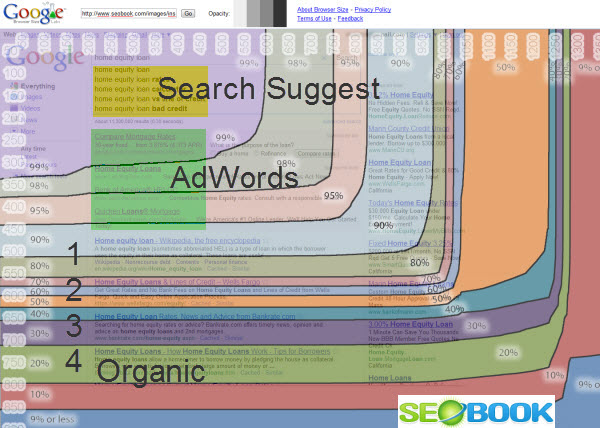
Here is an image using Google's browser size tool, showing that when Google includes 4 AdWords ads only 50% of web browsers get to see the full 2nd organic listing, while only 20% get to see the full 4th organic listing.

Its implications on SEO are easy to understate. However, they can also be overstated: I already saw one public relations hack stating that it "makes SEO irrelevant."

Nothing could be further from the truth. If anything, Google instant only increases the value of a well thought out SEO strategy. Why? Well...

  • it consolidates search volume into a smaller basket of keywords
  • it further promotes the localization of results
  • it makes it easier to change between queries, so its easier to type one more letter than scroll down the page
  • it further pollutes AdWords impression testing as a great source of data

Lets dig into these, shall we?

Rand Fishkin Interview

It is no secret that in the past Rand and I have had some minor difference of opinions (mainly on outing). ;)

But in spite of those, there is no denying that he is an astute marketer. So I thought it would be fun to ask him about his background in SEO and to articulate his take on where some of our differences in opinions are. Interestingly, it turns out we shared far more views than I thought! Hope you enjoy the interview. :)

Throughout your history in the SEO field, what are some of your biggest personal achievements?

The first one would have to be digging myself (and my Mom) out of bankruptcy when we were still a small, sole proprietorship. Since then, there have been a lot of amazing times:

  • The first time I spoke at a conference (SES Toronto in 2004)
  • Transitioning from a consulting to a software business
  • Taking venture capital
  • Building a team (not just making hires)
  • Having dinner with the UN Secretary General (Ban Ki Moon) and presenting to their CTO on SEO - it was amazing to hear stories about how people in conflict-ridden parts of the world used search to find safe havens, escape and transmit information and the UN's missed opportunities around SEO. I'd never really thought of our profession as having life-or-death consequences until then.
  • Making the Inc 500 list for Fastest Growing Companies in the US (during a nasty recession)
  • Probably my biggest personal achievement, though, is my relationship with my wife. I know that no matter what happens to me in any other part of my life, I have her support and love forever. That gets a guy like me through a lot of tough times.

Geraldine & Rand in San Francisco

My wife and I in San Franicsco (via her blog)

What are the biggest counter-intuitive things you have learned in SEO (eg: that theoretically shouldn't work, but wow it does (or the opposite - should work but doesn't)?

The most obvious one I think about regularly is that the "best content rarely wins." The content that best leverages (intentionally or not) the system's pulleys and levers will rise up much faster than the material the search engines "intended" to rank first.

Another big one includes the success of very aggressive sales tactics and very negative, hateful content and personalities. Perhaps because of the way I grew up or my perspective on the world, I always thought of those things as being impediments to financial success, but that's not really the case. They do, however, seem to have a low correlation with self-satisfaction and happiness, and I suppose, for the people/organizations with those issues, that's even worse.

A very specific, technical tactic that I'm always surprised to see work is the placement of very obvious paid text links. We realized a few months back that with Linkscape's index, we could ID 90%+ of paid link spam with a fairly simple process:

  1. Grab the top 10K or 100K query monetizable terms/phrases (via something like a "top AdSense payout" list)
  2. Find any page on the web that contains 2+ external anchor text links pointing to separate websites (e.g. Page A has a link that says "office supplies" linking to 123.com and another link that says "student credit card" linking to 456.com)
  3. Remove the value passed by those links in any link metric calculation (which won't hurt the relevancy/ranking of any pages, but will remove the effects of nearly all paid links)

We've not done the work to implement this, so perhaps there's some peculiar reason why applying it is harder than we think. But, it strikes me that even if you could only do it for pages with 3 or 4+ links in this fashion, you'd still eliminate a ton of the web's "paid" link graph. The fact that Google clearly hasn't done this makes me think it must not work, but I'm still struggling to understand why.

BTW - I asked some SEOs about making this a metric available through Linkscape/Open Site Explorer (like a "liklihood this page contains paid links" metric) and they all said "don't build it!" so we probably won't in the near term.

One of the big marketing angles you guys tried to push hard on was the concept of transparency. Because of that you got some pretty bad blowback when Linkscape launched (& perhaps on a few other occasions). Do you feel pushing on the transparency angle has helped or hurt you overall?

I think those inside the SEO community often perceive a conflict or tiff internally as having a much broader reach than it really does. I'd agree that folks like you and I, and maybe even a few hundred or even a thousand industry insiders are aware of and take something away from those types of events, but SEOmoz as a software company with thousands of paying subscribers and hundreds of thousands of members seems to be far less impacted than I am personally.


Re: Linkscape controversy - there have been a few - but honestly, the worst reputation/brand problems we ever had have always been with regards to personal issues or disputes (a comment on someone's blog or something we wrote or allowed to be published on YOUmoz). I don't have a good explanation for why they crop up, but I can say that they seem to have a nearly predictable pattern at this point (I'm sure you recognize this as well - think I've seen you write fairly eloquently on the subject). That does make it easier to handle - it's the unpredictable that's scary.

We certainly maintain transparency as a core value and we're always trying to do more to promote it. To me, core value means "things we value more than revenue or profits" and so even if it's had some hard-to-measure, adverse impact, we'd maintain it. We've actually got a poster hanging up in the office that our design team made:
The "T" in TAGFEE

An excerpt from our TAGFEE poster

There's a quote I love on this topic that explains it more eloquently than I can:

"(Our) core values might become a competive advantage, but that is not why we have them. We have them because they define for us what we stand for, and we would hold them even if they became a competitive disadvantage." - Ralph Larson, CEO of Johnson and Johnson

What type of businesses do you think do well with transparency? What type of businesses do you feel do poorly with it?

Hmm... Not something I've tried to apply to every type of business, but my feeling is that nearly every company can benefit from it, though it also exposes you to new risk. Even being the transparency-loving type, I'd probably say that military contractors, patent trolls and sausage manufacturers wouldn't do so well.

How have you been able to manage the transparency angle while having investors?

I thought it would be tougher after taking investment, but they've actually been very supportive in nearly every case (some parts of Linkscape, particularly those re: our patent filings being exceptions). I don't know if that would be true had we taken on different backers, but that's why the startup advice to choose your investors like you choose your husband/wife is so wise.

When you took investment money did you mainly just get capital? What other intangibles came with it? How have your investors helped shape your business model?

It certainly made us much more focused on the software model. As you noted, we dropped consulting in 2010 entirely, and we've generally limited any form of non-scalable revenue to help fit with the goals of a VC-backed business. We did gain some great advisors and a lot more respect in many technology and startup circles that would have been tough without the presence of venture funds (although I think that's shifting somewhat given the changes of the past 2-3 years in the startup world).

Have you guys ever considered buying out your investors? Are you worried what might happen to your company if/when it gets sold?

While we'd love to, I doubt that would ever be possible (barring some sort of massive personal windfall outside of SEOmoz). Every dollar we make gets our investors more excited about the future of the company and less likely to want to sell their shares before we reach our full potential. Remember that with VC, the idea is high risk, high reward, so technically, they'd rather we go for broke and fall to pieces than do a mid-size, but profitable deal. Adding $5 or $10 million dollars back to a $300+ million fund is largely useless to a VC, so a bankruptcy while trying to return $50 or $100 million is a very tolerated, sometimes preferable result.

VC Chart of Returns

I wrote about this more in my Venture Capital Process post (where I talked about failing to raise money in summer 2009)

Now that you are already well known & well funded you are taking a fairly low risk strategy to SEO, but if you were brand new to the space & had limited capital would you spam to generate some starting capital? At what point would you consider spamming being a smaller risk than obscurity?

You ask great questions. :-)

While I don't think spam has any moral or ethical problems, I don't know that I'd ever be able to convince myself that spam would be a more worthwhile endeavor than brand building for a white hat property. Overnight successes take years of hard work, and I'd much rather get started as a scrappy, bootstrapping company than build up a reserve with spam dollars and waste that time. However, I certainly don't think that applies to everyone. As you know, I've got lots of friends who've done plenty of shady stuff (probably a lot I don't even want to know about!), but that doesn't mean I respect them any less.

Speaking of low risk SEO, why do you think neither of our sites has hit the #1 slot yet in Google for "seo"? And do you think that ranking would have much business impact?

We've looked at the query in our ranking models and I think it's unlikely we could ever beat out the Wikipedia result, Google or SEO.com (unless GG pulls back on their exact-match domain biasing preference). That said, we should both be overtaking SEOchat.com fairly soon (and some of the spammier results that temporarily pop in and out). Some of our engineers think that more LDA work might help us to better understand these super-high competitive queries.

Analysis of "SEO" SERPs in Google

SERPs analysis of "SEO" in Google.com w/ Linkscape Metrics + LDA (click for larger)

In terms of business impact - yeah, I think for either of us it would be quite a boon actually (and I rarely feel that way about any particular single term/phrase). It would really be less the traffic than the associated perception.

As an SEO selling something unique (eg: not selling a commodity that can be found elsewhere & not as an affiliate) I have found word of mouth marketing is a much more effective sales channel than SEO. Do you think the search results are overblown as a concern within the SEO industry? Do you find most of your sales come from word of mouth?

I see where you're coming from, but in our analyses, it's always been a combination of things that leads to a sale. People search and find us, then browse around. Or they hear of us and search for information about us. Then they'll find us through social media or referring site and maybe they'll sign up for a free account. They'll get a few emails from us, have a look at PRO and go away. Then a couple months later they'll be more serious about SEO and search for a tool or answer and come across us again and finally decide, "OK, these guys are clearly a good choice."


This is what makes last touch attribution so dangerous, but it also speaks to the importance of having a marketing/brand presence across multiple channels. I think you could certainly make the case that many of us in the SEO field see every problem as a nail and our profession as the hammer.

What business models do you feel search fits well with, and what business models do you feel search is a poor fit for?

I think it's terrific for a business that has content or products they can monetize over the web that also relate to things people are already searching for. It's much less ideal for a product/service/business that's "inventing" something new that's yet to be in demand by a searching population. If you're solving a problem that people already have an identified pain point around, whether that's informational, transactional or entertainment-driven, search is fantastic. If that pain point isn't sharp enough or old enough to have generated an existing search audience, branding, outreach, PR and classic advertising may actually do better to move the needle.

Have you ever told a business that you felt SEO would offer too low of a yield to be worth doing?

Actually yes! I was advising a local startup in Seattle a couple years ago called Gist and told them that SEO couldn't really do much for them until people started realizing the need for social-plugins to email and searching for them. This is the case with a lot of startups I think.

In an interview on Mixergy you mentioned up racking up a good bit of debt when you got started in search. If a person is new to the web, when would you recommend them using debt leverage to grow?

Never, if you're smart. Or, at least, never in the quantities I did. The web is so much less costly to build on nowadays and the lean startup movement has produced so many great companies (many of them only small successes, but still profitable) from $10K or less that it just doesn't make sense, especially with the horror that is today's debt market, to go too far down that route. If you can get a low-cost loan from a family member or a startup grant through a government-backed, low interest program, sure, but credit card debt (which is where I started) is really not an option anymore.

How were you able to maintain presence and generally seem so happy publicly when you first got started, even with the stress of that debt?

To be honest, I really just didn't think about it much. If you have $30K in debt, you're constantly thinking about how to pay it off month by month and day by day. When you're $450K in debt with collectors coming after you and your wife paying the rent, you think about how to make a success big enough to pay it all off or declare bankruptcy - might as well go with the former until life runs you into the latter. There's just not much else to do.


As Bob Dylan says - "when you got nothing, you got nothing to lose."

Many people new to the field are afraid to speak publicly, but you were fairly well received right off the start. What prepared you for speaking & what are keys to making a good presentation?

Oh man - I sucked pretty hard my first few presentations. I think everyone does. The only reason I was well received, at least in my opinion, is because I'd already built a following on the web and had a positive reputation that carried over from that. The only thing that really prepared me for big presentations (things like the talk to Google's webspam/search quality team or keynotes at conferences) was lots and lots of experience and for that I'll always be grateful to Danny Sullivan for giving me a shot.

I'd say to others - start small, get as many gigs as you can, use video to help (if you're great on camera, you'll be good in front of a live audience) and try to emulate speakers and presentations you've loved.

When large companies violate Google's guidelines repeatedly usually nothing happens. To cite a random example...I don't know...hmm Mahalo. And yet smaller companies when outed often get crushed due to Google's huge marketshare. Because of the delta between those 2 responses, I believe that outing smaller businesses is generally bogus because it strips freedoms away from individuals while promoting large corporations that foist ugly externalities onto society. Do you disagree with any of that? :D

I think I agree with nearly all of that statement, though I'd still say it's no more "bogus" to out small spammers than it is to spam. I would agree it's not cool that Google applies its standards unfairly, but it's hard to imagine a world where they didn't. If mikeyspaydayloans.info isn't in Google's index, no ones thinks worse of Google. If Disney.com isn't in Google (even if they bought every link in the blogosphere), searchers are going to lose faith and switch engines. The sensible response from any player in such an environment is to only violate guidelines if you're big enough to get away with it or diversified enough to not care.

I'm unhappy with how Google treats these issues, but I'm equally unhappy with how spam distorts the perception of the SEO field. Barely a day goes by without a thought leader in the technology field maligning our industry - and 9 times out of 10 that's because of the "small" spammers. If we protect them by saying SEOs shouldn't "out" on another, we bolster that terrible impression. I don't think most web spam should even have the distinction of being classified as "SEO" and I don't think any SEO professionals who want our field to be taken seriously by marketing and engineering departments should protect those who foist their ugly externalities onto us.

I know we disagree on this, but it's always an interesting discussion :-)

One of the most remarkable things about the SEO industry is the gap in earnings potential between practicing it (as a publisher) and teaching it / consulting. Why do you think such a large gap exists today?

Teaching has always been an altruist's pursuit. Look at teachers in nearly every other field - they earn dramatically less than their production/publishing oriented peers. Those who teach computer science never earn what computer scientists who work at Google or Microsoft make. Those who teach math are far less well compensated than their compatriots working as "qaunts" on Wall Street. It's a sad reality, but it's why I have so much respect for people like Market Motive, Third Door Media and Online Marketing Connect, who are trying to both teach and build profitable businesses. I love the alignment of noble pursuits with profitable ones.

You guys exited the consulting area in spite of being able to charge top rates due to brand recognition. Do you think lots of consultants will follow suit and move into other areas? How do you see SEO business models evolving over the next 3 to 5 years?

I don't think so - our consulting business was going very well and I've heard and seen a lot of growth from my friends who run SEO consulting firms. The margins and exit price valuations wouldn't have made sense for VCs, but I don't think it was a bad business at all and others are clearly doing remarkable things. Just look at iCrossing's recent sale to Hearst for $325million. You can build an amazing company with consulting - it's just not the route we took.

In regards to the evolution of the SEO business model, I'd say we're likely to see more sophistication, more automation, more scalability (and hopefully, more software to help with those) over the next few years from both in-house SEOs and external agencies/consultants. It's sometimes surprising to me how little SEO consulting has progressed from 2002 vs. things like email marketing or analytics, where software has become standard and tons of great companies compete (well, Google's actually made competition a bit more challenging in the analytics space, but creative companies like KissMetrics and Unbounce are still doing cool, interesting things).

Small businesses in many ways seem like the most under-served market, but also the hardest to serve (since they have limited time AND small budgets). Do you think the rise of maps & other verticals gives them a big opportunity, or is it just more layers of complexity they need to learn?

Probably more the former than the latter. The small business owners I know and interact with in my area (and wherever I seem to visit) are only barely getting savvy to the web as a major driver of revenue. I think it might take another 10 years or more before we see true maturity and savvy from local businesses. Of course, that gives a huge competitive advantage to those who are willing to invest the time and resources into doing it right, but it means a less "complete" map of the local world in the online one, which as a consumer (or a search engine) is less than ideal.

When does the delta between paid search & SEO investment begin to shrink (if ever)?

I think it's probably shrinking right now. Paid search is so heavily invested in that I think it's fair to call it a mature market (at least in global web search, though, re: your previous question, probably not in local). SEO is ramping up with a higher CAGR (Compound Annual Growth Rate) according to Forrester, so that delta should be shrinking.

Forrester Growth of SEO vs. Paid Search

via Forrester Research's Interactive Marketing Forecast 2009-2014

Often times a Google policy sounds like something coming out of a conflicted government economist's mouth. But even Google has invested in an affiliate network which suggests controlling your HTML links based on payment. How much further do you think Google can grow before they collapse under complexity or draw enough regulatory attention to be forced to change?

I think if they tread carefully and invest heavily in political donations and public relations, they can likely maintain another very positive 5-10 years. What the web looks like at that time is anyone's guess, and the unpredictable nature and wild shifts probably help them avoid most regulation. Certainly the rise of Facebook has been a boon to their risk exposure from government intervention, even if they may not be entirely happy with their inability to compete in the social web.

I remember you once posted about getting lots of traffic from Facebook & Twitter, but almost 0 sales from it. Does there become a point where search is not the center of the web (in terms of monetization), or are most of these networks sorta only worthwhile from a branding perspective?

As direct traffic portals, it's hard to imagine a Facebook/Twitter user being as engaged in the buying/researching process as a Google searcher. Those companies may launch products that compete with Google's model or intent, but as they exist today, I don't foresee them being a direct sales channel. They're great for traffic, branding, recognition and ad-revenue model sites, but they're of little threat to marketers concerned with the relevance or value of search disappearing.

What are the major differences between LDA & LSI?

They're both methodologies for building a vector space model of terms/phrases and measuring the distance between them as a way to find more "relevant" content. My understanding is that LSI, which was first developed in 1988, has lots of scaling issues. It's cousin, PLSI (probabilistic LSI) attempted to address some of those when it came out in 1999, but still has scaling problems (the Internet is really big!) and often will bias to more complex solutions when a basic one is the right choice.

LDA (Latent Dirichlet Allocation), which started in 2002, is a more scalable (though still imperfect) system with the same intuition and goals - it attempts to mathematically show distances between concepts and words. All of the major search engines have lots of employees who've studied this in university and many folks at Google have written papers and publications on LDA. Our understanding is that it's almost universally preferred to LSI/PLSI as a methodology for vector space models, but it's also very likely that Google's gone above and beyond this work, perhaps substantially.

The "brand" update was subsequently described as being due to looking at search query chains. In a Wired article Amit Singhal also highlighted how Google looks for entities in their bi-gram breakage process & how search query sequences often help them figure out such relationships. How were you guys able to build a similar database without access to the search sessions, or were you able to purchase search data?

In a vector space model for a search function, the distances and datasets leverage the corpus rather than query logs. Essentially, with LDA (or LSI or even TF*IDF), you want to be able to calculate relevance before you ever serve up your first search query. Our LDA work and the LDA tool in labs today use a corpus of about 8 million documents (from Wikipedia). Google's would almost certainly use their web index (or portions of it).

It's certainly possible that query data is also leveraged for a similar purpose (though due to how people search - with short terms and phrases rather than long, connected groups of words - it's probably in a different way). This might even be something that helps extend their competitive advantage (given their domination of market share).

Sometimes one can see Google's ontology change over time (based on sharp ranking increases and drops for outlier pages which target related keywords but not the core keyword, or when search results for 2 similar keywords keep bouncing between showing the exact same results to showing vastly different results). How do you guys account for these sorts of changes?

Thus far, we haven't been changing the model - it just launched last week. However, one nice thing we get to do consistently is to run our models against Google's search results. Thus, if Google does change, our scores (and eventually, the recommendations we hope to make) should change as well. This is the nice part about not having to "beat" Google in relevance (as a competing search engine might want to do) but simply to determine where Google's at today.

For a long time one of the thing I have loathed most in the SEO space was clunky all-in-one desktop tools that often misguide you into trying to change your keyword density on the word "the" and other such idiocy. Part of the reason we have spent thousands of Dollars offering free Firefox extensions was my disgust toward a lot of those all-in-one tools. A lot of the best SEOs tend to prefer a roll-your-own mix and match approach to SEO. Recently you launched a web application which aims to sorta do all-in-one. What were the key things you felt you had to get right with it to make it better than the desktop software so many loathe?

I think our impetus for building the web app was taken from the way software has evolved in nearly every other web marketing vertical. In online surveys, you had one-time, self built systems and folks like Wufoo and SurveyMonkey have done a great job making that a consolidated, simple, powerful software experience. That goes for lots of others like:

  • PPC - Google has really taken the cake here with Adwords integration and the launch of Optimizer and even GA
  • CRM - Salesforce, of course, was the original "all-in-one" web marketing software, and they've shown what a remarkable company you can build with that model. InfusionSoft and other players are now quickly building great businesses, too.
  • Email Marketing - Exact Target, Constant Contact, Mailchimp, MyEmma, iContact and many more have built tens-hundreds of millions of dollar/year businesses with "all-in-one" software for handling email marketing.
  • Banner Ads - platforms like Aquantive, DoubleClick, AdReady, etc. have and are building scalable solutions that drive billions in online advertising
  • Analytics - remember when we had one-off, log file analysis tools and analytics consultants who built their own tools to dig into your data? Those consultants are still here, but they're now armed with much more powerful tools - Google Analytics, Omniture, Webtrends, etc. (and new players like KISS Metrics, too)

You're likely spot-on in thinking that power players will continue to mash up and hack their own solutions, build their own tools and protect their secret processes to make them more exclusive in the market and (hopefully) competitive. But, these folks are on the far edge of the bell curve. In every one of the industries above (and many others), it looks like the way to build a scalable software product that many, many people adopt, use and love is to optimize of the middle to upper-end of the bell curve (what we'd probably call "intermediate" to "advanced" SEOs, rather than the outlier experts).

When you gather ranking data do you use APIs to do so? If not, how hard was it been on the technical front scaling up to that level of data extraction?

Some data we can get through APIs, but most isn't available in that fashion, so relatively robust networks are required to effectively get the information. Luckily, we've got a pretty terrific team of engineers and a VP of Engineering who's done data extraction work previously for Amazon, Microsoft and others. I'd certainly say that it ranks in the top 10 technical challenges we've faced, but probably not the top 3.

What do you gain by doing the all-in-one approach that a roll your own type misses out on?

Convenience, consistency, UI/UX, user-friendliness and scalability are all big gains. However, the compromise is that you may lose some of that "secret-sauce" feeling and the power that comes from handling any weird situation or result in a hands-on, one-to-one fashion. Plenty of folks using our web app have already pointed out edge-case scenarios where we're probably not taking the ideal approach, and those kinks will take time to be ironed out.

Some firms use predictive analytics to automatically change page titles & other attributes on the fly. Do you see much risk to that approach? Do you eventually see SEO companies offering CMS tools as part of their packages to lock in customers, while integrating the SEO process at a much deeper level?

When we were out pitching to take venture capital last summer, a lot of VCs felt that this was the way to go and that we should have products on this front.

Personally, I don't like it, and I'd be surprised if it worked. Here's why:

  • Editors/writers should be responsible for content, not machine-generated systems built to optimize for search engines. Yes, those machine systems can and should make recommendations, but I fear for the future of your content and usability should "perfect SEO" be the driving force behind every word and phrase on your site.
  • With links being such a powerful signal, it's far better to have a slightly less well-targeted page that people actually want to link to than a "perfect" page that reads like machine-generated content.
  • I think content creators who take pride in their work are the ones who'll be better rewarded by the engines (at least in the long term - hopefully your crusade against Demand Media, et al. will help with that), and those are the same type of creators who won't permit a system like this to automatically change their content based on algorithmic evaluation.

There are cases I could see where something like this would be pretty awesome, though - e.g. a 404 detector that automatically 301s pages it sees earning real links back to the page it thinks was the most likely intended target.

On your blog recently there was a big fuss after you changed your domain authority modeling scores. Were you surprised by that backlask? What caused such a drastic change to your scores?

We were surprised only until we realized that somehow, our internal testing missed some pretty obvious boneheaded scores.

Basically, we calculate DA and PA using machine learning models. When those models find better "correlated" results, we put them in the system and build new scores. Unfortunately, in the late August release, the models had much better average correlation but some really terrifically bad outliers (lots of junky single-page keyword-match domains got DAs of 100 for example).

We just rolled out updated scores (far ahead of our expected schedule - we thought it would take weeks), and they look much better. We're always open to feedback, though!

When I got into SEO (and for the first couple years) it seemed like you could analyze a person's top backlinks and then literally just go out and duplicate most of them fairly easily. Since then people have become more aware of SEO, Google has cracked down on paid links, etc. etc. etc. Based on that, a lot of my approach to SEO has moved away from analysis and more toward just trying to do creative marketing & hope some % of it sticks. Do you view data as being a bit of a sacred cow, or more of just a rough starting point to build from? How has your perception as to the value of data & approach to SEO changed over time?

I think your approach is almost exactly the same as mine. The data about links, on-page, social stats, topic models, etc. is great for the analysis process, but it's much harder to simply say "OK, I'll just do what they did and then get one more link," than it was when we started out.

That analysis and ongoing metrics tracking is still super-valuable, IMO, because it helps define the distance between you and the leaders and gives critical insight into making the right strategic/tactical decisions. It's also great to determine whether you're making progress or not. But, yes, I'd agree that it's nowhere near as cut-and-dried as it once was.

The frustrating part for us at SEOmoz is we feel like we're only now producing/providing enough data to be good at these. I wish that 6-7 years ago, we'd been able to do it (of course, it would have cost a lot more back then, and the market probably wasn't mature enough to support our current business model).

How much time do you suggest people should spend analyzing data vs implementing strategies? What are some of the biggest & easiest wins often found in the data?

I think that's actually the big win with the web app (or with competitive software products like Raven, Conductor, Brightedge, etc). You can spend a lot less time on the collection/analysis of data and a lot more on taking the problems/opportunities identified and doing the real work of solving those issues.

Big wins in our new web app for me have been ID'ing pages through the weekly crawl that need obvious fixing (404s and 500s are included, like Google Webmaster Tools, but so are 20+ other data points they don't show like 302s, incorrect rel canonicals, etc.)

Blekko has got a lot of good press by sharing their ranking models & link data. Their biggest downside so far in their beta is the limited size of their index, which is perhaps due to a cost benefit analysis & they will expand their index size before they publicly launch. In some areas of the web Google crawls & indexes more than I would expect, while not going to deeply into others. Do you try to track Google's crawls in any way? How do you manage your crawl to try to get the deep stuff Google has while not getting the deep stuff that Google doesn't have?

Yeah - we definitely map our crawls against Google, Bing and Majestic on a semi-regular basis. I can give you a general sense of we see ourselves performing against these:

  • Google - the freshest and most "complete" (without including much spam/junk) of the indices. A given Linkscape index is likely around 40-60% of the Google index in a similar timeframe, but we tend to do pretty well on coverage of domains and well-linked-to pages, though worse on deep crawling in big sites.
  • Bing - they've got a large index like Google, but we actually seem to beat them in freshness for many of the less popular corners of the web (though they're still much faster about catching popular news/blogs/etc from trusted sources since they update multiple times daily vs. our once-per-month updates).
  • Majestic - dramatically larger in number of URLs than Google, Bing or Linkscape, but not as good as any of those about freshness or canonicalization (we'll often see hundreds of URLs in the index that are essentially the same page with weird URL parameters). We like a lot of their features and certainly their size is enviable, but we're probably not going to move to a model of continuous additions rather than set updates (unless we get a lot more bandwidth/processing power at dramatically lower rates).


the problem with maintaining old URLs became more clear when we analyzed decay on the WWW

In terms of reaching the deep corners of the web, we've generally found that limiting spam and "thin" content is the big problem at those ends of the spectrum. Just as email traffic is estimated to be 90%+ spam, it's quite possible that the web, if every page were truly crawled and included, would have similar proportions. Our big steps to help this are using metrics like mozTrust, mozRank and some of our PA/DA work to help guide the crawl. As we scale up index size (probably December/January of this year), that will likely become a bigger challenge.

---

Thanks Rand. You can read his latest thoughts on the SEOmoz blog and follow him on Twitter at @randfish.

Pages