In 2009, Google places a lot of trust in authority.
Authority, in terms of ranking, typically means "an established site with a high number of inbound links from authoritative sources".
Ranking might also have something to do with a sites popularity. And the usage patterns. And various other signals of "establishment" known only to the Google alchemists.
Whatever way you look at it, a new site is difficult to get ranked in competitive keyword areas.
So what are you to do while you're waiting for your authority signals to build?
Way, Way Off Site SEO Tactics
Consider placing content on established sites.
There are a number of reasons why you might do this, including increased exposure, the obvious back-link advantages, and the kudos that comes with appearing on a high profile site. Compare the effort of writing one killer article for a high profile site, with - say - begging other webmasters for links. The effort may be comparable, but the rewards of following the former path can be significantly higher.
Even if you get no link value from content placement, at very least you'll get your name seen. This can lead to people seeking you out, whether you rank or not. We'll look deeper into branding aspects shortly.
Piggy Back
Try putting up a page on Work.com, Squidoo, HubPages, Knol and any other established sites that allow user contribution. This also provides a testing ground to see if the keywords you have chosen are worth ranking for, before you attempt to rank for the same keywords on your own site.
Are you good with video? Make a few video's and place them on YouTube.
Win Friends And Influence People
A good, meaty reply to a popular blog post can garner you a lot of attention, particularly from the webmaster who runs the site.
Because webmasters deal with constant spam and low quality contributions, a well-considered comment from a new writer will really stand out. The webmaster may follow your link back to see where that great comment came from. You're now on their radar, which increases your likelihood of getting a mention.
Make sure you already have similarly high quality content on your own site that is link worthy. BTW, I follow every comment left on my SEOBook posts, and find it a great way to learn about what other webmasters are doing. Lurkers never appear on radars.
Q&A sites, such as Yahoo Answers, WikiAnswers, and LinkedIn Answers, often have well-ranked pages. If you provide a great answer to questions, people may follow your link back.
You'll also get a reasonable idea of the amount and quality of the traffic that a page ranking for your chosen term, receives.
Position Against The Market Leader
If you have a competing product to a product already reviewed on Amazon, it can be a good idea to provide your own lengthy review. This is an online way of positioning against the market leader.
Here's an example.
Check out this singing course. Now scroll down to the review comments. The first long review you see is by the author of a competing singing course product.
This is a cunning way to leverage the popularity of the established leader. Get your own product alongside the market leader, which will then encourage readers to draw comparisons. In this case, the first review is associated with a product that is significantly cheaper than the product it reviews, a point the writer alludes to in his opening line.
Why Brand Is Important
Some webmasters only consider the back-link possibilities of these strategies, but they're missing the big picture.
Links are, of course, important, but also aim to build brand recognition. There is little point getting in front of people if they don't remember you, so to get the most out of the above strategies, you must be consistent and memorable.
Individuals make themselves memorable by adding a personal photo. Companies make themselves memorable using brands. Brands are a way of helping consumers make associations between your products and their problems. Aaron goes into depth on branding and how to leverage brands for SEO in the members area. In short, your brand, as well as being memorable, needs to hit empathetic points with your customers. A brand must resonate.
If you can convince people that your brand is what they need, regardless of where they see it, then they will seek you out by typing your brand name into the search box. Whilst you're waiting to rank for generic keyword terms, direct your efforts into making people aware of your brand.
As an aside, when choosing a brand name, check out Aarons post on Domain Names As Natural Brands. Aaron quotes this great line from Rick Schwartz, which is killer:
NATURAL BRANDING or BUILD and CREATE BRANDING
This alone is worth the price of admission. Brad told us his story of spending millions and millions to advertise and brand with his original 3 word creative domain name. When he switched and used a fraction of those ad dollars to buy a category killer domain name, he transformed his business. The dollars he was using to brand was now freed up to do other acquisitions and grow his business in a more dramatic way. NATURAL BRANDING may be the simplest way to describe what a great domain brings to the table."
Few small operators are going to have much money to spend on brand building, which is notoriously expensive. Weigh up the cost of getting a really good, memorable generic name. You're telling people who you are and what you do at the same time.
Try not to position yourself against an existing market leader with a strong brand. Instead, define a category you can be first in, and establish your brand there. I talk more about this aspect in my post"Marketing Driven SEO Strategy".
Summary
Look for ways you can contribute to other sites in order to build awareness, links and brand recognition. Find out where your competition is mentioned and try to get mentioned in the space. Leverage the authority of existing sites.
I am going to be speaking at SES San Jose Tuesday of next week on SEO Tools stuff. My wife and I should be there for most of the conference roaming around. If you see us please say hi. :)
I am also hoping to be up in time to catch the Clay Shirky keynote on Tuesday. He has been right about the direction of the web on so many fronts including newspapers, micropayments, and communities. While his new book Here Comes Everybody book might be a bit idealistic, it is also one of the most compelling looks at the ever-changing nature of how the social aspects of the web intersect with our lives, and a nice counter view of the web to Nick Carr's The Big Switch.
Is your Web site and marketing strategy really the best it can be? Focusing on what everyone else does and why your organic SEO life is so unfair distracts you from doing what will benefit you most - improving YOURSELF. The best thing you can do for your Web site is to focus on IT and not spend all your time whining about your competitors.
Reporting your competitors is no more an SEO strategy than a heavyset person complaining about what good genes her skinny friend has is a weight loss technique.
Life is never about being fair. Either you focus on what matters or you do not. If people are beating you with low grade spammy stuff then either you are not very good at marketing or you are not putting your full potential into your projects. Outing others because you are not good enough to compete is simply a sleazy business practice.
Anyone who is a member of of our community likely knows that I am a fan of Cartman. It all comes down to Cartman's understanding of marketing principals:
Being perceived as a trusted authority is a powerful marketing tool for many reasons. Here are a few examples...
People fear making bad decisions. The fear of loss is one of the biggest emotional hurdles in the conversion process. And so we turn to authorities to help us out. This is why...
Google is huge and only getting bigger.
many scammy diets run "As Seen on Oprah" or some such on the ads.
Fakevertising goes so far as telling you a fake weight loss story from a specific celebrity.
cumulative advantage is such an important concept for online marketers to understand.
When I was sitting in jury selection one potential juror did not feel it was fair that the DA had to prove guilt. She presumed guilt based simply on accusation, without any other facts.
Most people are ignorant to the sausage-like nature of media, the corruption that is core to large centralized governments, and the fraudulent private banking interests that skim off the top of every transaction and enslave society in debt. We are trained to be ignorant consumers who trust authority. How else could you justify virtually nobody caring about bankers & politicians robbing trillions of Dollars from the country while budget constraints are forcing some local sheriffs to call in the national guard for security. The head of the Federal Reserve put in a half-trillion Dollar short on the US Dollar to aid foreign central banks (at our expense) and yet nobody cares! Steal from the semi-rich, middle class, poor, super-poor, unborn, etc. and give to the super rich. Let them have another round of casino capitalism until the country is bankrupt.
If you ever want to sell anything, then people trusting you and seeing you as an authority makes sales far easier. Back when I sold a how to SEO ebook there was a month where Google rolled in a filter that whacked some branded sites from ranking for their brand. Even though our site was selling an SEO how to book ***while not ranking*** our sales that month were still 85% of the record month. Because the site had so much perceived authority it developed distribution channels outside of search strong enough to sell even when the rankings made the site look like it was (at least temporarily) lacking in credibility.
Think of how the vast majority of searchers click on the top few listings in the search results. That is because perceived relevancy and authority. Even if you most the most relevant result down the page, many people will still click the first listing because of the perceived authority of that ranking position.
Many of the quality links that can't be easily replicated and are actually organic only come about after you are established as an authority. I just got referenced on the Network Solutions blog in passing...no way those types of links happen unless you already have lots of established exposure and perceived authority. But how do you develop it?
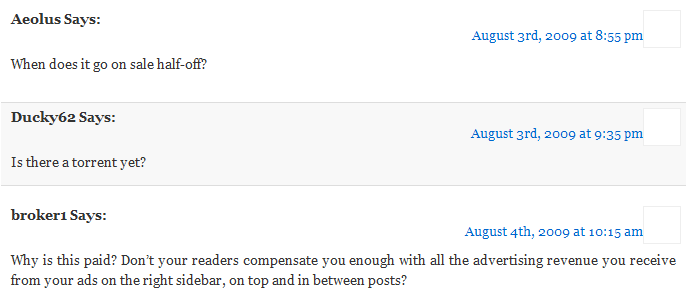
Recently I saw Barry Ritholtz mentioned that he was selling video recordings of a conference he put on for only $69, and some of the people who commented on his site wrote garbage like this:
These people have enough capital to try to trade the markets, but spending $69 for one of the most in depth and most current pieces of information about their livelihood is completely out of the question. Imagine having the gall to register on someone's site to leave a comment like "where can we steal your work from."
And yet this is normal (and expected) behavior on the web, even in fields directly connected money / finance / investing!!!
Every day I get some non-customers who acts that way as well. The noise does wear you down, and it really does highlight the problems with free. When some people get hooked on free they have no end to the demands, and no respect or appreciation for the work.
I personally handle all customer correspondence, which is why I recently had to increase prices to slow down our rate of growth. I am only 1 person. Customers rarely wait as long as a day for a response. This guy never sent in 3 requests, was rude and demanding and demeaning, is not even a paying customer, and expects free phone support for software worth hundreds of dollars that we give away for free.
Why would I care if that guy used our tools for free? Since he is rude I hope he can't use them, such that any competent competitor interested in SEO has a competitive advantage over him. And that guy's rudeness shows that he probably lacks the social skills to be successful on a large distributed social network.
When you chose your customers you are picking how much you will enjoy your job.
There are a lot of potential bad customers like that, and you don't even want to suggest they become a paying customer. The only ways to handle people that are that rude are to either ignore them or tell them off to let them know they are not welcome in your business. If you play nice with a person that treats you like a doormat then it will only get worse in time.
The person who needs a lot of support BEFORE becoming a paying customer rarely becomes a profitable long-term customer. The person who needs a price break today expects a larger one tomorrow. They keep squeezing margins until you are a commodity and the model no longer works. It is just a path to self destruction because if you cater to such people you do not raise them up to your level, you lower yourself down to their level.
This reminds me of an important business lesson from a Dan Kennedy book called The Ultimate Success Secret that a great friend recommended I read about a year ago.
When I first started in the "success education business," one of the few people in the country who was consistently effective at selling self-improvement audiocassette programs direct, face-to-face to executives and salespeople, gave me what turned out to be very, very good advice - he said: "Don't waste your time trying to sell these materials to the people who need it the most. They won't buy it. You should focus on selling to successful people who want to get even better."
Over the years, I've demonstrated the validity of this to myself a number of different ways. And I've developed an explanation for it. There is what I now call "the self-esteem Catch-22 loop" at work here: in order for a person to invest directly in himself, which is what buying self-improvement materials is, he has to place value on himself, i.e. have high self-esteem, but if he has such high self-esteem, he is probably already doing well and does not have a critical need for this type of information; he will get marginal improvement out of it; but the person who needs it most does not place much value on himself, i.e. has relatively low self-esteem, which prohibits him from buying, believing in or using self-improvement materials.
I used to be all about making everything (or as much as possible) free because I liked helping people, but really most people won't act on advice or respect it much unless they pay for it. Human nature is what it is, and there is no point fighting it. ;)
At some point we may need to test moving from offering any tools for free to making everything paid just to filter out that noise. Such a move would likely cost us exposure, but most of that exposure is not leading to any tangible business anyhow.
SEO Question: Hello, How do site suchs as: ____ and _____ work with flat fees Where everyone else charges us up the wazoo.
Do you offer such a program for my business. - Thanks, Paul
Short answer: "Laws control the lesser man. Right conduct controls the greater one." - Mark Twain
Some People Provide Value, Others Steal Money
Long answer: Believe it or not, at one point in time I was an SEO client who bought a trashy scammy service. The site I was trying to market was terrible, they offered no link building solutions for it, and instead suggested I create copies of pages on the site with hidden links pointing back and forth to try to rank well for some obscure 5 word phrases that nobody searches for.
Now those people could have told me that my site was a poor website and I can improve it by doing x, y, and z. But they didn't care about the actual outcome of the work. They just wanted $149 and they got it. That was over six years ago, and they are still scamming people today.
Many Big Organizations Sell Scammy No-Value SEO Services
Most SEO buyers are allured by the prospect of free traffic and that free price-point sets their anchoring for the price. Further their first introduction to SEO comes from non-SEO. Many web hosts, domain registrars, clueless web designers (who talk up web standards but do no actual SEO research), and sleazy telemarketers offer low priced flat rate packages that have no value. Some of the domain registrars and web hosts run on such thin margins that they would be bankrupt without selling stuff like the scammy bolt on no value SEO packages. To highlight such scams I created dollarseo.com to show how they did not work.
Which Creates a Market For Lemons Effect
John Andrews also highlighted this issue in the past, in a post about a market for lemons, comparing the market for SEO services to the used car market:
As non-selling good cars were removed from the market, masquerading “lemons” dominated, setting the tone for the used car market, and further blocking actually good used cars from appearing. In the end, the used car market becomes a market for lemons, not a used car market.
It seems SEO has the same problem. As “boiler-room” SEO firms cold-call companies and pitch ridiculously low prices for SEO contracts, based on old and incorrect SEO information readily accessible to consumers, high quality SEO firms start looking “too expensive”. Consumer research into SEO does not reveal better information, since that knowledge comprises a significant portion of the value SEO consulting, and is thus not freely published. The entire market for SEO services starts to become a market not for actual search engine optimization, but more a market for “snake oil SEO” than true SEO.
Consider the Baseline
To further put the economics of SEO in context, any great SEO should be able to profit from marketing their own websites about their own interests. If I was still interested in baseball cards (like I was in high school) I have no doubt that I could make 6 figures a year promoting a website about baseball cards. That interest faded. But any interests I have I can attempt to monetize. That sets the barrier kinda high for client services. Why would I market someone's thin affiliate site selling Viagra cheaply when if I poured the same effort into my own sites which I love I would make far more profits?
Competent SEOs Have Many Options
Because of snake oil SEO salesmen (and people who want to buy something cheap) the SEO market is very hard to extract money from in service based businesses unless...
you run your own publishing business (monetized through affiliate ads, contextual ads, lead generation, direct ad sales, creating & selling your own products + services) and optimize your own websites (which we do)
you sell information and/or tools that others can use to apply to learning SEO (which we do)
you sell other niche services (like keyword research or link building) that help clients, but are only a piece of the overall strategy (we do not do too much of this, but sometimes do)
you have very few select high end client relationships (which we do)
you hire a bunch of salesmen to sell worthless trash to the bottom 80% of the consumer market. (which we do NOT do)
This site is about 90% of my labor and about 30% of our profit. But we still run it for a variety of reasons...
it is one of my favorite hobbies
income diversity
running this site (and interacting with hundreds of smart SEOs) helps give us more feedback on international markets and inform some of marketing strategies
there are a lot of ways to make money online that are somewhat dirty, but this site is pure as snow and helps thousands of families put food on their tables.
Some Markets Are Competitive & Expensive
Anyone who is selling flat rate SEO services is selling a service priced without exploring the market and learning how competitive it is. Ranking well for credit cards might be worth millions of dollars. But it might also cost that much to rank. Ranking for Salem, Oregon bus rental is far easier and can be done using less than 1% of the capital investment.
Worse yet (for the consumer of a flat rate SEO service), SEO is a winner take most market. Most people click on the first page of the search results, with most those clicks happening on the top few listings. So lets say one of the flat rate companies was surprisingly not a scam and actually gave a crap about your business. This is doubtful in most cases, but lets just consider it. Well if they under-price the flat rate and rank you on page 2 or 3 you still are not going to get very much traffic, and (in spite of them trying their best on limited resources) you still probably lost money because page 3 of the search results = fail.
Is Google Flat Rate?
And here is another way of looking at it. Google AdWords doesn't sell their keywords for a flat rate. The words live in an auction that rises and falls with consumer demand. At the same time, advertisers who are paying Google over $10,000,000,000 a year are starting to put some of that budget into organic SEO. With the average SEO employee earning roughly $80,000 a year it is hard to believe that an outsourced discount flat rate package can compete.
Flat Rate Dream Homes Located in _____ for Only $5,000
I am not sure who came up with this analogy. I think it was Danny Sullivan (he is always great with those), but how many contractors do flat rate home building? Probably 0 legitimate ones. Everything is important from the foundation, to the number of rooms, to the materials used, and any special requests need to be considered.
Knowing if the house is on the side of the mountain, if it needs rocks cleared away, if it is in a swamp and could sink is important. Likewise legitimate SEO consulting aims to know the direction of the market, understand the brand, evaluate domain name selection, survey the market, and assess strengths and weaknesses.
Only AFTER all that work has been done to establish a foundation then you have to establish a well researched market strategy and keyword strategy. Then you need to do push marketing and other forms of marketing to build links. You might need to build 100 or 100,000 to compete. No matter how perfect your site is optimized, you generally are not going to rank for competitive keywords until AFTER some link building has been done. On-page optimization has a glass ceiling.
Rarely, if ever, do flat rate SEO service providers build quality links. And if the do buy them, then it is generally to some prescribed generic schedule rather than a specific plan catered to your market and your website. And while the provider is stuck working within that flat rate someone else is subscribing to sites like this one, learning SEO, and aggressively reinvesting their profits to further build a competitive advantage.
It is very hard for an outsourced discount service to compete with a self-interested business owner.
In the markets worth being in, pre-defined flat rate SEO rarely gets it done.
Anytime any of these words are in the name of an informational product or software tool you can be 99%+ certain it is a scam:
Money Words
money
cash
wealth
income
unlimited
rich
Automated Words
automated
automatic
autopilot
magnet
easy
lazy
system
blueprint
plug and play
turnkey
MLM Words
network
downstream
empire
Social Power Words
power
secrets
seduction
hypnotic
domination
success
More Tips
Thumb rules...
if your not sure what it does then its not worth buying.
the quality of the product is often inversely related to the number of products the vendor has on the market.
the quality of the product is often inversely proportional to the number of people who email you about it.
Why write blog posts like this one?
Our Support.seobook.com tickets often get filled up by people who bought some scammy products from some hyped up marketer (who we have nothing to do with) and beg us for refunds. I figure if I write a few more posts on topics like this maybe I will get a few less of those support requests from people who bought garbage from someone else.
Well they got that link because they were the best site out there. That was organic. It is a naive view of marketing to assume that if you are the best people will notice you and people will care. It is not enough to be the best...you need others to say that you are. If anything the web is making most people more driven by self interest - rather than lending a helping hand.
Worse yet, due to the anonymous nature of the web (and other automated technologies), we are bombarded with every type of spam imaginable (auto-dial telemarketing, fakevertising, reverse billing fraud, phishing, bait & switch marketing, etc etc etc) and the people who have distribution are gaining a predisposition that if you contact them out of the blue with anything commercial you are a spammer. Further tools like Twitter pull links off the web graph and make conversations more shallow, limiting the discussion of many complex topics.
Affiliate programs are great for distribution (and whoring fake reviews), but most good affiliates typically target brands that already have their own gravity around them.
Even if you make someone millions of dollars they typically don't want to give a testimonial because they are afraid of creating competition for themselves.
The site has a range of options for letting your company or organization know that you want it to “Go Google,” including things like fliers and pre-populated emails to send out.
And Google is also promising to give away “goodies” each week in August to users who have Gone Google and fill out a Google Doc describing their experience.
Eventually the goal of many forms of marketing is to create something that has enough targeted awareness that it begins to market itself. To become synonymous with a field. Kleenex & Xerox are great examples. But you have to use push marketing, begging, bribery, ass kissing, capital, sweat, blood, luck, and a bit talent to get in that type of position.
You can't be a successful market maker without first being a market manipulator. And even when you get to the top of a market you still have to try to control market perceptions. To get a refund for an Apple iPod that literally blows up you need to sign a confidentiality agreement:
The letter also stated that, in accepting the money, Mr Stanborough was to “agree that you will keep the terms and existence of this settlement agreement completely confidential”, and that any breach of confidentiality “may result in Apple seeking injunctive relief, damages and legal costs against the defaulting persons or parties”.
In spite of their strong market positions, Apple and Google are still heavily focused on manipulating public opinion of their products.
And Google's CEO Eric Schmidt sat on Apple's board to avail himself of key information. He sat on that board as Google attempted to clone the iPhone with Gphone, and stayed on it until his company pushed the FCC to go after Apple for blocking the Google Voice app: "Google brought down the disapproving scrutiny of the FCC onto Apple on Friday night, and on Monday morning Schmidt resigned. It is difficult not to make a connection between these two events."
And while Google paints the media as trustworthy, it rarely is. The news corporations do business deals to engage in cross-censorship in an attempt to increase short term corporate profits:
GE is using its control of NBC and MSNBC to ensure that there is no more reporting by Fox of its business activities in Iran or other embarrassing corporate activities, while News Corp. is ensuring that the lies spewed regularly by its top-rated commodity on Fox News are no longer reported by MSNBC. You don't have to agree with the reader's view of the value of this reporting to be highly disturbed that it is being censored.
One of the biggest flaws with the field of SEO is the presumption some people have that there is only 1 right way to do things, everything should be free, marketing should be entirely organic, you have to keep it all above board or you risk losing everything, and other BS pitched by companies trying to minimize and regulate the field.
The bigger risk for most businesses is being too conservative and thus remaining obscure, unknown, and unprofitable.
Get links from other sites with keywords in the link
These days, this strategy isn't working as well as it used to.
If a site isn't genuinely interesting and isn't worth remarking upon, it can be difficult to get links, attention and rankings.
These are essentially marketing problems.
By basing our SEO strategy on fundamental marketing principles, we stand a much better chance of dominating the rankings, no matter what niche we choose to target.
Audience
This document is intended for those who know basic SEO principles, but are new to marketing concepts and theory.
If you're new to SEO, there are helpful tips throughout the document, and links to further instruction on SEOBook.com.
Principles That Form The Foundation Of This Strategy
1. Market Analysis
2. Competitive Review
3. Positioning
4. SEO
5. Economics
Market Analysis
In the past, marketing was a last-minute ad on.
A company knocked out a product, then it was handed over the wall to marketing, whose job it was to get the product out into the market. Marketing put a colorful picture on the box, commissioned a jingle, and bought up millions of dollars worth of media time.
These days, marketing is more integrated. A product or service is designed with a clear audience in mind, although many SEOs might disagree, especially when asked to bolt an SEO strategy onto a Flash site consisting entirely of animation!
The internet offers us the opportunity to design with a clear audience in mind, but with a lot less risk than brick-n-mortar companies.
We can figure out if there is a market, and what that market demands, test that market, and then build a site to cater to that market. We can do this quickly and cheaply, using the power of search marketing.
Find Clear Space & Consumer Demand
Like SEO, marketing is part art, part science. Even if you cover the technical aspects of SEO, there is no guarantee you will rank well. Likewise, if you follow a marketing strategy, there is no guarantee of making money.
The trick is to find a place in the market that has two key aspects: clear space and consumer demand.
How do we find these places in the market?
Let's start with a basic marketing analysis.
Perform Market Analysis
Ask yourself three questions:
What does the consumer need?
How many consumer need this product/service?
What is the buying process?
You must fill a genuine need in the market.
Is there demand? It's no good trying to sell something, be it a good, service or opinion, if there is no demand for it. For example, do you know why most blogs don't get read? It is because there is a very limited demand for opinions from unknown writers. Demand is spread very thinly across the opinion/news space, and supply is virtually infinite.
How do you find out if there is a demand for your idea?
The SEO has a valuable tool at his/her disposal for determining demand. Keyword research involves mining databases of previously searched for keyword terms to see if there are existing traffic streams (demand) they can tap into. Any volume of keyword searches indicates demand. Generally speaking, the higher the search volume, the greater the demand, although there are traps, which we'll get to shortly.
For those new to keyword research, here's a step-by-step, using the SEOBook Keyword Tool
Example Of An SEO Marketing Analysis - Gone Wrong
The SEO aims to build a revenue generating site.
The SEO undertakes keyword research and finds there are a lot of searches for Britney Spears pictures.
It turns out that there are approximately 135,000 searches for Britney Spears pictures each month.
Our first two questions - "What does the consumer need? (Britney pictures)" and "How many consumer need this product/service? (lots!)" - appear to be answered. So the SEO licenses a collection of Britney pictures, sets up a site that charges a small membership fee, and ranks well for Britney related keyword terms.
And fails to make any money.
Why?
There are various reasons, but the main reason is that the SEO failed to ask "what is the buy process?" Conventional SEO-led strategies often fail to include this step, however it is crucial if your site is to succeed.
The buy process is, as the name suggests, the steps a person takes when they are interested in buying something. Had the SEO examined the buy process, she would have realized people don't pay for Britney pictures online. Granted, this example is a little silly, but this problem occurs often, especially when search traffic is viewed in isolation.
Offline, people may buy gossip and celebrity magazines, but when online, they expect to look at Britney pictures for free. Online, the buy process for Britney Spears images simply doesn't exist, except in a very narrow B2B market between photographers and publishers.
So what happens next?
Choose Niches With A Commercial Imperative
The SEO, discouraged that his first idea didn't work, chooses to run ads instead. Where there is traffic there is money, right?
Again, this approach is likely to meet with limited success, especially when compared to other niches she could have targeted.
People looking for Britney pictures don't tend to be in a buying mode, and so advertising, especially action based advertising such as Adsense, is likely to go unclicked. The activity "looking at Britney pictures" doesn't have a strong commercial imperative, whereas an activity such as "buying toys", does. Such sites need a very high number of page views to make much money.
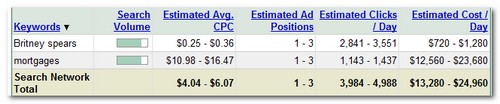
One way to determine if a commercial imperative exists is to examine the bid prices for Adwords. Almost always, the higher the bid price on the keyword, the more transactional the niche.
Think Of It From The Advertisers Perspective
The SEO also needs to understand the buy process in order to choose the areas which will be most effective for advertisers. The most effective Adsense sites, for example, are sites where visitors are looking to buy something. That's the only reason advertisers use Adwords - they need to sell visitors something*.
In reality, it's a little more complex than this.
Non-commercial searches can and do result in sales, however searches directly related to commercial activity - such as transactional searches - are most likely to result in higher income for your site and make for more profitable niches. See my article on the three types of searches, navigational, informational, and transactional for more information.
Ask yourself:
What makes someone buy something? Will they buy it online, or offline? Are they even capable of buying something over the internet? If visitors are in a buying mode, then what stage of the buy process are they at? Are they ready to buy right now, or are they looking for information?
Look at demographic details for competing sites and keywords to get inside the mind of the searcher. Don't just look at search volume, but also consider the intent behind the keyword, how you would monetize that demand, and the visitor value.
*The one caveat is to drive brand awareness, but this also has limited effectiveness. When was the last time you clicked on an adwords ad that focused entirely on building brand? And if people don't click, you, as the publisher, don't make money.
I hope I've impressed on you the need to evaluate keyword terms within a marketing and business framework.
Competitive Review - Strengths & Weaknesses
Query the search engine results pages under the keywords you want to rank for
Pick out the top ten sites in your niche. The top ten sites will usually appear under a mix of keyword terms relating to your niche
Determine the strengths and weaknesses of the competition
Determine the strengths and weaknesses of your own site, relative to the competition
Once you've decided on a niche to target, you then need to determine the level of competition within that niche.
A SWOT analysis can help you determine how your site compares to those already in the niche. SWOT stands for Strengths, Weaknesses, Opportunities and Threats. You perform this analysis on your own site, and the sites of your competitors.
You can can go into incredible detail with a SWOT analysis, but it doesn't need to be complicated. You simply need to determine what you're good at relative to the competition. Draw up a chart like this, and complete:
If you can't find any areas where you are better than the competition, either refine the niche, choose another niche altogether, or figure out a plan that will make you better than the competition. Ranking well doesn't really help, because a searcher will not stop at the first site they find.
Keep in mind that it is easier to be successful if you already know a lot about a market. Any experience you have lowers the investment needed to research the market and ensures you can write at a higher and more compelling level than people who do not know the market.
By doing a SWOT exercise, you'll also get a feel for any opportunities your competitors might be missing.
Positioning
Undertake keyword research
Look for a niche that is "worth remarking upon" and is new, or doesn't have a lot of existing competition
Select a brand name and domain name the describes the niche ie. SEOBook.com. It is useful to include a keyword term
Build a site that focuses exclusively on this niche, and no others.
Conduct SEO campaign
Monitor results.
What do you think of when someone mentions the name "Google"?
Search, right.
How about IBM? Computers. Hewlett Packard? Printers.
If you aim to be the first in the customers mind when they think of a keyword term, you can easily win the ranking game.
Be First
Who was the first president of the United state.George Washington. Who was second? Who was the first man on the moon? Neil Armstrong. Who was the fourth. It is important to be first. Being first is memorable.
But wait a minute! Google wasn't the first search engine!
Correct. However, they've overcome this by being first in people's mind when it comes to search. Yahoo was the first search service, and whilst it's star has faded of late, it is still a very wealthy company. It is no good being the tenth anything. Aim to be first. And if you can't be first....
If You Can't Be First, Be First In A New Niche
You'll face the problem of not being first whenever you enter an existing niche. And on the internet, that's "most of the time"
Look at the top sites in your chosen niche. If they got in early enough, chances are they enjoy the linking benefit that comes with being first. Typically, Google's linking algorithm favors long established sites, as opposed to newcomers. To find out why this occurs, check out Mike Grehan's "Filthy Linking Rich". Those who are first to occupy a niche have a much easier job of getting links because they are remarkable, simply by virtue of being unique.
So what to do if you arrive late to a niche?
Invent a new niche, and be first in that.
Say you sell holiday rental accommodation in Palm Springs. Unfortunately, there are a lot of holiday rental accommodation services in Palm Springs. So to differentiate yourself, you might decide to focus on "the cheapest rental accommodation services in Palm Springs". Or "the most upmarket rental accommodation services in Palm Springs". Or "the best rental accommodation guide for solo travelers in Palm Springs".
Focus on a new angle that your competitors aren't targeting. This is called market segmentation.
Make Sure The New Niche Is Worthwhile
One of the traps of market segmentation is that you might segment too finely i.e. there are not enough customers in your newly segmented niche to be worthwhile.
When you do your keyword research, look at the keyword volume for niche keyword terms. Are there any keywords that have good volumes AND cover an angle that you competitors aren't already targeting? Find a suitable keyword term, and make that your niche. Also, look at demographic details for competing sites and keywords to get inside the mind of the searcher. Remember, there needs to be a commercial intent.
Take Your New Niche For A Test Drive
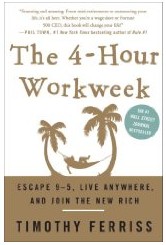
This strategy has been used in PPC for a while, however it's outlined really well in the book The Four Hour WorkWeek by Tim Ferris.
Once you've decided on a new niche that you can be first in, you need to test the niche to see if it delivers enough revenue to make the effort worthwhile. You can test a niche quickly and easily by using PPC, like Google Adwords.
A lot of SEOs don't use PPC, but they're missing out on a tool that can save them a lot of time and effort.
Run a short Adwords campaign targeting the keyword terms that relate to your new niche. You may only need to run it for a week or two, and it shouldn't cost you more that a few hundred dollars. The aim is to answer the question: "do people who search on the keywords want to buy what I'm selling?".
Ensure your site has a clear call to action that will help you measure actual buyer interest. For example, a sign-up form offering more information, a sales inquiry, or an actual purchase. You don't need to have your site finished to do this. A basic three page site will do.
Monitor the campaign and do split/run testing on the ad-copy. This means you compare one set of wording against another. Helpfully, Google Adwords has this functionality built in, and they provide a free product called Google Optimizer if you want to test you page copy. Check out my article "Tested Advertising Strategies Respun For SEO".
Again, this exercise can be as simple or complex as you want to make it.
Start off simple, and change the wording to make the offer sound more appealing, and make a note of the wording that works best. You can use this wording in your title tags during your SEO campaign. The wording that receives a click in Adwords is also likely to receive a click in the organic listings.
If visitors are searching for your keyword, clicking on your ad, and moving to desired action, then you've found a great niche. Remember, most people will click the organic results rather than Adwords listings, so the fact you're getting click-through further demonstrates that there is little competition in your chosen niche in the organic results.
If you aren't getting click thru and/or sign-up/purchase, try the same strategy, but with different keyword terms. Keep going until you find a winner.
It is a lot cheaper in terms of time, effort and money to test keywords at this point, rather than commit to a brand and an SEO strategy that targets the wrong keyword terms, and the wrong niche.
Marketing Within The Niche
Choose a trading name, and domain name, that can be used generically, and, if possible, aligned with your keyword term.
One approach is to take a simple keyword phrase people are familiar with, and will search for, and combine it with something else. For example, SEOBook, AfterMail, FaceBook, HotelFind, etc. This approach works well if you don't have a large budget for brand building.
Non-descriptive brand names, such as Kellogs, or Mooch, don't work so well for SEO, especially for low profile companies, because people need to know your name before they search for you.
Become Synonymous With Your Niche
Consider SEOBook.com.
It's hard for anyone else to sell a book on SEO without people also stumbling across Aaron's site. Aaron has selected a keyword-loaded brand name that is aligned with the niche. He has also worked hard to dominate this tightly defined niche within the broader SEO market. Whenever someone promotes any book on SEO, Aaron is likely to benefit, because he is #1 in that niche.
If you dominate your niche, and the niche is relatively new, then any promotion of that niche will also benefit you. If you're a leader in your niche, and become synonymous with that niche, then latecomers and generic copycats will have a very difficult time competing with you. Any promotion of the beverage "Cola" benefits the market leader Coke, because they dominate their niche. Likewise, promotion of PCs will benefit Dell, promotion of smartphones will benefit Apple, and so on.
Position Against The Leader
Let's assume you're competing against an entrenched leader. What can you do?
Position yourself against the leader. For example, if the leader is offering "cheap SEO services", you might position by offering "valuable SEO services". You could warn people against using cheap SEO services by highlighting the problems and risks, and showing how your price is linked to achieving better value. Figure out what they're doing, and define yourself against them.
Avis did this against Hertz. They acknowledged they weren't the top of the rental car niche, but made a virtue out of it. They adopted the phrase "we try harder". The market dominance of Hertz became a weakness.
Barriers To Entry Are Your Friend
On the web, there are few barriers to entry. Anyone can start a website and copy your idea.
However, not everyone can start a Google. Or an Amazon. Or a Facebook. Those companies have barriers to entry in their markets, mostly to do with the scale of operations. It's very expensive to do what they do.
Look for areas where there is some difficulty in starting up. Does your idea require capital? Do you have valuable information that no-one else has? Do you have a pre-established reputation or brand? Does you idea require specialist software? Is the service or product unique, or difficult to obtain elsewhere? Such barriers will dissuade a lot of people from entering the niche, which means you'll face less competitive threat.
The lowest barrier to entry is the affiliate site where the supplier provides a template site. They might even set it up for their affiliates. For free!
See the problem?
If it's that easy, then there is no barrier to entry, meaning anyone can do it. Even with the best SEO in the world, it would be very difficult to defend such a site from the hundreds of webmasters who arrive tomorrow, the day after that, and so on.
So when you evaluate the competitors in your niche, also consider how difficult it will be for followers to compete with you.
SEO
Build content. Get a list of 50 keywords and write a page on each. Include how-to's, generalist information, news (use Blog software), video, photos and maps. Tag all graphical content with keyword terms
Write naturally, stay on a single topic per page. Forget keyword density, it is overrated
Layout site. Place most important (money) pages at the top of the hierarchy, one step away from the home page
Add one new page of quality content to the site per day
After 30 days, examine your stats. Look for long tail keyword terms, choose the most popular term, and write a page about it. Use this list of long tail keywords as article starter ideas
Every 15 days, do the same thing again
Remember to write a new page of quality content every day
Find the top ten sites in closely related niches, and offer to write articles for them. Include a link back to your site
After six months, you should be ranking well, and your traffic should be climbing.
They're only free if you value your time at zero dollars.
Of course, you time is worth money, and this must be factored in. One of the great things about SEO is that unlike conventional adverting, your visitors don't stop arriving when you stop paying. The downside is that you must spend a lot of time up front, and with no guarantee of success. The search engines could also drop your site, at any time, and without reason.
So it's a good idea to ask yourself the following questions:
What are my costs?
What is the break even point?
How long before I get payback?
A lot of SEOs will persist with sites that enjoy high rankings, even when the economics of the site don't make any sense. If this happens to you, bite the bullet and drop these sites, or convert them to another use. There is no value in ranking highly if the visitors aren't doing what you want them to, and/or they aren't spending money.
Once your put a value on your SEO efforts, you'll clearly be able to see how much your site is actually making you.
If the site is making money, that's great. If not, then try to determine if the problem is to do with marketing. Have you identified the niche correctly? Are you dominate within that niche? Is there sufficient demand?
Summary
SEO works best when it is integrated into your business and marketing strategy. There is no point ranking well for terms that don't advance your business goals. Find a profitable niche you can make your own, and dominate it.
Follow this strategy and lucrative search traffic will flow you way.
Today is the last day to lock in our current price, as tomorrow we increase our prices 50%. It looks like we decided to do the price increase just in time too, as we have added 378 new members this month and we are rapidly approaching our 1,000 member limit.
If you are already a subscriber, thanks a bunch...you make this site possible! If you are not yet a subscriber and were thinking of joining here is the link.