How Brands Became Hardwired/coded in Google's SERPs

In October of 2008 Eric Schmidt announced that SEO was about to get really ugly for anyone who doesn't own a brand. He didn't word it that way though. Rather, he stated

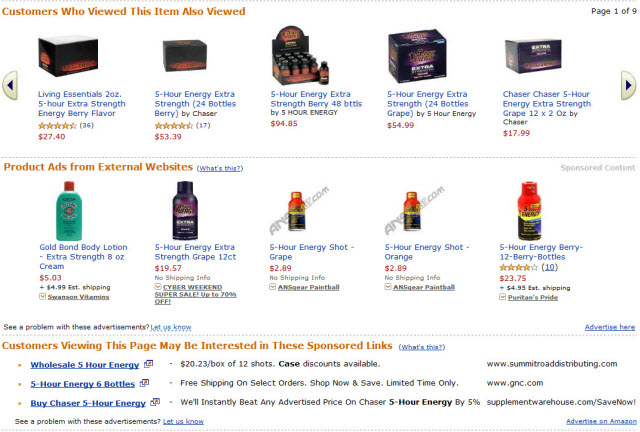
"Brands are how you sort out the cesspool. Brand affinity is clearly hard wired. It is so fundamental to human existence that it's not going away. It must have a genetic component." - Eric Schmidt

In response to that comment (& some of Google's pro-brand algorithmic updates) I created the following video.

Google's Brand Promotion History

Ultimately Google promotes brands for the same reason they promote Wikipedia: it is (generally) safe & easy.

Here is a history of how brand promotion became part of "the algorithm"

  • In 2003 Google did the infamous Florida update & ever since then they have generally trended toward placing more weight on domain authority (about the only big counter point to this would be Google's recent localization push)
  • Google's sandbox took it one step further by making it harder for new smaller sites to break through & giving them what amounts to a purgatory period
  • in 2006 BMW was caught spamming (after years of increased search traffic from spamming) they got a couple day slap on the wrist from Google. Smaller webmasters who were caught doing similar were penalized for far longer periods of time.
  • in 2005, shortly after announcing rel=nofollow, Google stepped up a campaign promoting FUD against link buying & promoting snitching (when combined with preferential treatment toward brands, this further favored big business at the expense of smaller webmasters)
  • over the years Google built increasingly sophisticated algorithmic filters to detect & demote aggressive link strategies (which, when coupled with brand promotion algorithms, further made it harder for small businesses to compete online)
  • in April of 2007 Google bought DoubleClick, highlighting Google's aspirations to move from demand fulfillment direct marketing ads into the lucrative brand advertising market
  • when the Google Vince update happened Google started placing more weight on search query chains, which would naturally favor large brands (due to their AdWords ad exposure on broader industry keywords & their large offline ad budgets - both of which aid recall by searchers)
  • when the Google Panda update happened Matt Cutts stated "we actually came up with a classifier to say, okay, IRS or Wikipedia or New York Times is over on this side, and the low-quality sites are over on this side." That algorithm allowed doorway pages & scraper sites to rank while killing off lots of smaller legitimate websites.

Sleazy Outing for Self-Promotion

In the later half of 2010 & the first few months of 2011 Google was getting beat up in the press about content farm spam (created by a combination of loose AdSense standards & Google putting too much weight on domain authority). To help deflect some of the bad press & show "who is boss" Google penalized both J.C Penny & Overstock.com for using manipulative links.

This past week the folks from Digital Due Diligence tipped of a NYT reporter for another hit piece. A lot of the top flower sites increase their ad budget around their busiest times of year, so coinciding with Mother's Day the New York Times highlighted how sites like ProFlowers, 1800Flowers, Teleflora & FTD were buying seedy links. I won't link at the NYT article because doing so would only promote more sleazy pageview journalism.

A Googler named Jake Hubert was quoted in the above mentioned article as saying the following:

"None of the links shared by The New York Times had a significant impact on our rankings, due to automated systems we have in place to assess the relevance of links. As always, we investigate spam reports and take corrective action where appropriate."

(Even Big Brands) Can't Rank Higher than #1

What is hilarious about that official Google comment is that sometimes Google has whacked websites based on perceived intent rather than results, & when I searched Google those 4 sites owned 6 first page results for that search query (along with the NYT article being listed as a 7th result (and 8th if you count the Google News result).

Google hard coded the algorithm to favor big brands (not once, but twice), promoted the big brands to the top of the search results, watches those brands violate their guidelines (in spite of said promotion) and then claimed that there is no corrective action needed for the violation since they already rank #1.

Well of course the paid links can't further improve a #1 ranking. You can't get any better than first place.

The good news for brands is that Googlers feel the sleazy outing angle is getting tired after J.C. Penny & Overstock.com & Google changed webmaster perception of their results with Panda (by making the common smaller webmaster pay for eHow's sins). Soon reporters won't justify wasting ink or bits on another sleazy SEO outing article because the pageviews won't be there.

At this point it is safe to say that Googlers don't really need to think of brands. All they have to do is search for *any* commercial keyword and click on the first result. The brand takes care of itself. :D

It looks like Eric Schmidt was right. Humans are hardwired for brands!

Indeed it is genetic.

Genetic algorithms that Google engineers code, with express intent of promoting brands! ;)

Questioning Amit Singhal's Questions

Google's Amit Singhal offered more "clarity" into Google's approach with the Panda update. However I am not convinced that any clarity was actually added, and I think a lot of the questions they ask are to a degree even a bit wrong-headed.

Would you trust the information presented in this article?

Sounds like this is all about promoting perceived authority.

Counter points:

  • Did you (or anyone you know) trust this outlet to give you a complete worldview at any point in the last couple decades & end up bankrupt, utterly decimated, or destitute because you followed its advice (on say internet stocks or the housing bubble or using excessive credit because "this time may actually be different")?
  • Did your allegiance to this particular media outlet cause you to be more likely to be unbelievably ignorant & ill informed about world-shaping anti-facts used to push things like wars based on fraud? Are there extra trillion Dollars of debt your children must pay interest on & over 100,000 people dead because a news outlet lied to you? And the US government (the largest seat of power & authority in the world today) was also complicit in ensuring American citizens were ignorant going into Iraq.
  • A lot of news sites are given additional distribution through services like Google news, which start them from a position of authority (because if you go to search to find something & Google promotes their news vertical right away, then sites in that news vertical will rank highly instantly & accrue backlinks from that early exposure). The education system itself is partly a propaganda tool to teach you to trust an obey authority. If the banking crisis taught us nothing else it should have taught us that many authorities are not worthy of our trust as they act in self interested ways at the expense of the whole.

Is this article written by an expert or enthusiast who knows the topic well, or is it more shallow in nature?

Mainstream media sites saw a $1 billion Dollar lift in annual ad revenue from the Panda update. Most mainstream media articles are *not* written by true subject matter experts, but rather by devout generalists who grab a couple quotes to fill out the shallow piece & make it feel more informed.

A lot of the "official" quotes are from officials who represent industry trade organizations. That means those folks support the interests of folks in that trade, even if/when that trade is working against the interest of the common man.

The problem is, you don't get to see who is a whore until *after* they already ____ed you. See for example David Lereah: "Ahhh, so he admits to being nothing more than a paid shill whose mouth was available for a price. How does that job description vary from the Trannies who hang out by the West Side Highway? In my book, not by very much. A whore is a whore is a whore."

Does the site have duplicate, overlapping, or redundant articles on the same or similar topics with slightly different keyword variations?

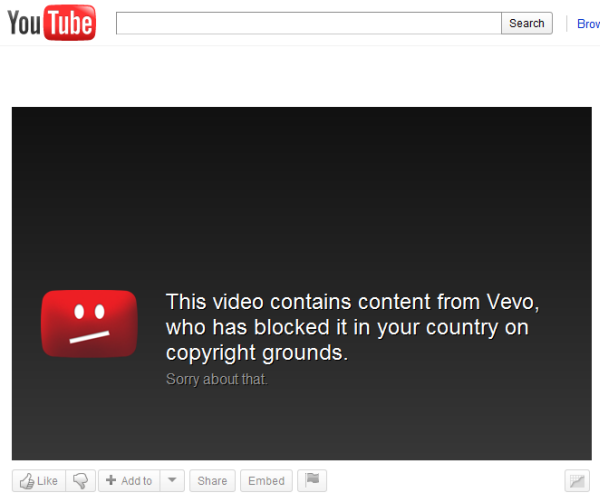
*Cough* Google Video vs Youtube vs Vevo.

Aren't most AP articles by their definition redundant duplication?

How are some of Google's late-to-the-party services like their ebook store or their places pages justified if we seek to minimize redundancy?

Would you be comfortable giving your credit card information to this site?

Some sites aim to sell, while others aim to tell.

If a passionate hobbyist desires to share but isn't selling something (and thus uses a quirky site design or a more personal formatting structure) should they be dinged for putting their passion ahead of getting an unneeded SSL certification & paying firms like TRUSTe, McAfee & VeriSign?

Interestingly, sites which display some trust symbols are *more* likely to scam consumers. Being a con man requires abusing trust and confidence. Some of the top brands do just that, over and over again.

Sites which don't go out of their way to sell you something are more likely to be built on passion.

Does this article have spelling, stylistic, or factual errors?

"Correct spelling, indeed, is one of the arts that are far more esteemed by school ma'ams than by practical men, neck-deep in the heat and agony of the world." - Henry Louis Mencken

Further, the error of omission is one that is constantly made in the mainstream media, which is precisely why you have to read fringe rags like the Rolling Stone to get an honest look at how bankers are robbing the country blind. Of course you will read the same article in the mainstream media in 6 or 7 years, after the statue of limitations runs out. And they will sell it as "new" news, even though the story at that point is nearly a decade old.

Are the topics driven by genuine interests of readers of the site, or does the site generate content by attempting to guess what might rank well in search engines?

I can tell you sure as hell that the auto-generated spam stub pages on the mainstream media sites (driven by services like DayLife or Truveo) which scrape blogs like mine are not driven by passion. You can't program a bot to have "passion."

Does the article provide original content or information, original reporting, original research, or original analysis?

Hard to disagree with this point. However, it is worth noting that the mainstream media is notorious for stealing stories.

Further, I have had a client featured in a well read trade magazine where they wrote an entire article on the client. They were unwilling to link to the client's site (even though the client was the only source & entire purpose for the article) because they said they felt it would be too promotional. How warped is it that they will do a photo shoot at your house & make you the feature of an article, yet they are afraid to link because that might be seen as being too promotional!

Does the page provide substantial value when compared to other pages in search results?

This is actually a bit of a bait and switch styled topic. Let me explain. In an ideal world every single page would be great.

But when some brands are above regulation, Google keeps screwing up source attribution & Google creates no-value-add scraper pages like their places pages, if you ensure that every page you make is unique & value add then if you operate at any scale you will likely go bankrupt in the search game (unless you have significant non-search distribution).

Most articles individually are failures that do not pay for themselves. It is the rare success that helps carry the failures. You do not know which is which in advance, but you hope that with some level of effort and scale you are marginally profitable out the other end.

This is how literally all forms of publishing work: online, music, movies, books, etc.

In terms of a money loser, take for instance this article. I am already rather well known, have a wide following, spent hours writing that article, and ultimately it garnered 1 comment & 0 inbound links (once you back out scraper sites, automated links, and links with nofollow on them).

Making things worse, you not only compete against others who will copy anything of yours that is successful, but if Google does decide to whack your site with a penalty then a scraper site (which Google paid with AdSense money) that steals your content will outrank you for your own work. How exactly do you provide a unique substantial value add when Google is paying others to steal & republish your work wholesale?

Things like source attribution issues, brand bias, and Google competing against publishers with scraper pages have a very real and significant impact on profit margins. A good sustainable company is generally lucky to have 20% profit margins. When Google introduced their places pages that scraped TripAdvisor Google instantly redirected 10% of TripAdvisor's search traffic.

Ultimately the above issue with content is not down to cost or effort, but if what you are doing is profitable. If it is not, then it is simply unsustainable.

And even when you are profitable, you can count on Google helping others subvert that position.

On the topic of value add, I have even seen people buying AdSense ads to redistribute 3rd party works, where the only value "add" was lowering the retail price!

How much quality control is done on content?

A lot of the high ranking and much hyped social media networks like MySpace, Friendster, Twitter & Facebook are almost exclusively spam. A couple days ago I deleted over 75% of my Facebook "friends" because I was sick of getting daily email updates about how some dirtbag wanted to promote some autowealth MLM blaster unlimited downstream product on my wall.

That is not to say that everyone I deleted did anything wrong (most of them are likely good people) but there was no opportunity cost to spamming. The spammers who automate drive everything toward the tragedy of the commons. A paywall is perhaps the single best filter for quality, but if you use a paywall expect to deal with a lot of freetard rage & expect Google to pay some folks to steal it.

Google polices the web, but anything goes in their ad programs.

You can see how ridiculous the double standard is by simply considering that Google let their counterfeiting advertisers count grow to 50,000 strong before finally axing them when the US government pressured Google. Bizarrely, Google had the audacity to position themselves as good doers who were cracking down on spammers, when in fact they were taking their own longtime business partners out to the wood shed!

Does the article describe both sides of a story?

Mainstream media sources often like to share "both sides of a story" to seem unbiased. But the truth is that media by its very nature is biased toward the interest of advertisers & away from consumers. See, for example, either Manufacturing Consent or the BGH lawsuit.

Further, some well known corporations (LIKE GOOGLE) blackball media outlets that question them in certain ways. Google would never give exclusives to SEOBook & the sites that they do give exclusives to would lose the relationship if they were as blunt as we are.

Is the site a recognized authority on its topic?

Lots of recognized authorities have conflicting funding sources - something that was well highlighted in early Google research, and has been consistently exposed (years or decades after the fact) in the medical space.

Many firms which can "move the market" regularly trade against the advice they give to retail schleps.

Honesty is more important than authority, but then being bland & honest is not quite as remarkable (or profitable) as putting on a coat of spin.

Is the content mass-produced by or outsourced to a large number of creators, or spread across a large network of sites, so that individual pages or sites don’t get as much attention or care?

How would Google's efforts stand up when graded against this suggestion? Why does Google have Google Video, Youtube & Vevo?

Further, most market leaders do have large networks and multiple branded sites for purposes of branding, segmentation, and double dipping in the marketplace. Remember when Bankrate (which already owned Bankrate, Nationwide Card Services, Credit Card Search Engine, Bankaholic, etc.) bought out CreditCardsGuide.com & it got temporarily penalized for the spammy links it had? Well it ranks again & of course since then they have also bought out CreditCards.com. You see this sort of behavior amongst almost any big brand: from Amazon.com to Zappos. (Oh wait, Amazon.com now owns Zappos!)

Was the article edited well, or does it appear sloppy or hastily produced?

A lot of the best content comes from people who are subject matter experts. But those people may have only mastered their subject & may be new to: writing, website design, online publishing, etc.

For a health related query, would you trust information from this site?

Let's put it this way: the media people consume is in part responsible for the current state of health in the US where there is an obesity epidemic. Further, a lot of the leading health authority sites (like WebMD) run special advert sections in their site where it looks just like content but you have to read the small print to see it is an ad.

Going one step further on this front, it is worth mentioning that a number of the large pharmaceutical corporations have repeatedly sold drugs for off label purposes & yet none of their packaging is required to highlight those ill deed they did that have literally killed millions of people.

And let's not forget Google's take on educating misinforming the public about these drugs.

Would you recognize this site as an authoritative source when mentioned by name?

A lot of "authoritative" sites are simply sites with large ad budgets.

Quick, tell me which company advertises a clever gecko with a British accent. Other than as a mascot (& perhaps alliteration), how relevant is that gecko (or the accent) to their business? Not at all. But they do spend nearly a billion Dollars a year on ads.

Does this article provide a complete or comprehensive description of the topic?

Most articles that do are money losers.

Especially true while Google is funding so much no-cost automated web scraping.

Does this article contain insightful analysis or interesting information that is beyond obvious?

Held to your own standard, how would Google Places pages hold up?

Is this the sort of page you’d want to bookmark, share with a friend, or recommend?

A lot of the stuff which is shared is shared precisely because it is ill-informed, controversial, or shares someone's pre-existing biases.

Does this article have an excessive amount of ads that distract from or interfere with the main content?

In the Manufacturing Consent DVD a big media guy highlighted that they like to have a 60/40 split between ads and content. Google already pushes online publishers to do less, even if Google does the exact opposite:

Would you expect to see this article in a printed magazine, encyclopedia or book?

Aren't print magazines where a lot of the bait and switch headlines came from?

Are the articles short, unsubstantial, or otherwise lacking in helpful specifics?

Do you mean something similar to most magazine articles? Or do you mean the content farms that Google funded & then used as a justification to torch 10,000's of small businesses?

Held to your own standard, how would Google Places pages hold up?

(I know. I know. If what you do looks like what Google does then you MUST be a spammer.)

Are the pages produced with great care and attention to detail vs. less attention to detail?

This basically excludes almost any user generated content site, with the exception of Youtube.

Would users complain when they see pages from this site?

I'll complain about something I just saw. ;)

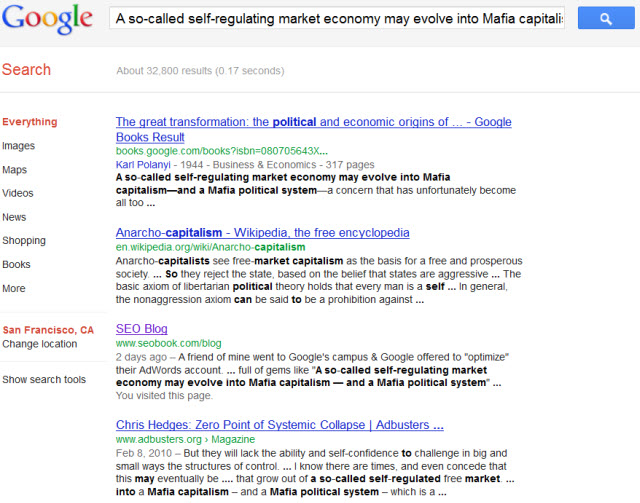
While searching for a link for a blog post I was writing today, the #1 Google result (not voted up by social circle stuff) was a Tweet linking to a Hootsweet framed page linking to a music industry site which posts RSS feed content and linked to a BusinessInsider article that referenced the TechCrunch article I was looking for.

If we want to get rid of unneeded duplication & noise then why is Google tying their bonus system to promoting more social media noise? After Amazon.com has done a great job with Kindle why is there a need for Google's ebook marketplace? After Yelp has created a strong community review site (with real editorial expenses) why is there a need for Google Places to scrape & displace its reviews?

-----

tl;dr

If you look at what actually happens in reality (rather than what folks claim to support in their "ideals") it is anarchy. The bankers stole what they could and moved on. The pharmaceutical corporations create fear-driven propaganda about the dangers of drug re-importation, all the while pushing drugs for off label purposes. Google pays people to steal your content, then tells you to suck it up & it is your fault you are not a big brand.

Anarchy is here.

The only difference is that it is dressed up in suits and fancy language, where people perceive anarchists as like ripped jeans, megadeth shirt wearing, pyro's.

Google Panda Algorithm Exploit Uncovered

In the Manufacturing Consent DVD a newspaper executive highlighted that they liked to have a 60/40 ratio between ads and content.

Google says that if over half your page's content is ads then your pages are of insufficient value.

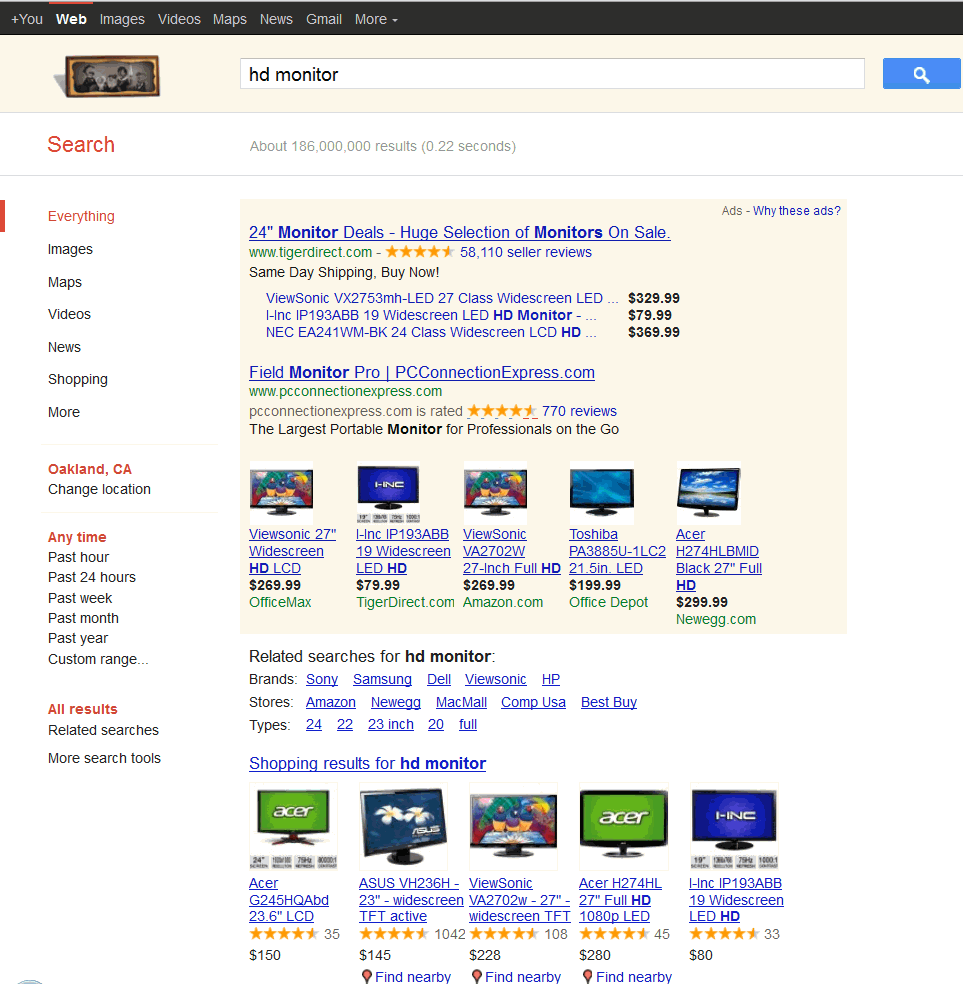
What Google engineers miss when delivering sermons to webmasters is that Google is fine with disappearing their organic search results for self promotion & even advertises that consumers can't tell the difference between their search ads and the organic results.

You see, tricking people is bad. Unless you are Google. In which case you have to hit the quarterly numbers.

Everyone else needs to read Google platitudes, create deep content, and pray to turn the corner before bankruptcy hits.

Matt Cutts stated that you should make your products like Apple products by packaging them nicely.

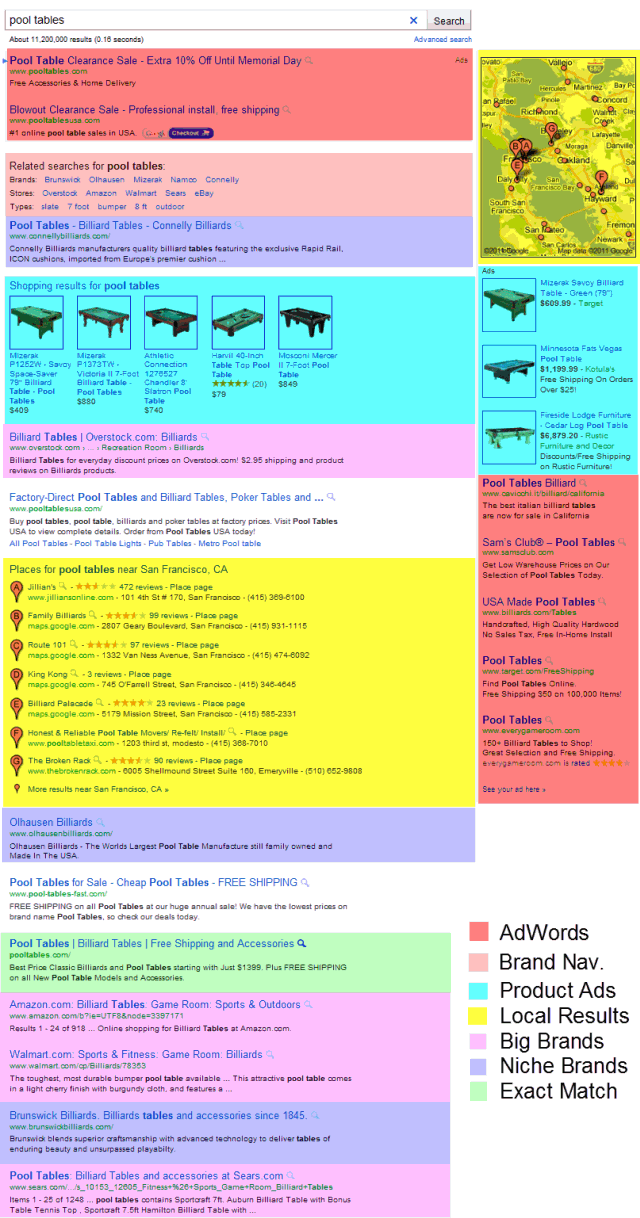
For illustrative purposes:

It was easy for Google to speak from a moral high ground when their growth was above 50% a year, but now that growth has slowed over the past couple years they have been willing to do things they wouldn't have. In November of 2009 when I saw the following I knew the writing was on the wall.

Since then Google has only dialed up local more. If you are not in the top 1 or 2 organic (non-localized) search results then in some cases when they get localized you end up somewhere on page #2.

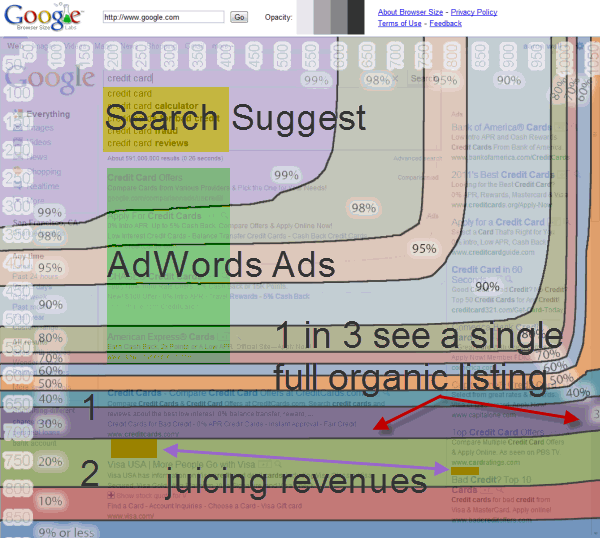
When Google Instant launched, we got to test Google's 50% content theory. And they hit the numbers perfectly. A full 50% of web users could see 2 organic listings above the fold when instant was extended (the other half of folks could only see one or none).

As if the massive Youtube promotion & the magically shrinking search results for everyone else were not bad enough, with Panda they suck at determining the original content source.

This site you are reading wasn't hit by Panda, which makes us lucky, as it allows us to rank as high as #3 for our own content (while Google pays dozens of other webmasters to snag it wholesale and wrap it in AdSense).

We got lucky though. If we had been hit by Panda (like 10,000's of other webmasters) we probably wouldn't even rank on the first page of the search results for our own content.

When Google screws up source attribution they are working counter to open culture, because they are having you bear 100% of the cost of content production, and then they are immediately paying someone else for your work. Do that long enough and the quality content disappears & we get a web full of eHow-like sites.

And yet Google tells us the secret recipe (which may or may not work at some unknown time) is to pour more money into content development.

The solution to this problem is more deep content. Keep feeding Google (and their AdSense scraper partners) and hope that after you pour $50,000 into your site that some small fraction of it ends up back in your bank account (while the larger share winds up in Google's and their AdSense partners).

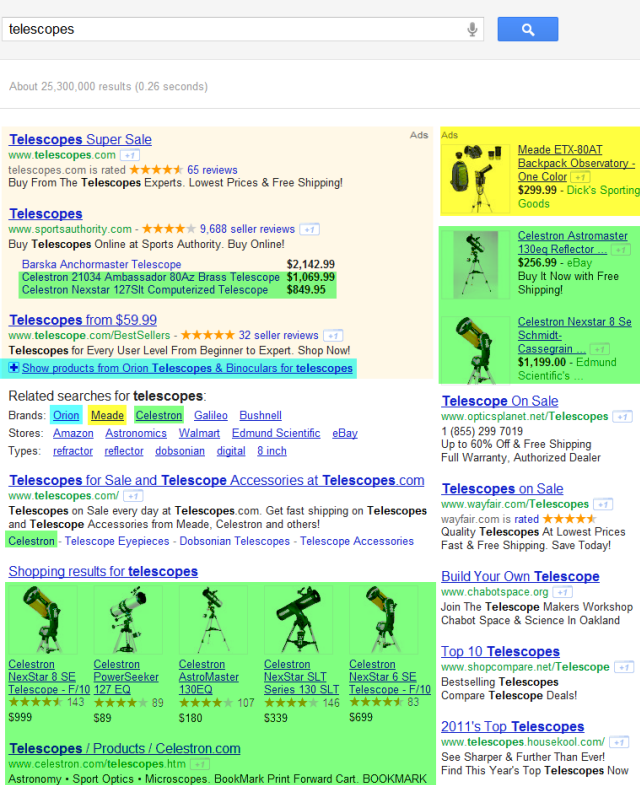
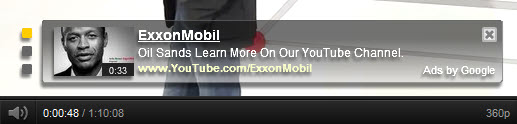
As bad as all that is, I recently got selected as a lucky beta user for the next version of Google's search results. Notice the horizontal spacing that drives down the organic search results. After the top AdWords listings the organic listings start off 88 pixels lower on the screen.

I have a huge monitor. Less than 10% of people have a monitor as large as mine. Before this new search result I saw 8 organic search results above the fold on my large monitor. Now it is down to 5 (and that is with no Google video ad, no Google vertical comparison ad like the above credit card one, no browser toolbars, no browser status bar, and only 1 of the advertisers having ad sitelinks).

So how does Google score now on their ad to content ratio?

When Google's new search results roll out, there are some keywords where less than 1 in 3 searchers will be able to see a single organic listing above the fold! And lest you think that spacing is about improving user experience, notice how wide the spacing in the left column is, and how narrow the right rail AdWords spacing is. This is all about juicing revenues & hitting the number.

Which leads me to the Google Panda loophole I mentioned in the headline. It is an easy (but painful) one-step process.

All Google's propaganda about the horrors of paid inclusion look absurd when compared against the search result with 0 organic listings above the fold for half of desktop computer users.

The only "exploit" here is how Google is paying people to steal other's content, then ranking the stolen stuff above the original source.

PS: wake up Larry! ;)

What's Your Story?

With Google making the life of the SEO harder and harder, it pays to add as many marketing strings to our bows as we can. In this article, we'll look at a way to brand and position using stories. Hopefully, if we have a good story, and tell it well, people are more likely to remember us, and more likely to pass the story on.

Are We Special?

Most people think their site is special. But, by definition, few sites in a given niche can be special.

If we target a keyword term, that many other sites are targeting, we'll probably write a similar keyword-loaded page, including the same synonyms, derived from the same keyword tools, using the same headings in bold, in the hope of appearing in the top ten list of pages - which are just like the others.

We may distinguish ourselves by managing to rank in the top three, but, as we know, there are no guarantees we'll maintain this advantage.

We Need Something Else

If SEO is our only strategy, then this will only work if few other people are using SEO. How many niches worth fighting for are like that these days?

Not many.

Generally speaking, the more mature the niche, the more you need something besides SEO. You need to make as much effort to stand out as possible, otherwise people will likely overlook and forget you. There are too many other sites and options.

Let's look at a differentiation strategy based on stories.

Why Use Stories?

Stories are universal.

The human race has been using stories for thousands of years. We use stories because they are informative, memorable, and easily spread to others. Isn't that what we want our sites to be, too?

Every news story is a tragedy. Every religion is a story of redemption. Politicians tell stories, some of which are true! The alternative would be to give people a string of disconnected data and facts. Such data and facts may be 100% true, but they are seldom memorable or easily repeatable. Telling a compelling story is one good way to contextualize information, and make it more meaningful.

A story isn't just words on a page, saying how great a company is, and what products they have, and if you want them, you should "click here". That's surface. Think of "story" as a sub-text, the underlying, perhaps unspecified tale of who you are, what you're doing, and how you can help people solve their problems. This is a form of positioning, and branding, but I find it's helpful to reduce those high concepts down into a simple narrative. It helps bring a lot of different, and sometimes complicated, marketing aspects together.

Everyone can tell a story, especially about themselves.

The Mechanics

Every business has a story.

Take Amazon.

The Amazon is the largest river in the world, which is an appropriate name for a site which aimed to be the largest retailer on the planet. Amazon is huge. Amazon is huge because they took the shopping experience, made it easier, and people loved it. With one click, a customer could order a book, or a DVD, and many other products and have it sent to them. Amazon faced some huge challenges. Just how do you store and ship a vast array of products and still make money? Amazon do massive volume, and use unique, sophisticated tracking and packing systems to overcome these challenges. Amazon's cloud computing service alone has revenues in excess of $500m.

Amazon's story is mostly about "being big". All very well for Amazon, of course, but what about the little guy showing people how to build stuff? There's a story in that, too.

Tim Carter founded "Ask The Builder.com". Tim provides tips for DIY, answers building questions, and provides product and tool reviews. Rather than the home DIY enthusiast going out and buying manuals, or hiring an expensive builder, Tim provides his information for free, and his video's provide depth that printed books do not. Tim clearly cares about building, and the home DIY enthusiast. Tim's gone a step further, and told his life story.

Try boiling your site down into such a story. Once you have a story, you can then flesh out narratives that flow through everything you do, from your graphic design, to your copy, to your approach to customer services.

For example, Tim's story is a "small, personal" story. It is fitting that he doesn't have a glossy, corporate theme, as this would grate against the narrative. Rather, the site is a bit raggedy and amateurish, in a good way. He is providing one-to-one personal help, so it fits that he talks directly to camera. It fits that, unlike Amazon, you know who is behind the site. It fit's the the About Page is a personal history. It's approachable. It's all part of the "small, personal" story. It helps make the site more convincing, and hopefully more memorable, if common themes are repeated.

A story helps achieve focus, clarity and distinction.

How To Construct A Story

If you're having problems getting started, here's a work-plan.

1. Describe Your Brand

What do you do? Make it short and sweet i.e. "Provide advice to home DIY enthusiasts". "Sell books online".

2. Where Did You Come From, And Where Are You Now

How did you start? Why did you start? What did you do before you started? What position are you in now?

3. What Challenges Do You Face?

What problem do you solve? What are challenges have you overcome? It helps if these are the same challenges and problems your customers face.

4. Personify/Quantify These Challenges

Did you overcome people? Organizations? Time? Money? Lack of knowledge?

5. Who Is Your Target Market?

Who, exactly, are you trying to help? Where do they live? What is their time of life? What challenges do they face?

6. What Does Your Target Market Care About?

Security? Being first? Individual care? Low prices? Value?

7. Why Should They Buy From You?

What do you offer that other sites do not?

8. What is your end goal?

How do you know you're completed what you set out to do? What is the measure of victory?

Answer these questions, and it becomes easy to make decisions about design, positioning, branding, and marketing.

Hopefully it helps make your site more memorable, too.

12 Popular Keyword Organization Tips & Tools

Before Google's Panda update an effective SEO strategy was to "make a page for everything." If you are Wikipedia that strategy may still work, but for most websites that approach is a high risk & low return approach. Clustering like keywords together and using that to help set up your site's information architecture is a lower risk and higher return strategy.

Given Google's new approach to search (where dead weight can harm your good pages) organization is more important than ever.

Let's say you have a big list of keywords which is not well organized & you want a quick and dirty way to organize it. Here are a dozen different tips and tools to help you organize your keywords.

Ad Group Filter

We created an ad group organizer tool which aims to create a footprint for keywords by putting muti-word keywords in alphabetical order & stemming the keywords. The output is TSV, so you can copy it and paste it into a spreadsheet for further analysis. It also allows you to use stop words to filter the list. This can not only be used for organizing keywords for paid search, but also to help organize them for your SEO efforts down to a per-page level.

RKG Duck

RKG Duck is a Perl clipboard extension which was the inspiration for our above tool. This tool works well in spreadsheets, but it takes some level of programming sophistication to get working.

Wordstream Keyword Grouper

Wordstream's keyword grouper allows you to see niche keyword groups at a fairly granular level, with them emailing the results to you.

SpyFu Keyword Groupie

Spyfu's Keyword Groupie allows you to look up a competing site's keywords & see them organized by root word. In addition to listing keywords by root word, they also give you the option of viewing the top 100, 500, or 1000 keywords for a site.

The big benefit with SpyFu is that you can view data on a competing site & use their performance as a bit of a filter for you, but the downside is that at times it can be a bit slower than the above tools. That is to be expected though, because it is searching through a database of records related to sites, rather than just applying a filter or returning results.

They allow you to browse keywords to drill down in areas of interest. Another nice feature is that they show you keywords they feel you are missing out on by putting them in bold, so this tool is great both for looking up competing sites & for looking up your own site to see what you missed.

Google AdWords Desktop

There are a couple different ways to use the Google AdWords editor to group keywords. Here is a semi-automated way (where you still have a bit of human editorial in the process to manually filter to find themes & create groups)

You could do similar to the above with Microsoft Excel's table filters. And if you are combining multiple data sources / tables in Excel this AbleBits merge tool is handy.

Google also offers an automated option inside Google AdWords editor to help organize keywords into fairly tight groups.

First create a new ad campaign (and its settings can be a bit arbitrary off the start as you are mainly using this to help automate data sorting). You only need to create 1 ad group in that ad campaign and then bulk upload a group of keywords into it.

Next use the keyword grouper tool, as shown here.

In the keyword grouper you can use the "generate common terms" option to automatically create keyword groupings. Note that in the right box you can add stop words & other words that you don't want them to cluster keyword groupings around.

Google then spits out a result set you can use, with the keywords clustered into tight groups. Note that sometimes they footprint geo-local keywords similarly even if they are for multiple different areas, but outside of that it is a pretty nice tool considering the amount of work it does in what amounts to a 2-minute process.

Rank Checker

Put your site in rank checker and see how you rank for your target keyword list. If your site is nowhere to be found for a keyword then that may indicate a need to create more content pages around those new topics. If your pages already rank well then see how well they are optimized. A small amount of link building & on-page SEO can go a long way if you were already ranking for a keyword that you were not intentionally targeting.

If your site is brand new & has no authority (or you are researching a new market) you can search for the rankings of a popular website in your niche and see where they rank. Export the ranking data and you can sort the Excel spreadsheet by URL, which should help you cluster your keywords around a similar strategy that top ranked websites are using.

You can pull data on competing sites from competitive research tools like SEM Rush, Compete.com, Keyword Spy, SpyFu, and Alexa to help get an overview of some of the top keywords competing sites are ranking for.

Crawl Their Site

Do you have a well optimized competitor? You can crawl their site using tools like Xenu Link Sleuth or Screaming Frog & then export the data to a spreadsheet, using that as a baseline to start your information architecture strategy from. Xenu is free & Screaming Frog's SEO Spider is free for up to a 500 URL site.

Keyword List Cleaner

If you have a big and dirty keyword list where some of the words have multiple meanings you can try to filter the list down by using negative keywords on a keyword list cleaner.

Google Related Searches

Whenever you search on Google not only does their search box recommend tightly related keywords (which are good for late state optimization of on-page content), but in the left column they have a link to "related searches" which organizes related keywords. Within these lists of keywords you can click further into to drill down deeper.

Some folks scrape that data in bulk as well, but if you do that then you are back to having to organize it again. ;)

Google AdWords Keyword Tool

Many paid keyword tools like Wordtracker have advanced filtering & organization options, but I mainly wanted to show free options in the post. Google AdWords keyword tool has multiple helpful ways to organize data.

I tried to highlight key areas & options in the above image, but it sorta feels like I highlighted everything, as there are so many amazing options baked into it. You can get keyword data based on selecting a category, a site, or entering a root keyword. They allow further filtering by match type, tight or loose keyword groupings, location, and so on. Sometimes the data can be a bit inaccurate, but nonetheless it is a great starting point as it really is an amazing feature-rich tool.

Microsoft adCenter Plug-in for Excel

Earlier I mentioned how Excel tables have a bunch of handy filters in them. Taking that to the next level, try the adCenter Excel plug in (review here), offering you quick access to Microsoft's keyword data by root keyword, general topical category, ad campaign association, and so on.

Your Web Analytics

There are at least 4 amazing benefits to using your site's keyword data

  • This is the stuff that actually applies directly to your site. Rather than being some sort of academic exercise or a bunch of "what if" sort of stuff where there is a big margin for error, you have the data related to the actual business impact of these keywords.
  • Since your site is already ranking for these keywords you already have momentum behind them. Pushing a #5 to #2 is typically far easier than going from nowhere to #5. And it is not only easier, but it is also more profitable.
  • This data is organized by page already, and (since you know your site) you should be able to quickly tell if pages that are ranking should be further optimized for a keyword or if the user intent for that keyword is different and it deserves a different page.
  • If you have been tracking your site for an extended period of time you should know not only what pages are ranking, but also why. Sure Google aims to make this a bit more complex, but that is precisely why looking at data on your own site is so helpful: you already know so much about it.

The same types of benefits can be had by using a (phrase matched, broad matched, or modified broad match / with negative keywords) AdWords ad campaign to do keyword research. You are not only testing the search volume of the keywords, but also how your site performs for them.

Visualize It

WordTracker's Strategizer (review here) is a premium SEO-oriented extension of web analytics data, which helps make the data relationships easier to visualize. Concentrate is another paid application built on data wrangling & visualization front.

Free keyword cloud tools like Wordle & tools like Many Eyes can also be valuable for helping you see word relationships for a page and convey concepts to management. You can probably guess which page the following analytics-driven word cloud is for without even visiting it. ;)

You could also put a URL in a keyword density tool, a page comparison tool, or a word cloud tool to view a page's on-page content that way. If it isn't too self-referential, ...

Insurance For SEO's

Insurance is a popular, profitable area for some SEO's. Trying to find reputable insurance for an SEO business is not so popular because many insurance agents do not have the experience to make the distinction between what a web design shop does versus what an SEO or PPC business does.

Prior to entering this business I was an insurance agent and before that I was an underwriter and I still have my agent license (hey, you never know!!). There are policies out there which SEO's should consider purchasing as well as any web design or development shop.

There are a few different policies you might want to consider in this industry:

  • General Liability
  • Professional Liability (Errors and Omissions)
  • Workers Compensation (if you have employees)
  • Short-Term and Long-Term Disability

As a business owner, you will have or not have the following conditions:

  • employees
  • office space
  • equipment
  • office space where you conduct business with clients and vendors

Workers Comp and STD/LTD

Workers Compensations and STD/LTD are fairly general insurance policies with respect to the policies not really being specific to the SEO business. Here in the US, Workers Comp is administered on the state level. Workers Comp is required in certain situations, depending on your state, so it is wise to check with your attorney and insurance agency regarding what is appropriate for you.

While you only have to worry about Workers Comp if you have employees (actual employees hired and placed on payroll not contracted labor or freelance arrangements) you should consider Short Term and/or Long Term Disability insurance even if you're a solo SEO.

Short Term and Long Term Disability

If you are coming from corporate America you likely had these policies under a group plan (which is why it's so cheap). Essentially, it breaks down as follows:

  • Coverage responds if you are injured and unable to work (this doesn't cover sick time and generally excludes maternity coverage)
  • Short Term Disability will cover you for a certain period of time (usually under 90 days) at 100% of your pre-tax (sometimes you can choose post-tax) income.
  • Long Term Disability kicks in either after Short Term has expired or if you decided not to purchase Short Term at all.
  • Long Term will typically cover you at 60% or so of pre-tax (or post-tax if you are given the choice) for an extended period of time.

Wages are usually determined based on your prior year's tax return in conjunction with a current Profit/Loss statement (another reason why you should report all your income!).

Sometimes it makes more sense to get a quote on LTD (as it's cheaper) and just build up a reserve of your own to cover what Short Term Disability would have covered (rather than spending money on premiums and losing it if you never file a claim).

If you advance a claim for either, there usually is a waiting period of a few weeks to a few months while a case manager is assigned to investigate the claim.

Be prepared to get put under the microscope much more than you would if you were part of a large group plan (if you work for a large company as an example) as you are no longer part of a protected herd, but this is where using an independent agent can be help in fending off the overzealous claims adjuster who might see you as an easy case :)

Different policies have different exclusions so it's wise to discuss all your extracurricular activities with your agent as things like sky-diving are usually not covered causes of injury.

General Liability

This is one of the most common forms of business insurance. The meat of what this type of policy provides is:

  • Bodily Injury and Property Damage
  • Defense Costs while defending a suit
  • Personal Injury
  • Medical Expenses
  • Operations Liability

Most of this coverage is applicable when/if some of the following conditions occur:

  • Client is injured on your premises
  • Damages to property you are renting to other businesses
  • Advertising mishaps (slander, libel, copyright infringement, etc)
  • Injuries sustained by others on your defined premises due to the activities and operations of your business

Combining GL with Property Insurance (BOP Policies)

Many times, a GL policy is combined with Property Insurance to make what is called a BOP or business owners policy (BOP package).

Property Insurance is fairly standard and covers things like:

  • Inventory
  • Equipment (probably computers for most of us)
  • Records and Documents
  • Buildings
  • Other Real and Personal Property
  • Lost income due to a covered loss

A BOP is really geared towards business which have an office building, equipment in that office, meet clients on the premises, or rent out space to others.

Neither of these, or the BOP package, cover Workers Comp. A BOP is a good solution for a shop which has a physical location, clients on site, and has inventory/equipment on premises.

Professional Liability & Specialized Insurance

These types of policies is where a chunk of the specialized coverage for an SEO would come from. A BOP policy is meant to cover "products" with respect to liability so as an SEO, web designer, or web developer you'll need more specialized coverage which covers things like:

  • Data Storage
  • Malicious Code (say your Wordpress site gets hacked and distributes malware or keyloggers)
  • Hosting
  • Loss of business income (say your host goes down and your client's e-commerce site goes offline, or it goes offline due to an error on your end)
  • Data security

Depending on your level of involvement with servers, software, and application development you may want to scale up and get a more specialized policy. Lots of larger insurers sell specialized, broad polices under the name of Technology Insurance or Information Technology Insurance.

Over the years these policies have developed to cover more and more specialized areas of tech insurance. In the beginning they were mostly geared towards straight IT companies but now cover all sorts of tech groups like:

  • Web Designers
  • Web Developers
  • Consultants
  • Outsourced Applications
  • Hosting Services

Be Up-front

Our industry is no different than any other, lots of snakes. If you are engaging in some kind of off the wall activity you really need to tell the agent. Tell them exactly what you do, if you are doing things that your state or other states consider illegal (fake reviews for instance) then don't expect your policy to respond to such things.

It's no different than getting a homeowners policy while saying you don't have a Pit Bull, even though you have a Pit Bull (which are excluded by all standard insurers), then expecting coverage when your Pit Bull bites the neighbor.

While the agent may not understand the nuances of the business, you are typically good to go if you take the time to fill out the application completely and accurately.

Why Use a Local, Independent Agent?

Most folks you get in the call centers of GEICO or Progressive are salaried or hourly employees, they don't live in your community, and they really don't care to get you the best deal (they can only give your theirs).

Having a local agent gives you access to more markets, someone close by to help you fight any injustices the carrier may try to perpetrate on you, someone who is making a living selling policies in a local market (less likely to burn you as they care about their reputation), and someone who can help insure all your personal and business needs.

A call center rep, if they are on commission, generally wants to churn and burn through the calls and probably won't meet with you face to face to go over anything and answer all your questions (or get answers). Plus, most local agencies need help with web marketing so it could be an easy in for you!

What Do You Need?

Scenario 1 (Work from home, no employees)

Get a business endorsement on your personal homeowners policies and schedule your equipment if you need to (might not need to if you have warranties in place already). This will also make your home office deduction look more official to the IRS.

Get a Professional Liability (E&O) policy and look into a specialized Technology policy depending on your business model. Consider STD/LTD insurance for lost wages if you can't work.

Scenario 2 (Home office, external office, no employees)

Same as above but add in a BOP (General Liability and Property Package) which is probably required if you are renting office space anyway.

Scenario 3 (Home office, external office, employees)

You should check with your attorney about how you are defining employees and if that means they are actual employees versus free-lancers or contractors.

You would want to look at a BOP, Professional Liability and/or specialized Tech Insurance, and Workers Comp if required as well as employee benefit/insurance packages for things like STD/LTD.

Insurance is Boring

Yes it's boring but it's worthwhile for most of us from a cost/benefit standpoint (or legal liability standpoint). Solid, legal contracts reviewed by attorney's are also HIGHLY recommended.

Make time to sit with some local agents to really go over your business and your business activities. It's a really soft market right now for business insurance, especially small business, so agents are going to be more than happy to sit with you and go over what they have to offer.

Why Contracts are Important

There are many contracts available online, for free and for a fee. These contracts, even ones from places like LegalZoom have not been reviewed for your specific business by attorneys in your state.

A contract is no good if it's not enforceable. You can probably expect a fee for a good attorney to review your contracts, and make any necessary changes, to be in the high hundreds of dollars or low four figures.

There is a cost certainty to the cost for an attorney to give you the green light on a set of contracts (though, for really big deals you might still be wise to get a contract specific to that deal) but there is no cost certainty to the legal liability you could face if your contracts are essentially worthless in a court of law.

Another thing you'll want to watch out for is a client who tries to give you unlimited downside from a liability standpoint (in the contract) but severely limits the upside to your fees. You might be willing to take on the risk of downside so long as you are getting a decent %, or a few % points, of the upside on the deal. This is another case where an attorney reviewing the contracts can be well worth the cost.

Choosing the Right Business Entity

Your insurance policy is mutually exclusive from your business entity. If you are a sole-proprietor your personal assets are at risk even though your insurance policy covers defense costs. Choosing the right entity is another way to insulate yourself from liability.

In most states a single member LLC up to a full-blown corporation (and everything in between like a multi-member LLC, S-corp, and so on) will insulate your personal assets (home, savings, future personal earnings) from legal liability, whereas a sole proprietorship will leave your personal assets exposed.

The combination of a good insurance policy and the right business entity will cover defense costs (on a covered event) and protect your personal assets. Choosing the wrong set up can be financially disastrous.

The policy will cover defense costs if a claim is covered but if it is a frivolous lawsuit, or something personal, you might have to defend yourself. This is where having the right entity is key because your personal assets are not at risk even though you are probably going to incur your own legal costs.

The best way to protect yourself is to insure and to pick either an LLC or a corporation of some kind. Choosing neither, or one but not the other, can leave you and your business significantly exposed to liability.

How Google Creates Black Hats

The #1 goal for any organization is self-preservation. When people feel things are fairly just & they are just getting by they are fine with squeezing out more efficiency in what they do and figuring out ways to pay the bills. But when people feel the table is tilted at some point they stop caring and do whatever it takes.

Ex Post Facto

Some longtime AdWords advertisers have recently been punished for affiliate ads they ran 8 years ago where some of the sites they promoted at some point fell out of Google's graces through an ad system which never allows you to delete your history & offers ex post facto regulations that turn a regular advertiser arbitrarily into a spammer.

What's worse is that sometimes the data Google ties together creates guilt where there is nothing but innocence.

AdSense, AdSense, AdSense

In 3 weeks it will have been 3 months since Google first launched Panda. Outside of bloggers with 50,000 RSS subscribers few (if any) reports of recovery from Panda have been seen. Some of the theories floating around what caused Panda attempt to tie it to AdSense & many of Google's AdSense case studies are now highlighting best practices to follow if you want to be just like the sites Google torched.

As if that wasn't conflicting enough, some of the webmasters that were torched by Panda received automated messages that they were missing out on revenues by not using the maximum allotted number of ad units. After the huge fall off from Panda, Google has been pushing AdSense so hard that many webmasters have been receiving unsolicited emails from Google suggesting they sign up for AdSense.

I won't run AdSense on our main sections of this site because it would be tacky and destroy perceived credibility (having a "submit your site to 2000 search engines for $29" ad next to the content doesn't inspire trust on an SEO site). I could create a content farm answers section of the site that mirrors Ask's strategy, but with a higher level of quality. I won't though, because it would be viewed as spam because I am me. Once again, SEOs should be held to a higher standard than search engines. ;)

That Which You Consume, Consumes You

Where this rubs wrong is not only the overt brand push, but also that some of Google's pushes at expansion down the search funnel have looked a lot like the spam they claim to fight.

Many UK finance comparison sites were penalized for spammy link buys, and then Google somehow managed to buy BeatThatQuote without any due diligence. Others who were penalized for sketchy links (say like Overstock.com) were whacked for a couple months. BeatThatQuote was ranking again in Google in only 2 weeks ***without*** fixing any of the actual spam link buys.

TechCrunch's April 1st article about Google Places being inadvertently classified as a content farm sounded so authentic that I saw multiple friends in-the-know pass it around as though it was true.

Bad Actors

In the Wall Street Journal there was an article about the Panda update highlighting that many small businesses were laying off their employees. The same article highlighted numerous cost extensive desperate marketing measures the firms were taking which may or may not work. Google didn't disclose much in the article other than:

The Google spokesman says the company doesn't disclose details about changes it makes to its algorithms because doing so "would give bad actors a way to game our systems."

Nobody likes bad actors, but most of the webmasters that were hit were not bad actors. Rather, most of them were naive & simply followed the Google guidelines thinking that was in their best interests and perhaps would allow them to stay competitive. Unfortunately, it wasn't.

Not only did the update allow some information-less pages to rank better than ever, but certain folks with 100% duplicate content screamed to the top of the search results.

Don't Let the Door Hit You on the Way Out!

If you adhere to guidelines, get beat down, are not told why, and are told that generally sites need to "improve their quality" that can be a pretty infuriating message. The presumption that your stuff isn't good enough when 3rd grade rewrites of your content now outrank you is both smug and obnoxious. What is worse about the update though now is that many scraper websites are outranking the original content sources, so the message is that your content is plenty good enough, but it is just not good enough when it is on your site. A large portion of those scraper sites are monetized via Google AdSense & would not even exist if it were not for AdSense.

So Google whacks your site, tells you to clean up your act (& increase your operating costs while decreasing your margins), lumps you in the bad actors group, offers no information about when the pain will (or even could) end, pays someone to steal your content, then ranks that stolen copy of your content above you in the search results.

Make Your Move

If a person has the pleasure to experience the above it doesn't take much critical thinking skills to develop a different perspective on search.

Ultimately this is going to lead to a "why not" approach to search for many folks in the search space.

  • If Google already dinged your website why wouldn't you remove AdSense & replace it with competing ad programs? Why not test those affiliate programs you have been meaning to test? If you have to rework your content anyway, why not move past AdSense/webmaster welfare?
  • If your AdWords budget was marginally profitable & you were buying ads to compliment your organic exposure, why wouldn't you stop buying ads with Google & test running ads on other websites? Google is fine funding an affiliate network that uses direct links, so why not use clean links on your ad buys? If you like run it through a self-hosted affiliate program so that you are just like Google.
  • If your site is already whacked why wouldn't you buy links to help boost its ranking back?
  • If your site earns nothing from search, why wouldn't you sell links if you have to do whatever it takes to make costs?
  • If your site gets penalized & someone copying your content & wrapping it in AdSense outranks you why wouldn't you create new mirror sites? Why wouldn't you create scraper websites to pollute Google with?
  • If rankings are unpredictable & one site is no longer enough, why wouldn't you create backup sites & projects of various levels of quality & effort? At this point diversity simply serves as a needed form of insurance.
  • If while running these purely scientific experiments you accidentally run into something that works really well that shouldn't, why not scale it to the moon?

I am not convinced that the search results are any cleaner today than they were a few months ago. However I am fairly certain things will soon head south. I am not advocating going out of your way to be extra spammy, but am just highlighting the cost-benefit analysis which is going through the heads of thousands of webmasters who Google just torched.

Google is betting that anonymous strangers will behave more kindly than Google has, but when an animal is backed into a corner it often acts in unpredictable (and even uncontrollable) ways.

The big problem for Google is this: "when innocence itself, is brought to the bar and condemned, especially to die, the subject will exclaim, it is immaterial to me whether I behave well or ill, for virtue itself is no security." - John Adams

Amazon Sponsored Products Ads

Outside of Google, Amazon and eBay own perhaps the 2 largest streams of ecommerce traffic. In fact, both are amongst the top 10 sites in Alexa (even though ~ 100% of their traffic is commercial while ~ 0.001% of Twitter's traffic is). In spite of Google's prominent promotion of Wikipedia, Amazon still gets more traffic.

In the leak of AdWords top spenders data last June Amazon was #5 on the list. Kantar Media's research estimated that Amazon's Q4 Google AdWords spend was almost double their nearest competitor.

Why mention this?

Amazon recently started giving away a free $75 coupon for product ads on their site.

You can use the following coupon to get $50 worth of free ad clicks from Amazon.com good for selling your products on Amazon.com.

A lot of their customers may be used to buying on Amazon, but you don't get much more of a pre-qualified ecommerce visitor than a person who clicks on your offer who is already on Amazon.com. If you sell on Amazon.com, then even greater friction is removed from the transaction, further boosting your conversion rates.

AdWords Logo.
Google is also pushing free $75 AdWords coupons fairly aggressively. You can get a free $75 AdWords coupon here (or here or here or here or here or here or here) ... many options linked because some of their coupon offers expire over time & we update this page periodically. The Google Partners Program also offers coupons to consultants managing AdWords accounts.


Bing Ads: Bing and Yahoo! Search expand the reach of your business to millions of monthly users. Get a free $50 Bing coupon today.

Doug Pierce & Byrne Hobart do Digital Due Diligence

A Spammy Start Up

Recently TechCrunch posted an article outing [link nofollowed] the Sequoia-backed start up Milanoo for ranking using paid links:

Here’s what Digital Due Diligence found: For a number of very valuable keywords in Google search,, Here’s how Milanoo ranks for “cheap dresses” (position 2), “evening gown” (1), “cheap wedding dresses” (1), and “summer dresses” (2). Digital Due Diligence partner Doug Pierce (who also served as an expert in the New York Times J.C. Penney expose), writes that those four keywords alone have an equivalent cost of nearly $200,000 per month in Google AdWords.

It’s a red flag, explains Pierce’s fellow partner Byrne Hobart

The article left a fairly foul stench in the air which is hard to get over.

Risk Analysis vs Risk Creation

These folks claim to do due diligence for investors, which essentially means "risk analysis" and "risk management." But then to market themselves, they throw active investments under the bus for self promotion. And now they have done so repeatedly. It is not an isolated incident, but rather a pattern of conduct.

To be frank, that form of marketing from an outfit claiming to do SEO risk analysis can be described using no other word than this: sleazy.

Just Another Form of Competitive Sabotage

An outing like the above is typically driven (at some level) by a competitor looking to take down a competitor. And such a high profile outing literally can destroy lives. It is a high stakes game of public relations. The media outlet gets a story, the expert gets quoted, and the competitor gets torched.

If I was an investment firm I would never spend a single Dollar with Digital Due Diligence. Why? Well they may do a valuable service on some project you are funding them for, BUT if you fund them at all you are encouraging more outing in the future and more risk for your own future investments.

Outing is Anti-Innovation

Eric Schmidt has stated that lobbyists write the laws. Markets are rigged to favor established interests. If you are an investor you are betting that you can take smart calculable risks & disrupt markets. But SEO outing is yet another layer of unknown risk which harms all start ups while rewarding existing market leaders: the exact opposite of innovation.

Even if you encourage your own investments to be ultra-conservative you still have no protection from this sort of activity.

A competitor could easily buy a bunch of links for one of your sites (they could even pay cash for a gift card while traveling & use that to buy links from a clean browser with cookies cleared on a public wifi connection, making themselves untraceable). After throwing a few hundred or few thousand Dollars at setting up the site, they can then leak a tip to Digital Due Diligence, who will then leak it to TechCrunch or the NYT.

Why This Sort of Outing is Horrible for SEO Professionals

The core issue here is professionalism. Should we let people who screw other people over get ahead while trying to paint themselves as the good guy? I don't see how there is any hope left for the industry if that becomes the new normal. Every time there is a high profile outing SEO investments become perceived as being more risky and the whole of the industry looks less professional.

Double fail+++

An Example of Two Interpretations of Google's Guidelines

The last time I had any significant experience on this front the SEO police asked who Google should "come down on" for our affiliate program passing link juice. That made our affiliate links no longer pass link juice. Shortly after a Google search engineer publicly stated that affiliate links should count and the same SEO firm that threw us under the bus mentioned they were thinking about bringing their affiliate program in-house so they could do the same thing they outed us for. A few years later it was highlighted that Google has an active investment in a start up that builds a scaled paid link network.

In other words, Google claims their guidelines to be black and white, but a particular technique can be fine for some, spam for others, and worth funding on an industrial scale if Google gets a piece of the action. Is it any surprise that the FTC is looking into Google's business practices?

Just Say No!

The above sort of activity is just like Google and Microsoft leaking each other's security flaws publicly to try to screw each other over. Out of such exchanges nobody wins, but everyone looks a bit more like a used car salesman, as we further create a market for lemons.

With the rise of such SEO diligence projects, how long until the primary business model & main form of diligence being done is funded "research" to take down competitors? Is this market even worth participating in if we let it devolve to that point?

These sort of folks who throw the whole of the SEO industry under a bus for self-promotion should be shunned by the industry. If our industry is to have any sense of fair, just, and reasonable meritocracy to it then this behavior can not be condoned.

Google Dials Up Localization Big Time

Google Implies Local Demand Based on User Location

It appears that Google has just dialed up search result localization in a big way.

A picture is worth a thousand words, so...

Like a good neighbor, State Farm is there and there and there and there and there.

The Struggle Real Businesses Face

The big problem with this IMHO is all but the spammer (who is now busy working on "local" signals) loses. Legit online-only pure plays are simply wiped off the result set. The searcher gains nothing by seeing State Farm agents 5 times in the search results. Even the local business which has a new windfall of business is simply overwhelmed with leads, meaning they likely have (at least relatively) poor customer service until they hire up.

To a small business, a sharp rise in demand can be every bit as damaging as a sharp fall in demand.

But should small local businesses hire aggressively, they could be only 1 algorithmic update away from needing to prune staff. Maybe some day Google decides to limit the results to show 1 agent per parent company, and then the agents end up fighting out each other (much like affiliates had to fight each other on bids in AdWords to be the 1 that shows up).

Given that some of the agents ranking page 1 have less than a dozen inbound links & links from only a few unique domains, it won't take long for some new "local" players to come online.

What Makes a Search Result Good?

A lot can be said for getting users where they need to be quickly. When it works it has great value. But when it doesn't work, it makes the market less efficient. Value chains exist for a reason. Sometimes a brand (or an individual agent of brand x) is not in the best position to act as an unbiased advisor.

As a consumer buying car insurance, I don't care that my agent is local. In fact, if I live in an expensive area I may want my insurance provided from someone who lives in an area with a lower cost of living so they can provide the services (while making a comfortable living) for less. For the last decade I have been insured from a company in another state (USAA in Texas). Location had precisely 0 impact on my decision making.

What mattered to me was that they had great rates. Which is precisely what almost all insurance commercials promote.

Geico spends nearly a billion Dollars a year pounding that message into the minds of consumers.

The problem is that almost all the big brands promote the exact same message. They are the cheapest. Save with them. Etc. Online pure plays that provide quote comparisons provide a valuable & value-add function in this marketplace, but they have simply disappeared from Google. They aren't local enough to hit the local signal, they aren't brand enough to hit the brand signal, and since they are not the end brands they can't justify buying $30 AdWords clicks thinking that what they don't get back in direct ROI can be written off to "brand."

Ultimately the end user loses (or at least until Google creates their insurance flavor of "comparison ads.")

This Stuff is Everywhere

This stuff is even happening on search queries where there is absolutely no implied local intent & no need for a local provider. General discovery & topical queries like "web designer" or even informational background searches like "SEO" now bring up service based sites with a local presence.

Leaving Off On a Positive Note

1 day doesn't make a trend, but if this stuff sticks ranking local sites for big keywords just got really easy.

  • If you know SEO and live near a big city, a second office location might soon be a profitable decision.
  • If you are a local business who thought SEO was too complex or expensive, that excuse may have just been removed from the marketplace.
  • If you run a bespoke consulting styled business & ran into a windfall of demand don't forget to increase your rates & be more selective with who you work with. Working all the time leads to burn out. Trust me I know that all too well. ;)
  • This is another example why it can be a great idea to mix and match your businesses...such that if one jumps out of nowhere or another one tanks you are still fine. Having multiple projects is one of the few ways you can really protect yourself from the likes of Panda & updates like this one. Running multiple businesses allows you to lean into your side gigs when your main one drops off, and push harder on your main gig when it is really humming along.

Pages