What Are Your Favorite Foreign SEO Information Sources

I have worked with some large multi-national brands who had multi-lingual sites, but they typically hired us for English optimization, and never really asked for much more than general advice and strategies (internal link flow, subdomains vs unique domains, etc.) when it came to other languages and cultures. I noticed a few differences between Google.com & International Google results while traveling, but I still only analyzed stuff that was published in English.

What are the best informational sources for SEO in Japanese? SEO in Chinese? SEO in Spanish? SEO in your language or region? How do you feel SEO in your area differs from the SEO advice you read from those of us who operate in the English US marketplace? I also would love to publish a guest article for each language.

Will Wikia Search Turn Into Spam?

Wikia recently announced that their search service was finally almost worth using. It is easy to rate and vote sites up to the top of the search results. When they have limited marketshare they will not get much spam. As they start building marketshare will they be able to get enough people engaged in the project to fight off spam? And who defines what is spam anyhow?

You can comment about the results, rate a result, spotlight it, and add images to it. With over 100 edits so far today, SEO has to be one of the most frequently edited pages. I am not sure if voting is cumulative, but please vote for SEOBook just in case. :)

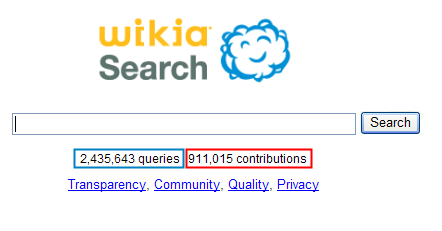
Here is an image of a couple results for SEO. Notice how I put my logo in the SERPs

If this project gains any momentum and they provide a list of most frequently edited search results you can expect that to be a nice list of commercial keywords, much like Mahalo!

Wikia Search also offers a nice keyword suggestion tool in their Bloom tool, which shows related search queries based on an input query.

Google SERP-rot, Paid Links, & Spam Classification

I talked to a search engineer a few months back and he mentioned that he thought one of my sites and one of the promotions associated with it were both spammy. This month I came across a random blog comment where a person talked about how great that search company was for showing them that same site! The only problem was that since that site was new and we still need more links we had to pay Google for those clicks.

Meanwhile a network of older established poorly designed English third language sites dominate Google's organic search results, and keep getting self-reinforcing links that make it virtually impossible to compete with them without buying links. But our AdWords ads and viral marketing we did lead to some exposure where editors from other companies got to evaluate our site.

  • A number of mainstream media companies (newspapers and radio shows) mentioned us on their site.
  • A leading search company featured a link to our site aggressively in their portal (sorry I can't say more than that or a partner would kill me for doing so).
  • Mahalo listed our site with a cool rating and listed many deep links from our site on their overview page.
  • The Yahoo! Directory listed our site for free.

Had we not paid Google $1,000's, the organic links we got never would have existed, and our site might never rank. Amongst most other search related companies they generally love our site. But because I am associated with the site and I am an aggressive marketer the site is seen in a different light by search engineers at Google, in spite of providing a better user experience than the outdated garbage Google currently ranks (as indicated by searchers and editorial judgement from human reviewers at other search companies).

I am not complaining here, as we are on page 2 and getting close to page 1, but most content producers are not as aggressive at marketing as we have been, and some of the best content might take many years to rank - if ever. The bigger issues at hand are

  • Most English speaking webmasters with trusted sites use Google, thus if something is not in Google it is hard for it to get the quality links needed to rank unless the webmaster buys AdWords or spends a lot on public relations
  • many employees of other search companies are likely using Google search
  • any warp in Google's view of the web (like SERP staleness & bias toward huge media companies) creates opportunity for another search company to be born, and to some extent validate arbitrage plays by companies like Mahalo.

By relying on old websites to clog up the search results Google virtually guarantees that you need to buy links to rank a new site. The only question is who is getting paid!

Catch Me on The Black Ink Project Today

Jeremy Palmer invited me to do a presentation on link building for his Black Ink Project. The presentation will be today at 3PM Pacific time. If you are a member of the Black Ink Project please listen in. If you have not joined the Black Ink Project it is free to sign up.

If you have followed this blog for years and are a member of our training program this will not be a ground breaking presentation, but if you are new to this site and the field of SEO I hope you listen in and like the presentation. There is also 30 minutes of Q&A time at the end of the presentation if you catch it live, and the presentations are recorded so you can watch them later.

Back From Vacation

My wife and I got back from our Kauai vacation Sunday afternoon. I slept most of yesterday, but am now back after the seasonal hibernation period. Hope to start posting a bit more frequently in the near future. :)

Interview of Neil Patel, Social Media Marketing Legend

I have been going to SEO conferences for many years, and it seems Neil Patel was at every one of them...always laughing, joking, and having a good time. I went from obscurity to being somewhat well known on the web from 2003 to 2005 and Neil did the same, but started about a year later. In addition to learning so much about social media, Neil shares tips on Pronet Advertising, runs ACS SEO, and created a start up named Crazy Egg. I asked him about his rapid accent and where he sees the future of social media heading.

True (and perhaps humbling story here)...a person I know said that they thought you were "the annoying kid at conferences," and then about 6 months later the same person said that you were the unsung hero and up and coming star in the field of SEO...and they were following everything you did. What did you do that made such a big impact in such a short period of time?

Great story, but I am probably still the annoying kid at conferences. ;-)

The main thing that took place in that short period of time was that I started leveraging social sites like Digg. When I started I was the highest ranked SEO on social sites like Digg and at one point I had a 75% success ratio.

The only other thing that happened in that period of time was that I started blogging and speaking at conferences. Once I started sharing my knowledge people started, somewhat, listening to what I had to say.

There is a lot of controversy in the online marketing space...with various marketers comparing who has a bigger penis (or, perhaps, who can act like a bigger penis) virtually every day. How did you get well known while avoiding much of the hollow self-promotional hype and conflict that is associated with so many other well known internet marketers?

My philosophy is that someone is always going to have a bigger penis than you, so might as well not try to compete and do the best you can do. Instead of getting involved with the self-promotional hype, I just concentrate on sharing my knowledge (similar to you), which I think helped with my personal brand.

And the main key to my success was that I let everything out. Because sooner or later others are going to know what you know, so might as well be the one to tell them.

Many bloggers have grown to (at least claim to) hate SEO. I go to lots of the top tech blogs and I see ACS logos on many of them. How did you build all those relationships and get that exposure? If I was just starting out in the SEO field today would that still be possible?

Bloggers in general don’t like paying for things and many of them believe that SEO is bullshit. So what I did was approach all the Technorati Top 100 bloggers and tell them that I could increase their traffic for free. And if I increased it drastically in return I would appreciate if they could place my company’s logo on their blog.

By offering this, they did not have much to lose. In today’s market it is probably more difficult to do this because most bloggers have already been approached. But either way, there is no harm in trying.

Have you ever had any linkbaits bomb, or worse yet, backfire? What are the lessons you learned the hard way when it comes to social media marketing?

I can’t recall of any linkbaits that have bombed or backfire. Some did not succeed, but none have really hurt my clients or me. The only thing that backfired for me was that people found out my Digg user name and started publicly bashing me that I was getting paid submissions from a lot of the Technorati Top 100 blogs. The funny thing about it was that those bloggers never paid me a cent and all the companies that did pay me never got called out.

With many people talking about gaming Digg it seems like they do not like people who create content that is targeted to their user's interests. As a marketer, is it worth the effort to target Digg? Does my site's general theme need to be aligned with that community?

It is definitely worth targeting Digg because it is a good place to obtain links. The trick with Digg is not to try and game the system, but instead to provide valuable content to the community. If your content is good enough you can still do somewhat well even if the community doesn’t like your sites theme.

For example, if I recall correctly your site made Digg for your Firefox extension. Even though they hate SEOs, you still got on the front page.

How do you come up with strategies for what topics to go after with linkbait? Roughly what is your success rate with launching linkbaits? How many links do your average linbaits get?

We come up with linkbait topics through brainstorming sessions. By passing ideas off to each other, sooner or later we come up with content ideas that can work. As for our success rate, we usually sit around the 50% mark with short linkbait pieces and around 80% with the in-depth pieces.

As for the average link count, it is around the 200 mark. This is probably a lot lower than the industry average, but in our count we don’t include links from the social networks. Also some search engines may show a certain blog is linking to your site 20 times, but we only count that as 1 link.

Do you target mainly social media sites with linkbait, or do you also pitch them to bloggers? If you pitch, how do you prevent it from backfiring?

We target bloggers as well as social sites. The best way to prevent this from backfiring is to first research a blogger you want to solicit. Make sure you truly understand the type of things they blog on because the last thing a blogger wants is to be approached to write on something that isn’t of their interest. After you have a list of bloggers that you want to hit up, then you want to write a tailored email (maybe with a bit of humor) to them. When doing this be honest as possible because people hate fake emails with tons of fluff.

Are most of your linkbait ideas temporal, or do they tend to have an evergreen aspect where they keep building links?

Most of our linkbaits have an evergreen aspect. Some are time sensitive, which means they stop building links after a while. But we prefer to create timeless linkbaits because this allows them to continually build links over time.

Is YouTube important? Do you have anyone you recommend for creating video content?

YouTube is very important in my opinion. If you are trying to brand your company, yourself, or just create buzz, you should consider YouTube. Billions of people visit YouTube and if you can get them to watch your video, that is effective marketing. Just think about how much companies spend on TV advertising. If you can get a video to the homepage of YouTube the effect can be much greater then any TV advertising, and it will be a lot cheaper.

Widgets have become popular in the SEO space recently. As more sites add social function will widgets continue to grow in popularity, or will they fade out? How important is it to integrate your site with social networks?

Widgets will continue to grow as long as the functions they add are useful. People like cool things such as social functions, but as they stop providing value people will remove them. The ones that do provide value will continue to grow.

I think it is very important to integrate your site with social networks because it turns your website into a community. This way you will be able to better understand your visitors and you will be able to get to know them on a personal level.

OpenSocial and other APIs are trying to help small sites bolt social aspects on to their sites. For a small company do you think it is more effective for them to blog, or create a community of sorts using something like Google Friend Connect or Ning? When do you prefer blogs? When do you prefer forums or social networks? When do you prefer not adding any social stuff but rather tapping into other social networks? What types of sites should have social aspects to them?

I think it is important for companies to do both, but I would first start off with a blog. Blogs have become common and more businesses are starting to use them. It is a great way to communicate to your client base as well as potential clients. And most importantly blogs are a tool that allows you to share your knowledge with the masses.

As for communities, it is usually effective to use them when you have tons of traffic or a large user base. If your company is just starting off, or if you are just starting a new site, it is probably not wise to make your site too social. The reason for this is because there will be very little use of your social features without a strong user base. And if you still want social features even if you are just starting out, I would leverage other social networks so you can tap into their user base.

When it comes to forums or social networks, I prefer forums when it comes to sharing knowledge between users. If you are trying to create interaction between users social networks do a better job.

Lastly, almost any site could use social features. But before you add them you need to make sure these features will benefit your users instead of just creating noise. As Leonardo da Vinci said, “simplicity is the ultimate sophistication”.

Do you ever see usage data and social voting taking the place of links as the backbone of Google's relevancy algorithms? Or do you feel much of that data is already reflected in linkage data?

I think much of that data is already reflected in linkage data. If you think about the sites that people most use or the sites that people vote for on the social web, they are the ones that usually have thousands of links. The sites that don’t do well on the social web or are not often used, usually don’t contain tons of links.

You were ahead of the curve on the social media and linkbaiting stuff a few years back. Where are you looking now? What should online marketers really be looking out for in the next couple years? Where should we focus our efforts?

Currently I am looking at the social networks and analyzing their growth rate. Social networks are growing at an extremely high viral rate, and why shouldn’t normal sites also experience that growth rate. I think marketers should look at the social web and see how we can bring those same principles to the rest of the web.

Digg, Del.icio.us, StumbleUpon, and Reddit and just the tip of the iceberg. If applications on Facebook can get a few hundred million pageviews, there is no reason why more websites can’t experience that traffic level. And more importantly as sites like Facebook grows they have a strong understanding of their user base, due to the data they are collecting. If we can collect Facebook type of data for all the sites on the web it will allow them to grow their traffic faster and more importantly increase their bottom line. I know this easier said than done, but hopefully it will happen sooner or later.

Thanks Neil!

Blogging - No Longer a Unique Business Strategy

I was surfing around quite a bit today and came across many great blog posts that seem like they were meant to be more than blog posts. But there is too much content and not enough attention, so nobody cared. A marketer who has studied online marketing for nearly a decade got 0 comments and 0 inbound links for writing an 8 page blog post of quality content. Worse yet, the blog is about using content to build links, and the post shared link building tips.

If you are one off linkbaiting or publish nothing but hyped up linkbait garbage then blog posts are a good format for promotion because blogs make it easy to show social proof of value (via trackbacks and comments). But if your site is real and you aim to create a real brand your best content needs a permanent home, and should be set apart from your average blog post.

Blog posts are great for getting quick ideas out to the marketplace, but when you create something in depth it is usually better if you place it on another part of your site rather than making it a blog post. And if you find yourself spending 10 hours creating a piece of featured content then why not...

  • focus the idea around a topic you feel you should be able to own
  • give it a title that shows ownership of an idea
  • spend a couple hours getting feedback
  • create a logo for it and put graphics in it to make it look different than text heavy blog posts
  • spend a couple hours marketing it by mentioning it to friends in the industry
  • feature it aggressively on your site

Average content with an aggressive launch and great marketing outperforms great content with no marketing.

Google Temporarily Purges .info Domain Names

I do not own too many .info domain names, but a couple of them that I do own have quite solid link profiles. In spite of this, on May 23rd all of my .info websites (including search-marketing.info) disappeared from Google's search results. And then the next day it returned. It may have just been a ranking glitch, but many other webmasters had the same issue... their .info domain names simply disappeared from Google.

Why would such a thing happen?

  • 2008 prediction from Matt Cutts "A top-level domain (TLD registry) will offer domains for under $4. The result will be another TLD blighted by spammy domain registrations."
  • GoDaddy has a 99 cent sale on .info domain names.

Marcel Feenstra highlighted this issue on LockerGnome:

Filtering out all .info domains just because some of these domains are being abused is, of course, far too draconian a measure, and I don’t think it’s what Google intended. It would make much more sense if they filtered out, say, .info domains that had been registered less than a year ago and that didn’t have some minimum number of “trusted” backlinks.

Was the .info purge a glitch? Maybe, but Google never will accidentally filter out all .com domain names. This algorithmic tweak (especially when coupled with Matt Cutts' prediction for 2008) shows an internal Google bias against .info domain names. While many .info domain names rank where they did just a few days ago, this does not bode well for the perceived value of .info domain names, especially for brand new domain names or parked pages.

Just one more example of how domain names play a big roll in SEO strategy.

Google to Police 'The Truth'

Recently a fake story was highlighted in the mainstream media, and the SEO behind it also mentioned it on their site. The SEO space as a whole began debating the legitimacy of such tactics, and Matt Cutts even commented on the issue:

My quick take is that Google’s webmaster guidelines allow for cases such as this:

“Google may respond negatively to other misleading practices not listed here (e.g. tricking users by registering misspellings of well-known websites). It’s not safe to assume that just because a specific deceptive technique isn’t included on this page, Google approves of it.”

There’s not much more deceptive or misleading than a fake story without any disclosure that the story is hoax.

The irony of this statement, as Nick Wilsdon pointed out, was that not only did Fox News syndicate the fake story, but they got in trouble in the past for attributing fake quotes to John Kerry. A person coming up with a clever story to get a few inbound links is nowhere near as sleazy as lying to try to sway the public vote for presidency...but it is much easier for Matt to police the small and weak webmasters while turning a blind eye to similar (but worse) offenses from larger players.

Morals of the story:

  • If you talk about exceptionally effective SEO strategies expect them to lose their effectiveness (search engineers are active in public discourse because it is easier to control people through fear than it is to write a better relevancy algorithm).
  • If your technique works so well that it is featured on many SEO blogs and/or draws a specific public comment from Matt Cutts you have went too far (sheep must be slaughtered to control the herd).
  • If you are going to lie do it in a way that builds a fan base. If you have such a large fan base that most of your traffic comes from channels other than Google it is virtually impossible for Google to block you (unless you use hate speech that extends beyond the lies and spin that are typical on networks like Fox News).

If you want to understand how the mainstream media works I highly recommend investing 5 hours and $50 into the following 3 DVDs. As more time passes Google's ad fueled business model will lead to them essentially replicating the flaws and biases of the mainstream media.

  • Manufacturing Consent - Noam Chomsky talks about how the media operates to shape public opinion and policy.
  • Outfoxed - how Fox News spins the news to fuel their desired political agendas.
  • The Fog of War - in this DVD Robert S. McNamara talks about how he used spin and media control to try to minimize blowback from the Vietnam War.

A New Kind of Duplicate Content - GoogleBot Random Form Crawl

Michael VanDeMar highlights how a website lost an important page to duplication across a new not so important page, which was added to the Google index by Google filling out forms.

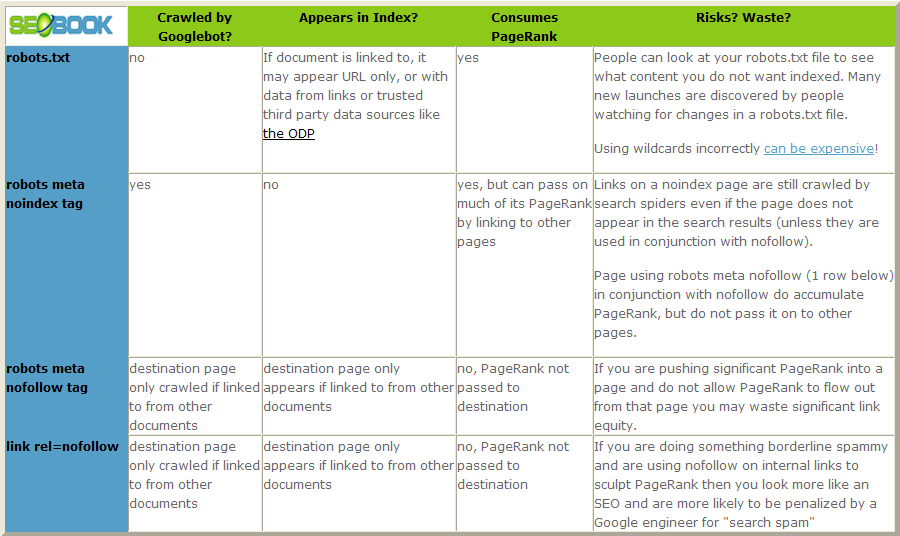
If you have limited PageRank and a Google accessible form or search box you may want to block them from indexing output URLs via a robots noindex meta tag or your robots.txt file.

Pages