Why it Makes Sense to Target Longtail Keywords First

When launching a brand new website in a competitive marketplace you have a lot of network effects working against you. Your competition has years of conversion data, an older trusted site, tons of content, and thousands of organic inbound links. Try to beat them right from the start for the most potent high-value keywords and you will likely fail.

Any new website has opportunity cost. One of my first goals with a new site is to get it to self-sustaining while it is still growing rapidly. In doing that, I can afford to lock up that capital with no returns because I know I am buying market-share in a fairly organic manner, and few competitors will operate at that strategic level or see me coming. Whenever the site has enough exposure then advertising (and other promotional spending) can be cut as needed.

If I target the most competitive keywords first (without a strong competitive advantage - like a network of sites to build off, an old trusted website, a huge brand, or a strong domain name) then I might never get to self-sustaining. There is no award, little traffic, and virtually no value for ranking on page 2 or page 3, even if it is for an exceptionally competitive and high traffic keyword like credit cards.

Longtail keywords are easier to rank for. If you can pick off mid-tier phrases and rank at the top of the search results then you can build a revenue stream from them, which can be reinvested to further buy marketshare and distribution.

There is more value in...

  • using your core pages (and link anchor text) to target lower competition variations of your core keywords (like best credit cards or compare credit cards) rather than targeting just the core competitive keyword credit cards
  • ensuring that each particular deep page is well optimized and can pull in relevant traffic

than there is *almost* ranking for credit cards.

Core keywords require domain age, good anchor text, trusted links from a variety of sources, and perhaps links from within your topical community. It takes time to build all those external signals of quality. You can rank for longtail keywords much faster, because you control your on page optimization.

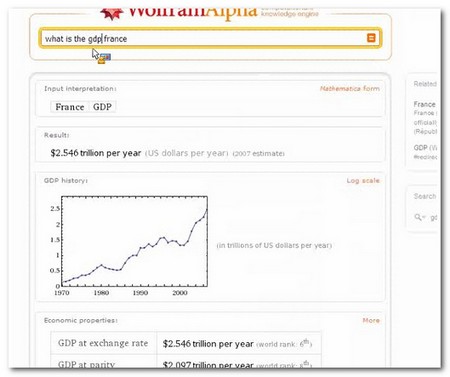
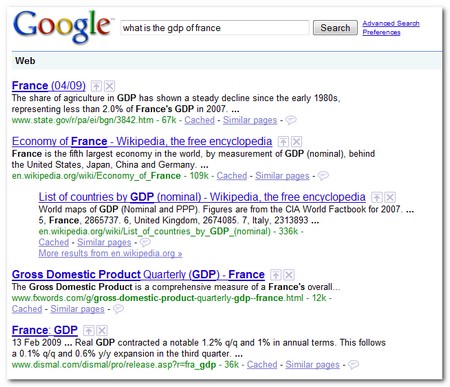
Longtail keywords have less competition, and are thus far easier to rank for, as illustrated below.

And the good news is that if you target best credit cards or compare credit cards that will help you rank for credit cards as your site gains link authority and trust in Google.

Eventually you want to rank your site for many of the most valuable phrases, but you need to build a revenue stream to support those efforts. By focusing on the second tier and third tier keywords first, you enable yourself an opportunity to earn (and buy) the exposure needed to rank for the core keywords.

This site does not rank well for SEO just because I decided to target that keyword, but because we helped create many paths into this site...which helped to build the authority of the site...which helps it rank better for the core keywords.

Introducing The SEO Book Competitive Research Tool

I have been a big promoter of the SEM Rush service because I think it rocks. As an extension of that, I partnered with with SEM Rush to license their data and offer the organic search piece of their service as a free bonus to our SEO training & community members.

If you are a paying subscriber you may want to check out our new competitive research tool.

Site Specific Competitive Intelligence

You can use it to find the most valuable or highest traffic rankings for competing sites

Page Specific Competitive Intelligence

You can use it to find the most valuable or highest traffic rankings for a specific page

Similar Keyword Audience

You can use it to find sites that have a large overlap in search rankings / audience

Easily Export Data


The columns are sortable and it is easily to export 1,000 listings in a couple of seconds.

Advanced Uses

On the competitive research tool page I list 10 high powered ways to use this tool. I would share them publicly, but if you only find one of those tips applicable to your site & situation you should still be able to make far more than $300 from it - making the cost of the subscription free.

Try it Now

If you are a subscriber try it now. If you are not a paying subscriber you may want to join. We keep trying our best to add new content and goodies each month :)

Mahalo Caught Spamming Google With PageRank Funneling Link Scheme

Jason "SEO is dead" Calacanas, founder of Mahalo, used "SEO is dead" as a publicity stunt to help launch his made for AdSense scraper website. In the past we have noted how he was caught ranking pages without any original content - in clear violation of Google's guidelines. And now he has taken his spam strategy one step further, by creating a widget that bloggers can embed on their blogs.

The following link list looks like something you would find on an autogenerated spam website, but was actually on Hack A Day, a well respected technology blog with lots of PageRank.

  • Note that the links are not delivered in Javascript and do not use nofollow.
  • The links are repetitive and spammy.
  • The links have no contextual relevance.

This activity is in stark contrast to Google's webmaster guidelines:

Your site's ranking in Google search results is partly based on analysis of those sites that link to you. The quantity, quality, and relevance of links count towards your rating. The sites that link to you can provide context about the subject matter of your site, and can indicate its quality and popularity. However, some webmasters engage in link exchange schemes and build partner pages exclusively for the sake of cross-linking, disregarding the quality of the links, the sources, and the long-term impact it will have on their sites. This is in violation of Google's webmaster guidelines and can negatively impact your site's ranking in search results. Examples of link schemes can include:

  • Links intended to manipulate PageRank
  • Links to web spammers or bad neighborhoods on the web
  • Excessive reciprocal links or excessive link exchanging ("Link to me and I'll link to you.")
  • Buying or selling links that pass PageRank


The above links not only appear on hackaday, but Mahalo is actually creating a "Mahalo Blog Network" that cross links to other Mahalo promoting blogs and exists for the purpose of flowing PageRank into high paying Mahalo pages.

Back around the last time Jason was calling SEO spam, he was promoting Weblogs Inc., and his blog revenues relied heavily on selling PageRank from his blogs to casino websites.

Do the venture capitalists that invested in Mahalo support such Google gaming and PageRank selling strategies? When will Google act on this blatant violation of their guidelines? Jason has a clear history of operating outside the spirit of their guidelines, and if Google lets this slide then many other people are going to start spamming them too. Google has an obligation to protect searchers from such devious behavior, lest they let it slide and promote the creation of more spam.

Update: This Looks Worse Than I Originally Thought!

While leveraging blog sidebars to pump PageRank and anchor text is pretty bad, at least it was not in the editorial content of blog posts. But it looks like many Mahalo employees not only put links in their sidebars, but they publish posts that consist of little but a link laundry list pointing at various seasonally hot parts of the Mahalo site.


The above is just a small sample of such posts promoting Mahalo. There are probably hundreds or thousands of suchs posts floating around the web. What makes that strategy any better than the "evil" Pay Per Post strategy that Jason Calacanis was allegedly against? I guess it is only bad when someone else is profiting from it.

How The Small Guy Can Use Trust To Win The SEO Game

If only Google would sit still for one moment!

The job of the SEO would be so much easier :)

As we all know, the last thing Google wants to do is make life easy for SEOs, so we'll just have to live with the constant change. One of the biggest changes SEOs have had to adapt to in recent times has been algorithm shifts that reward big players.

For example, Google results heavily feature YouTube (owned by Google, of course) and Wikipedia pages in against almost every search we make.

Let's look at some of the advantages of big business, and ways the small guy can counter them.

Advantages Of The Big Players

Unlike the small business, large businesses have access to significant amounts of capital. They can use this capital, indirectly, to buy position.

They can run large ongoing media campaigns that ensure visitors, links and attention, and all the resulting ranking advantages that provides. Big business can cross promote their properties, which makes it easier to launch new sites. They can buy out competitors (Google - YouTube) and trounce the competition, even though they enter late. They have many employees they can throw at problems, and waves of lawyers to throw problems at others.

What does the little guy have?

An internet connection.

Google Has Devalued Easy Tricks

The low hanging fruit is gone.

Google will always be a moving target. As the structure of the web changes, Google changes with it.

In the last few years, Google have devalued on page factors, they've made link building a lot more difficult, and the playing field is far from level. When the big guys get caught out using aggressive SEO, they're often given a free pass back into the index, because to not have them showing would devalue Google. The little guy is likely to be excluded for some time.

What Can The Little Guy Do?

The big companies have one major problem.

They're big.

Because they are big, they can often only operate in tried and tested ways. For example, there's a Telecoms company that have just wasted tens of millions of dollars on a website that most bedroom SEOs could have beaten in their sleep. The site has recently been shut down.

The site was uneconomic because the only way this big Telecoms company knew how to operate was by using the biggest and "best" suppliers. So that meant hiring in consultants from the big consultancy firms. That meant employing large vendors to do their programming. It meant above-the-line advertising at prime time, and saturation advertising across newspapers and radio. It meant hiring teams of people and organizing them in the tried and tested organization structure.

Because that's how they've always released products and services.

Also consider that a lot of Web 2.0 operations, lauded in the media for the past few years as "the bright young things to watch", are now crashing to earth as their big-money funding dries up. Turns out that was the only thing keeping them going. Meanwhile, a lot of SEO-aware webmasters are enjoying a growing income because they're always had the revenue equation right.

In both cases, the access to big capital was a disadvantage. It meant these companies didn't need to be smart.

So what, specifically, can the smart, little, SEO-aware guy do?

Big Bets?

You can take big bets.

The big guys tend to be conservative, but we don't need to be. We can have a crazy idea one morning, and make it a reality by that afternoon. We can ask ourselves "Is this idea crazy enough!".

The big company finds it very hard to do that.

Big company people often fret about their jobs and reputation, they have to convince a lot of stakeholders, and there's always someone waiting to stab them in the back.

So they play it safe.

Read why Seth thinks "safe" is bad idea.

Small Niche

The big company might not be able to make money out a small niche.

In the Telecoms company example I used above, their bloated structure and operating methodology drove costs way above the potential return. However, a smaller company with lower overheads could have made a success of it.

There are thousands and thousands of small niches the big companies can never compete in.

But you can.

Personal Trust Networks

Big companies have problems personalizing their services and relationships.

The web is about to change again. And when the web changes Google changes, too. The big change is a social one.

Twitter, social media, bookmarking sites are all about "the personal". They're hard for a big company to centrally control. That suits the small guy.

Look to build up a high degree of trust with small, tightly linked networks of people. Use a blog to keep in contact. Not just any old blog - really work it. Make it unique and own your ideas. Have an opinion and shout it loud.

Try to talk to those one hundred people in your little niche who make a difference. Talk to those 100 people who think the same way you do. If they know you and trust you, they'll do a lot of your marketing for you. There remains no more effective marketing than word of mouth.

Ask your friends to help out. Cross promote their stuff. Go into joint ventures. Really work the personal, trusted relationship side, because that's the way the web is going. Trust is being decentralized.

This is one area in which the big guys are going to have a lot of problems competing.

Friendgine - Friend Search Engine

Aaron has a great idea called "Friendgine".

Set up your own, personal Google or Yahoo search engine that includes the sites of all your friends and personal network colleagues. If you ever need to link to an external article, search your friendgine first, and link to your friends if they have relevant content.

This is a subtle way to keep in contact. They'll also likely reciprocate the favor. By creating these mini trust webs you'll make it difficult for other people who haven't established such relationships, to follow. You'll have your own nepotistic closed circle :)

If you want to see a presentation on this topic, check out Aaron's Beating The Big Guy

Did Google Actually Penalize Google Japan?

After Google Japan got caught buying paid blog reviews it was claimed that Google penalized their own site. Sure their toolbar PageRank score matters, but did it do anything to their actual rankings? Not so far as I can tell.

Search Google for John Chow or Text Link Ads and try to find the official branded sites...that is what a real penalty looks like. It looks like The SEO Commandments don't apply equally to everyone.

Thou shalt bear witness against all thy competitors, spying and snitching and ratting on them whenever thou perceivest a purported spam causing grief to Mine index and My corporate ego. And My profits. For thus shalt thou spare Me labor and the expense of attending to Mine Own job. And if thou wilt not lay it to heart to give glory to My name in this manner, behold, I will corrupt thy ranking, and spread dung upon thy name, and castigate thee as unethical, and thine SEO agency shall be damned and misranked in all eternity. For verily, I am a jealous Search Engine.

Self Promotion vs Confidence & Self Esteem

This is going to be a bit of a personal post...if that weirds you out, then please skip it. :) It explains how my lack of self-confidence developed, and how I slowly developed confidence over the years - and used it to build a thriving online business.

A Lack of Confidence Limits Success

One of the biggest things that separates really successful people from people who are only moderately successful or just getting by is self esteem. I have always been a bit cynical in my perspective, and have been consumed with self doubt since sometime grade school. It turns out this is quite common, though few people admit it publicly.

Establishing Seeds of Doubt

One of my weird attributes is that at times it seems I have a photographic memory, but I was on the border of being legally blind - without knowing it. Whenever I would get an eye exam I would fail them in school, and then when it came time to go to an eye doctor somehow I would squint or cheat or something (to this day I am not sure how I passed them). Perhaps it was because I didn't want to be flawed or different. About half way through high school I got glasses and it made a world of difference to improving my confidence. But it only went from super low to low. ;)

My older brothers were a bit of troublemakers and picked on me a bit, which was not so good...though my sister was very caring and nurturing toward me. 2 weeks after high school I joined the Navy. The current military is not the military my grandpa served. They generally only teach you what you did that was wrong, and structure and orders did not get along well with me. So after about 6 years of that I started playing on the web, and within the first year was doing well enough to quit my job. But a lot of my flaws and self destructive behaviors did not disappear right away...many lingered for years.

Limited Perspective

I did decent off the start, but earned somewhere in the 2% to 3% of my potential. A lot of the 97% of potential revenue was missed simply because I did things to keep busy and did not act as a business person - going to SEO conferences but not really selling anything, spending thousand of hours on forums, and offering a better customer service to $79 ebook buyers than most SEO companies offer when they are getting thousands per month from their clients.

A Challenge

When I started making enough money to get by I was happy with that. When you go from making nothing to doing pretty well (even only relatively) it can feel a bit weird. What helped me decide to earn more was when Traffic Power sent a bogus lawsuit my way, costing about $40,000 in legal fees from a lawyer that told me that the $5,000 retainer was more than enough to cover the case. At that point I decided it made sense to build up a bit of a war chest in case anyone tried to screw me over again with some bogus crap like that.

Ignorance vs Scholarship

Some people are academics. Some people have street knowledge. A rare breed of person has both, while still finding enough time to do self promotion to make it all worthwhile.

The people who know the least often scream the loudest, and I have always worked hard to try to balance learning vs selling...making sure to keep myself way over on the learning end of the spectrum. The problem with that type of strategy is that unless you sell aggressively and/or apply that knowledge to the right verticals, you are simply killing your profit potential as opportunities around you disappear.

Super Salesman

I recently heard an audio interview of a multi-millionaire info-marketer who stated that he started online marketing via bulk email spam, but did not make any money doing it. His first real moneymaker was selling an information product on how to make easy money online. Think about that...here is a guy who had no success, straight out teaching others on how they can easily gain success. Sorta feels like fraud, and yet the guy can say it with a straight face and confidence. It takes a lot of self-confidence to be able to do that.

Please Recycle!

Another internet marketing company that has sold 10s of millions of dollars of internet marketing products bought my ebook and said they loved it passing it around the office. They asked beginner level SEO questions, and less than a month later they were selling an SEO info-product. Years later one of their senior members joined our training program because he was struggling to rank websites and said that he was blown away at the ideas I came up with.

Another top selling SEO course actually lifted lines from my ebook to put in their product. I am not sure if they intentionally did it, but when they asked to get an up to date copy of my ebook for the second launch of their product I was pretty certain that it wasn't an accident.

Everyone is Broken

I also get to talk to some internet marketers off the record, and some of them have revealed things like that they were about to go bankrupt, and that they created a project out of thin air because they had to in order to prevent their business from going under. Seeing that others are just as flawed behind the curtain makes it easier to be comfortable with ones own flaws.

Asking for Reciprocity

Another info-marketer in the golf space bought my ebook and then tried to use that as a free ticket for about 10 hours of consulting. I answered a number of his questions, with the end answer being "your site(s) are nothing more than cheesy spammy looking salesletters that offer the web no value whatsoever until after people give you money." Eventually I asked him if he valued his own time at $8 an hour, because I could use some help with my swing. About 2 years later my wife read a book about info-marketing millionaires, and saw this guy profiled in the book. Offer discount pricing and people will not respect you or listen to you. They will waste your time though.

Change Takes Time

Even AFTER I ranked well in the search results with many sites, spoke at dozens of SEO conferences, and was recruited by a Microsoft headhunter to head their SEO team, I still was lacking in confidence. Part of why I stuck with the ebook model so long was just general self doubt. It was working well enough, and in spite of selling $1 million worth of the ebook, helping to make many multi-millionaires (as per customer feedback), and ranking for many high value keywords, I still wondered if I knew enough to be a teacher.

There is Always an Excuse

My general lack of respect for authority made the idea of being perceived as an authority confusing. And seeing how marketing is sometimes used in exploitative manners made it hard for me to push too hard on that front. And I didn't even like subscription based business models because of how shady pharma corporations hook customers on drugs that solve symptoms rather than problems.

Markets Drive Value Toward Price

If you do not value yourself properly then the market will work to help discount the value of your time. And, considering that we are all going to die someday, it is quite self-defeating to put arbitrary limits on your potential. Yet we all do it in some ways virtually every day.

Your Are Your #1 Competitor

The whole point of this winding post is that until I gained enough self confidence there were always excuses to say "this is good enough" and/or "I can't do that." Online you have lots of competition. And any bias self-imposed limit that clouds your judgement lowers your perceived value and your ability to create profit. Your biggest competitor is yourself.

"Free" Help

Until I met my wife I was so longing for connection that I actually used to respond to emails like this one

"plz sir i am starting a new blog can you tell me that how i have to start its search engine optimization .
The details are not required but just the steps you follow while doing your work .
Please sir i am a boy of 18 years old help me i want money very urgently .
sir u know that now there is a hard competition in world of seo so anybody recieving this male please forward to Mr. Aaron for GOD sake Please .

Thanking you .
who is reading please forward thi message to Mr Aaron Wall"

There are billions of people in the world, but billions of them are unwilling to put the effort in needed to become successful.

After about 5 years of answering those types of emails, I learned the hard way that if people do not pay for help they intrinsically value your time and advice at $0 (or really close to it). Help the wrong people who are unwilling to do work and you not only waste your own time, but you get their internal frustrations cast on to you...further lowering your sense of self value. I can really see the difference in quality between free and paid when I venture off our forums to check out some of the "free" ones...a lot of misinformation to be had!

Sage Advice on Resonance

I really wish I would have listened better to one of my mentors when in 2005 he said:

I think the best brands, the best sites have a large portion of their founders personality in them. Never be afraid to be yourself, after all there are 1/2 billion people on the www, not all of them have to agree with you. Concentrate on the ones that share your views, concentrate on making their experience the very best it can be, the rest forget them.

Or to put it another way, the best sites say - this is what we do, this is how we do it, if you don't like it go somewhere else.

What helped me gain adequate self-confidence?

  • My wife meeting me and falling in love with me. She thinks far more of me than I do!
  • My wife pushing me to charge more and do better (at first this created stress because I took it as me not being good enough...but she was right all along. To this day she still has way more self confidence than I do and I am so lucky to have her in my life.)
  • Working with some of my mentors. I was stoked when we hired Peter to help work on the blog here because he was one of the 3 people I tried to pattern my initial online strategy after (Seth Godin and a friend from the UK nicknamed NFFC being the other 2).
  • Working with my partner the caveman to optimize some of the largest and most complex websites of companies worth 10s of billions of dollars...and getting repeat business from those clients (even though they have internal seo teams).
  • Using the power of SEO & marketing to promote good stuff - like PBS :)
  • Watching Thom Yorke's struggle with success in Meeting People is Easy.
  • Some of our other projects working well and generating more revenue than this site does.
  • Seeing about a half-dozen people or companies that know less about SEO the I do re-wrap my ebook in another format and sell it for anywhere from 5 to 100 times the price.
  • Working with Conversion Rate Experts to improve the conversion rates of this site and seeing a great lift.
  • A better and deeper connection with our customers afforded by the membership site business model where you get to see people learn in real time and see the excitement of their progress when top rankings roll in.

Still Have Some Bumps & Bruises

If you don't fail then you never tried to do anything great.

I still fall short on many goals. Today was the 1 year anniversary of the change in our business model, and I wanted to have made 10,000 forum posts in the first year, but I only made 9,928 so far...falling 72 short. I still spend too much time sitting at the computer and do not exercise or read books as much as I should. I still am a bit overweight, but I will start working on that soon...and in spite of that, I have way more self-confidence than I did a couple years ago when I was able to run a sub 6 minute mile.

Given the complete fraud that is our corrupt taxation policy and fascist banking system (everyone should be in debt forever except for the bankers who destroy trillions in wealth and loot the treasury) I have a renewed sense of cynicism, but at least I am not lacking in self-confidence! :)

Dear Friend

Don't you hate sales letters than begin with "Dear Friend"? :)

Sleazy sales letters peddling get rich quick scams will be familiar to anyone who has spent any time on the internet. Seemingly written by some self-aggrandizing, ex-timeshare salesman, they attempt to press every conceivable button in order to make a quick sale. The downside is that they can make your product or service look low-rent.

However, whilst the execution of these letters is often mangled, the underlying psychology works. Most copywriters use these very same psychological techniques.

Let's discuss a few common sales writing techniques, the underlying psychology, and how these techniques can be used in different ways.

1. Avoid Cliches

Some sales letters start with outdated phrases such as "From The Desk Of: [name]", and "Dear Friend".

Perhaps an updated version would be "From The Computer Of:". Still sounds hokey :)

The problem with this approach is that consumers in the 2000s are cynical, jaded and media savvy. Bombarded with commercial messages, they've learned to filter commercial messages out. By using jaded, outdated phrases associated with sales copy, you increase the likelihood your message will be filtered out.

A more contemporary approach is to make your copy direct, honest and colloquial. For example, take a look at Copyblogger. The writing on CopyBlogger uses a lot of the classic, direct marketing techniques, yet it doesn't sound jaded, because the writer is using an informal, self-aware style of writing.

One qualification: this does depend on your audience. The older your audience are, the less likely dated phrases will turn them off.

2. Appeal To Self Interest

It's still all about them, not you.

Sales letters are big on outlining the benefits for the consumer, and this is one area that hasn't changed. However, to be most effective, you need to know your audience well. Depending on your audience, this might mean using no words at all.

Take a look at the Gucci site. Luxury brands seldom resort to explicitly listing benefits, because as far as the manufacturer and consumer are concerned, the benefits should be self-evident. If they need explaining, then they've got a problem, so very much a case of show, don't tell. Could you imagine using a long-winded, cliche ridden sales letter to sell Gucci? It would undermine, rather than enhance the brand.

Listing benefits can be very powerful. Take a look at how SEOBook does it. Aaron tells me the conversion rate jumped after he moved to spelling out benefits in this focused, punchy way. Notice that page also integrates a strong call-to-action, and examples of social proof.

More on these aspects shortly.

3. Engagement

If your audience feels engaged, they're more likely to buy.

Forrester Research conducted a study(PDF) of over 200 companies, and found that companies expected to benefit in terms of more sales, increased loyalty, and peer recommendations by engaging their customers on a deeper level. Customers often want more than a transaction, they want to feel part of something.

A clumsy way to invoke engagement is to use over-familiar phrases like "Dear Friend". It's a little dishonest, given the anonymous nature of the relationship. A better way is to relate genuine shared experiences. Shared stories and experiences create a feeling of empathy, which leads to a greater degree of engagement.

There are many ways to do this, of course.

Take a look at the way Apple markets to their customers. You're very much buying into an familiar and shared identity - a style conscious one - when you buy Apple, as opposed to simply buying a computer or an MP3 player.

Telling stories about how you solved a problem is a good approach, and one that sales letters often do well.

Another approach is to let the customers tell their own stories. Amazon does this with the user feedback facility. Think of ways you can combine interaction, engagement and brand identity.

4. Social Proof

If other people have done something, it feels safer.

Buying carries risk - risk that you'll lose money. In the traditional sales letter, you'll see testimonials from seemingly delighted users. These testimonials often appear alongside stock photos - erm, genuine photos of the letter writer ;) - and often feature a scanned signature.

The underlying truth is that humans are like reef-fish. We think, sometimes unwisely, that there is safety in numbers. So if we see other people buying a product, then it is safe for us to buy it as well.

There are a number of ways to provide social proof. Testimonials are very powerful, but people are likely to be suspicious of testimonials from people they don't know. Try and get testimonials from people your audience are already familiar with. Link to the sites of people who provided the testimonials. Give people a means to check credibility.

One method used a lot in the SEO world is to have your photo taken at a search conference, usually alongside some guru. The implication is that the person has been sharing secret SEO techniques all evening, when in all likelihood the person pictured has just asked "hey, can I get a photo with you?".

The photos are another example of social proof - the person pictured is "in the know", and seems to be best friends with some guru the audience already knows, and thus becomes a reliable source of advice on search.

We've all done it :)

5. Call To Action

Give people a clear indication of what they should do next.

This is an important aspect of all direct marketing, and you'll see calls to action peppered throughout sales letters. Calls to action work well because they help close the sales deal. They move the prospect from thinking to action.

The call to action in the sales letter usually involves jumping straight to the close - BUY NOW!! - but it needn't be. Calls to action take many forms, including a request for the prospect to join a mailing list, call the company, remember a piece of information, or send an email.

Keep in mind what you want your audience to do, and spell it out. Don't leave it up in the air.

Content vs SEO: Business Profit Margins

I was sad to see some people who claim to be search experts actually syndicate that John Dvorak article stating that it was good. Of course there are some scammers in every piece of the marketing industry because anywhere where there is demand for a marketing service opportunistic people will look to take advantage of people, but not all SEO techniques are seedy or shifty. In fact, most are not.

Steven Arnold wrote "Gaming search engines for fun or profit is of zero interest to me as are those who practice these dark arts," and he wrote that content was the secret. "SEO is a way for content free sites to game the indexing systems. Content, Aaron Wall, content. Not tricks, spoofs, and carnival tricks." That is the mindset of a guy who has probably spent thousands of hours researching search. Bizarre.

Sure SEO can be used to temporarily promote garbage, but it is also used to make quality publishing business models profitable.

It is no secret that many publishing business models are no longer effective. Mainstream publishing businesses are going bankrupt. They have nearly limitless content, but even with their huge online archives, it does not create enough traffic and profit to effectively subsidize the cost of new content production.

The New York Times recently shared their profitable publishing strategy - waiting for many competitors to go bankrupt, and hoping they get enough inventory to become profitable.

So here is a publishing company with a strong brand, tons of content, losing money, and their growth strategy is hoping that competitors go bankrupt before they do. These newspapers get direct promotion in the search results through the Google News OneBox (a rankings boost subsidy), and yet they still can't turn a profit. That really shows the flaw of the "content" mindset in the age of the internet.

As Robert Thomson, the managing editor of the Wall Street Journal explains:

But one of the — Google — I mean, the harsh way of just defining it, Google devalues everything it touches. Google is great for Google, but it’s terrible for content providers, because it divides that content quantitatively rather than qualitatively. And if you are going to get people to pay for content, you have to encourage them to make qualitative decisions about that content.

Relevancy algorithms are built around making sure the search ad network makes money (even while many publishers do not). Some people run businesses. Others are bankrupt, but are just not aware of it yet.

  • I have sites with great content that went nowhere.
  • I had a few sites with sub-par content that got tons of rankings and exposure.
  • Some of our sites make good money.
  • Other projects have lost more than I care to mention.
  • And we have sites at just about every level in between.

What is the difference between all of them? Marketing. SEO is a subset of marketing. It can be done effectively or ineffectively. It just depends on how healthy the target market is, who is doing the work, and how much they care for the project.

Many businesses struggle for survival or flourish based on a tiny couple percent change in profit margins. If you routinely rank #5 in the search results then it is pretty easy to see the potential upside from a #1 ranking.

Google's eye tracking research highlight this distribution trend as well.

Based on eye-tracking studies, we know that people tend to scan the search results in order. They start from the first result and continue down the list until they find a result they consider helpful and click it — or until they decide to refine their query. The heatmap below shows the activity of 34 usability study participants scanning a typical Google results page. The darker the pattern, the more time they spent looking at that part of the page. This pattern suggests that the order in which Google returned the results was successful; most users found what they were looking for among the first two results and they never needed to go further down the page.

Last year Google's Peter Norvig stated that Google did not use usage data directly in their relevancy algorithms because it is not very sensitive to new ranking models. When the order of search results are changed, people will still have a strong tendency to click inferior result if it appears at the top of the search results.

Like people, businesses are born, grow, then die. A solid SEO strategy can be the difference between a solid company and a company that no longer exists.

As many of the newspaper companies go bankrupt with tons of “content,” our sites (and profits) will keep growing. Not because of “content” but because we leverage marketing & SEO to ensure our content garners enough exposure to turn a profit.

John Dvorak - a Good Example of Why Many Media Companies Deserve to go Bankrupt

John Dvorak wrote what is perhaps one of the more ignorant articles about SEO I have seen in quite a while.

Search engine optimization (SEO) has turned into a big business, and from what I can tell it's the modern version of snake oil. The unproven nonsense spewed by so-called "SEO experts" simply doesn't work. And worse, it's screwing up the elegance of the Web.

How did John come to these results? Well he changed his URLs based on "free" advice, and he got what he paid for. People who expect the world handed to them for free are always disappointed with the results, and expect a steady paycheck for bitching about and externalizing their own character flaws & ignorance.

A person can claim that SEO is ineffective if they are clueless about it, but if it were actually ineffective snake oil would...

  • Many of the media outlets that publicly dismiss SEO have an in house SEO team? (On multiple ocassions I have been called or emailed - the same day - with questions from an in house SEO at a publishing company that just published a piece denouncing SEO)
  • I still be writing this blog for over 5 years?
  • My income have doubled (or more) every year?
  • People have spent over $1,000,000 buying my ebook?
  • A headhunter working for Microsoft try to offer me a job paying 6 figures a year?
  • Google have hired more than 10,000 remote quality raters?
  • Google's Matt Cutts spend so much time going to SEO conferences?
  • Yahoo! have a patent for automating SEO based on their proprietary user data?

As I mentioned to Chris Crum from Web Pro News:

"It is not surprising that search engines know the value of SEO. The only thing I find surprising is them openly admitting it," Aaron Wall of SEOBook tells me. "Google always tries to shape, control, and minimize the scope of the field of SEO. And here Yahoo! is trying to expand it. Exciting stuff!"

Now SEO is constantly changing. Search engine crawlers are getting more sophisticated. Mechanical SEO is practiced by many people, and so it may not offer a sustainable competitive advantage. But SEO is not just a mechanical process as it draws upon market research, psychology, sociology, public relations, branding, advertising, and both online and offline marketing.

Outbound links show up in referral logs and act as a marketing tool. Plus they help establish & develop social relationships, such that when you have important news to share, some of those people might be willing to reference your works. There is a cumulative advantage effect.

Getting just an extra little bit of coverage on a few more channels leads to many additional citations (hey everyone is talking about this, so it must be important). For every publisher that is an original thinker there are dozens (maybe hundreds?) of followers. Many of those followers also write blogs, bookmark resources on Delicious, use Twitter, promote stories on social news sites. Some latent links come from ignorant journalists that are too lazy to do real research and just quote from whatever sources are easily accessible via a Google search.

When you get new links into key parts of your site, they not only pass PageRank, but also pass anchor text. Having inlinks from a variety of trusted domains with targeted anchor text pointing at relevant pages is MUCH more valuable than raw PageRank score.

When people link at you in editorial channels, they not only link, but in many cases leave behind an endorsement. Assuming they are writing to a relevant targeted audience then you just gained a bunch of social proof of value and reached a wider audience in a means that is much cheaper and more effective than traditional advertising.

Unlike John Dvorak, professional SEOs do not need to lie and pull sleazy tricks to get "hits"... we rank for high value keywords and turn that traffic stream into real business. His publishing strategy is so inauthentic and cheesy that he writes by number:

One Youtube comment on the above video says "What a clown. Journalist? Snake oil salesman more like." Funny, that sounds familiar.

The Integration of Media & Public Relations

If someone comes to you with a 'great' product that just needs some marketing, the game is probably already over. - Seth Godin

Bolt on Publicity

Some companies give exclusives to people willing to syndicate their misinformation, but that is not without cost. It is getting harder to push stories without merit via public relations because things are becoming more transparent and media outlets are outing each other - a trend that will only increase as the media business models get squeezed.

Consider Daniel Lyons take on the media and Apple's public relations: "It's one thing for PR flacks to tell lies. That is, after all, what they get paid to do. But it's another thing for the media to join in on the action." He was (at least temporarily) booted of MSNBC for his bluntness.

Blogging as a Tough Business Model

That same Daniel Lyons wrote about how he couldn't make serious money blogging:

I blogged from cabs, using my BlackBerry. I blogged in the middle of the night, having awakened with an idea. I rationalized this insane behavior by telling myself that at the end of this rainbow I would find a huge pot of gold. But reality kept interfering with this fantasy. My first epiphany occurred in August 2007, when The New York Times ran a story revealing my identity, which until then I'd kept secret. On that day more than 500,000 people hit my site—by far the biggest day I'd ever had—and through Google's AdSense program I earned about a hundred bucks. Over the course of that entire month, in which my site was visited by 1.5 million people, I earned a whopping total of $1,039.81

Making Blogging Work?

The traditional blog ad network model is not doing so well. But some are much better at monetizing blogs. Federated Media's John Battelle mentioned that brand advertisers using their ad network were mostly interested in their ability to buy ads that influenced the media and were integrated into the media. You can read about how the human network became a Wikipedia page here (or here), and see Federated Media's renewed focus here:

Over the past year, it became increasingly clear that the majority of our business was in the execution of these more complex media programs. So when the economy began its nose-dive last Fall, we reached out to our marketing and publishing partners to ask what they wanted from us. Most told us that they need us now more than ever. They value above all else our ability to create highly engaging, cost effective media experiences that allow marketers to connect with their customers. It's high-impact marketing, but it's also time-intensive and nuanced work. We are realigning much of our staff to support the marketers and content creators who make these programs sing by expanding our Strategic Programs and Major Accounts teams. Unfortunately, it also means that we need to lose some staff in our more traditional advertising support business.

Google Uses Pay Per Post Marketing Strategy

Not only are upstart ad networks focusing on interactive media ad buys, but even Google is using paid blog postings to market their search engine in Japan:

the Japanese blogosphere today is filled with reports about Google hiring Cyberbuzz, a Tokyo-based Internet marketing company to promote the keyword feature (its widget version) with a pay-per-post campaign. And in fact, the search string “Google Hot Keywords Ranking+Blog Widget+CyberBuzz” in Japanese in Google’s own Blog Search leads to a few dozen results, indicating the reports aren’t made up of thin air. This blogger, for example, integrated the keyword widget and praises the list as being very useful to be kept up-to-date on what is going on in the world. This one says the keywords change every 20 minutes and that the new Google feature once quickly helped in obtaining information on a Japanese TV star. All postings end with a disclosure that says: “I am taking part in the Cyberbuzz campaign”.

Apparently Google's view of organic marketing changes when they are not a market leading monopoly. :)

The Pollution of the Commons

Companies that realize Google likes reviews have been hard at work encouraging reviews - with Belkin paying 65 cents per fake review.

Advertiser Bias Limits Value

As Seth Godin rightfully notes, when newspapers disappear we won't miss much. If taken at face value, and compared against historical accuracy, some media is worth less than nothing due to the need for advertiser bias:

The bull-biased business press is financed with advertising by financial services firms that primarily sell equities-based mutual funds and stock index funds products, stock brokerage firms that sell stock brokerage services, and stock trading firms that sell trading platforms and tools. It plays up greed-fear in bull markets with the message that you can’t afford to stay out of the rising market, and never mind the bubble. During bear markets they play down loss-fear with the message that if you stay out of the market you’ll miss the big rally.

The Rise of Disinformation

Worse yet, media does not only have an advertiser bias, but some advertisers push cultural ignorance to mask the flaws of their business models:

"People always assume that if someone doesn't know something, it's because they haven't paid attention or haven't yet figured it out," Proctor says. "But ignorance also comes from people literally suppressing truth—or drowning it out—or trying to make it so confusing that people stop caring about what's true and what's not."

After years of celebrating the information revolution, we need to focus on the countervailing force: The disinformation revolution. The ur-example of what Proctor calls an agnotological campaign is the funding of bogus studies by cigarette companies trying to link lung cancer to baldness, viruses—anything but their product.

Niche magazines in fields ranging from tech to business are see sharp drops in ad revenues. Traditional advertising is not working as well as it once did, forcing traditional media outlets to cater to advertiser interests.

Mass Pollution Erodes Trust

With the web getting polluted with machine generated personalization, slick infomercials, fake information, crowd-sourced recycled incorrect information, spyware, reverse billing fraud, and fake reviews our general trust for the medium will go down. The barrier to conversion will increase...requiring more steps in the conversion process.

The Value of a Known Trustworthy Voice & Bias

When compared with the advertiser bias of most large media outfits, personalized media with a known friendly voice and bias like this and this become more welcoming, more appealing, and easier to trust.

Ad supported journalism will remain possible, but typically only if you focus on a niche, maintain a small editorial team, and/or are advertising your own products and services. It is not likely that you will be able to charge a subscription fee for general news.

Search Engine Land started out with ads for other services on their site, but now they push co-branded ads, their conferences, and subscription area...once a business publishing brand is known well enough, it should be able to get more value out of its traffic than it can get by selling that attention to third parties...giving its offerings premium positions and selling backfill / remnant inventory to the highest bidder.

How to Build Attention

If you want to have a sustained marketing advantage then renting the media is not going to be as easy as it once was. The better strategy is to make content accessible, participate in the conversation, host the conversation, win marketshare through exclusives, ride current news & marketing trends, and give away that which others are selling. That is how you build the mindshare needed to get people seeing you as the market default, and to cultivate linking without thinking.

Sell Yourself

Figure out how to build attention and a brand, and all you need to do is create something that is better than free, and start selling it to your legions of loyal followers.

Pages