How to Up Your SEO Income by a Factor of 10: Testing

The following is a guest post by Ari Ozick, a member of our SEO Community who frequently shares great insights. :)
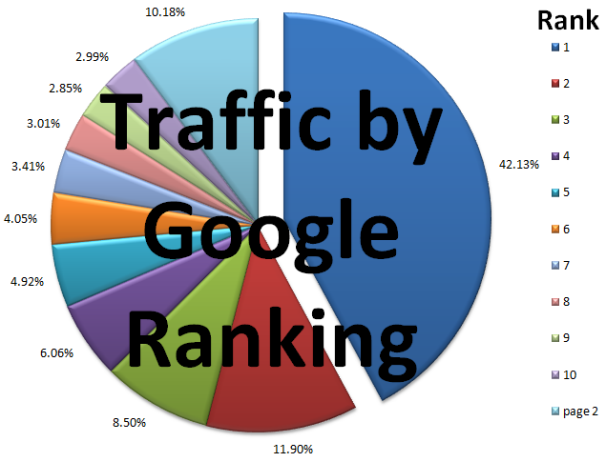
The above graph is based on an intensive questionnaire of over 2500 world class SEOs, including freelancers, in-house corporate types and SEO entrepreneurs. In the questionnaire, I asked one simple question – what is the most profitable activity in your business. The results are in, and as the graph clearly shows, Twittering away the day is by far the most profitable activity for most SEOs. Apparently there is more money to be made on twitter then there is in link building and out ranking the competition.

Obviously (I hope), I’m lying. I didn’t conduct any survey. I just made up the graph with Smart Draw. In fact, if I had to guess, I imagine the most profitable activities for companies would be conversion optimization, link building, and public relations.

Here’s the thing, though: I don’t have to guess about any of these answers for my business. I know. If you’re guessing or following other people’s advice on pretty charts (even if it’s backed up by third party expert opinions), then you’re leaving a lot of money on the table. Let me show you how, with a little change in thinking and how you approach business, you can make a lot more money out of what you do, everyday.

Most SEO Blogs have an Agenda

Aaron recently mentioned that there are over 5,000 SEO blogs out there today. A lot of people read the more popular SEO blogs as if they were the Gospel itself. What most of them don’t realize, or don’t want to realize, is that almost all of these blogs have one of a few agendas:

  • To promote the business running the blog so they can get more clients
  • To promote the blogger as an SEO expert so he can get more clients.
  • To get lots of links, so that they can rank for [SEO] and, you got it, get more clients and sell advertising

Granted, there are a few exceptions. The bottom line is, however, that most of these blogs are fundamentally aimed at increasing their readership, their clients, and their reputation. That means that the information they offer is less aimed at being fundamentally useful, and more about furthering their goals. It very rarely is about providing concrete, useful tips that will lead to a direct increase in your ROI.

Don’t Believe Anything Anybody says

Often, someone will come to me and tell me that they’ve stopped writing content, or that they don’t want any reciprocal links, or that they don’t want to be listed on site X. Then I ask them why. Invariably, the answer I get is “I read it on a blog” or “It was on a forum”, or “I saw it on Twitter”. You need to make a business decision based on data, not on what something written somewhere on some forgotten piece of the internet.

Different sites will also have different focuses that provide higher ROI. E-Commerce stores may put more focus on optimizing for conversions from existing traffic, while sites like blogs and forums that sell advertising on a CPM or flat rate model will optimize for higher traffic – link baiting and public relations. Niche Adsense publishers and others operating on the longer tail of search will look to create volume quality content and build links in a more focused manner, sending link juice to the pages that need it most.

Data is King

The only way to make a decision is by looking at data gathered and seeing if the data provides you with enough information to make an informed decision. I think Diorex said it best:

I will share with you the same answer that my employees get.

“Do you have any data?” The answer is usually “No”, or they would not have asked the question.

To which I respond “Well why don’t you run a test and get some data.” Once a test has been run, they no longer ask my opinion because they now have an answer (good or bad, testing will give an answer)

I have said it before and will probably say it again, buying data in the form of testing is the best investment you can make in your business. It is not cheap, which is what scares most would be internet marketers away.

Getting the Data

So Data is what helps make informed decisions. How do you get the data? If you’re doing anything PPC/CPM based, you just need to start running a test campaign and use that data to scale, or alternatively shut down the project before you lose too much money.

SEO is a bit different – no two web sites have the same link profile, and minor differences can lead to very different results in terms of how certain types of links and on page changes will effect changes in search results. That being said, it’s best to have a secondary group of sites so you can measure the effectiveness of different link building methods, without endangering your profitable, money making sites.

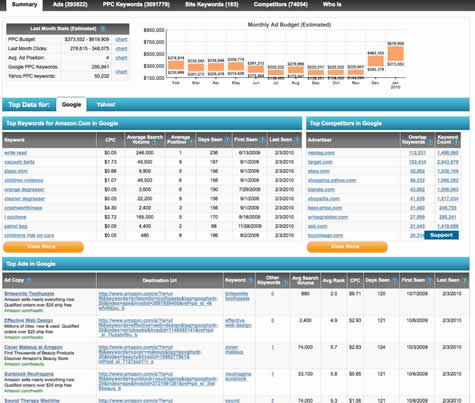
Ideally you also need to have a good idea of the link graph in the verticals you work in, and an idea of what competitors are trying to accomplish. To that end, I highly recommend Majestic SEO and SEM Rush (I’m a happy customer, nothing more). There’s nothing like having fairly accurate data without being at the complete mercy of a search engine. It’s a liberating feeling.

What Data Has Taught Me

Data has taught me that what works for one site doesn’t necessarily work for another site. Strong sites with aged links have consistently performed better when they receive low quality links, while newer sites have languished until they received some better links.

In one test, we sent low quality links to an aged authority site in a competitive niche. These are links that are probably not your top priority on your link building list, and certainly not given the time of day on most SEO blogs, yet we saw a definite increase in rankings on competitive terms. In the vertical we had a newer, less linked to site – there was absolutely no movement in either direction for that site. Our testing on authority sites has shown us that you can send almost any type of link and get some benefit, either in rankings boost on a specific keyword or a larger net for long tail keywords. Yet if you tried to rank a new site using the same tactics that clearly work on an old, trusted crusty site, there’s a very good chance the new site would at the very least be filtered, and at the top end of the spectrum be penalized. Of course, defining what is an authority site is another issue – I suggest you go out and test what exactly is an authority site, and reach your own conclusions.

The Bottom Line

You need to be actively running tests and making efforts to build your business and your sites. The only data that you should trust is your own. While it’s good to have an idea of what’s going on in the larger SEO community, what really matters is your rankings. Everything else is, and should remain, secondary.

Ari Ozick is CEO of Wired Rhino and occasionally blogs at AriOzick.com. He would love any constructive feedback or questions you have, either in the comments or direct via email: first name @ wiredrhino.com

Optimizing For Bing

How are your referral stats looking? Noticed more traffic from Bing lately?

According to a Nielsen report last month, Bing is growing faster than any other search engine. It was reported Bing had 10.7% of the total search market, up 2% from the month before. Yesterdays report from Hitwise suggests Bing has since dropped to around 8.96 percent.

So, somewhere around 8-10% perhaps.

The new statistics, from internet research firm Hitwise, will make disappointing reading for Mr Ballmer, who has said he is willing to spend as much as $11bn on search. Earlier this week he told The Daily Telegraph: “We’re trying to give Google a little competition in the search business

Microsoft have struggled for along time to make a dent in Google's share of the search market, so it looks like they are beginning to make inroads, albeit slowly. Microsoft have done a ton of marketing to promote Bing. They've introduced cutting edge features like visual search and voice support.

This is not a battle Microsoft can afford to lose, and for search marketers, competition between engines can only be a good thing.

Is Your Site Optimized For Bing?

The thought of adopting different optimization strategies for different engines feels so antiquated now.

Years ago, there used to be a lot of talk about how to optimize for the different engines. Some webmasters would go so far as to serve differently optimized pages to each major engine.

In the past few years, SEO has been about all-Google, all the time, so the rule of thumb is to optimize for Google, and the rest pretty much takes care of itself.

This advice still stands.

Keeping Up With Bing

Google has Google Guy (Matt Cutts). Likewise, the Bing search team regularly reaches out to the SEO community. SEOs should bookmark the Bing Webmaster Centre announcements.

In particular:

NB: You need a Live Id to see those links.

Microsoft released a comprehensive document for Webmasters. Check out page 23 where they address SEO specifically.

Like Google Guy advice, it tends towards the general and is ultimately self serving, but interesting to be aware of, nontheless.

The Bing Difference: Why Bother?

In terms of search engine results pages, the two engines do produce different results. Here's a nifty tool for side-by-side comparisons.

Why should you be interested in Bing at all?

Even though usage is lower, the user demographic for Bing is different to that of Google. Ask search marketers and you'll get anecdotal evidence that Bing/Yahoo users don't tend to be as web savvy as Google users, use the web less often, are more likely to click on ads, and are more likely to be involved in online shopping, whilst Google appeals more to researchers, webheads and geeks. If you're engaged in web commerce, you need to be thinking about Bing.

Bing Ranking Tips

From the Bing Features For Webmasters document:

Because of this new way of thinking about search, some webmasters might initially be concerned that the shortened primary organic listing in the new Bing SERP might render their SEO efforts as less effective. Instead, Bing makes it easier to compete for broad terms because it surfaces more categories automatically, increasing the number of results on the page and generating more relevant content.

In reality, the same SEO strategies you use for Google apply to Bing.

1. Get Your On-Page SEO Right

Nail the basics.

Make sure your content is unique, use H tags for titles, use alt tags for images, use unique page titles and description meta tags, one topic per page and ensure your copy is free from spelling and gramatical errors. Like Google, you can sign up for MS Webmaster Center which will help you spot and troubleshoot problems.

2. Quality Inbound Linking

Bing appears to favour linking from pages that share a similar topic area.

Is Bing a theme-based engine? Think of a theme as a topic pyramind. A themed site would have the topic "cars at the top. The level beneath that would be makes of cars i.e. Ford, Ferrari, Lotus, then below then models, then components, etc. The theory goes that a site should be all on the same topic to rank well, and links should come from sites on the same topic. Themes used to get discussed a lot, but fell out of fashion when people realised Google didn't use themes.

Is Bing using themes? I don't think so. Like Google, the algorithms appear to be largely page based, as opposed to site based. Bing looks at the topic of the page linking to you. If the linking page is on a similar topic, the target page receives a boost. Have a play around with the title tag on the linking page. Try to ensure the title tag keyword on the linking page is the same as the keyword you're targetting on your optimized page.

3. Domain Age

Domain age seems to be an important factor in Bing - the older, the better. Like Google, Bing tries to establish authority, and domain age is one way it does this.

Got any tips for optimizing for Bing? Any patterns you've noticed, particularly in respect to how Bing differs from Google?

The Unexpected Success

Have you ever had an unexpected success?

For example, you may have targeted a keyword term you thought was highly important, yet a few obscure long term keywords brought you more business? Or the site you've put all your effort into lately isn't doing as much business as that throw-away site you've been neglecting?

I'm re-reading a great book called "Innovation & Entrepreneurship" by Peter Drucker. Drucker was a management consultant who wrote a lot about demographics, the importance of marketing and the emergence of the information society, with its necessity of lifelong learning.

Drucker discusses the "unexpected success", that thing that works, usually whilst you are pursuing something else.

Drucker gives the example of Macy's, which had the "problem" that it was selling too many appliances.

Why was this a problem?

Macy's considered themselves to be an upmarket clothing store, and clothing is where they had always put their effort. They took pride in it. Clothing defined who they were. Macy's actually wanted to slash their profitable appliance business because they thought it would affect their clothing business.

When Macy's management changed - management unclouded by the emotional investment of the past - they looked at the data, re-oriented around the unexpected success - the appliances - and Macy's business took off once again.

Why Does This Happen

Why does a carefully laid out plan, a plan you're executing well, and into which you have invested a lot of time and effort, not do so well, whilst some throwaway project is returning more?

It could be due to an underlying change in the market, or a section of the market you hadn't previously noticed is now revealing itself. Many people remain blind to such opportunities, even when, like Macys, it is staring them in the face.

We must always be on the lookout for these unexpected successes on the periphery of what we do.

The original IBM computers were scientific instruments meant for arcane academic research purposes. However, businesses started to buy computers for more mundane, everyday functions, like payroll. IBM reoriented their company around business machines, and the rest is history. Had IBM not tuned into what was working, rather than what their business plan said should be working, they probably wouldn't be here today.

The same thing happened with search. Search wasn't working as a business, even after Google was underway, until Google saw the massive opportunity presented by that much maligned, preposterous idea - pay per click - devised by Goto.com. Pay-per-click was working, in a business sense, in that it was a search function that delivered revenue. Google thought they were building a search engine. Remember the search appliance? Google reoriented and built the ultimate marketing machine instead.

How Do You Spot The Unexpected Success?

Sometimes the unexpected success isn't seen at all. Our frame of mind may render the success invisible. If we invest a lot of emotional energy into something, it can cloud our vision to new opportunity.

We need to be attuned to unexpected success. We need to look for those things on the edges. The obscure keywords where the traffic is growing quickly. Try not to second guess the market. Instead, measure what the market is actually doing. The market you were targeting might have moved. Or you may have discovered the edge of a new market no one else has seen.

The shift at Macy's was due to a shift in the underlying market. The market was segmenting. The market was no longer a socio-economic group of shoppers, it was a new, wider group of "lifestyle" shoppers. Had Macy's responded to data, rather than be blinded by their pre-conceptions, they would have exploited this opportunity sooner.

These opportunities lurk in the shadows. And can disappear just as easily.

Have you seen any examples of this happening in your work?

Employing Market Leverage + Subsidies

Are You Employing Leverage?

A few months back I had a chat with ShoeMoney and we talked about a lot of marketing stuff. He always speaks of the importance of being able to leverage success to build other related projects. It is typically worth far more money to be a lead player with projects that build off of each other than it is to be a #10 player in many different markets trying to build disconnected brands that can't feed off each other. Even traditional slow moving publishing organizations like newspapers are aggressively leveraging network effects in their SEO strategy.

Networks Allow You to Come From Behind

When you look at Theme Forest they came late to the market, and yet are many times as large as competing businesses that are twice as old. Envato was launched in 2006, and in spite of coming late to market they were nearly instantly successful. Owning popular blogs helped them create thriving marketplaces, and the marketplaces help them make the blogs more popular. The promotion is circular.

Most Leading Web Companies Use Networks

Larger web networks like IAC, Amazon.com, Yahoo!, Internet Brands, Quinstreet, Expedia, Classified Ventures, BankRate, Monster.com, and Demand Media employ the same tactics. At $170 million Mint was a cheap buy for Intuit just to block out competition. Any additional distribution and cost savings are a bonus. Once you have distribution you have free inventory to promote a new site into a related vertical. And this strategy works with smaller niche sites as well. Publishing this site made it easy for us to get a lot of exposure for my wife's PPC strategy flowchart.

Subsidizing New Channels

Everything that is free is subsidized. And rather than trying to squeeze the maximum returns out of any given project it is often better to look for ways to add more value. The best businesses that are sustainable create more value than they capture. Once you have multiple monetization models and multiple income streams you can be flexible with your approach to growth.

Keep Bolting On Pieces

We originally gave away free SEO tools mainly with the ideas of building links and promotion in mind. But now they also help establish a customer funnel while commoditizing the value of some similar business models. And because many of the tools are decentralized (as Firefox extensions) maintenance costs are much lower than someone who centralizes everything. Our customers on average tend to be toward the more sophisticated end of the spectrum, so giving away useful and extensible tools helps us meet that market. But a lot of our business strategy has been made up as we went along, rather than having an aggressive master plan in place.

Watching Big Companies Develop Strategy

Some companies are driven by big goals and 5 (and 10) year plans. Adobe bought Omniture and plans on offering deep analytics into user interactions with flash widget ads. Out of nowhere Adobe entered the ad market.

Renting vs Building

As Seth Godin highlighted, marketing has moved from renting an audience to building one:

This might be the most subtle yet important shift that marketers face as they deal with the reality of new media. Marketers aren't renters, now they own.

For generations, marketers were trained to buy (actually rent) eyeballs.
...
Suddenly the new media comes along and the rules are different. You're not renting an audience, you're building one.

Google is GOD of the Web

One of the best companies to study from the perspective of using market leverage to enter new markets is Google. Recently they struck a deal with Warner to bring their music back to Youtube. But even while their music was not on Youtube I was still able to listen to it - on Youtube ;)

Want to try Google's newest software in Microsoft's Internet Explorer? Continue at your own Peril!

Google is constantly trying to extend search. And their 4 step process to entering a new market usually consists of...

  • Make the service essentially free to buy marketshare, become the marketplace, and kill the business model for competing start ups in the space.
  • Promote it across search, the AdSense content network, and via a thick public relations program.
  • Use the work of thieves and the blurry parts of copyright law to diminish the value of non-partner content to try to force non-partners into a formal partnership.
  • 12 to 36 months later start charging a fair to normal market rate for the service. Claim the service makes no profits until it is an undeniable cash cow.

One of the more cynical, but perhaps accurate, in depth research reports on Google's use of market leverage is Scott Cleland's Googleopoly [PDF]. You might not be able to apply every idea in there to your projects, but it should help you understand where Google intends to intersect with your market and how you can leverage some of those touch-points to your advantage.

One last tip, from Larry Ellison, "Pick your competitors carefully for you will quickly come to resemble the companies you compete with."

Consulting Compromises

Top Intersection: Most of these people are not available for traditional client consulting projects because they simply lack the time needed to do them and run many successful projects of their own.

Right Intersection: The person who is available and under-priced quickly gets overworked. I have experienced this with multiple contractors in other fields where they would offer killer services and be surprisingly affordable and fast...and then on the next project they would disappear.

The guy who made the logo for SEO Book back in early 2004 was probably the most talented and most unreliable logo designer I have ever worked with. Sometimes he would be fast, sometimes he would be slow, and sometimes I would pay him and get no response. I wanted the guy to become more successful and reliable so much so that I offered him tons of free marketing so long as he would be available for the boatload of work I was going to send him. He said sure. Before beginning that marketing campaign I asked him if he was ready and got no response. ;)

And last year there was a designer/developer that had amazing skills. We hired him full time and it took him 2 months to make a website design. There are a lot of people in the world who are talented at what they do, but just are not skilled at business and/or do not approach their business like a business.

Left Intersection: There are lots of people who are good at sales who have no substance. If an SEO firm contacts you out of the blue (via tele-spamming or email spam) that is a good hint that they have more salesmen on staff than they have practitioners. If SEO is bolted on as a package for cheap then it is usually a scam.

It is nearly impossible to have enough time to study a fast changing craft, brand yourself as an expert in the space, and yet still find time available for doing consulting. It is not hard to do any 2 of the 3...but all 3 is brutally tough. In consulting so long as you have popularity you do not need much knowledge, as some well known SEOs have proved. But knowledge without popularity can be hard to monetize effectively.

Even if you are pretty decent at sales and have a strong brand it is hard to make an SEO services business model scale without watering it down. And watering down is rarely a solution because it leads to churn.

  • WebSourced at one point was the largest SEO firm, but closed abruptly, largely because their clients were not getting any value.
  • The guy who speaks at 40 SEO conferences a year does little SEO work...his job is to generate leads for the firm where an intern can work on the project. And the projects that the interns work on are rarely top shelf because you often pay expert rates while getting automated and systemized mystery meat services from someone new to the market.
  • Some of the smallest clients tend to be the most demanding, even while paying crumbs. And Google/the search market, which is becoming more corporate, is making it harder and more expensive to service such clients profitably.
  • Corporate client projects which at first may seem like mega-paydays still perform poorly when compared against putting the equivalent effort into growing your publishing projects.
  • Rather than watering down we have decided that scarcity and value are a better strategy. But that is still a work in progress. This site is about 90% of my work time, had a 5 year head start on most of our other publishing efforts, and yet the SEO industry is so hard to monetize (unless you use loads of hype) that this site earns a minority of our income. As we get better at sales we can try to increase earnings...but lately we have just been pushing more on what is working and maintaining this site's quality for existing members (and closing it off to growth) while putting a bit more effort into the higher yielding projects.

Who Sets Your Prices?

Underpricing

In the past I historically set my prices too low. Some of that was due to starting out with a low self-esteem, but just as much of it was due to not appreciating the actual value of what I was delivering. Because I could do something cheap I had no problem doing so, even if my pricing was well below the value delivered. Another thing that caused me to charge too little was a distaste for traditional salesmanship techniques (a difficult hang-up if you are a marketer!)

Where I learned how off my pricing was is when I reviewed work done by some competing firms for 5 figure sums. Some of which was of far less value than what I was offering in my $79 ebook. Well that made me feel a bit like an idiot.

When Low Prices Make Sense

I think when a person is new to a field it makes sense to set prices somewhat low so you can...

  • overcome starting friction
  • build customer experiences & interaction
  • get feedback from customers on how to improve your product or service
  • gain testimonials & social proof of value

Setting prices a bit too low helps subsidize creating other pieces of your sales strategy...whereas if you set prices way above market expectations you won't get sales or market feedback.

The Problems With Discounting

But typically discounting should be done for a short period of time, only as something that is given as a reward for being fast acting. If you frequently discount you just lower the perceived quality and value of your product. And while you think you might be giving someone a good deal by discounting you have to look at it in the broader perspective. Offer a lower price and the customer...

  • respects and values it less
  • is less likely to use it and act on it
  • is more likely to be demanding (since they don't see as much value they expect you to spend more time and effort proving it)

all the while you...

  • become over-worked and burned out
  • work over twice as many hours servicing twice as many people (and, not surprisingly, miss an email or 2 because you are constantly behind)
  • sell your time at a discount while watching your health erode

Really the whole set up to discounting is quite stupid.

What About Free?

In a world where traditional advertising is losing efficacy, offering something free that helps gain mindshare and establish a relationship is smart. But free does have limitations. One of the biggest limitations is a sense of entitlement. If a person is a non-paying customer they are not a customer. You have to assume their complaints are worth $0. You owe them nothing and they should be thankful for whatever valuable tools and services you offer for free.

Overcoming Entitlement

After you get enough momentum it makes sense to erect barriers to entry so you can gain value while giving it away. Rarely do one way exchanges build lasting value. If 1,000's of non-paying users are sending you emails asking questions then they are noise that must be filtered through ... a non-trivial cost.

The hard part is that it feeds the ego when you give stuff away and help people out. You think that you help so many people and that lots of people care for you. Put any barrier in their path and you will see how selfish and worthless many of those people are though. Every barrier brings about some level of hate from the most ignorant, greediest, and least appreciate members of the crowd. But if you get something like this you can't respect the sender:

This is crap. Every download link goes back to the same page. Like how are you suppose to download the tool if there's a download link which say #.

Instead of spending time collecting peoples emails and spamming them you should try more in giving better product and easier way to access them.

I like your tools, but it was easy last year to use them, now it's a waste of time. If this system keeps on getting more slower and I've to go through more registering then using I'm better off using something which is less good but instantaneous, which was your product, but it's not anymore.

So I hope you start easying out the process of installing your tools or you'll start loosing your customers.

So that person...

  • is not paying me
  • uses our CUSTOMER support area
  • tells me they like our tools
  • wants me to create BETTER products
  • calls me an email spammer
  • expects me to dismantle my sales funnel in return for nothing (other than random critical hate mail)
  • tells me I will lose customers if I don't make it easier for freeloaders to use my stuff
  • never intends to pay me

As far as my business interests go, that person is worth less than nothing. If they are still breathing, it is no doubt a waste of oxygen.

Would I rather spend my time helping out that ungrateful USER, or would that time be better spent spending it with someone who loves me and cares for me?

Resourcefulness

Now some people have a tough break and sometimes it is worth helping them out. But in most cases a lack of resources is simply caused by a lack of resourcefulness. And, since change comes from within, if you try to help those kinds of people out they are far more likely to pull you down than you are to lift them up.

Recently a person asked me via a blog comment what they should do if they are smart but can't afford a conference ticket and know nobody. The frame of that question is one which is lacking in resourcefulness. When I was new to the SEO industry part of why I got known was because I syndicated content to other sites, participated in some online forums, moderated some online forums, and blogged day in and day out. I further spent tons of money giving away free software, which some people appreciate ;)

And even when I was less known, had no money, knew nobody, etc. I did not see those as obstacles. They were opportunities. Since I lacked capital I could leverage my time as an undervalued resource until the market started to value it more. I got a job to create cashflow, spent everything I could on learning + networking, helped organize a conference in exchange for a free pass to go to it, and out of the process the only thing I regret is that I didn't savor obscurity as much as I should have. :D

SEO: Where Is It Going?

SEO came about soon after the advent of the web crawler. The commercial imperative was obvious - where there was web traffic, there was money to be made. Positioning a page first in the engines was pretty much a licence to print money.

Still is, of course.

Throughout the history of search and SEO, the predominant metaphor of the web has been one borrowed partly from publishing - the page - and partly from computer science - the domain. A domain contains pages. A domain is a silo. A domain has clear borders.

The Search Metaphor

Search forces quite a different metaphor on the web.

Search is a connector between a person and a page. Search subverts the domain structure because the visitor can dive in at the page level. In this respect, all pages become a part of the much bigger silo. In 2009, that silo is Google.

Search also strives to be the ultimate answer engine - the mind of God. Got a question? Google it. Google will provide the answers.

But search is not quite there yet. Search still returns pages - the user still digs through the page to find the answer.

But for how long?

The Slow Unraveling Of The Page Unit

Consider social media. Is a page the basic unit of Twitter? No, it's the sentence. How about Youtube? The video. Social networks? The person. All can be extracted, re-purposed and dis-intermediated without losing meaning.

Consider the semantic web:

Humans are capable of using the Web to carry out tasks such as finding the Finnish word for "monkey", reserving a library book, and searching for a low price for a DVD. However, acomputer cannot accomplish the same tasks without human direction because web pages are designed to be read by people, not machines. The semantic web is a vision of information that is understandable by computers, so that they can perform more of the tedious work involved in finding, sharing, and combining information on the web

What happens when the machine "understands" the query enough to provide a direct answer to a question, as opposed to returning a list of pages?

Black Clouds On The Content Producer Horizon, Or Opportunity?

In a recent Techcrunch interview, Eric Schmidt said something rather telling:

So I don't know how to characterize the next 10 years except to say that we'll get to the point - the long-term goal is to be able to give you one answer, which is exactly the right answer over time.

Perhaps he was quoted out of context, but that strikes me as an absurd thing to say. As if there is ever one "right" answer. Well, I guess there is if you live in some Orwellian nightmare.

More importantly, if this is where Google intend to be in ten years time, then where does this leave content producers? If Google provides "the answer", why would anyone click-thru and visit a page? Conversely, why would anyone let Google crawl their content if Google's aim is to disintermediate the producer from their content? Johnon had an excellent post on this topic.

Recently, Google released rich snippets, a feature whereby you markup you data to suit Google's display criteria.

Rich Snippets give users convenient summary information about their search results at a glance.

If the answer is "rich" enough, I guess the user doesn't even need to visit your page. Perhaps the user will get distracted by the Adwords listings, instead ;)

If Google aims to extract information and keep the visitor on Google, rather than just acting as a conduit between visitor and page, then this does not bode well for content producers.

This brings up the burning "Newspaper vs Google" argument. "How", the newspapers argue, "can we make money if Google undermines our revenue model? Ultimately, this is a question all content producers must face. Just ask those in the music industry.

Seemingly in response, Google is planning to roll out micropayments in the next year:

Google is planning to roll out a system of micropayments within the next year and hopes that newspapers will use it as they look for new ways to charge users for their content.

The question is, will micropayments and web advertising be enough to pay the bills, especially when it comes to expensive, high-risk media production, such as television and movies:

Grade’s criticisms were echoed in October by C4 chief executive Andy Duncan, who said Google had failed to invest in UK content creation. “Google takes more ad revenue out of the UK than ITV makes and it isn’t regulated. It isn’t fair [that] it’s not reinvesting that back into content and independent film production companies in the UK,” said Duncan.

Content producers are posting losses, whilst Google continues to post massive profits. What happens if content isn't worth producing anymore? What happens when revenue falls below the cost of production? Or perhaps content will still be economic, but only if production quality is sacrificed? Is it really just a case of fat media producers cutting bloated production costs?

What is Google's long term strategy as far as content producers are concerned? Besides PR fluffery, they never really say.

It's Not All Bleak

Of course, if content producers really did get disintermediated to the point where content production wasn't worth doing, Google may well collapse soon after. What would there be left to search? Wikipedia?

Where would the "answers" come from? Who would fund "answer provision"? Sufficient income must flow to the content producers, but the question still remains "how"?

And I don't really think the page is going away. The page has served humans well for thousands of years as a container of information. But if the information on pages can be aggregated in such a way that users don't need to visit the source page, where does this leave content producers? Where does this leave SEOs?

In 2009, SEO plays fall into three distinct categories.

  • Agency model: people offer services to others for a fee.
  • Affiliate model: people gather traffic and funnel it somewhere else for a performance fee.
  • Content model: people generate content and make money off advertising.

The last model is, I'm guessing, is one a lot of SEOs will pursue. Many do so now.

Check this out:

Demand Media operates based on a simple formula for success on the Web: create a ton of niche, mostly uninspired content targeted to search engines, then make it viral through social software. Demand Media has been heavily funded to carry out that mission, to the tune of $355 million. So yes, brute force - quantity of content + money/power - works more often than we'd like to think on the Web.

The aggregator wields most of the power in this relationship, unless the publisher can lock in an audience who will by-pass the aggregator.

Is Dis-intermediation Over-Rated?

On the flip-side, John Battelle argued a few years back that search dis-intermediation is overrated.

Those who fear disintermediation should in fact be afraid of irrelevance -- disintermediation is just another way of saying that you've become irrelevant to your customers. It doesn't mean there isn't a customer, or middlemen of some sort who service that customer, or that the core proposition of your business has disappeared. It just means you're in a bit of a rut, and as much as you might pine for the past, it's probably time to rethink things before it's too late.

He reasons that writers can go outside the traditional silos:

And what of the role of publisher or content creator? Increasingly, those who have the ability to create great media can get pretty far without attaching themselves to the traditional indentured servitude of a publisher, label or network. Writers, for example, are finding their own voices outside the strictures of magazines and newspaper publishers. Blogs like Boing Boing, Daily Kos and Cool Tools are drawing millions of readers each month, and their overhead is the cost of a high-speed Internet line.

However, what they're actually doing is jumping out of one silo and into another. Google is the master silo in this scenario.

So, what do you think? what is the role of SEO in the future? Will it be more about making connections, and a less about making pages? Will the page itself be subverted? Have Google gone moved beyond the idea of "organizing the world's information"?

When is the Best Time to Hire an SEO Professional?

If you have the budget resources the best time to hire an SEO is before you start your website projects. However, most people new to the web lack the cashflow needed to buy quality SEO services. Further if they don't understand the complexities of the market and get bombarded with cheap (and low to no value) SEO package offers from web hosts, registrars, and email spammers they may think SEO should be cheap and easy, causing them to buy garbage - and become distrusting of the concept of SEO.

Your best bet (if you are new to the SEO field) is to do as many of the following as are practical

  • start a test Google AdWords campaign (and use the conversion feedback from this to help inform your SEO strategy)
  • if you are in a competitive AdWords market you might also want to watch the Google AdWords videos, and read books by guys like Andrew Goodman and Perry Marshall
  • buy 2 or 3 SEO books from Amazon.com (and see where some of the general tips and ideas overlap...mark up the books and take notes)
  • join a high caliber SEO membership site
  • read 5 or 10 of the top SEO blogs for a minimum of a month or 2
  • go to an SEO conference or 2

...and then from that collection of knowledge you can start building a bit of a strategy, some momentum, and some cash flow. That way if/when you do hire an SEO, you are the type of client who is worth having (ie: one that will receive a positive ROI, one who knows the basics and will make sure suggestions are implemented, and one who is willing to allocate significant resources in the search game).

If you are a small or local player in a fairly non-competitive non-saturated niche (a clue here might be if your AdWords campaign is instantly profitable then the market probably is not too saturated) you might be able to do well hiring an affordable SEO right out of the gate, but when you get down into the lower price bucket for services there is a market for lemons effect and over 99% of the offers are scams.

In spite of claims to the contrary, you can do SEO and SEM yourself, especially if the market is not saturated. More and more companies SEO is getting baked right into their content process and company culture - many companies that hire third party consultants also have an in house SEO team. Search is the highway new customers drive on for the next hundred years. SEO will be taught as a fundamental piece of marketing strategy in the next decade.

The big limitations to doing SEO yourself are if you don't understand some of the risks vs rewards and use a singularly focused SEO strategy then those types of sites can have wildly fluctuating rankings and higher than needed risk levels. The more supports you have the more solid and stable your search rankings will be, but if you just find 1 loophole that works and exploit it aggressively then when it stops working those types of sites can come crashing down.

This is where having an SEO consultant on retainer makes a lot of sense. It prevents some of the oh crap, I just destroyed my business moments that Google shows business owners every day. Think of an SEO consultant on retainer as an insurance policy on your business.

In the last couple days I have had multiple people contact me about their site after it got whacked in Google. That is sorta the wrong time to contact an SEO...it is far better to do so while you still have growth, momentum, and cashflow. An ounce of prevention is worth a pound of cure.

If your site is banned or filtered then sometimes you have to take a step back before moving forward. A site that was banned for buying too many links will be looked at and evaluated more closely upon review by Google - such reviews take some gray hat opportunities off the table... a significant lasting cost in a competitive set of search results where business is often won or loss on small differences in strategy.

And in many cases where a site was penalized for being too aggressive there are similar techniques that can be used with a far lower risk profile. Hiring an SEO who can help you manage risk and growth while you have momentum (or during the slightest pull back) makes a lot of sense. It is leveraging expertise to help build a stronger foundation and a deeper competitive moat.

But asking them for help after your site is banned is much harder because for them to help you get unbanned they might have to try to ask for some favors or try to leverage their feedback channels they earned with the search engines. If they just keep making requests to get penalties removed then that makes them look pretty spammy, kills those feedback channels, and in some egregious cases penalties can take years to be lifted.

The goal of an SEO is not just to rank your site, but to keep it ranked as the structure of the web changes, Google's business goals change, and your competitive landscape changes. This often means working the gray areas to get a site built up, and then pulling back on the sketchier stuff as momentum is built and solid supports take over the role of pushing up rankings.

Managing risk is probably the singular most undervalued aspect of SEO consulting. Largely because the cost does not appear until it does - and by then it is already too late.

Corporate SEO Services

You would either have to be new to the industry or under a rock to not notice how the SEO industry has become more corporate over the past 3 or 4 years. The trend has been slow and gradual with many small steps, but I thought it would be a good idea to try to put the pieces together. What started off as a 5 minute project took a couple hours. I hope you like it! If you are a creative thinker you should be able to get a number of actionable ideas by thinking about how such trends will change your market.

Warning: this image is big! ~ 225KB

http://www.seobook.com/images/corporate-seo.gif

This is sorta a high level document which looks at many existing and emerging trends and how they combine to change the landscape. A lot of small businesses and small online publishers are feeling the following trend

In a recent comment on a blog post about link buying Google's Matt Cutts stated:

Personally, I believe the reason that so many people come to Google is that for the last decade, we’ve worked really hard to protect our users and return the best search results. When other search engines showed pop-up ads, Google didn’t. When every other major search engine offered pay-for-inclusion into their search results, Google didn’t. And Google has taken strong action to protect our users from spam, malware, and poor-quality sites. I think part of Google’s lead (and brand loyalty) in the search space is because we’ve taken strong action to protect our users.

Sure I think they try to protect people (and do a good job), but I never really see the bits that are inaccessible, so I don't know what I am missing. In time I do wonder if you could have too much media consolidation due to favorable reviews of "too big to fail" brand companies while smaller competitors are flushed away for using similar marketing techniques.

To the best of my ability in the above linked image I tried to explain why SEO outing is bad in how it influences the entire search engine optimization, search, and online media ecosystems. If I had to shorten it down to 3 points, those would be...

  1. Outing limits media diversity. Media plurality is important, but it is something that Eric Schmidt doesn't get. And it is often the independent types who have the editorial freedom that enables them to highlight major fraud. Some media channels are so driven by advertiser interests that they fire employees who dare to mention risks in advertiser's products. (And I would rather pay a bit more to not drink poisoned milk!)
  2. Outing harms small businesses while corporatizing the web. Historically most economic innovation has come from smaller companies. Microsoft was once a small company. And so was Google. ;)
  3. Outing drives down the earning potentials of many SEOs and will eventually force many independent SEOs into low paying in-house SEO jobs. Most societies operate on a debt-based money system where debt slavery controls many decisions. The ability to be self-employed, do what your passionate about, and operate outside of that system should be cherished by anyone lucky enough to not have a boss.

Google's Eric Schmidt claims that "brands are how you sort out the cesspool." Brands take money to build, but they are bought and sold just like anything else - only they require more capital and/or more insider connections to buy.

You know those damn bankers who bankrupted their own companies through the use of leverage and predatory lending? And then the same people lied, cheated, and looted trillions of Dollars from United States tax payers to save their companies (and pay their bonuses)?

Well they are not only leading media advertisers, but they now own a HUGE chunk of the traditional media sphere:

One wonders why Goldman and JPM were so eager to provide "rescue" financings to virtually the entire distressed media space: both companies knew too well that sooner or later they would end up with full equity control over essentially the most coveted industry: thousands of TV stations, radio channels, newspaper and magazines. If you thought the media propaganda was unbearable now, just wait.

Link Buying: the Good, the Bad, & the Ugly

Online Marketing is Complex

One thing I believe about online marketing (and SEO in particular) is that the more rigid the advice the lower its value, particularly when it is cast out to a general audience. Why? Online marketing incorporates psychology, sociology, game theory, etc. The human mind is complex. Understanding how many of them work together (or against each other) is even more complex.

There are hundreds or thousands of ways to win a market. Each idea is a tool that has potential risks and potential rewards on a per market and per project basis.

Link Building in 2003

With link buying people get emotional and just consider it out of the question. Back when I got started as an SEO, many SEOs were considered spammers simply because they even did any link building at all. Why?

  • It was amazingly effective.
  • It was time consuming and expensive work that many established SEOs did not want to do for their clients.

Since then the web graph has got amazingly polluted and paid links are treated similarly to how link building efforts were treated back then.

Few SEO Tips Are Universal

Rand recently stated that he no longer recommends paid links. If you philosophically didn't believe in buying links then why would you spend $1,000,000+ building a web graph of link data? What good is researching all the link data if you take link buying off the table as one of the options? Most of the competing links that you can replicate will require some level of payment.

Sure link buying does not make sense for everyone, but it makes a lot of sense for some businesses. And if you don't buy links then there is little purpose to link research tools, IMHO.

The potential risks & ROI in link buying are not the same for everyone. Saying link buying is off the table is like saying keyword research is off the table. Sure if you are TechCrunch you don't need to do keyword research to succeed, but it still wouldn't hurt to consider it.

Waiting in Obscurity is a Real Cost

Let's say that you are starting a brand new project and have 0 market momentum - a position almost every successful webmaster starts from at some point in time. I don't think there is risk in buying a few links because you have to start from somewhere. Most of the people who launched new websites in the past year will be out of it by the end of next year. The biggest online risk for new webmasters is perpetual obscurity.

While being obscure you are not...

  • building brand and momentum
  • building cashflow
  • building customer loyalty
  • optimizing conversion flows
  • catching up with established competitors who are re-investing into growing their businesses

One way or another you have to start doing some push marketing to build momentum. Eventually pull marketing can drag you along, but you don't benefit from it until AFTER you have built some awareness and market momentum.

At Pubcon 2 years ago Stephan Spencer mentioned you might get penalized 5 years from now for links you bought today. I said that I got started in SEO less than 5 years ago and if I didn't buy any links back then I wouldn't be speaking into the microphone right now. I also said that if you get penalized 5 years later for what you did back then well then you didn't build much of a business.

Brands

But for established brands doing limited link buying can still make a lot of sense. Since "brands are how you sort out the cesspool" there is much less risk in a brand buying a few links.

Some SEO consultants who are trying to appear like the safe option (to pull in corporate consulting clients) think that saying they don't recommend link buying makes them look wholesome, but any SEO who has worked for fortune 500s knows that once you get in the board room all that matters is efficacy.

Having wrote that, I can think of numerous instances where we advised clients to approach their overall strategy in a way that was less spammy and less risky than what they were already doing and what they were proposing.

Deep Links

If you don't buy links it is hard to influence the anchor text, particularly if you are doing SEO at the enterprise level AND want to get deep links into commercially oriented pages. Companies spend billions of dollars a year on organic SEO because ranking a few spots higher in Google can be worth a lot of money. If you know a #5 ranking is worth x, then there is a good chance that a #1 ranking can be worth something like 8x.

A Tool is a Tool

Am I advocating that everyone go out and buy links? Not at all. I am just saying that it does not make sense to categorically take it off the table. Link buying is a tool which has various value levels depending what market you are in and how your company is positioned.

Paid links can be a stepping stone or part of your strategy, but rarely should they be your entire strategy. On some client projects we have done we have suggested shifting away from doing as much link buying or reciprocal linking because we felt that the strategy needed to be more holistic and well rounded. It worked, and there was no reason to stop doing what already worked, but going forward it would make sense to leverage some of the brand assets and audience to build other types of links.

Where Link Buying Can Lead You Astray

If link buying is your only SEO strategy it is hard to stay competitive long-term because

  • if your link profile is nothing but paid links that is risky
  • if your link profile is nothing but paid links that is easy for competitors to clone
  • if you are in a big money market some competitors will have other assets to leverage against you in addition

Doing a bit of link buying way back when helped get me some exposure, but it didn't produce the explosive ROI that we got from doing things like going to conferences, networking with people, and launching a bunch of popular SEO tools. Link buying can be considered a support, but the most successful businesses typically have numerous supports.

Creative Link Buying

Did you see that Mint.com was recently bought by Intuit for $170 million? It seems they used a creative way to buy links:

To build demand, we started asking for email addresses for our alpha 9 months in advance of launch. Then when we had too many people sign up, we asked people to put a little badge that said “I want Mint” on their blogs to get priority access. We got free advertising and 600 link backs which raised our SEO juice.

See how they required links as payment for priority access? Well I would say they got a nice return on those link buys. And so would they. And now that they have so much momentum they can't and won't be penalized for buying links. ;)

Where Link Buying Can Make Sense?

  • if you are new and have nothing to lose
  • if your brand & link profile are so big that buying a few links won't stick out
  • in markets where the competitive barrier set by all the top ranked competitors includes an array of link buying (not saying you should match them link for link, but it might make sense to cherry pick a few of the best opportunities)
  • getting a few deep links with targeted anchor text
  • in markets where links are valuable and there are few organic links

A Word From Bing

One thing SEOs should love about Bing is that Bing's search team gives practical advice and does not try to scare you:

The truth is that getting bad links happens to great sites. We know this happens. In fact, we’ve never seen a decently ranking site that doesn’t have a few (or more) bad inbound links. We take the approach that bad inbound links won’t adversely affect your site ranking unless most or all of your inbound links are from bad sites.

Consider this as well: perhaps the reputation of the site linking to you is bad, but the content on the actual linking page is relevant to the page on your site. This could possibly be a decent inbound link—not as good as one from an authority site, but it might give you a little link goodness.

When it comes to inbound links, just remember this: zero inbound links are better than all bad inbound links. But if you have many good, relevant inbound links from respected sites, a few bad links won’t count against you (but they won’t help you, either).

So in general they look at the overall profile of the business when making editorial decisions and are not likely to penalize you for having a couple bad links. They not only won't penalize you for having a few bad links, but even expect them to be there.

Summary

I don't buy all that many links for SEO purposes. But I don't think it is a good perspective for most webmasters to remove the option from their tool set. Had I not bought links back in 2003 and 2004 I am not sure if I would have as big of an audience as I do today.

If you are just starting out and have limited capital you might want to approach link buying creatively (like Mint did), but if SEO is core to your business strategy you shouldn't be afraid to buy a few links.

Pages