Google Checkout launched today. It is a payment system which revolves around Google storing your credit details and making it quicker to checkout at various stores. After having signed up and looked at it all I think this system will likely spread like a weed. The biggest reasons are:
- Google AdWords is the largest online ad market.
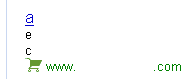
- Merchants who use the Google Checkout product will get a little shopping cart badge next to their ads, which could increase their ad CTR and thus lower their per click cost.
- The pricing policy for Google Checkout gives you $10 of free payment processing for every $1 you spend on AdWords.
- Google is a trusted brand.
- Most shopping carts are garbage. This is all about making checkout quick, simple, and easy.
- Merchants are not allowed to change the Google Checkout images. The Google Checkout images do a great job of conveying a fast, easy checkout.
Google uses AdSense as a way to spread their brand across the content portions of the web, but did not have much visibility on highly commercially oriented websites. Web = Google = web is really going to be pounded into people's heads as the Google brand appears on more and more websites. They are the leading monetization network across content sites, and now they have found a way to sneak into commercial sites in the middle of the highly visible conversion process.
This launch also gives Google another data point in the buying cycle, closing the loop from research right on through to purchase. In addition to giving Google a better idea as to the margins and size of a business this launch also allows Google to trust a merchant more based on consumer feedback and transaction history (although it is unlikely they would want to integrate that data point into the organic results too heavily because they would prefer to have an informational bias to the organic results since AdWords already puts commercial results in the search results.
It's pretty nasty how much power Google has right now. To do that in a decade is absurd. This is no eBay or Paypal killer though, as noted by Ars Technica. But in time, as this and similar programs evolve and this is integrated into the AdSense program (or related programs) it helps Google ensure they have the most efficient product recommendation cycle, which should keep them at #1 in the contextual advertising space unless 1 of 2 things happen:
- they lose their market position in search because they are so afraid of manipulation that they drive their results into the void of irrelevancy (and they have been heading down that path recently, but they can get away with it because Yahoo! has not been very good at branding their search and Microsoft is irrelevant and does not even know what a brand is).
- Microsoft decides to spend billions of dollars operating a distributed ad network at a loss to steal market share (although this is not too likely because this would create an arbitrage opportunity which would be heavily abused by people like me)
I may be coming and going this weekend (and my internet connection has been exceptionally unreliable the last few days) but if you want, I am offering $10 off my ebook price if you buy it through Google Checkout. This is a short time promotion (which may end sometime this weekend). I just want to see how this works from the merchant end to see how viable I think it is relative to Paypal. Please note that it may take a number of hours for me to get your ebook to you after purchase as I sleep sometimes (but rarely ;) and my internet connection has not been that great recently.
Update: Order button removed. Thanks to everyone who bought my ebook through Google Purchase.
Here are some more thoughts from my purchase experience.
- Processing the orders was quite easy, but...
- I do not like the idea of Google "protecting" my customers for me. Having them suddenly put a brick wall between my customer's email and my business is not seen as much of a value add from the merchant perspective.
- I do not understand the point of cloaking a person's email address if you give me their name and physical address.
- One of the two people who used the Google email cloaking stuff also had order problems with their credit card not going through.
Who is Google Purchase good and bad for?
- I think it may work well for those who have such a large established brand that most of their traffic is for people already searching for their brand, but then again if you are operating at that scale having Google play middle man with some of your customer emails might suck.
- If you are heavily reliant on search traffic this could put a squeeze on your business. Trusting Google to constantly make the market more efficient when they profit from advertiser inefficiencies is somewhat altruistic for a merchant to do.
- If you are new to the market and are confident in your product quality I think Google Purchase can be a way to make it easier for Google to learn to trust you and understand what other products and services your business relates to, but even then you are self selecting your site to be commercial in nature, which may not be a good since their search results have an obvious informational bias.
- If you do not have a website and are just listing a couple products on Google Base and are in no rush to sell the items then Google Purchase can be useful.
Eventually Google will probably use purchase details, search history, and other information consumption habbits to make their AdSense program a more efficient ad/product recommendation engine (think of the Amazon emails and on site notifications that say people who bought x also bought y).
It might be worth thinking about that as one of their end goals and playing with Google Purchase to see how it works and how you can integrate it into your system, but like anything Google Purchase is just a small step in a direction and they are starting off slow, so I do not think it is a make or break now or never thing for most merchants.
If you are a market leader with a low price point and broad distribution you are giving Google a ton of relevant usage data back to refine their ads, especially when weighed against how little value they are adding to your business.
But they do give you a logo :)