The Value Of Linking Out: $56m Per Year

links

Further to my post the other day about SEO Blackholes, here's an interesting study regarding the value of linking out.

The common wisdom is that linking out will result in the following:

  • People will not link back to your site
  • A page that sends people away has low engagement
  • It boosts the completion at your expense

However, it appears that top news site in terms of session use, two months running, is DrudgeReport, a site that does nothing but send people away. I believe Google got rather popular for doing much the same thing :)

And look at the numbers:

"Page view statistics
500 million page views monthly
1.95 billion ad impressions monthly
12 million unique visitors monthly
1.75 million daily unique visitors (weekday)
1 million daily unique visitors (weekend day)

Assuming 60% sell-through at $4 CPM… that’s $56 million annual revenue.

One guy. Linking."

If you provide something people really want, they'll keep coming back.

Funny Email: Anyone Who Outranks MY Clients is Unethical ;)

I just came across one of the funnier SEO emails I have ever read. When I shared it with my wife we both laughed out loud, so I thought I would share it with you. Personally identifiable information has been removed to protect the guilty.

Hi,
___________ are looking for sites that would be interested in publishing content on behalf of a number of the UK's major brands, including the likes of ________ and _________ and ___.

For a site such as ___________ we'd be prepared to pay up to £30 per article a month, every month, depending on the nature of the agreement.

Naturally, you would have a say in what content is placed on your site, we would simply provide you with useful, accurate and well written content.

To see how the links might look on your home page please visit _____________ (the articles are near the bottom of the page under the title ‘___________’).

The reason we are looking to pursue this relationship with you is because there are a number of sub-standard websites that are ranking higher in the search engines than our clients for their own products by using unethical techniques. It is our intention to address this imbalance and is why we are willing to compensate you on a monthly basis for the publishing of our content and links to our client's sites on your site.

If you feel this is an opportunity that you are willing to discuss further or if you have any questions about this proposition then please feel free to contact me.

Regards,
________ _______, Media Buyer

Generally by the time an SEO is experience enough to be working with Fortune 500s and big brands they are smarter than to buy into the bogus ethics debate. But what was funny is the ethical links they were buying in the example site were not even for brand related queries...some of the anchor text was for core category keywords like life insurance and loans. :)

It was pretty stupid for them to publish their clients (and a published site with link buying examples) in that email. If I would have fully published it without redacting information that probably would have made their rankings a bit worse ;)

That SEO firm claims to be award winning...I shall send them an email asking if they seek nomination for the worst link request email award.

Can Google Be Trusted?

Dollars

They are a world-leading enterprise, employing over 22,000 people. Fortune named them "America's Most Innovative Company". They also run various online marketplace services, through which a vast amount of money flows. They are a trusted name in households across the country. It is the year 2000, and that company is Enron.

Less than a year later, Enron would collapse under the weight of institutionalized fraud. And hubris.

The lessons learned from the Enron collapse were the dangers of monopolistic power and lack of transparency.

Google In 2008

Google is the darling of the tech world. In fact, they're pretty much the darling of every world, given their massive market reach and the usefulness of their services. Google occupy a position of enormous power. It is fair to say Google has nothing in common with Enron, other than the fact they are a big company, and for the most part, Google has done a good job in terms of gaining and maintaining trust with a wide range of stakeholders.

But for any company the size of Google, especially one that has grown in such a short period of time, questions of trust - and anti-trust - will eventually surface.

Should We Trust The Machine?

Take for example the recent case of United Airlines stock. An old story about the airline's bankruptcy was published online, resulting in $1B being wiped off the value off the value of the stocks within minutes. The finger pointing started soon after, with Google blaming the originator of the piece, The South Florida Sun-Sentinel, whilst the Tribune Company, who publishes The Sun-Sentinel, pointed the finger right back.

To be fair, the mistake was largely due to a chain of human errors, and most of the mistakes made were outside of the control of Google. Questions of blame aside, this issue comes down to a matter of trust. Clearly, people trusted the information they saw on an automated news service, and acted accordingly. The lesson learned is that we should not be so quick to place trust in the machine.

From Trust To Anti-Trust

There is another trust - actually, anti-trust - issue of late, and this issue goes to the heart of Google's business model - online advertising.

Google's proposed Yahoo partnership is raising fresh antitrust woes. Regulators are starting to look more closely at Google's role in the world of online advertising. Will this deal give Google too much control of the online advertising space? Yahoo claims this partnership will create more market access, and provide better ROI, to advertisers. Advertisers fear that Google could use market dominance to set higher prices for search ads.

Forward-thinking SEOs may be licking their lips at that prospect, but I doubt many small website owners who rely on PPC will be too happy.

Smoke & Mirrors

In a related example, Aaron reported on a feature in The New York Times about how Google refused to tell the owner of a directory why his bid prices had skyrocketed.

"When I pressed Mr. Fox about Sourcetool, he refused to tell me why the algorithm had problems with the site. When I asked him why the business.com site was in the algorithm’s good graces but Sourcetool’s wasn’t, he wouldn’t tell me that, either. All I got were platitudes about the user experience. It wasn’t long before I was almost as exasperated as Mr. Savage. How can you adapt your business model to Google’s specs if Google won’t tell you what the specs are?"

A similar dual-tier system appears in to be in operation in the organic search results. Greg Boser has a great post about this entitled "Why Big Brands Should Spam Search Engines".

"I wouldn’t hesitate because I understand that if a search engine happens to stumble upon what it considers improper SEO techniques all on their own, they will more than likely contact us directly to discuss the matter. Getting kicked out of the database won’t even be a consideration. If our improper SEO tactics happens to get outed publicly by some gung-ho blogger, or one of the many competitors competing for our terms, I know that all we’ll get is a tiny slap on the wrist to show the world that the particular search engine is serious about web spam. And once our public scolding is completed, we will instantly be allowed to cut to the front of the confessional line".

We all remember the BMW incident.

Google may well enjoy a significant trust level, but they couldn't exactly be described as transparent, or consistent. The Adwords and Adsense systems have become a hall of smoke and mirrors, where some players get a free ride, whilst others get hammered. There is often little or no explanation given as to why. With transparency comes trust, and the often secretive Google could do a lot more to provide clarity.

Cases of this nature are always complicated and it is unlikely much will change in the short term. Many of us simply wish that Google would be a lot more transparent about how webmasters can use, and build upon, their platform.

I suspect that, going forward, saying "Trust Us!" won't be good enough.

Tested Advertising Strategies Respun For SEO

Testing Strategies For SEO

"I have seen one advertisment sell 19-1/2 times as much goods as another" - John Caples

I've been browsing through a pile of my old marketing books looking for tried-n-true techniques that could be applied to SEO in 2008. Here are some examples of ads that worked last century:

"They laughed when I sat down at the piano - but when I started to play!". And "When thin film covers teeth, smiles lose fascination" . A personal favorite "How a strange accident saved me from baldness".

Trouble is, in 2008, these ads come across as hokey.

However, much of the underlying psychology of these time-tested techniques is pure gold, and can be directly applied to search marketing and social media. Over the next few days, I'll look at strategies that can help you grab and hold visitor attention. Some of this will be old-hat to SEO pros, but hopefully it will help those new to the game :)

First up - the value of testing.

The Key To Success Lies In Perpetual Testing Of All Variables

John Caples, author of "Tested Advertising Strategies", outlined two classes of advertising:

1. The Testers
2. The Non-Testers

The idea is simple: decide on a desired action you wish the user to take i.e. making a purchase; then link this action back to the advertising spend/keyword term. You also test the wording of one page against another. Run with the winners, and cut the losers. Repeat.

This is known as split-run testing. This process was developed by direct marketers, and has a natural fit with search marketing. An ocean of material has been written about how to do this, so I won't reinvent the wheel by repeating it.

Here are three great resources regarding split-run, and more accurate, but complex, multivariate testing:

There are problems with this type of testing, however. You've got to watch out for small sample sizes and statistically small variations. Sometimes measuring the exact same page against itself produces different data!

The payoff in split/run testing is in the big swings in user action. If you're not seeing big improvements, then you've probably got your landing pages about right, and split run testing will offer incremental value, at best.

SEO: What Data Do I Test?

We're spolit for data.

The speed at which we can test and obtain data regarding visitor behaviour patterns is unprecidented. Before the internet, direct marketers used to run a series of trial campaigns in print. Can you imagine how difficult it was to measure response? And how much time it all took? These days, we've got detailed, automated analytics in the form of server stats, and we can build, test and analyse campaings, often within hours.

One trap those new to SEO often fall into is using the wrong data and metrics. One terrible, but often-cited metric, is ranking, as ranking doesn't tell you anything about utility. For example, how much traffic will the ranking generate? If the ranking does result in traffic, is it the type of traffic I need to fulfill my objectives?

We can find this information out by running a few simple tests.

How Can Testing Be Applied To SEO?

Keyword Testing With PPC

How do you know if the keyword you intend targeting is really worth targeting? A keyword term may have considerable volume and little competition, but if those searchers are intent on research, and you are trying to sell something, then your effort is wasted.

One way you can test user intent is with a short PPC campaign.

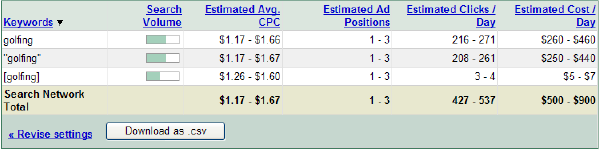
PPC offers you some valuable data points. Firstly, you can test actual search volume, as opposed to estimated volume, simply by running an ad. The Google data provides these numbers.

Secondly, you can measure the intent of the query by measuring click activity.

Determining searcher intent is important. If you aim is to sell via your site, then you want to target people who buy. Often, this information is contained within the keyword query itself. For example, the intent behind "buy x online" is clear. However, the intent behind "San Francisco Houses", less so. How do you measure intent if it is unclear from the search phrase?

You can do this by crafting different adwords ads - i.e. some commercial in nature, some informational - and testing them against one other. You can further test visitor intent by crafting landing pages that demand the visitor commits to an action that causes them some level of "pain". i.e. filling out a form. If they aren't prepared to engage after clicking a PPC ad, they're unlikely to do so just because they found your pages in the organic listings, either. If you find a PPC term with a high level of user engagement, chances are that keyword term is gold on the organic side, too, and therefore a great keyword to target.

After you've validated keyword phrases in this way, you can then set off on your SEO campaign, armed with the knowledge that your keyword terms should underpin your business objectives.

One flaw in this approach is that the searcher has clicked on a PPC ad vs an organic listing. This very action tends to indicate a commercial intent as people who do not have a commercial intent tend to ignore search advertising altogether. However, it will give you a ballpark idea and could save valuable time and effort, especially if you're targeting generic, non-specific keyword terms that don't clearly convey intent.

Keyword Spinning

I spotted this technique a while back on BlueHatSEO. It is a fantastic technique for testing and refining SEO on big sites.

It can be difficult to know what keyword variant attracts the most visitors. For example, does "Myspace Pimps" get all the traffic, or does the variant "Pimps On Myspace"? Keyword tools often aren't sensitive enough to reveal this data, and it can be time consuming to monitor, test, and change thousands of individual web pages.

Instead, try adding a counter to each page and decide on a delimiter. Say, 5 visits per page per month. If the page views are less than this figure, use an automated script to scramble the title tag and the headings to produce a different keyword order. Reset the delimiter, and see if the new keyword order receives more page views than the previous order. Your site will self-optimise, based on the results of each test.

This is an excellent application of an established advertising method - it's an automated split/run test - and applying it to SEO.

Useful Tools & Resources

How Does the Algorithm View Your Website?

Great article in the NYT over the weekend about an ad arbitrage directory named Sourcetool, which Google punted from the AdWords program. A couple quotes:

When I pressed Mr. Fox about Sourcetool, he refused to tell me why the algorithm had problems with the site. When I asked him why the business.com site was in the algorithm’s good graces but Sourcetool’s wasn’t, he wouldn’t tell me that, either. All I got were platitudes about the user experience. It wasn’t long before I was almost as exasperated as Mr. Savage. How can you adapt your business model to Google’s specs if Google won’t tell you what the specs are?

Business.com...

  • sells links (yes they have editors, but when they were interviewed about a year ago by Aviva Directory they only had 6 editors managing 65,000+ categories...many of the listings not only included aggressive anchor text, but also allowed the use of up to 5 spammy sub-links with each listing)
  • used nofollow on many of the free editorial links (while passing link juice out on the paid links)...this was corrected after we gave them a proper roasting on Threadwatch :)
  • uses a funky ajax set up to hide work.com content in a pop up (but makes it accessible to the Google crawler)
  • scrapes Google search results as "web listings" and in some cases Google ranks these pages! (Google is ranking a Google search result surrounded with Google AdSense ads, branded as Business.com)

Any one of those 4 would be enough to kill most websites, but because of Business.com's large scale, strong domain name, and brand they can do things that most webmasters can not. They are given the benefit of the doubt because Google can not clean up all arbitrage without hurting their own revenues - and Google's job it easier if they have to police a few thousand companies rather than millions of individuals.

Google also told me that it never made judgments of what was “good” and “bad” because it was all in the hands of the algorithm. But that turns out not to be completely true. Mr. Savage shared with me an e-mail message from a Google account executive to someone at another company who had run into the same kind of landing page problem as Sourcetool. The Google account executive wrote back to say that she had looked at the site and found that “there seems to be a wealth of valuable information on the site.” Consequently, her team overruled the algorithm.

Want to learn what the algorithm thinks? Read Google's remote quality rater documents. They tell you what Google wants and how the algorithm really works.

Algorithms (and under-waged third world employees labeled as the algorithm) often make mistakes. If a mistake is made when Google passes judgement against your site, is your site good enough to recover? If your site was deleted from the Google index would anyone other than you notice and care?

The Profitable Art Of Listening

Used Car SEO

"Wanna buy a car?

I got great cars for sale!

I've got the cheapest cars. I got the best deals in town! You won't get better!"

What is wrong with this picture?

This is how sales used to work. The salesperson worked to a script. The complex desires and concerns of the customer mattered a whole lot less than the need to push a generic solution. There is little in the way of relationship development or needs assessment.

Fast forward to 2008, and we live in a very different world. Due to rich, deep product and services markets, the customer has near infinite choice and options. The power has shifted to the consumer, albeit the downside is often confusion and inaction. This is why it is important to listen.

What Does The Customer Really Want?

In my opening paragraph, the salesman hasn't really bothered to find out what the customer really wants. All he knows is they probably want a car. He has made assumptions about the rest, and launched straight into benefits.

Many websites make the same mistake.

Here is a market research questions format you can incorporate into your SEO and copy writing. The aim is to find out if the benefits you are selling are the benefits the customers actually want. This is known as the SPIN selling method, and it was devised by Neil Rackham.

  • Situation Questions: These ask about facts or explore the buyer's present situation. For example, "How big is your family?"
  • Problem Questions: These deal with the problems, difficulties, and dissatisfactions that the buyer is experiencing with the present situation and that the supplier can solve with its products and services. For example, "What mile per gallon is your car old getting?"
  • Implications Questions: These ask about the consequences or effects of a buyer's problems, difficulties, or dissatisfactions. For example, "How much is it costing you to run your car each week"?
  • Need-Pay Off Questions: These questions ask about the value of usefulness of a proposed solution. For example, "How much extra money would you have for other things if we could reduce your weekly transport costs?"

Can you imagine how focused your pitch would be if you had the answers to these questions? You'd know exactly what your visitor wanted, and you'd have a good chance of closing the sale. However, it can be difficult to get this level of engagement from web visitors.

There are a few strategies we can adopt to get closer to those answers. It can help our SEO, too.

1) Path Your Visitors

On your landing page, write some copy, then ask the visitor a few questions. Keep the SPIN methodology in mind. Make each question a link to another page. Depending on how the visitors answer, they will be taken through a series of different pages that help address their needs. This will lead them closer to desired action. This has a great payoff for SEO, too. You can incorporate hundreds of pages into your site, all asking slightly different questions about pretty much the same thing. These pages become natural, interlinked keyword variations on a theme.

2) Overload With Answers

Sometimes pathing isn't appropriate.

One of the potential risks is the visitor may tire of the questions, and drop out of the sales process. Always be sure to make it easy for the visitor to complete the desired action (e.g. make a purchase ) at any step.

Another approach you can use is to overload your sales pages with keyword copy in an attempt to answer most buyer needs on the one page. In the direct marketing world, it is an established fact that long copy produces more sales than short copy. Part of the reason for this is because people are at different stages in their buy cycle, and their needs and desires will vary. You see this approach on sites such as Amazon.com, and some pretty horrid examples on hard-sell sites where this technique is taken to the extreme.

Try making long copy from a series of independent short copy units. One obvious example of this is a FAQ. A person doesn't need to read all the copy to get their questions answered, but can jump to the appropriate place to find their answer. Another can be seen in the Amazon page structure. Those who like customer reviews know to scroll down to the bottom of the page. Those who want a description look in the middle section. Those who want to price compare can do so against second hand copies. And so on.

If you're thinking this point is obvious, you're right. It is. But it underscores the need to always consider your visitors needs and how they may vary. Orient your strategy around the idea that there will be multiple questions and answers, needs and wants, and work this into your copy and site structure.
3) AIDA

AIDA stands for Attention, Interest, Desire, and Action.

These are the things you must do, in terms of web information structure, in order to get your visitor to the close.

Capture attention and interest. Create desire by sweetening the deal (one day offer, bonus gift, discount today only, etc). Help visitors complete the action by overcoming objections (money back guarantee, etc) You lead the dance, but you're always listening out for the visitors wants and needs. Create funnels in your analytics programs. See where people are dropping out and ask "why"? Sales used to be about talking. These days, it's about listening.

Eventually, your sales copy will meet the varied desires and needs of your visitors.

I'll be making further posts about AIDA, but the important thing for now is to think about how listening can be used in terms of information structure, and the ways in which you need to respond. SEOs are already good at listening. They "listen" for keyword queries, and orient their copy accordingly.

Think of the process less as a sales funnel, and more of a buy path. The buy path is a relationship, consisting of questions and answers. That process starts on the search engine, and ends when you provide a visitor with the answers, and the solutions, they need.

Further Reading:

Black Hole SEO

Black Hole SEO

There is a black hole forming.

A few of them, actually.

These black holes aren't the result of the CERN Hadron Collider. They are forming for two reasons: the desire to keep people on site longer; and to hoard link juice, in order to dominate the SERPs.

Increasingly, top-tier sites are becoming cagey about linking out. They are more than happy to be linked to, of course, but often the favor is not reciprocated. Check out this post by SEOBlackhat.

What Does A Black Hole Look Like?

  • Uber-black hole, The New York Times, seems reluctant to link to anyone but themselves. This is especially annoying when they write about websites.
  • Wikipedia no-followed their links some time ago, thus forming a PageRank variant of the black hole.
  • The mini-me black hole, as practiced by TechCrunch. Rather than directing you to a site mentioned in an article, TechCrunch would direct you to their own CrunchBase entry instead, thereby keeping you on-site longer, and passing link authority to their own web pages. As a result, a search on Google for a sites' name may well bring up the CrunchBase entry. To be fair, TechCrunch does also link out, and there is an explanation as to why TechCrunch aren't as bad as the New York Times here.

The result is a link-love black hole. Sites using such a strategy can dominate the rankings, if they are big enough.

So if you wanted to create a blackhole, what would you do?

  • Don't link to anyone
  • If you must link out, then No-Follow the links, or wrap them in scripts
  • Direct page rank around your own site, especially to pages featuring your competitors names
  • Buy a motherlode of links
  • Become a newspaper magnate :)

Now, if you're an SEO, you might be feeling a tad conflicted about now. Why wouldn't every SEO do this? What if you owned a black hole? Isn't that the ultimate SEO end game?

In the long term, I doubt it.

If this problem becomes too widespread, Google will move to counter it. If Google's results aren't sufficiently diversified, then their index will look stale. If you search for a site, and get third party information about that site, rather than the site itself, then this will annoy users. Once confidence is lost in the search results, then users will start to migrate to Google's competitors.

I'm not certain such a move will be entirely altruistic, however. After all, what is the point of Knol? No, really - what is the point of Knol? ;)

The Advantages Of Sharing The Love

Consider what you gain by linking out.

  • Webmasters look at their referalls, and may follow the link back to check out your site
  • Outbounds may count for more in future, if they don't already
  • Your users expect it. Don't fight against their expectations else you'll devalue your brand equity
  • Any site that looks "too-SEO'd" risks standing out on a link graph
  • There is social value in doing so. Black hole sites start to look like bad actors, can receive bad press, and risk damaging their relationships with partners, suppliers, and communities.

Create More Value Than You Capture

Tim O'Reilly put it well:

"..... The web is a great example of a system that works because most sites create more value than they capture. Maybe the tragedy of the commons in its future can be averted. Maybe not. It's up to each of us".

Update:
The phrase Black Hole SEO was used by Eli on BlueHatSEO.com over a year ago to describe various aggressive SEO techniques.

Interview of Quintura Search CEO Yakov Sadchikov

When was Quintura launched? What gave you the idea to launch it? What problems were you trying to solve by launching it?

Quintura was founded in August 2005 and released its first search application in November of that year. One year later, we launched a web-based search. It was based on visual context-based search concepts that the founders had been developing since 1990s. Quintura was founded to solve several fundamental problems inherent with today's search engines. Those problems include too many irrelevant search results returned, no one reads past the first page of results; inability to manage or tune results by defining context or adding search scope; no means for users to graphically visualize search terms or manage their relationship/relevance. Quintura is designed to make it visually simple for searchers to find what they are looking for, and to make it easy for web publishers to expose the content their visitors are looking for.

You guys have got a lot of great press from tech bloggers. On the marketing front what are some of the biggest and most successful surprises you have encountered? What have you found to be hardest when marketing your search service?

The simple fact that there is a tremendous amount of interest in our technology and service, in spite of the large field of alternative search engines on the market. We've invested most of our time and efforts in research and development. Our biggest challenge has been in getting our first marketing message out, which is we're in the process of expanding now to mainstream media.

How do you guys generate the keyword clouds?

That's part of the magic behind the Quintura technology. At the heart of our technology is a semantic-based 'neural network' algorithm. The cloud is literally a depiction of those search terms laid out to show their contextual relationship. Since the graphic depiction is dynamic - (you are interacting with the search in real time) one of our design goals has been to develop the widget to be extremely responsive. Through the past year, we think we've reached that point.

Quintura is popular as a keyword research tool amongst many SEOs (I use it all the time). Have you thought about combining your service with search volume data and/or competitive research data to create a formal premium keyword research (or competitive research) service/tool?

We've been asked that several times, but for now, our goals are to provide the best consumer site search services to the market and to provide our search widget to as broad an end-user audience as possible.

Quintura makes boolean search easy to visualize. Do you think searchers will eventually start using advanced search operators more on general web search engines, or will most only use it when it is presented in an aesthetically friendly way like Quintura does?

The question is whether users want to become adept at boolean logic or would they prefer to have that hidden in the background. From our experience, users would prefer to focus not on the math but on the search itself - finding the most relevant results in the least amount of time. By laying out search terms contextually and graphically, Quintura helps users manage their search and be in control of their search.

When partners sign up for Quintura you guys create a custom index from a crawl of their sites. How many domains can be part of the same index? What sort of sites does Quintura's visual search work great on? Which ones are not as strong of a match?

There is no limit. We're glad to work with large web publishers directly to assure that we are indexing all important content as part of our site search solution. The publisher of several web-sites can create a “vertical” search engine based on the Quintura search cloud. Quintura works well with all web-sites that we have worked with to date including numerous amount of blogs. Though, our first major site search clients were lifestyle portals and lifestyle magazine web-sites.

Do you see the face/interface of general web search changing drastically in the coming years? How might it change?

The web is getting more visual. So is search interface. That’s the trend. We are enabling our content-publisher customers to be more creative through customization of the widget itself. We're also looking at ways to make the search results even easier to see through the use of even more graphics.

Does Google have general search locked up? What competitive positions might allow people to build out a strong competitor that can take marketshare from Google?

General search is mostly locked up with Google. In my opinion, the best way of taking a marketshare from Google is not by building a better search destination site, but by changing the paradigm – give reasons for users not to make a decision to go to a search engine. Because when the think search engine, they think Google. Essentially, what Quintura site search does is creating environments where users keep exploring the passions, their interests, their information needs from where they are on the Web. People go to search engines when they can’t find what they want where they are.

Chitika has created a fairly large sized behaviorally targeted ad network by targeting ads to the search query prior to people landing on a page. Your site search strategy seems like it could be a rather powerful strategy for building a strong network. How has growth been going? Do you have any interesting success stories from the publisher or advertiser standpoints?

Quintura currently powers site search for a monthly audience of 8 million site users. The tests are underway on various U.S. sites, including two major men’s lifestyle sites and an educational publisher. We plan to reach the audience of 50 million in 2009. You can see Quintura search widget on lifestyle sites Maxim.com, Passion.ru and Cosmo.ru; technology news sites ReadWriteWeb.com and Compulenta.ru, business community portal E-xecutive.ru; web-sites of consumer magazines Hilary Magazine, Russian Newsweek, ComputerBild, luxury news site LeLuxe.ru, in addition to hundreds of smaller web-sites and blogs that joined our affiliate program for site search. We have also approached several online advertisers including security software vendor Kaspersky Lab to advertise on our search widget network of sites.

What types of ads work especially well with a service like Quintura? Which ones are less strong?

We have tested both contextual search ads and display ads. We are going to blend search ads with display ads for more visual appeal. Plus, can target those contextual graphic search ads with much greater precision because of our context-based algorithm. Ads from companies with established brand logos benefit from our ability to graphically display their logos in the search cloud.

What areas does Quintura have a lot of inventory in?

It is in lifestyle and technology areas.

Many search engines (Google, Yahoo! Search, Live), large content & commerce sites (Amazon.com, eBay, Wikipedia), and browsers (IE8 Beta 2, Google Chrome, Firefox 3) are now adding search suggestions in the browser via the search box and/or address bar. Do you see this eventually evolving into a Quintura-like service?

It’s a helpful feature that is mostly based on search statistics. We go a step further by offering contextual suggestions. One of the greatest aspects of our display cloud is that it shows contextually-related results, and to depict them with a graphical element. Can you imagine a shoppng experience that lets you see related items in real time?

Quintura is currently powered from the Yahoo! index. Do you guys ever plan on creating your own web-wide search index?

As a matter of fact, we are already creating our own web index from individual indexes of web-sites where Quintura powers site search. Quintura site search on those web-sites is powered by search results from Quintura index of those sites.

How many regular users does Quintura.com have as a search destination? Do you guys intend to become a consumer search destination, or are you more focused on providing search for third party sites?

We focus on providing site search, analytics and monetization platform for web publishers and content owners. As a search destination, Quintura has less than 1 million users per month. We will continue operating and developing our search sites to provide the benefits of our search technology to users. For example, Quintura.com will evolve into an online research tool where registered users will be able to save and share their searches online with the other registered members.

You guys have a vertical search service for kids. Is that seeing good adoption? Do you plan on coming out with any other vertical search engines?

Children are far more graphically oriented and can grasp contextual depictions easily. It was a natural extension for us to offer a search engine designed specifically for children - Quintura for Kids. It's also a great test bed for us to further evolve search technologies while giving kids a hand. The search engine is used mostly in the elementary schools and public libraries in the U.S., Canada, Australia, and New Zealand. Since its first launch in March 2007, several hundred school and teacher web-sites linked to Quintura for Kids. According to site statistics, the search engine has 70 percent returning visitors. 75 percent of visitors come to the site directly from a browser. In June 2007, Quintura for Kidswas ranked the highest among search engines for kids by Search Engine Watch.

We evaluate additional opportunities including licensing our technology to intranets and major search engines.

For now, our hands are full with upcoming site search product enhancements and monetization as well as  with our growing site search customer base.

Brand Building Tips (On A Budget)

Coke Bottles

It's all very well for Coca-Cola.

Everyone already knows who they are. They have an established, iconic presence. They have mega-bucks to spend. They hire very expensive people to make very expensive noises in every market-place in the world.

But what do you do if you're a web entrepreneur trying to build a brand, from scratch, from your couch?

I've put together a list of brand building ideas, strategies and resources that can help you enhance and establish your brand on a limited budget.

1. Own Your Keyword Name

An obvious example of this strategy is SEOBook.com.

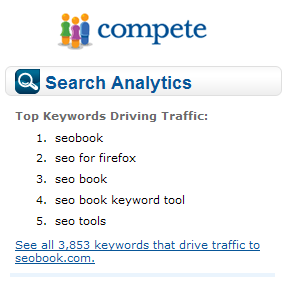
I recall Aaron describing how there was no search volume for "seo book" when he started, although there was a market for books on SEO. By building up that brand name, Aaron sparked brand searches, and forever owns the search term.

SEOs will be aware of the power of incorporating keywords into your brand name itself. The trick is not to be too generic, else you'll forever compete with everyone else who targets generic keyword terms.

2. Tell A Consistent Story

You walk into a luxury hotel. The street frontage and reception and first class, but as you explore, you notice the hallways are shabby. The rooms are top notch, but the bathrooms are dated and there are cracks in the bath.

The brand is not telling a consistent story - well, not a story that says "luxury" - and will suffer as a result.

Everything you do on your site must tell a consistent story. Everything you do is your brand. Great design is of little use if the copy writing is sub-standard, and vice-versa. Get all those little, but important, details right. Broken links, 404s, slow load times, confusing navigation, unexpected surprises - they all part of your brand experience.

3. Tell A Great Story

You'll hear this a lot in modern marketing. Businesses often say "we have a great story to tell".

Stories can be very powerful brand building exercises because people like being told stories. Stories are easy to remember, they capture the imagination, and they engage people.

Learn how stories are constructed. In a nutshell, stories move from a point of equilibrium, into chaos. The central character faces a series of challenges, which s/he overcomes. A new status quo is established.

How could this be used for a brand?

Apple started in a garage. Two misfit teens overcame the might of the corporate world to produce one of the worlds most successful, technology brands.

That's a David vs Goliath story.

But what if you don't have such a glorious story yet?

Tell a series of small stories.

"I was always getting frustrated because I often had to yell over a crowd when there was no PA available. So I started using and selling cheap, mobile PA systems. Now everyone can hear me, whether they like it or not!"

Not a great story, but it illustrates a benefit.

What is your story?

4. User Experience Is Your Brand

Site structure and usability are as much part of branding as site design. Learn the lessons of Google. The user experience is the brand i.e. fast, simple, uncluttered. Brand recognition is largely created by the accumulation of experiences and associations the user makes with your company.

There is often no need to hit people over the head with convoluted mission statements. People don't care about you. They care about them. If you make their experience a good one, they'll reward you.

5. Brand Partnership

Partner with someone who has an existing brand.

An example of this strategy was mentioned on CopyBlogger.com recently. Approach authors of well-known how-to books and provide an online learning resource. The author puts his/her name to it, and receives a share of the revenue. You run the online learning resource. You have the benefit of starting with a pre-established brand and audience.

Also consider licensing brands and product marks.

6. Let Your Customers Tell You What Your Brand Is

In the 4-Hour Work Week, Timothy Ferris outlined a strategy using Adwords to decide the title of his book. He placed Adwords text ads, varied the titles, and chose the title with the highest click-thru rate. His potential audience decided his title, which is also his brand: "The Four Hour Work Week".

This strategy is useful in that it can help identify untapped niches in markets.

7. Clarity

Why is your product better than the others?

Answer that question, and you have a brand.

8. Reputation

Without it, you don't have a brand.

Move heaven and earth to maintain your good standing.

9. Become The Brand

Be your brand. Live your brand. Tell everyone, and tell them often.

It seems obvious, but I've seen many a presentation where I couldn't recall the names of most of the companies by the end of the day, mostly because people didn't do the simple thing of repeating their brand name often enough. Chances are that you need to repeat this information five times before most people will remember it.

As an aside, Jason Calacanis had a piece of advice in one of his recent newsletters. "If you don't *really* believe in your product on a deep, intrinsic level, it's going to come across *immediately* to the bloggers and press you're pitching".

The simple, most powerful thing you can do is to believe in your brand. Everything else flows from there.

10. Viral Baby

If you're reading this site, chances are you're already ahead of the curve when it comes to the huge potential the Internet offers the little guy. Multi-national businesses can now be run from a bedroom.

Look at Digg. YouTube. Facebook. Flickr. They all started from relatively humble beginnings, then went supernova very quickly. Why? There are many reasons, but they all have one thing in common.

They built viral into the brand.

They rely on one person telling another person. They facilitate it. They encourage it. They make it almost impossible not to do it.
Can your brand be made viral? Can you twist it so that people will engage with it and pass it on to their friends?

11. Time To Advertise

Once you've got your messages down, then it is time to advertise. You'd be surprised how many people do this the other way around!

Some corporates are especially bad at this, possibly because the marketing department isn't talking to the sales department, but therein lies the opportunity for the nimble entrepreneur.

One tip is to use banner ads, where you pay per click. Click-thru rates on banner ads are notoriously low, whereas they do generate brand awareness. Also seek out sites that aren't in direct competition with you, but have a similar, established audience. You can leverage off their brand by association.

Whatever channels you choose, the key is to repeat a single, simple, compelling message, over-and-over again.

Further Reading:

Predictably Irrational Web Marketing Strategies

I'm reading a book called "Predictably Irrational", by Don Ariely. It's about the hidden, irrational forces that shape our decisions, and it's a great read.

There are a few interesting case studies in this book that can be applied to web marketing. I'd like to look at two aspects which might help those of you involved in e-commerce.

Relative Pricing Structures

The first experiment looks at relative pricing structures. How do you structure your prices in order to achieve higher returns? Often, it can be a simple case of making an offer no one in their right mind will accept.

Huh?

Here is an example.

The Economist presented readers with the following subscription offer:

1. Internet only subscription for $59
2. Print only subscription for $125
3. Print and Internet subscription for $125

Notice something odd about option 2 and 3? Why would anyone take up option 2?

They wouldn't. And that's the point.

It turns out humans rarely choose things in absolute terms. We work out how much things are worth based on what other things are worth and compare them. In the above example, the "Print and Internet" offer is better that just the print offer. The "Internet Only" offer might be better than both, however there is no point of relative comparison for that offer. The relative comparison is made between offers 2 and 3, which makes option 2 look poor, and option 3 look like a steal. Ariely ran real tests to measure take-up, and sure enough, most people took option three.

To illustrate how powerful this pricing method is, let's remove option 2.

1. Internet only subscription for $59
2. Print and Internet subscription for $125

In this example, people are faced only with a cheap option and an expensive option. The point of comparison is largely about price. You can guess what option most people chose. They selected the cheapest option, as price becomes the key differentiator.

So, try splitting your offers. Create offers that are valuable compared to other - deliberately substandard - offers.

The Effect Of Expectations

In another chapter entitled "The Effect of Expectations", Ariely asks why the mind gets what it expects, and not necessarily the reality of a situation.

For example, Ariely conducts an experiment whereby researchers offer students a free cup of coffee, along with some rather unusual condiments, such as cloves, nutmeg, orange peel, anise and sweet paprika. Not the sort of thing you'd likely put in your cup of coffee! The students were asked to rate the taste of the coffee, and specify the maximum price they were prepared to pay for a brew.

From time to time, the researchers made one subtle change. They placed the condiments in a range of containers, from rough styrofoam cups, through to beautiful glass-and-metal containers. The condiments were never actually used, however the mere appearance of the serving bowls had a curious effect. When the condiments were placed in luxury containers, the coffee drinkers were more likely to say they liked the coffee, and whats-more, they were prepared to pay a lot more for it.

If people thought the coffee was upmarket, they convinced themselves the coffee was upmarket. The reality was that the coffee never changed. The coffee was of the same quality throughout the experiment.

Self-evident, right? So, can this theory be directly applied to web marketing?

Essentially, we're talking about branding. There is the logical first step of using upmarket web design in order to help convince people your product or service is more desirable. There is a trap, however, and this is the reason I think this case study needs to be adapted for the web environment. When it comes to e-commerce, upmarket, glossy sites do not necessarily result in higher sales. There are various reasons for this, but I think mainly it has to do with the level of trust. A slick website can sometimes feel impersonal, and people crave a personal feel on the web.

Trust, not slick graphical design, is the equivalent of the elaborate serving bowls.

In order to raise expectations, consider raising the level of design, but only if you do so without losing trust. Achieving a fine balance between excellent usability, trust metrics and excellent graphic design is a great target to aim for.

Consider the converse. Have you bought from sites that are unusable? Plastered with over-the-top Adsense? Such sites are less desirable as expectations are set low, primarily because of the low level of branding. The buyer is expecting "cheap". That's probably the only reason people buy from such a site.

Such sites are the web equivalent of broken styrofoam cups, compared to the elegant serving bowls.

Have your say

What do you think? Have you got any "irrational strategies" to share?

Pages