The Ups and Downs of Socializing Your Content

There are many ups and downs to adding a user generated content section to a site. It has been interesting watching the effects of SEOMoz's user generated content and points systems. The ups:

  • users feel they are part of the brand.

  • they are more likely to push the brand and link to the site
  • points are created free but give some perception of value
  • users create free content for the site even when you are not doing so.
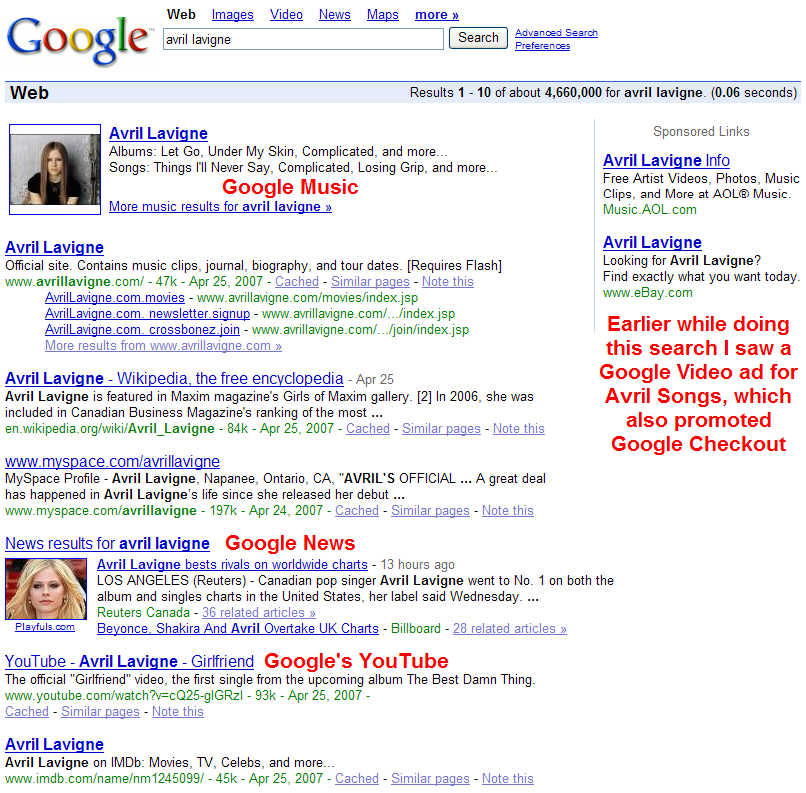
  • some of their content will rank in search results. today I did a search for search engine marketing and saw Google listing a link for recent blog posts listing this post
  • contributors might give you good marketing ideas or help you catch important trends before competitors do

The downs:

  • people who spend lots of time contributing tend not to value their time too much AND are hard to profit from (especially in savvy marketplaces that ignore ads).

  • having many relationships allows you to be a connector that knows someone for just about any job, but focusing heavily on building community and maintaining the many relationships needed to do so may hold you down on the value chain. A few strong relationships will likely create more value than many weak ones, especially as we run into scale related issues.
  • if your site is not authorititative, user generated content may waste your link authority and lead to keyword canibalization
  • if your site is authoritative many people will look for ways to leverage your domain or authority
  • as you get more authoritative more people will try to exploit it. even friends get aggressive with it, and unless you call people out it gets out of control quickly.
  • as you extend your commitments, spending time to police a site, it is harder to change course. I get frustrated when I see spam on the homepage of ThreadWatch, but I guess I can't be surprised people do it, and due to database issues I am uncertain if I will be able to upgrade TW without just archiving the old information and switching to a new CMS.
  • some people looking to promote their work may spam or aggressively associate your brand with the articles they wrote. For example, is this comment spam? Or is it good?

If a relationship is affiliate based it is quite easy to police undesirable activity by banning accounts, but if people are adding content to your site and marketing it aggressively in ways that may not bode well with your brand it might be harder to police it, especially as you scale your community. And typically the people that are most likely to give you crap for it are hypocritical with their beliefs.

I think on the whole a community section is a pretty good idea if you tie it into a paid content model, but even when you do that you will still run into scale issues if you provide any type of support for the paid content. I have over 600 emails in my inbox, and recently stopped advertising free consulting with an ebook purchase because I stopped scaling as a person. As your profits scale the opportunity cost of any one revenue channel become more apparent. That is one of the things which has prevented me from putting a forum or community section on this site.

Help Me Help You

It looks as though Scoreboard Media is pumping out better content than Tropical SEO. This post is no exception.

I’m constantly amazed at how many of these “SEO Firms” with the big followings generate little to no income from their own projects. If there is a stronger signal of quality for a lack of confidence in their own ability, I can’t think of it.

If anyone with more than 3 years of experience is allocating more than 50% of their time to consulting, I’m going on record as doubting their skills.

Why is it so important for a consultant to market their own sites?

  • During periods of uncertainty having limited obligations creates easy income opportunities - one reacts to the market quicker.

  • So we can do risky stuff without risking client sites. Not testing limits is intellectually dishonest and defeats the purpose of calling oneself an optimizer.
  • Better pay. Building growing passive income streams is far better than getting paid by the hour.
  • Growing passive revenue streams help the consultant get a baseline for their value and ensure they value their time.
  • A reasonable consulting rate filters out the worst potential clients while attracting high value clients.
  • Passive revenue streams allow us to be selective with clients, working with the rare client worth taking on, and extracting enough profit from them to deliver them significant value.
  • We learn how to spread ideas better if we are pushing things we are passionate about. It is hard to be passionate about a client site and see their full potential unless I pushed myself first. We learn when...
    • good ideas spread;

    • when good ideas do not spread;
    • when we see garbage spread; and,
    • when we see things backfire.
    • Seeing junk spread and figuring out why some good ideas do not teaches you much more than when the market acts as you would expect.

Elite Retreat Was Fun

Elite Retreat just finished, and I think this one was even more fun than the last one. Wendy and Kris both blogged it. Thanks to everyone who attended and spoke.

Google Beta Launches Affiliate Network

Via SEL, Google beta launched a distributed pay per action ad network, and are accepting publisher sign ups here. More background here and here, including a new ad format, text links:

Text links are hyperlinked brief text descriptions that take on the characteristics of a publisher's page. Publishers can place them in line with other text to better blend the ad and promote your product.

For example, you might see the following text link embedded in a publisher's recommendatory text: "Widgets are fun! I encourage all my friends to Buy a high-quality widget today." (Mousing over the link will display "Ads by Google" to identify these as pay-per-action ads).

Though the maximum length of a text link is 90 characters, we've found that shorter links perform better because they allow the publisher use the link in more places on her/his site and in different context. The maximum length is 90 characters but less than 5 words is best. Even better, just use your brand name to offer maximum flexibility to the publisher.

If they push this as hard as they did AdSense or search it is going to teach advertisers and publishers to create efficient conversion oriented content and sales funnels. It will fundamentally change the structure of the web.

Too Much Email

Drowning in a sea of email. Hundreds of them. Blah. Elite Retreat conference today and tomorrow. Deeper I will submerge into the depths of endless email. Hope I reply soon...

Filters vs Penalties & Optimization vs Over-Optimization

Jill Whalen recently posted to SEL about how duplicate content penalties are not penalties, but filters.

If you duplicate on a small scale duplicate content does not hurt you (other than perhaps wasting some of your link authority), but if you do it on a large scale (affiliate feed or similar) then it may suck a bunch of link equity out of your site, put your site in reduced crawling status, and / or place many of your pages in Google's supplemental results. Jilll's article mentioned the difference between penalties and filters:

Search engine penalties are reserved for pages and sites that are purposely attempting to trick the search engines in one form or another. Penalties can be meted out algorithmically when obvious deceptions exist on a page, or they can be personally handed out by a search engineer who discovers an infraction through spam reports and other means. To many people's surprise, penalties rarely happen to the average website. Most that receive a penalty know exactly what they did to deserve it.

From a search engineer's perspective, the line between optimization and deception is thin and curvy. Because that is the case it is much easier for Google to be aggressive with filters while being much more restrictive with penalties.

From my recent experiences most sites that lost rankings typically did so due to filters, and most site owners that got filtered have no idea why they were filtered. If you were aggressively auto-generating sites your experience set might be different (biased more toward penalized over filtered), but here are examples of some filters I have seen:

  • Duplicate Content: This filter doesn't matter for much of anything. Only one copy of a syndicated article should rank in the search results. If they don't rank all of them who cares? Even though duplicate pages are filtered out of the search results after the search query, they still pass link authority, so the idea of remixing articles to pass link authority is a marketing scam.

  • Reciprocal Linking: Natural quality nepotistic links are not bad (as they are part of a natural community) but exclusively relying on them, or letting them comprise most of your link authority is an unnatural pattern. A friend's site that was in a poor community had their rankings sharply increase after we removed their reciprocal link page.
  • Limited Authority & Noise: A site which has most of it's pages in the supplemental results can bring many of them out of the supplemental results by ensuring the page level content is unique, preventing low value pages from getting indexed, and building link authority.
  • Over-Optimization Filter: I had 2 pages on a site ranking for 2 commercially viable 2 word phrases. Both of them were linked to sitewide using a single word that was part of the two word phrases. Being aggressive, I switched both sitewide links to using the exact phrases in the internal anchor text. One of the pages now ranks #1 in Google, while the other page got filtered. I will leave the #1 ranking page as is, but for the other page I changed the internal anchor text to something that does not exactly match the keyword phrase. After Google re-caches the site, the filtered page will pop back to ranking near the top of the results.

The difference between a penalty and a filter is the ability to recover quickly if you understand what is wrong. The reason tracking changes is so important is it helps you understand why a page may be filtered.

How can you be certain that a page is filtered? Here are some common symptoms or clues which may be present:

  • many forum members are complaining about similar sites or page types getting filtered or penalized (although it is tricky to find signal amongst the noise)

  • reading blogs and talking to friends about algorithm updates (much better signal to noise ratio)
  • seeing pages or sites similar to yours that were ranking in the search results that also had their rankings drop
  • knowing that you just did something aggressive that may make the page too well aligned with a keyword
  • seeing an inferior page on your site ranking while the more authoritative page from the same site is nowhere

Near Identical Articles for Content Syndication & Link Building?

People have asked my thoughts on content remixing and syndication. It is an ineffective approach to marketing.

There is enough content on the web, which is why Google is getting selective with their index. The problem with ineffective content is not that it needs mixed up and syndicated. If a site syndicates watered down vanilla remixed content they have too much content for their link authority, and most of their pages are doomed to Google's supplemental results. Lots of content and little link authority means remixing and syndicating is NOT the answer. What is the solution?

Rather than syndicate garbage, create things people would want to talk about and link at.

Getting Out of a Bad Community

SEO Question: When I did a related search on Google it said that my site was related to some gambling sites. How do I help my site no longer be related to these sites?

Answer: It sounds like you may have a spammy link profile that needs cleaned.

Site Content Cleanliness Check:

Do a site:mysite.com search in Google for your domain, while also searching for a few offensive words to ensure nobody has added spammy pages and / or spammy outbound links to your site.

Outbound Link Profile:

The first thing you want to do is look at who you are linking to. If you are linking to any off topic or spammy stuff get rid of those links. If you are not linking out to any industry authorities link out to a few authority sites in your industry to help search engines understand what sites your site is related to.

Clean Up Your Inbound Link Profile:

Stop renting any links that associate your site with bad sites (ie: have co-citation with spam).

The next thing you may want to do is consider looking through your backlinks in Yahoo! while searching for offensive words (ie: casino, poker, gambling) to see if you have any dated offensive links that you may need to request be removed.

Build Up Your Legitimate Inbound Link Profile:

While you are taking down the bad links also look to make sure you have plenty of good links that help put your site in the community it belongs in. Submit your site to a few of the major trusted directories, get other locally or topically relevant authoritative links (industry magazines / bloggers / trade associations), then use tools like hubfinder, touchgraph, MyBlogLog, Alexa related sites, the Google Directory, and other similar sites that help organize link profiles and/or visitor profiles to define communities.

When possible get links from those quality sources. If it seems like your site could not get many links from those quality sources then do what you have to in order to be considered comment worthy and link worthy. If you don't know how to do that, do the following:

Group Interview on Links - Without Group Think

Rae recently posted a 5 person interview about link building that is well worth a read. 5 experts are interviewed. Each answers a set of questions without seeing the other answers until after the interview.

Selling SEO Services on a Performance Basis

SEO Question: Some prospective customers have offered to pay me on a performance basis. Should I consider providing search engine marketing services for these types of clients?

Answer: There are many ways to structure these sorts of deals, but generally I would probably avoid most of the offers because a lack of willingness to pay until results are achieved is often an indication of a lack of trust.

Trust and Toxic Customers:

If a customer does not trust you enough to pay you until after you show results they may not trust you to access their site or implement your suggested changes. This lack of willingness to consider optimization elements away from search is the single common problem associated with most toxic customers.

It is easier to push your own good idea than to push a bad idea owned by a person who is rigid and hard to work with.

Selling All Traffic as PPC:

If they will not give you access to the site you can still give suggestions that you hope they will implement, and you can still build links. Selling traffic as PPC minimizes the upfront commitment on both sides, and allows the SEO to still get paid even if their site can't convert. These deals can be structured in many flexible ways:

  • set minimum and / or maximum spend caps

  • set contract term length and opt out clauses
  • set price as being flat rate per click, or allow both partners to adjust rates when it makes sense
  • do not charge for brand related searches
  • specify what traffic sources are valid (ie: pay for Google searches and traffic from other engines, but do not pay heavily for a Digg homepage story)

As an SEO, selling traffic on a PPC basis protects you from conversion errors on their site, and may make them more likely to listen to your conversion advice. A good SEO should be able to sell traffic for less than comparable PPC traffic.

If you set your price point high enough you can start off by selling them relevant PPC traffic and then easing off the PPC spend as your organic optimization gains traction. Some SEO companies may set up third party sites to drive traffic, which protect them if a client decides to cut their budget.

I believe Barry Lloyd was one of the first to sell SEO services on a per click basis, but I believe he has since moved on to selling PPC management software.

Pay Per Ranking:

Some clients think they need a few certain trophy phrases even if that is not the case. Some deals with a single trophy phrase or wide related keyword nets can also be sold on a pay per ranking deal, with so much being paid for ranking in different engines for different keyword phrases. Make sure both parties have the same idea as to what the goals are and how long a page must rank to receive payment, and when the payments are due.

Affiliate Websites:

If a merchant reveals an appealing vertical, but does not want to pay enough to make it worth your time, consider setting up an affiliate website marketing related offers. This allows you to chose whatever affiliate programs pay the most, while ensuring you get paid recurring revenues even while you are not actively promoting your site.

Sites Worth Partnering on a Pay for Performance Basis:

  • Related Sites: If you already have a related site that can drive significant traffic a partnership makes sense, but probably as an affiliate rather than an SEO. But if you help them on their site it should be easy to provide value if you already know their site well.

  • Large Brands: If you see structural errors that are holding back large brands AND they are willing to act on your advice they may see significant upside so will the SEO, but most large brands will be adverse to these type of deals.
  • Small niche players: (perhaps even local niche sites) that take limited time to work on are also nice to work with, but be careful not to do too many projects like these or they can weigh you down during shake ups. Algorithmic shake ups are periods of opportunity if you have free time to roam, but may be periods of hurt if you have too many clients.

Sites Not Worth Partnering On:

  • New Sites in Competitive Fields: If you have to go through all the work to build up a new site you are probably better off building up your own site than building up someone else's site from scratch. The one time these types of deals make sense is if you really believe in the upside potential of an idea and can get an early equity stake.

  • Thin Content Sites: If their site is already doing exceptionally well, but has serious issues and is just waiting to get nuked then they may blame you for the fault that was just waiting to happen. Stick clear of thin content sites and sites that are designed more for bots than for humans.

Pages