Your FICO Credit Score Follows You Around the Web

In one of the more absurd public privacy invasions online, Google has announced they are going to use FICO scores to help advertisers target ads at consumers in different credit buckets.

I wonder if at some point in time if AdWords advertisers selling the scammy government grand & biz-op offers will get to use this data to target poor people with low credit scores. It only makes sense that Google would spin this positively stating that it is good for brand advertisers to find credit-worthy customers, which is the story that was marketed in the above linked piece:

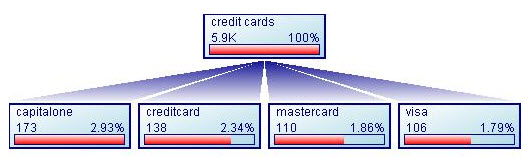
Consumers with high FICO scores demonstrate some unique attributes that show they shop carefully for the best cards. For example, shoppers begin using search earlier in their application process, they use the term "best credit cards" at three times the rate of lower FICO shoppers, and they are more likely to use branded terms.

Consumers with high FICO scores use non-branded search terms more than branded -- approximately 60% of high FICO searchers. They tend to search on terms, such as "travel rewards," "low rate," and "balance transfer."

From a marketer's perspective this makes a lot of sense. Smart people who manage their credit well look for tangible benefits in their financial choices...they don't just blindly buy the brand.

The problem is that (so long as the current bankruptcy "reform" remains in tact and taxpayers bail out any banking losses) bankers have little to no incentive to reach people with good credit scores. People who pay their credit cards on time are seen as deadbeats while the least credit worth are the profitable market segment because they use credit ignorantly and accrue billions of dollars in unneeded fees every year:

Overall, we find that debt literacy is low: only about one-third of the population seems to comprehend interest compounding or the workings of credit cards. Even after controlling for demographics, we find a strong relationship between debt literacy and both financial experiences and debt loads. Specifically, individuals with lower levels of debt literacy tend to transact in high-cost manners, incurring higher fees and using high-cost borrowing. In applying our results to credit cards, we estimate that as much as one-third of the charges and fees paid by less knowledgeable individuals can be attributed to ignorance. The less knowledgeable also report that their debt loads are excessive or that they are unable to judge their debt position.

Bankers have historically hidden these fees in illegible 30+ page contracts, as mentioned by Elizabeth Warren

I teach contract law at Harvard Law School and I can't understand my credit card contract. I just can't. It's not designed to be read. Read the Government Accountability Office (GAO) study on this. The GAO looked at credit cards and they said: "Nobody can understand this stuff." Are you kidding me? And understand when you've got terms that say: "In effect, we'll charge anything we want any time we want for any reason or no reason at all," what's the point of reading it?

She later commented on the ideal credit card customer

Every credit card for a credit card company is like a lottery ticket. They're just waiting to see who's going to maybe stumble a little. Maybe get into trouble on a car loan. Maybe nothing at all except they just look vulnerable. They're just in the right zip code. They're just the right profile for people who won't be able to run any place else. And those are the ones you slam. Those are the ones you hit with the 29 percent interest rate, the 35 percent interest rate, the new fees. And then, because of course if you can't pay it, then you get hit with a fee for not paying or for paying late, for going over limit. And the game is afoot. With any luck at all from the credit card company's perspective, these people will become little annuities that will just keep generating profits for the credit card companies for months, for years, maybe forever.

The idea of only servicing legitimate debt needs of customers that can afford their credit card bills has made banking industry executives so angry that they are threatening hitting consumers with lots of bogus new "conveninece" fees:

Now Congress is moving to limit the penalties on riskier borrowers, who have become a prime source of billions of dollars in fee revenue for the industry. And to make up for lost income, the card companies are going after those people with sterling credit.

Banks are expected to look at reviving annual fees, curtailing cash-back and other rewards programs and charging interest immediately on a purchase instead of allowing a grace period of weeks, according to bank officials and trade groups.

This new consumer-credit profiling Google is offering will be far more profitable to use on the poor, the weak, the desperate, the ignorant, and the uneducated. In early research Lawrence Page and Sergey Brin stated

Since it is very difficult even for experts to evaluate search engines, search engine bias is particularly insidious. ... We believe the issue of advertising causes enough mixed incentives that it is crucial to have a competitive search engine that is transparent and in the academic realm.

So were they right back then? Or are the right now? They can't be both.

Update: Sandra from Google's PR team emailed me the following

I've included an outline of the research methodology below the body of this note. Please let me know if you have questions or need clarification on any of the below -- or anything else, for that matter.

Best,

Sandra

-----

* Compete conducted a clickstream analysis on their opt-in panel of 2 million US online consumers, to associate FICO score categories with sites in the Google Content Network.
o The analysis took a look at the online behavior of Compete's opt-in panelists who shopped for or applied for a credit card online between January and March 2009, for the 30 days prior to the application and/or research.
+ Compete, via a sister company that provides secure matching of certain characteristics (one of which is FICO scores) to anonymous/anonymized individuals in the Compete panel, segmented the opt-in panelists into one of three categories, based on their FICO score: Super Prime (720 and above), Prime (600 to 719), and Sub-Prime (below 600).
+ Individual scores and personally identifiable information were not used by Compete, nor were they received by Google.
o Google provided Compete with a list of all sites in the Google Content Network.
o Compete compared how panelists in each FICO band searched and where the panelists spent time on the GCN, and ranked each GCN site based on its ability to reach consumers in particular FICO score bands.
o The ranking/scores of the GCN sites were passed on to Google -- not any information about the credit scores of individuals.

How to Make Easy Money on Google

Want To Make a Living on Google Money?

AdAge has a good post about how Google's promotion of fraudulent advertising is undermining their brand...

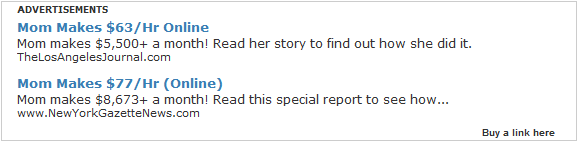
In a world of double-digit unemployment and old-line industries in mid-collapse, here's a sales pitch tailor-made for the times: "Get Paid by Google."

It's a pitch that's compelling millions of people to visit sites such as Kevinlifeblog.com, Scottsmoneyblog.com, Maryslifeblog.com and Googlemoneytree.com, all promising some variation on one theme: Just buy our guide and we'll teach you how to make thousands from Google, right in the privacy of your own home!

Google's 5-Step Easy Money Process

  1. Find a high paying affiliate program which sells a product about how easy it is to make money on Google.
  2. Ideally the program will just charge for shipping to get the credit card details, and make most of the money through back end reverse billing fraud.
  3. Create a fake blog (or fake news site) complete with fake comments about how you lost your job, this program took you from zero to hero. And it makes you 6 figures a year.
  4. Do keyword research to find freshly desperate and unemployed people.
  5. Create ads targeting those people and market them through Google AdWords.

Drug Dealers ***ARE*** Affiliated With Their Drugs

The surprising thing about this process is that Google claims no affiliation to these ads. From the above AdAge article

"As Google is not affiliated with these sites, we can't comment on individual claims," a [Google] spokesman said.

Nice try, but Google ***is*** affiliated with such offers, since they create the distribution channel. Just as a guy who just happens to have a boat load of cocaine he is distributing to clients ***is*** affiliated with the drugs if he is caught in possession.

Businesses Are Responsible for Their Own Business Strategy

Google gives webmasters this guideline "Your site’s reputation can be affected by who you link to." Why shouldn't it apply to Google as well?

As long as Google has 30%+ profit margins they are making a BUSINESS DECISION to run these fraudulent ads. They could spend 1% of revenue on cleaning up this issue (if they wanted to), but they are making a choice not to. Hal Varian has probably done the math, and the offers stay after repeated media exposure of the issue.

Google keeps running the ads because they want the revenue. And they know exactly how much revenue comes from scamming consumers with these ads:
Get Rich Quick with Google.

Amoral Ad Networks Constantly Promote Fraud

Is risked mis-priced? Is an asset class overvalued due to fraud? Are consumers unaware of a new type of fraud?

It does not matter where there is a bubble in the economy - amoral ad networks will find it. As Jay Weintraub put it:

The truly complex part of the problem comes from the size of the un-branded continuity program market and just how much it is helping certain companies hit their numbers, along with what happens were it to go away. In so many respects, the current fakevertising trend is the 2008-9 equivalent of the mortgage advertising boom from 2002-2006.

Not surprising that yield based ad systems promote the biggest scams in the marketplace. Mortgage fraud was a multi-trillion dollar industry, and even as the market heads south, there is still yet another way to exploit the public with ads by targeting their dire situation and desperation.

Could Fraudulent Ads Eventually Change the Web?

If the central network operators do not police their networks then eventually web users will stop trusting online advertising. That (plus pending affiliate regulation) could eventually lead to a significant thinning of competition for mindshare online. It might also push many media companies away from ad based business models to creating businesses built through actually taking money from real human customers.

Please Help Google Fix This Issue

Since Google has not put up consumer warnings and lots of consumers are getting ripped off, I believe it is our job as marketers to help warn consumers about this brazen looting and fraud. If you have a blog or website could you please write about this topic? Bonus points if you reference this post using keywords like "Google money" and "make money" as the anchor text such that we can try to rank a warning high up in the Google search results.

And if you write about this topic to help consumers and your site does not carry AdSense ads on it, please list it in the comments below such that anyone who comes to this page can see how big of an issue this has become.

SEM Training: Do You Make These 14 Common SEM Errors?

There are a lot of parallels between Google AdWords and SEO, and a lot of the beginner mistakes are the same for both traffic acquisition strategies. I figured it would be worth outlining some of the most common ones to help save you money on your search engine marketing campaigns.

  1. Weak Domain Name
  2. All Search Traffic Driven to Homepage
  3. No Link Building
  4. All Links to the Homepage
  5. No Link Anchor Text Variation
  6. No Focus on Quality
  7. Lacking On Page Optimization
  8. No Site Structure
  9. Site With No Value Add
  10. Competitive Saturated Market With Inadequate Budget
  11. Picking a Market for 1
  12. Pick a Market Which Does Not Monetize
  13. Over-Aggressive Monetization From Day 1
  14. What Other Common SEM Errors do You See?

1. Weak Domain Name

Google AdWords

When I interviewed Perry Marshall about AdWords he recommended split testing URLs because the URL can and does have a major impact on your ad clickthrough rate.

Since Google factors click-through rate (CTR) into their quality scores, anything that influences CTR influences your click prices. And while competitors can and will steal your AdWords ad copy, they CAN'T steal your domain name.

SEO

There are many potential errors that can be made with domain names. Two of the more common errors are creating a domain name that is impossible to remember and creating a name that restricts expansion.

Recommendations

Some people feel the need to limit their domain name budget to $10, but it is a foolish strategy. Almost every piece of marketing you do will be influenced by your domain name. Your domain name has limited recurring costs associated with it, but can represent a huge recurring market advantage or disadvantage. Yeah for CreditCards.com, and boo for cheapest-online-apply-credit-cards-and-loans.info.

  1. If you are using Google AdWords for a new product or a non-branded product then test clickthrough rates across multiple domain names.
  2. Make sure your domain name allows you to expand as needed. This is sorta an error I made early on with this site...I had no idea how successful the site would become when I started it and did not anticipate us creating the #1 SEO training program back when I thought of selling an ebook.
  3. Avoid names that are impossible to remember. If you intend to create something that is easy to market online and offline then your domain name must pass the phone test, which typically means avoiding hyphens & numbers. This is especially true if you are trying to build a big brand.
  4. If you feel your company may expand internationally it is best to buy any matching domain extensions where you might intend to eventually do business.
  5. Exact match domain names can create a big SEO advantage if you can afford them - since some engines may give them a relevancy boost and your domain name influences the anchor text people use when they link at your website.

2. All Search Traffic Driven to Homepage

Google AdWords

1 page can only be relevant for a certain sector of search queries. In an efficient market anyone who directs all traffic to the homepage will lose a lot of money.

Every additional click you force users to make has some amount of slippage. When using Google AdWords / pay per click marketing a small change in conversion rates can be the difference between sustained profits and sustained losses.

SEO

It is sorta impossible to make a page "optimized" for hundreds or thousands of popular keywords because eventually after you add enough different keywords in the page copy it ends up reading bad and it harms conversion rates.

With SEO efforts mis-directing traffic is not as obvious as it is with AdWords because you don't have to pay for every click. But giving users an irrelevant experience still means you are throwing money away and only operating at a fraction of your potential.

Recommendations

With the prevalence of Google (and web search in general) every page of your site is the front door. We navigate via search. So map out keywords against URLs and try to offer the most relevant user experience whenever possible.

Observe how we map out core keywords, variations, and modifiers.

Some Google AdWords advertisers take perceived relevancy one step further and use the search query to help define the page content through the use of keyword insertion into their page copy and/or altering the page based on geographic information based on your computer's IP address.

3. No Link Building

Google AdWords

The equivalent of links to AdWords is keywords in your AdWords account. If you only advertise on 1 or 2 keywords you miss out on a large stream of relevant traffic.

SEO


If you build it they will come is simply not true in the search game. If it was easy to rank for competitive keywords without links then few companies would buy AdWords ads. You can't typically rank a new site until you have some level of awareness. Search engines follow people. Links are seen as votes of trust.

Recommendations

With AdWords, don't just bid on 1 keyword. Look for additional relevant variations that make sense. If you don't mind splashing out $50 you can also look at what competing sites are advertising on using SEM Rush, Keyword Spy, SpyFu, and/or KeyCompete. There are so many new tools popping up in this market segment that I have not had the time to review them all.

For SEO, download SEO for Firefox and the SEO Toolbar and look at how many links competing sites have and how many domain names those links come from. You will likely need to build some number of links in the range of what competing sites have (from a similar set of sites) to rank. Today is the perfect day to start building links. And yesterday was even better. ;)

4. All Links to the Homepage

Google AdWords

Since you are buying the links from the search engines based on keyword, this problem would be corrected by solving issue #2.

SEO

A variation of the above thinking. Most quality sites have useful content somewhere that people link to editorially. If all your links point at the homepage then that means you are not using anchor text from external links to boost your internal page ranks. In most markets that creates a big loss considering that some of those pages would get a lot of traffic with just a few more deep links which would yield higher rankings.

Recommendations


Search is a winner take most market. Analyze your traffic patterns, rankings, and target keywords to ensure you are promoting key pages. Look at top competing sites and keyword ranking values to gain additional insights.

Create linkworthy content that people would want to link at and push market it. The objective (vs self-interested) viewpoint here is "if you did not own your site what is unique about it that would make you want to visit it every week and/or recommend it to a friend?"

5. No Link Anchor Text Variation (or AdWords Ad Copy Variation)

Google AdWords

You shouldn't use the exact same ad copy on all of your keywords. You should segment it out by trying to understand user demand and create compelling advertising text that is relevant to the search query, relevant to the user demand, and relevant to your landing page. If you use a single generic boilerplate ad copy you are loosing a lot of money because your ad will not look as relevant as some of the top competing ads.

SEO

When people link to things naturally there tends to be some variation involved. If all your inbound links say "my keywords" then that can look suspicious...particularly if you are buying lots of links.

Recommendations

With AdWords, at a minimum you would want to use dynamic keyword insertion. But if you sell a lot of different products then you should try to find a way to match up small groups of relevant keywords against a set of ad copy. Make your core keywords stand out on their own, and be willing to be somewhat less descriptive with low search volume backfill keywords.

With SEO you should try to mix up your link anchor text when you are manually building links. If you create original compelling content that people want to link at (and push market it to the right audience) then that will also pull in natural anchor text.

6. No Focus on Quality

Google AdWords

Some advertisers are compelled to go after "cheap" clicks. But some of the more expensive keywords are expensive because they are associated with significant and valuable consumer demand.

SEO


Google algorithms estimate the probability of a new site being quality or low quality. If you start off with 2,000+ "free" directory links you align your site with sites that are often of lower quality. Similarly, if you try to promote watered down or average content then few people will be receptive to those efforts.

Recommendations

There is nothing wrong with buying cheap traffic, but make sure you track the business value you get from that traffic. If you buy "cheap" traffic from 3rd tier ad networks and/or keywords without any commercial intent those will not build your business anywhere near as well as developing a solid traffic stream from valuable industry keywords on leading search engines.

Start your link building efforts with quality links first. As your site gets more trusted you can fill in some lower quality links as well, but you don't want to do it first, and you don't want to do it in bulk.

When you decide to do push marketing for link building make sure the content you are promoting is unique, original, useful, compelling, & citation-worthy.

7. Lacking On Page Optimization

Google AdWords

Quality user experience and usability are crucial to converting well. When users come from search to your site they are switching channels. The more cues you can give them that they are in the right place (like relevant page headings + navigation) the higher your conversion rates and visitor value should be.

SEO

For really competitive queries links are crucial, but you can rank for many less competitive keywords and keyword variations without lots of links (because there is much less competition for those keywords). And even if you have lots of links, it is still typically hard to rank for keyword phrases that are not in your page copy.

Recommendations

With Google AdWords you can reach many of the stray searchers by using a combination of phrase match and broad match, and then using negative match to filter out irrelevant searches.

For every person searching for "seo" or "sem" there are probably 10 people searching for more obscure queries like "how do I promote my business on Google?" You can see how our page about link building ranks for hundreds of related keywords.

This is probably the single most powerful graphic explaination of why having lots of useful on-page content:

With SEO you can reach a lot of the searchers by using alternate word forms, alternate word orders, related phrases, and keyword modifiers in your content.

8. No Site Structure

Google AdWords

If your AdWords ad campaigns are not well organized then you are likely losing money. A strong site structure also helps ensure that your AdWords account has a strong structure, which can aid profitability.

SEO

If your site is not structured well then...

  • navigation will likely be hard or confusing
  • some of your key pages may not get much of your link authority
  • some of your unimportant pages may accumulate a lot of your link authority

Recommendations

Most successful websites have a structure in which key pages which are mapped out against user demand and search volume.

  • Create separate AdWords campaigns based on goals. Perhaps you can have campaigns for brand related searches, seasonal offers, public relations, campaigns that are based on ROI metrics, and even backfill campaigns like misspellings.
  • Some content management systems (CMS) have major errors with duplicate content and site structure issues. A review of that topic is beyond the scope of this article, but search for the name of the CMS and SEO prior to implementing it to verify there are no serious issues and/or that there are easy fixes on the market.
  • Set up site categories and sub-categories that are aligned against the keywords people use to search for your products and services.
  • If you blog (or publish content regularly) reference older related materials when relevant.
  • If your content is in a database you can use automated contextual links to help fix some site structural issues and redistribute PageRank down toward lower pages in your site structure.

9. Site With No Value Add

Google AdWords

If your site does not add much value it can be quite hard to sustain profit margins in the AdWords market. Affiliates routinely copy the work of each other and drive up click prices, which kills profit margins.

SEO

My very first profitable website was a no value add website that I got some spammy links for. The site did make thousands of dollars in affiliate commissions (a gift from God at the time), but that income was only made ***because*** I was a bad speller and misspelled some casino brand names back before search engines integrated spell correcting aggressivley. Such a site would simply go nowhere today.

Google often considers sites without value add to be unneeded duplication and/or spam. If you ever get a chance to read some of the Google Remote Quality Rater Documents you can see what Google believes is associated with "value add."

Recommendations

  • In competitive AdWords markets competing businesses are forced to keep improving their business processes and efficiencies to be able to afford increasing bids from competing businesses.
  • If you have a lower lifetime customer value than competing businesses you may eventually be driven out of the market.
  • With some seedy affiliate offers in many cases the only people with sustained profit margins are basically those who are surprisingly sleazier than the rest of the market or those who are barely breaking even themselves, but are using their blog to build a downstream of followers that they get commissions from.
  • Some (perhaps most?) affiliate networks ***will*** shave your commissions AND steal your keyword list if you send them the data.
  • If you don't have a value add and want to play catch up in a competitive SEO market you need to have some sort of competitive advantage (be it nepotism, domain name, market experience, etc.).
  • Making paid things freely available, creating useful software or tools, and having deeper & better editorial are 3 great ways to add value and win marketshare.

10. Competitive Saturated Market With Inadequate Budget

Google AdWords

In some markets it is hard to compete buying traffic without having a strong brand. If Geico pays Google $30 a click, but only pays affiliates $10 per lead then there is no way an affiliate can compete against Geico on the core industry keywords like auto insurance.

SEO

Want to rank for hotels and insurance? Me too. But I am uncertain if I have the resources to do it from scratch in a lasting manner given the algorithmic trends promoting well branded business and how corporations are increasing their SEO budgets.

Recommendations

  • Have big ideas, but set reasonable goals, and measure progress.
  • Do the math in advanced to estimate how much you can afford to pay for a click.
  • Pick and chose your spots in the Google AdWords market. If after you do significant testing and optimization a word is still losing money consider dropping it.
  • Try to pick a market position you feel you can dominate. The #20 result for "insurance" produces traffic worth ~ $0. The #2 or #3 result for "pet insurance" yields much more.
  • Make at least 1 incremental improvement to your web business everyday.
  • Aggressively re-invest early profits into growing your website and building a moat.

11. Picking a Market for 1

Google AdWords & SEO

If there is no demand for an idea then it is quite hard to create demand through search engine marketing. Search engine marketing works best when it captures existing demand.

Recommendations

  • Keyword research tools can give you estimates of search volume.
  • Since AdWords is so much quicker and easier to test than building a full site and implementing an SEO campaign, you can use AdWords to test market demand and interest for an offer before spending money building and marketing a full website.
  • It can be good to be out front of trends (as one of the easiest ways to win a market is to be the first person in it), but just as easily you can go after an established high money market with your own original spin or angle.

12. Pick a Market Which Does Not Monetize

Google AdWords

If similar competing business models have much higher visitor value you may have to change your business model to compete. Some low earning business models might simply be precluded from participating in the AdWords market in a meaningful way.

SEO

There is nothing wrong with building a site about a topic you are passionate about and interested in without knowing how well it will monetize, but if you are trying to build a business you should pick something with a high enough visitor value to create enough profit potential to make it worth the time and money investment.

Recommendations

If you are planning on participating in the AdWords market, but have a low margin business then you should look for ways to increase profit margins, customer order size, and lifetime customer value.

If you run an editorial site it can be a good idea to under-monetize off the start to build market momentum without people viewing you as a competitor, but it can be hard to bolt on a business model if you have spent a lot of time servicing the wrong market segments.

13. Over-Aggressive Monetization From Day 1

Google AdWords

If you are buying traffic there is no problem with trying to monetize it. But most website visitors will not convert.

SEO

Sell in line text links & have pop ups? Is ever other post an affiliate link? If so, why would anyone want to subscribe to an ad stream when there are many useful alternatives to look at?

Recommendations

  • Since most website visitors will not convert to paying customers on the first visit, you should look to establish a relationship with them by giving them a free offer and/or some reason to come back to your website. You can see the offer we make at the bottom of our pages and on our join now page.
  • Existing leading trusted sites that have built up a following benefit from cumulative advantage. If your site is brand new and driven by editorial content it is a good idea to give away more value than you capture. Under-monetize until you build enough market momentum to make your rankings stick even when you do monetize.
  • Consider monetizing some areas of your site more aggressively while not monetizing other sectors of your site, but instead using them for public relations and link building.

14. What Other Common SEM Errors do You See?

How To Spot Keyword Trends

When we launch SEO projects, we've often got one eye on the future.

We start with a site that ranks nowhere, then we build links and optimize with the expectation that a few months from now, we'll start getting rankings, and traffic. Are the keyword terms we rank for going to be worthwhile over time? Will search volumes in our niche increase? Will they decrease? Are there more lucrative niches we could target instead? What will our market be interested in this time next year? Where is our market moving?

Given that search engine ranking has a long lead time, it pays to think about keyword trends well ahead of time.

The problem with the future is that it is difficult to predict. However, spotting trends is somewhat easier, and gives us an insight into how our niche is likely to develop. Trends typically follow a gradual, predictable pattern.

Let's take a look at a few tools you can use to help spot long term keyword trends.

Trend Spotting Tools

Google Trends is a useful tool for predicting rising interest in keyword areas. Search on your keyword terms, and see if interest in your niche is rising or falling. Ideally, you want to find keyword areas that show an increasing level of interest, or areas where there is significant, steady interest over time.

Likewise, Google Insights For Search allows you to drill down into the data in a variety of ways, including by date, by region, by category and by source. The related terms section is particularly useful for getting new keyword ideas, and analyzing trends. Click the RSS icon at the bottom, and you can keep up to date with this information in your RSS Reader. I use Google's Reader.

Twitter Search is a good tool for trend spotting. Possibly the most useful aspect of Twitter, as far as the SEO is concerned, is the ease of which you can spot keyword trends in terms of everyday usage. Search for your keyword term and make a note of the words people use in conjunction with your keyword terms. In what context does your keyword appear? Integrate these words into your copy.

Also check out Twist which shows keyword trends in Twitter over time, although it is limited to the last 30 days.

Both Microsoft Ad Intelligence and Google Adwords provide seasonal trends, which is especially useful for looking at interest patterns linked to the time of year, an obvious example being gift buying at Christmas.

Paid research tools, such as Keyword Discovery, provide historical data. Also check out Compete.com and WikiRank. WikiRank shows you what people are reading on Wikipedia. It’s based on the actual usage data from the Wikipedia servers, and provides trending data.

Microsoft Bing (I can't type that name without thinking of "Friends") provides XRank, a service that gathers related trend information and presents it on the same page, although the keyword terms it shows any results for seem to be rather limited.

So the takeaway point is to look at both keyword usage volumes and keyword trends over time.

Determine your bread-and-butter terms i.e. the terms that show constant levels of traffic and construct your link building strategy around these terms. Also look at the the emerging terms in your niche i.e. the terms with a rapidly climbing trend graph. Use this trend information as a suggestion list for new article topics. Watch your stats and look for rising areas of interest. Also try looking at keyword research from the opposite direction. Spot a rising trend, then make a list of keywords suggested by that trend.

All grist for the mill :)

Related Resources

SEO Pivot - a Lightweight SEM Rush 100 Results Deep

The folks behind SEM Rush recently launched SEO Pivot.

SEM Rush does a great job of comparing sites head to head, but is a bit top heavy in the search results (only searching through Google's top 20 search results).SEO Pivot is more for just looking deeper into 1 site at a time, however it does use a smaller keyword database of 500,000 top keywords. It can help you uncover some broad keywords that you rank better than expected for.

Who knew we ranked #97 for price fixing, #98 for invisible hand, or #32 for dark art? The 3 examples I used were more of an attempt at humor than useful data, but we also rank for other valuable phrases.

Between this tool and SEM Rush I still like SEM Rush way more, but this is another useful tool to add to the toolbox. Look at deeper search rankings for such broad keywords...

  • can help give you a good idea of how strong a particular site is
  • help you see the unlocked ranking potential of a site that is currently poorly optimized
  • perhaps can help you rethink making some site structural changes like promoting some pages a bit harder in your link structure and/or using internal 301 redirects to combine some related pages

Free Keyword Research Tool for Bloggers

Free Inline Keyword Research Tool

WordTracker recently announced the launch of a new free Firefox extension that aids you in doing keyword research while blogging. The keyword tool works with any publishing software, and helps you ensure you work selected keywords into the content. The tool sits to the left of the browser window, and as you type, it will search your post and does an analysis of the text in your content to see if any of the phrases appear.

How to Use It

You can manually select keywords that you think would be highly relevant and then try to work them into the content. And when it is not possible to fit in a whole phrase naturally, you can always try to sprinkle those keyword modifiers that make up the phrase into your post's content. For instance, in the above post I worked in the words software, free, search, and generator into the content quite naturally in only a 4 sentence blog post.

“Bloggers often don’t take the time to do keyword research for each article they write – they just want to get their story out there. Now, bloggers have instant access to relevant keywords so they can easily produce optimized blog posts. That’s sure to bring them extra traffic.” Said Ken McGaffin, CMO at Wordtracker.

Free Keyword Research Guide

And with this tool Wordtracker offers a free companion keyword guide for bloggers from my buddy ChrisG worth checking out if you are new to blogging or SEO.

Google Sending Out Keyword Suggestions via Email

A few days ago Google sent me the following email, which somehow sent me keywords for other websites.

Google did a follow up email appoligizing for the first email sending me the wrong keywords and sending me a new list of keywords.

Almost every time I start a new AdWords campaign I am impressed by new features that recommend more keywords inline during the sign-up process. This is sorta where there is great risk in data sharing with ad networks. The more data you feed into the network the more likely that data is to pour right back out into the hands of competitors & higher market prices.

What Would Google Do? - Book Review

If Google is so successful, shouldn't you be doing what they do? If you follow their philosophy, then you can be successful, too.

This book, by blogger Jeff Jarvis, is a collection of Google fanboy thoughts on how to do business in the internet age, using Google, and other high tech companies, as a model. The rules have changed. The old way of doing things no longer applies. We're entering a brave new world where the internet will bring about a tech-led utopia.

Haven't we heard all this before?

Indeed, we have. We heard this before the last 2.0 tech crash. And the tech crash before that. When you look at the burn rate of internet start-ups, it doesn't look like a tech utopia, so much as a train wreck. The landscape is littered with bodies, wasted venture capital, and broken dreams. Many of these companies followed the "new rules of engagement", demonstrating that following new models, like the Google model, is far from a guarantee of success.

I'm not quite sure where to start with this book. Someone who is new to internet culture should find it illuminating, as Jarvis pontificates on state of the internet, circa 2009. Unfortunately, the book is a rambling, curricular collection of thoughts, some of which I find highly dubious. For example, Jarvis pontificates that "Free is a business model".

Huh?

Perhaps it's a case of semantics, but "Free" is not a business model. Free is a loss leader tactic. Free gets people hooked in so the ticket can be clicked somewhere else, just like Google does with Adwords. The obvious irony is that Jarvis isn't giving his book away for free. He's not publishing it online. He defaults to a traditional, old world, fee-based business model facilitated by middlemen - the book.

Funny, that.

Jarvis outlines the "Google Rules" you should follow in this brave new world, which include:

  • The customer is always right
  • Be a platform others can build upon
  • Middlemen Are Doomed
  • Be Transparent (Google are transparent?!?)
  • Small is the new big
  • The middleman is dead
  • Don't sell things, stuff sucks (Kinda hard to drive a non-car, though)

You get the idea. I doubt the audience of this blog will find anything particularly new in this book as it is a mishmash of various ideas that have been floating around for years. I found myself skipping through it. Whilst yawning.

Curiously, SEO is discussed. I'm pleased to note Jarvis doesn't pour scorn SEO, rather he shows how newspapers, and About.com, used SEO to make themselves more useful. He even outlines a basic SEO strategy. So pat yourselves on the back, SEOs. It looks like after all these years, commentators outside the SEO industry are starting to appreciate the value you provide.

It doesn't look like Google had anything whatsoever to do with this book. In fact, this book isn't really about Google. It's more about Jarvis and his personal observations of the state of the internet. The book's major downfall, besides being unnecessarily pompous and condescending, is that it misses the mark. The Google model can't be applied elsewhere and get the same results. It is a model that suits Google, but Google is a product of its own unique environment.

I also disagree with some of his predictions. He thinks the salesperson's days are numbered. Uh-huh. So we're all going to order from the internet, just like we didn't order our stuff from mail order catalogs? Salespeople will persist while people like to do business with people.

He also thinks middlemen won't last. Middlemen often create efficiency, aggregation and add value. Isn't Google a massive middleman, getting in between users and content, and adding value by making finding content a more efficient process?

Really, the rules of business online are very similar to the rules of business 100 years ago. We still need to give people what they want, at a price they can afford, and we need to deliver it at a lower cost than we sell it for. Free is an ideology, it's not a business.

I'm guessing the next big thing on the internet won't model itself after Google. It will do things quite differently, and few people will see it coming, based on their experience of the existing "rules". Did anyone see Google coming? Facebook? Yahoo? EBay? By the time people saw those companies coming, those companies were already entrenched.

They did so by doing things differently than what had been done before. The question isn't so much "What would Google do?". The question is "What Is Everyone Else - including Javis - Missing"?

FTC Going After Bloggers = Epic Fail

The AP reported that the FTC is planning on going after bloggers that make fake endorsements or get paid in products for coverage without disclosing it:

"New guidelines, expected to be approved late this summer with possible modifications, would clarify that the agency can go after bloggers--as well as the companies that compensate them--for any false claims or failure to disclose conflicts of interest," the article explained.

The rules could be quite strict, even extending to the practice of affiliate links--for example, a music blogger who links to a song on Amazon MP3 or iTunes that earns an affiliate commission in the process.

What is absurd (to me at least) is how inefficient this process is. What needs to happen is better enforcement on ad networks, search engines, and merchants. Follow the money downstream rather than hunting for nickels upstream.

The people who are making fake sites are doing so because they are paid to. And amoral ad networks that syndicate ads based on *maximizing yield efficiency* (like Google AdWords) are designed to syndicate fraud because it is easy for advertisers to pay a lot for ads when their profit margins are nearly 100% because they scam people.

Look how sophisticated some of the fake sites are here.

You will never track them down one at a time because many domains are internationally owned, anonymously registered, and some domain names only cost a couple dollars to register. Wordpress.com and Google's Blogspot are free, which leads to automated spam pushing scams:

Three out of every four unique Blogspot.com URLs that appeared in the top 50 results for commercial queries were spam, the study said. Blogspot is the hosting site for Google's blogging service. Blogs created for marketing purposes are sometimes referred to as "splogs."

They need to police the distribution vehicles through which the scams find consumers - ad networks. Any individual blogger can remain fairly anonymous, but ad networks can not scale to efficiency and create publisher and advertiser relationships without being well known.

One recent article talked about how clicking on certain keyword search results was a bit like Russian Roulette. Ben Eddleman explained the issue well in his article titled False and Deceptive Pay-Per-Click Ads. After he showed a long list of scammy pay-per-click ads he wrote:

Each and every one of these ads includes the claim that the specified product is "free." (These claims are expressed in ad titles, bodies, and/or display URLs). However, to the best of my knowledge, that claim is false, as applied to each and every ad shown above: The specified products are available from the specified sites only if the user pays a subscription fee.

These ads are particularly galling because, in each example, the specified program is available for free elsewhere on the web, e.g. directly from its developer's web site. Since these products are free elsewhere, yet cost money at these sites (despite promises to the contrary), these sites offer users a particularly poor value.

Ben continues to the appropriate conclusion

Google's inaction exactly confirms my allegation: That Google's ad policies are inadequate to protect users from outright scams, even when these scams are specifically brought to Google's attention.

Once again, to prove Ben's point, here are some of the government grant ads that the FTC warned about

This issue has been aired many times. Lets not forget that Google lied to the government and media when they said they cleaned up the government grant ads, and these fraudulent ads are still running strong today.

Most searchers unaware that search results have ads on them, and likely less than 1:10,000 are aware of Yahoo!'s Paid Inclusion program that blends ads directly into the organic search results. Most SEO professionals can not point out which Yahoo! Search Submit results are paid.

A 2005 Pew study found that most users were unaware of sponsored search results:

Only 38% of users are aware of the distinction between paid or “sponsored” results and unpaid results. And only one in six say they can always tell which results are paid or sponsored and which are not. This finding is ironic, since nearly half of all users say they would stop using search engines if they thought engines were not being clear about how they presented paid results.

Worse yet, Google's automated ad networks (AdSense + DoubleClick) are responsible for monetizing nearly 70% of online copyright violations.

These networks go so far as monetizing warez websites, and Google doesn't always disclose the ads they place on content websites, either. But may as well police everyone who is not a current business partner ;)

When Google wanted to fight paid text links they penalized the Text Link Ads website to send a message. It is far more efficient to police at the network level. Why can't the government do the exact same thing?

As many times as they have sued and/or fined ValueClick you would think they would notice the pattern.

Force ad networks to have editorial integrity. Make small gray text with reverse billing fraud terms of service illegal. Make the networks run a clean show. If they do that there will be little to no incentive for scamming consumers. And it is easier to force self-policing onto 200 ad networks than it is to try to police millions of bloggers.

Google to Promote Affiliate Product Ads in Search Results

Google Becomes an Affiliate

Blogoscoped scooped an email to a Google advertiser promoting Google Product Ads:

Product ads are paid product listings that appear when users search for products on Google. Through participation in the Google Affiliate Network product ads beta program, you can promote your products to users actively searching for your products and pay only when users make a purchase on your site.
...
Google product ads will feature product specific information directly in the ad such as price and product image. During the beta program, Google will be testing to identify the most effective ad formats. Google product ads will complement standard text ads on Google.com and will run independently during the beta.

And these ads could eventually create a near perfect marketplace. Google automatically targets the ads based on your Google Base feed. Either you are descriptive and give Google lots of information that they can commoditize, or you get limited exposure. And as far as pricing goes...

How are these ads ranked?
Ad Rank = Commission × Quality Score. The quality score takes into account the relevance of your product to the user’s query, conversion rate of the query and the matched product ad on Google, your account history, and other relevant factors.

Either you have the maximum visitor value and hand over the maximum profit share to Google or you get limited exposure.

And the ads will have more information in them than organic search results do:

Unlike text ads, product ads will “feature product specific information directly in the ad such as price and product image,” according to the email Google sent some advertisers inviting them to try out the ads this week. Google said that it would continue to work on the most effective format for the ads and that the ads would “complement standard text ads on Google.com.”

Search & Semantic Web Pulls Value From Domains

This move fits in with John Andrews' recent post Search Engines want to Eliminate Domain Names

We call developed domain names “assets” because we have difficulty accounting for that stored value. Accounting methods allow for “intangible assets” such as “intellectual property” and “good will”. If you build a successful site, you do it on a domain. When the site is no longer active, the domain retains a significant amount of “stored value” from the previous market success.

Search engines want to take back that stored value, or perhaps keep it for themselves. On many fronts, the domain name is in the way.

Could Google Open Up to Lead Generation Markets?

Google also launched a click to find out what's here option. When you think of how they carved out a dominant position in the map market, how they have aggressively pushed maps into the search results (even for some queries that lack local modifiers), and how they have merchants upload product feeds, what is to prevent Google from offering inventory data and hotel booking experiences right in Google's search results?

Seedy & scammy offers will continue to be pushed through AdWords/AdSense so Google can keep an arm's length distance from liability, but what happens to the CPA affiliate market (and small affiliate networks and thin affiliate sites) when the #1 lead source for most legitimate merchants is Google.com?

  • Will they force brands to pay for leads that are already driven based on brand?
  • Can they push the "organic" results down far enough to make the CPA option more appealing to merchants?
  • What lead channel could possibly be anywhere near as clean as the #1 search engine (especially when the search engine basically acts in the role of direct navigation)?
  • If this is successful will it kill many affiliate networks? Might that give Google more room to lower AdSense partner payouts?
  • If they are too aggressive with ad integration might they drive searchers to Bing or Bleko?

Twitter Looking at Ecommerce Too

A Twitter board member confirmed commerce is going to be part of the Twitter revenue strategy as well:

“Commerce-based search businesses monetize extremely well, and if someone says, ‘What treadmill should I buy?’ you as the treadmill company want to be there,” [Todd] Chaffee said. “As people use Twitter to get trusted recommendations from friends and followers on what to buy, e-commerce navigation and payments will certainly play a role in Twitter monetization.”

I could only imagine that those relationships will be affiliate driven.

Legitimizing Affiliate Marketing

Generally central networks have taken a dim view of affiliate marketing because it competes with their business model, but once they become themselves that will surely go away. Yahoo! already has a lot of affiliate relationships. Google's test is only a beta, but even if it fails they will try something similar again. They have to keep evolving their model to keep growing revenues.

Pages