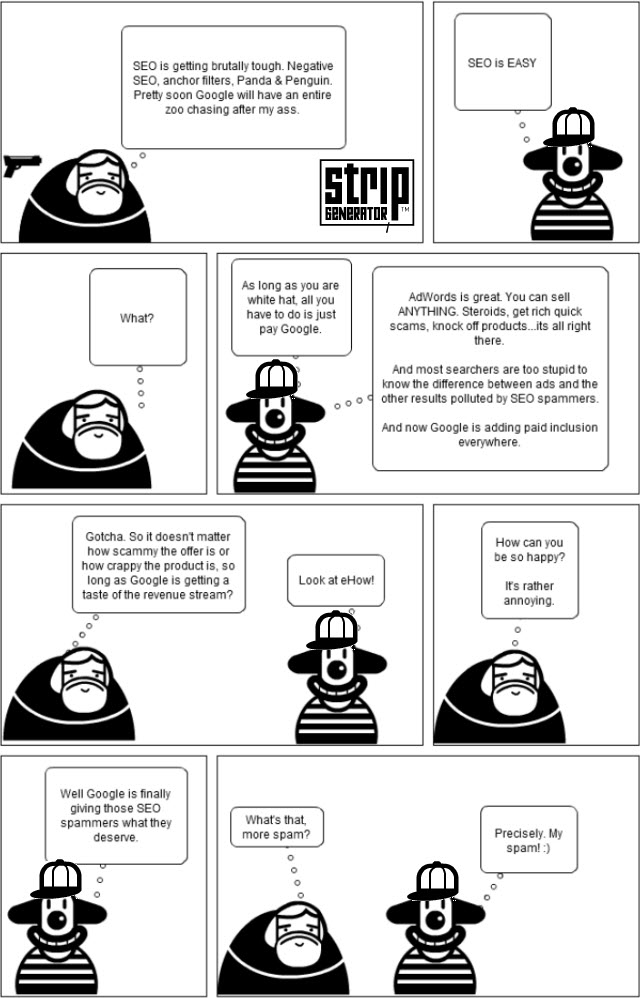
Affiliates: Spam is a 4 Letter Word

Google Hates Affiliates

Years before Google broadly torched affiliates operating inside the AdWords channel I highlighted how much Google hated affiliates in their ecosystem.

How was I aware of that?

2 ways:

  • If you read any of Google's older guidelines that leaked over the years you would see a consistent disdain toward affiliate sites. This was also reflected in official advice at search engine conferences & whatnot.
  • A friend of mine went to Google's campus & Google offered to "optimize" their AdWords account. As soon as the word affiliate came up it was like spoiled meat. Replacing the word "affiliate" with some other idiotic made up phrase (I think it was "regional online distributor") suddenly made everything O.K. again. Other friends had similar stories.

Note that the difference between "affiliate" and "regional online distributor" is for all intents and purposes linguistic crap, however it can be the difference between life and death for an online business.

To be fair, the ready availability of feeds to quickly generate sites means that most affiliate sites will be garbage. At some point Google gets sick of fighting the same battles over and over again. Then again, most websites are garbage & only the top x% of anything is going to be great.

At Affiliate Summit last year Google's Frederick Vallaeys basically stated that they appreciated the work of affiliates, but as the brands have moved in the independent affiliates have largely become unneeded duplication in the AdWords ad system. To quote him verbatim, "just an unnecessary step in the sales funnel."

It is worth noting that Google doesn't consider itself "just an unnecessary step in the sales funnel" when they insert themselves as an affiliate.

Should information empires be allowed to discriminate based on nothing more than the business model of competitors?

Spam vs Not Spam

The most recently leaked Google rater document stated

Spammers create spam pages to make money. Sometimes, they make money directly, by placing moneymaking links on the spam page. Here are two types of moneymaking links:

  • Pay-Per-Click (PPC) ads: Spammers get paid each time ads are clicked on their webpages. Another term for PPC ads is “sponsored links”.
  • Thin Affiliates: Spammers make money when a transaction is completed after the user has clicked through to the merchant’s site from their webpages

PPC ads appear on many, many webpages. Some pages with PPC ads are spam, but many pages with PPC ads are not. Pages should not be assigned a Spam flag if they are created to provide information or help to users. Pages are spam if they exist only to make money and not to help users.
Sometimes, spam pages do not have moneymaking links. These spam pages are created to change search engine rankings or even to do harm to users’ computers with sneaky downloads.

So in essence, the difference between spam & not spam is if the page is helpful to users.

The rating document takes 130 pages to clearly articulate the difference between what is spam and what is not spam.

But the core ethos in categorization is if it is original & helpful it is not spam unless it is doing something deceptive.

A Minor Exception*

Google's rater guides also arbitrarily sneaked in the "what the hell, if it is affiliate, it is spam" card:

Note: Major cosmopolitan cities are preferred targets for spammers, especially hotel affiliates. Such results should be flagged as Spam, even if they are related to the query and helpful to users. For example, a hotel affiliate page with a list of Chicago hotels may be assigned a rating Relevant, but also receive a Spam flag.

Google is directly going out of its way to attack competing business models.

Even if the site is quality - any way you slice it - they still tell raters to label it as spam if it is a hotel affiliate.

Once again it is worth pointing out that the label "affiliate" is just an arbitrary label. It could just as well be a "commissioned salesperson."

An Example Market: Books

In our forums one of our members quoted a brilliant book by Karl Polanyi from 1944 which was full of gems like "A so-called self-regulating market economy may evolve into Mafia capitalism — and a Mafia political system"

I searched for that quote & guess what ranked #1?

Google Books of course.

Google's owned & operated affiliate offering in the niche.

The stolen version hosted on Google.com ranks #1...everything else is either spam, unneeded duplication in the marketplace, and/or conjecture that can float up and down as they tweak the algorithms.

To say that the book publishing industry is undergoing pains would be an understatement. But maybe in some weird way Google promoting Google helps the book industry by giving it more avenues to be seen? Maybe they are trying to help out book authors?

The structure of the book industry prevents the book author from getting anything but a small slice of the book's revenues (unless the author is well known and/or they self publish). Markets being what they are, most authors live in obscurity on the long tail. To help supplement their low cut of the revenue pie, some book authors use affiliate links to link to Amazon.com as a purchasing option on their official book websites.

Recently in our forums a member created a thread about a client site being blocked from AdWords because there was an affiliate link on the page for their own book!

Google is The Biggest Online Affiliate

So the author is not allowed to advertise his own work to give you multiple buying options & highlight options which offer her additional compensation, however...

  • Google is free to steal the copyright work & promote their looted version first
  • Google can run an affiliate network
  • Google can double dip in the AdWords auction
  • Google can give itself affiliate ad units in the SERPs (all their lead generation offers & the CPA-based product ads)
  • Google can invest in start up affiliate networks (like VigLink) that automatically inserts affiliate links without any editorial discretion from the publisher
  • Google can invest in networks of similar sites (like Whaleshark Media) that are primarily driven by affiliate links
  • Google can create paid placement affiliate-driven sites like Boutiques.com & then fold them into Google Product Search without disclosing what is happening to those affiliate placements
  • Google can become the ultimate online affiliate

And yet the word "affiliate" is a bad word.

The word affiliate is arbitrarily tarnished in the same way that SEO is.

Use another label & if you do the exact same thing it is clean. Craigslist or eBay are not affiliates as they are marketplaces. Wal-Mart & Amazon.com might do drop shipping & have some affiliate promotions on their sites, but they are retailers.

These arbitrary label differences make a big difference to the stability of an online business.

Machine Learning vs a Small Business Killing Machine

Google can claim that they use artificial intelligence and machine learning and are unbiased, but their ranking systems need training sets. And if upon this alleged independent rating affiliates come up as "spam" then how can an affiliate build a sustainable business model?

I know what you are thinking: "Well, Aaron, they can stop being affiliates and move up the value chain."

The problem with that is that as an affiliate I can compare a lot of products in a condensed space, but if I accept payments for products then I likely need to have a page for each product. The issue there is that if you do not have a strong brand and you have lots of pages on your site there is a great chance that the Panda algorithm will torch your website.

At the same time, if you try to go big & thick you have to worry about competing against Google as they buy out vital pieces of the supply chain, create their own affiliate partnerships, steal your content & outrank you with their copy of it, and launch their own affiliate channels & affiliate stores on their websites.

Brand Sites Become Affiliates

One of the things Google mentioned to identify thin affiliates from other merchants is this:

Check to see if the address of the image is the same as the address of the page or if it is the address of a “real” merchant?

Small businesses are getting squeezed out of the search results by Panda. Affiliates are getting torched for not being a "real" merchant.

What is "real"?

At the same time, some of the biggest branded websites that Google promotes are now BECOMING AFFILIATES:

The new items on the website will mostly get to consumers through third-party sellers, which means B&N won’t have to carry the expense of inventory. The bookseller will just take a sales commission of 8% to 15% on each item.

What's worse, when brands come under review for spamming, Google says that they already ranked #1 so there is no reason to penalize them. Which is precisely why you can now buy rugs on Barnes & Noble. And it is precisely why you can find dating offers, education offers, jobs, and automotive sections on Excite.com. There is no SEO risk in brand extension for large brands that can do no wrong.

Google puts weight on domain names then suggests that domains can be a spam tool. So in a sense, if you invest in whatever Google trusts and are small you are a spammer. Whereas if you invest in whatever Google trusts and are large you deserve the benefit of the doubt & further promotion.

Sometimes the only difference between the brand and spammer labels is that the brands spam harder.

Brand + Money = Not Spam

For those with money, brand is another SEO tool to buy, and Google will proudly run the affiliate program for your duplicated site if you buy a bankrupt brand & slap a product feed on it.

Google literally ties their relevancy signals to their ad units. Recall that:

So if you have brand & money you can just flat out buy the "relevancy" signals. Yet if you try to create similar signals without paying Google & without owning a billion Dollar brand you are shunned & labeled as a spammer.

This subjective circular nonsense is getting a bit out of hand.

In summary, we are not SEOs and we are not affiliates.

We are a brand & we will buy retargeting AdWords ads + up our AdWords budget appropriately.

If we rebrand to remove "SEO" from the domain name can we please be added to Google's whitelist? ;)

Celebrities Killed The SEO Star

As the co-founder of an SEO Consultancy, my biggest hurdle in business is finding more staff. Clients are lining up at our door, we have no trouble there, it's finding the staff to work with them that becomes the issue. This may not sound like the worst dilemma for a business to face, especially during the current global economic decline, but the causation is a matter of great concern to me as both an SEO and a businessman.

Ayima's company structure is such that only highly skilled SEOs make it through to our interview stage and yet even then, less than 5% meet our skill requirements. This isn't me being picky, misjudging characters or sourcing bad candidates - this is a knowledge pandemic that is spreading through our industry. We've started apprenticeship programs to teach eager candidates from the ground up, but this can take several years to generate the finished article.

After looking back at our past 30 interview candidates, my opinion for the reason behind this issue may not be a popular one. I believe that celebrity SEOs, brands and blogs are feeding a generation of untested and poorly trained search marketers, who pass themselves off as SEO experts. I will of course explain my positioning…

The Pander Update

Some high profile SEO bloggers recently ceased client work and personal projects, in order to appear impartial and trustworthy to their community. This makes sense at first, after-all, who wants to use a link building tool operated by someone working for one of your client's competitors? It does however bring to light 2 much larger issues;

1) a reliance on tertiary information for SEO analysis, and
2) a reliance on search engineers to provide fresh and exclusive information/data.

Some SEO information sites may argue that they have access to the Web Analytics accounts of their partners and that they do study index changes, but nothing replaces the value of following a handful of websites every single day of the year. An absence of "boots on the ground" leads to misinformation and a distancing from the SEO practices and concerns that really matter. This in turn results in an information churn which newbies to the industry naturally perceive as important.

Moving away from servicing clients or running in-house/affiliate projects also causes a financial flux. Revenue no longer relies on problem solving, but on juicy search engine spoilers and interviews. Search Engines are businesses too though and it's in their best interest to only reward and recommend the publishers/communities that tow their line. A once edgy and eager SEO consultancy must therefore transition into a best practice, almost vanilla, publisher in order to pander to the whims of over-eager search reps.

How do we expect the next generation of SEO consultants to analyse a website and its industry competitors, when all they've read about is how evil paid links are and how to tweak Google Analytics?

I could directly link the viewpoints and understandings of some recent SEO candidates back to a single SEO community, word for word. They would be horrified to see the kind of broken and malformed SEOs that their community has produced.

OMG, Check Out My Klout

It's true that social media metrics will become important factors for SEO in the future, but this certainly does not negate the need for a solid technical understanding of SEO. Getting 50 retweets and 20 +1's for a cute cat viral is the work of a 12 year old schoolgirl, not an SEO. If you can't understand the HTML mark-up of a page and how on-page elements influence a search engine, pick up a HTML/SEO book from 2001 and get reading. If you don't know how to optimise site structure and internal linking, read a book on how the web works or even a "UNIX for Dummies" manual. If you're unable to completely map out a competitor website's linking practices, placement and sources, set up a test site and start finding out how people buy/sell/barter/blag/bate for links.

You may be thinking at this point, "Rob, I already know this - why are you telling me?". Well, the sad fact is that many SEOs, with several years of experience at major and minor agencies, fail to show any understanding of these basic SEO building blocks. There are SEOs who can't identify the H1 on a page and that seriously consider "Wordle" and "Link Diagnosis" as business-class SEO tools. It used to be the case that candidates would read Aaron Wall's SEO Book or Dan Thies' big fat Search Engine Marketing Kit from cover-to-cover before even contemplating applying for an entry level SEO role. These days, major agencies are hiring people who simply say that "Content is King" and "Paid Links are Evil", they have at least 50 Twitter followers of course.

"Certified SEO" is NOT the answer

In most other professional industries, the answer would be simple - regulate and certify. This simply does not work for SEO though. I die a little, each time I see a "Certified SEO" proclamation on a résumé, with their examining board consisting of a dusty old SEO company, online questionnaire or a snake-oil salesman. A complete SEO knowledgebase cannot be taught or controlled by a single company or organisation. No one in their right mind would use Google's guide to SEO as their only source of knowledge for instance, just as no self-respecting Paid Search padawan would allow Google to set-up their PPC campaigns. Google's only interest is Google, not you. Popular SEO communities and training providers have their own agendas and opinions too.

I do however concede that some learning should be standardised, such as scientifically proven or verified ranking factors. Just the facts, no opinions, persuasions or ethical stances.

My Plea To You, The Industry

I plea to you, my fellow SEOs, to help fix this mess that we're in. Mentor young marketers, but let them make up their own minds. Put pressure on SEO communities to concentrate on facts/data and not to be scared by controversy or those with hidden agendas. Promote apprenticeship schemes in your company, so that SEOs learn on the job and not via a website. Encourage people to test ideas, rather than blindly believing the SEO teachings of industry celebs and strangers.

An experienced SEO with, what I perceive to be basic skills, isn't too much to ask for is it?

Interview with Link Building Expert Melanie Nathan

Recently we had the pleasure of interviewing one of my favorite link building experts, Melanie Nathan. Melanie has been involved in online marketing since 2003 and is a wonderful writer on all things link building in addition to being a well-respected link builder by her peers.

Melanie runs CanadianSEO, an internet marketing company based in Canada. You can check out some of her posts from the web here, follow her on Twitter here, and follow her on Google Plus here.

We hope you enjoy the interview!

So I see you started your career by running a successful e-commerce store, which you then sold off to a US company and then you moved into the client side of things. When did this all start and how did you decide to get into online, e-commerce stuff?

The e-commerce stuff started in 2003. My husband and I were operating a successful brick and mortar auto repair/aftermarket accessory store in Edmonton, where my husband’s dad (a skilled mechanic) would fix the vehicles and we would bling them up with cool accessories like euro tail lights and hid lighting kits. When we found out that our main manufacturer would be willing to drop ship their products directly to our North American customers, starting an online store seemed like no-brainer.

I fell in love with SEO shortly after that, mostly through experimentation with various e-commerce shopping carts and my frustration at not being able to find a decent one (at the time).

Some SEO's love the idea of running their own sites rather than working on client sites based on the difference between the ratio of profits to labor on your own sites versus client sites (relatively speaking). Some SEO's like doing both to help diversify their income streams, and some like pure client work. What lead you to decide to get into the client side of things?

I’m happy working for clients because I have a genuine interest in helping people and it’s extremely gratifying being able to impact someone’s life in such a way. On top of that, the work is constantly changing and I can pick and choose my projects therefore it never gets boring.

If there’s a downside, it’s that I don’t get many opportunities to experiment with different techniques or work on personal projects. This is why I’ve been slowly making time for the leap into the ‘other’ side of SEO (tool creation, affiliate marketing and yes, even some BHT) with some domains I own.

I figure, if I’m offering professional services, it’s best to be as experienced as possible in order to best serve my clients. If this leads to me eventually moving away from the client side of SEO though, then I might be open to the possibility.

If you’re interested in co-developing a link building tool or an affiliate site, ping me and we’ll talk ;)

You're well-known as a link building expert and you've written extensively on the subject. Can you walk us through how you approach/plan out a new client's plan (generally speaking) and talk about which tools you use and why?

Site owners mainly hire me in order to see measurable movement in the SERPs for their top keyphrases. This means, to help my clients stand out (where Google is concerned), I first need to see what they’re up against. I therefore always start with competitive research.

Among the tools I use are; SEOmoz Open Site Explorer & Competitive Link Research Tool. I’ve also been using SEOProfiler Competitive Backlink Intelligence tool lately. I also use Yahoo Site Explorer (I’ll sure miss this when it’s gone!) and, of course, Google itself.

I look for such things as; rankings of the site, number of root domains linking, quality of backlinks, backlink velocity and social media mentions. Once I chart out what each competitor’s link profile looks like, what I need to do in order to differentiate my client, becomes pretty apparent.

After that, it’s all about looking for prospects and then developing realistic ways to acquire links from them.

I read, and actually have Evernoted (is that the new word for bookmarking?) your Search Engine Journal post on "6 Super Tips For Creating a Natural Link Profile" and some of things you talk about there (back in 2010) might have helped sites weather parts of this latest Panda parade of updates.

Those tips are logical, solid, but require a good amount of work. Do you find that link building failures are a result of trying to look for shortcuts too often or just not being willing to really put a lot of natural effort into link building?

Thank you for Evernoting (love this) and mentioning that post.

In my experience, the majority of link building failures happen simply because the linkee was too busy thinking about THEIR needs rather than the needs of the linker. They also take shortcuts that often decrease their own chances, such as; sending bad email pitches and/or using generic email subject lines and/or using poor grammar etc.

Link building offers awesome rewards, but it can be an incredible amount of effort. If you’re unwilling or unable to put in that effort, I guarantee you’ll be disappointed with the results.

Of course, in some areas these kinds of natural links can be harder (sometimes much harder) between different sites. Do you think link building opportunities are existent enough in each market irrespective of the competition (big brands, strong sites, etc)?

Or, is it more of a budget issue on the client side when it comes to being unable to complete for really competitive stuff?

I’m always up for a challenge and I have yet to encounter a niche or market where links weren’t readily obtainable. Unfortunately, sometimes the techniques required to attract those links, just don’t fit within the client’s budget. In these cases, I recommend starting out small and, as the client sees more and more ROI, they’re happy to increase their budget. After all, some link building is better than no link building.

As far as eventually competing on a large scale, I’ll just say that most people grossly underestimate the power that high-quality links can have.

What are the key points you look for when identifying link opportunities? Do you consider pure link value to rankings and/or consider links that might be no-follow if they have the potential to bring targeted traffic to the site?

The main thing I focus on when selecting link prospects is; relevance. The link absolutely has to make sense or I won’t waste my client’s time on it.

After that, I look at the overall quality (How many links on the page? Is there any PR? Does it rank for anything?) and, to save a bit of time, I like to run it through the Raven Quality Analyzer (which tells me how many backlinks, indexed pages, age of domain etc). I do all of this in order to determine how much Google trusts the site and the likelihood of a link from the site directly affecting my client’s rankings.

As for nofollow links, let’s face it, clients don’t pay me to get them links that aren’t heavy hitting so I generally don’t pursue them (unless there’s a specific reason for doing so such as trying to help a paid link profile appear more natural). I don’t build links in humongous quantities though, so it all evens out.

If you’re building links for your own site though, I would never recommend turning down a link that makes sense…. even if it was nofollow.

As a provider of services, I see that you also offer a full suite of services. Has that evolved over the years from being mostly a link building company to now being a full service company?

Do you find this differentiates you from other providers and is that well-rounded approach one you'd recommend for someone starting a link building company today?

CanadianSEO has always offered a full line of SEO services, however over the years I’ve learned from experience that it’s the LINKS that get you where you need to be in Google hence why I’ve made link building my main focus. I now look at web design/site optimization and content creation as necessary steps in making sure your link efforts will have the desired effect.

Not sure if this sets me apart, but my clients are happy therefore I would probably recommend this approach to anyone running a SEO company. You absolutely have to be capable of attracting/acquiring/sourcing valuable links though, and this is something that apparently not every SEO is willing (or able) to do.

So let's say you are advising me on how to become a better link builder or a better manager of link building teams. What would your top 3 points be and what are maybe the top 3 myths or over-hyped points I should avoid?

Become a better link builder/manager by a) developing a system for tracking progress b) learning how to be persuasive to get what you want and c) never sacrificing quality in order to meet a deadline or fill a quota.

As far as myths, it may surprise many people to learn that both paid and reciprocal links are still effective as part of an overall link building strategy. I’m always trying to emphasize that Google doesn’t know as much about your links as you think it does. Especially when it comes to how your links are obtained. Yes, they do watch for certain obvious things (rate of links acquired, unnatural use of anchor text etc) but it’s totally ok to be creative. In fact it’s best. As long as you’re being logical, you’ll get the results you’re looking for.

Other than that, I still roll my eyes at people who say PageRank doesn’t matter when it comes to links. Hi, um, have you heard that Google still uses PR as a metric of quality? I’d like to offer those same peeps a link from a relevant PR0 or a link from a relevant PR7 and see which one they jump at.

Not that PR should be the ONLY metric you use when determining the value of a link prospect, but if you’re interested in making any impact on your rankings, it should definitely be taken into consideration.

For tracking link building efforts and for tracking the links you secure, do you use tools for that (like Raven or Buzzstream) or do you do that internally?

I still do it all internally/manually via custom Excel reports. Guess I’m still old-school in that regard.

A typical link report includes such data as; link URL, link anchor text, Google cache date, Raven Quality Score, relevancy info, link type, PR and link status. It has everything my clients need in order to see the progress of their link campaigns and its also great for keeping me organized as I’m often building links for many sites at once.

Please tell us what you think are going to be the most important aspects of link building going forward in this age of rapid algorithm changes and social signals?

Many people assume that link development is decreasing in importance, but this is far from the case. Links are still the simplest way for search engine spiders to judge the reliability of a webpage. However, the way that search engines view links is changing.

I’ve definitely seen (what I consider to be) evidence that Google is using social media mentions as a measure of quality. In an age where Facebook ‘likes’, Tweets and Google +1’s can be readily bought and sold though, one has to wonder about the longevity of such a system.

I almost feel sorry for Google in that no matter what they try to use as a measure of quality, there will always be ways to game it. I think this is precisely why they’re trying to move away from organic SERPs by diversifying them so much. It’s an imperfect system and I seriously don’t envy the position they’ve put themselves in.

As always, those that can keep up and adapt, will ultimately have the most success.

----

Thanks for your time Melanie! You can stay up to date with Melanie over at Twitter and Google Plus.

Melanie runs the show over at CanadianSEO.Com; a web marketing firm that offers web design, SEO, link building, and content creation services.

SEM Rush Review & Free Trial SEMRush Coupons

SEM Rush has long been one of my favorite SEO tools. We wrote a review of SEM Rush years ago. They were best of breed back then & they have only added more features since, including competitive research data for Bing and for many local versions of Google outside of the core US results: Argentina, Australia, Belgium, Brazil, Canada, Denmark, Finland, France, Germany, Hungary, Japan, Hong Kong, India, Ireland, Israel, Italy, Mexico, Netherlands, Norway, Poland, Russia, Singapore, Spain, Sweden, Switzerland, Turkey, United Kingdom.

Recently they let me know that they started offering a free 2-week trial to new users. try SEM Rush for free.

Set up a free account on their website & enter the promotional code located in the image to the right.

For full disclosure, SEM Rush has been an SEO Book partner for years, as we have licensed their API to use in our competitive research tool. They also have an affiliate program & we are paid if you become a paying customer, however we do not get paid for recommending their free trial & their free trial doesn't even require giving them a credit card, so it literally is a no-risk free trial. In fact, here is a search box you can use to instantly view a sampling of their data

Quick Review

Competitive research tools can help you find a baseline for what to do & where to enter a market. Before spending a dime on SEO (or even buying a domain name for a project), it is always worth putting in the time to get a quick lay of the land & learn from your existing competitors.

  • Seeing which keywords are most valuable can help you figure out which areas to invest the most in.
  • Seeing where existing competitors are strong can help you find strategies worth emulating. While researching their performance, it may help you find new pockets of opportunities & keyword themes which didn't show up in your initial keyword research.
  • Seeing where competitors are weak can help you build a strategy to differentiate your approach.

Enter a competing URL in the above search box & you will quickly see where your competitors are succeeding, where they are failing & get insights on how to beat them. SEMrush offers:

  • granular data across the global Bing & Google databases, along with over 2-dozen regional localized country-specific Google databases (Argentina, Australia, Belgium, Brazil, Canada, Denmark, Finland, France, Germany, Hungary, Japan, Hong Kong, India, Ireland, Israel, Italy, Mexico, Netherlands, Norway, Poland, Russia, Singapore, Spain, Sweden, Switzerland, Turkey, United Kingdom, United States)
  • search volume & ad bid price estimates by keyword (which, when combined, function as an estimate of keyword value) for over 120,000,000 words
  • keyword data by site or by page across 74,000,000 domain names
  • the ability to look up related keywords
  • the ability to directly compare domains against one another to see relative strength
  • the ability to compare organic search results versus paid search ads to leverage data from one source into the other channel
  • the ability to look up sites which have a similar ranking footprint as an existing competitor to uncover new areas & opportunities
  • historical performance data, which can be helpful in determining if the site has had manual penalties or algorithmic ranking filters applied against it
  • a broad array of new features like tracking video ads, display ads, PLAs, backlinks, etc.

Longer, In-Depth Review

What is SEM Rush?

SEM Rush is a competitive research tool which helps you spy on how competing sites are performing in search. The big value add that SEM Rush has over a tool like Compete.com is that SEM Rush offers CPC estimates (from Google's Traffic Estimator tool) & estimated traffic volumes (from the Google AdWords keyword tool) near each keyword. Thus, rather than showing the traffic distribution to each site, this tool can list keyword value distribution for the sites (keyword value * estimated traffic).

As Google has started blocking showing some referral data the value of using these 3rd party tools has increased.

Normalizing Data

Using these estimates generally does not provide overall traffic totals that are as accurate as Compete.com's data licensing strategy, but if you own a site and know what it earns, you can set up a ratio to normalize the differences (at least to some extent, within the same vertical, for sites of similar size, using a similar business model).

One of our sites that earns about $5,000 a month shows a Google traffic value of close to $20,000 a month.
5,000/20,000 = 1/4 = 0.25

A similar site in the same vertical shows $10,000
$10,000 * 0.25 = $2,500

A couple big advantages over Compete.com and services like QuantCast for SEM Rush are that:

  • they focus exclusively on estimating search traffic
  • you get click volume estimates and click value estimates right next to each other
  • they help you spot valuable up-and-coming keywords where you might not yet get much traffic because you rank on page 2 or 3

Disclaimers With Normalizing Data

It is hard to monetize traffic as well as Google does, so in virtually every competitive market your profit per visitor (after expenses) will generally be less than Google. Some reason why..

  1. In some markets people are losing money to buy marketshare, while in other markets people may overbid just to block out competition.
  2. Some merchants simply have fatter profit margins and can afford to outbid affiliates.
  3. It is hard to integrate advertising in your site anywhere near as aggressively as Google does while still creating a site that will be able to gather enough links (and other signals of quality) to take a #1 organic ranking in competitive markets...so by default there will typically be some amount of slippage.
  4. A site that offers editorial content wrapped in light ads will not convert eyeballs into cash anywhere near as well as a lead generation oriented affiliate site would.

SEM Rush Features

Keyword Values & Volumes

As mentioned above, this data is scraped from the Google Traffic Estimator and the Google Keyword Tool. More recently Google combined their search-based keyword tool features into their regular keyword tool & this data has become much harder to scrape (unless you are already sitting on a lot of it like SEM Rush is).

Top Search Traffic Domains

A list of the top 100 domain names that are estimated to be the highest value downstream traffic sources from Google.

You could get a similar list from Compete.com's Referral Analytics by running a downstream report on Google.com, although I think that might also include traffic from some of Google's non-search properties like Reader. Since SEM Rush looks at both traffic volume and traffic value it gives you a better idea of the potential profits in any market than looking at raw traffic stats alone would.

Top Competitors

Here is a list of sites that rank for many of the same keywords that SEO Book ranks for

Most competitors are quite obvious, however sometimes they will highlight competitors that you didn't realize, and in some cases those competitors are also working in other fertile keyword themes that you may have missed.

Overlapping Keywords

Here is a list of a few words where Seo Book and SEOmoz compete in the rankings

These sorts of charts are great for trying to show clients how site x performs against site y in order to help allocate more resources.

Compare AdWords to Organic Search

These are sites that rank for keywords that SEO Book is buying through AdWords

And these are sites that buy AdWords ads for keywords that this site ranks for

Before SEM Rush came out there were not many (or perhaps any?) tools that made it easy to compare AdWords against organic search.

Start Your Free Trial Today try SEM Rush for free.

SEM Rush Pro costs $79 per month (or $69 if you sign up recurring), so this free trial is worth about $35 to $40.

Take advantage of SEMRush's free 2-week trial today.

Set up a free account on their website & enter the promotional code in the image located to the right.

If you have any questions about getting the most out of SEM Rush feel free to ask in the comments below. We have used their service for years & can answer just about any question you may have & offer a wide variety of tips to help you get the most out of this powerful tool.

Google Whores Out Users With False Privacy Claims

So today Google announced that they have turned on SSL by default for logged in users, a feature that has been available for a while on encrypted.google.com. The way they set it up, as explained in this post, means that your search query will not be forwarded to the website you're visiting and that they can only see that you've come from an organic Google result. If you're buying AdWords however, you still get the query data.

This is what I call hypocrisy at work. Google cares about your privacy, unless they make money on you, then they don't. The fact is that due to this change, AdWords gets favored over organic results. Once again, Google gets to claim that it cares about your privacy and pulls a major public "stunt". The issue is, they don't care about your privacy enough to not give that data to their advertisers.

That might also enlighten you to the real issue: Google still has all your search data. It's just not allowing website owners to see it anymore. It's giving website owners aggregated data through Google Webmaster Tools, which would be nice if it hadn't shown to be so incredibly useless and inaccurate.

If Google really cared about your privacy, (delayed) retargeting wouldn't be available for advertisers. They wouldn't use your query data to serve you AdSense ads on pages, but I doubt they'll stop doing that, if they did they would have probably said so and made a big fuzz out of it.

If Google really cared, the keyword data that site owners now no longer receive from organic queries would no longer be available for advertisers either. But that would hit their bottom line, because it makes it harder to show ROI from AdWords, so they won't do that.

The Real Reason for killing organic referral data

So I think "privacy" is just a mere pretext. A "convenient" side effect that's used for PR. The real reason that Google might have decided to stop sending referral data is different. I think it is that its competitors in the online advertising space like Chitika and Chango are using search referral data to refine their (retargeted) ads and they're getting some astonishing results. In some ways, you could therefor describe this as mostly an anti-competitive move.

In my eyes, there's only one way out. We've now determined that your search data is private information. If Google truly believes that, it will stop sharing it with everyone, including their advertisers. Not sharing vital data like that with third parties but using it solely for your own profit is evil and anti-competitive. In a country such as the Netherlands where I live, where Google has a 99%+ market share, in other words: a monopoly, I'm hoping that'll result in a bit of action from the European Union.

---

Joost is a freelance SEO consultant and WordPress developer. He blogs on yoast.com about both topics and maintains some of the most popular WordPress plugins for SEO and Google Analytics in existence.

Google Aggressively Enters Make Money Online Niche

Even if you are in a seedy vertical that you think Google wouldn't touch with a 10 foot pole, Google may still be gunning for you!

Recall that when Google bought DoubleClick, Larry Page wanted to keep running the Performics SEO & SEM shop:

Google would spin Performics out of DoubleClick, and sell it to holding firm Publicis. Only one major force inside of Google hated the plan. Guess who? Larry Page.

According to our source, Larry tried to sell the rest of Google's executive team on keeping Performics. "He wanted to see how those things work. He wanted to experiment."

A search engine selling SEO services? Yep.

And now they are aggressively entering the make money online niche. Both Prizes.org & YouTube are in the top 3 ad slots for "make money online"

And I am seeing some of those across portions of the content/display network as well. I just saw this in Gmail today.

How does this align with the Google AdWords TOS?

To protect the value and diversity of the ads running on Google, we don't generally permit advertisers to manage multiple accounts featuring the same business or keywords except in certain limited exceptions. Furthermore, Google doesn't permit multiple ads from the same or an affiliated company or person to appear on the same results page. We've found that pages with multiple text ads from the same company provide less relevant results and a lower quality experience for users. Over time, multiple ads from the same source also reduce overall advertiser performance and lower their return on investment.

Google doesn't allow advertisers or affiliates to have any of the following:

  • Ads across multiple accounts for the same or similar businesses
  • Ads across multiple accounts triggered by the same or similar keywords

Well, as it turns out, the Google AdWords TOS doesn't actually apply to Google.

Search is a zero sum game.

Google is just getting started with breakfast. I am afraid to see what the last meal looks like!

Mutated Search Queries

Google has recently began refining search queries far more aggressively. In the past they would refine search queries if they thought there was a misspelling, but new refinements have taken to changing keywords that are spelled correctly to align them with more common (and thus profitable) keywords.

As one example, the search result [weight loss estimator] is now highly influenced by [weight loss calculator]. The below chart compares the old weight loss estimator SERP, the current weight loss estimator SERP & the current weight loss calculator SERP. Click on the image for a larger view.

Google keyword mutation.

There are 2 serious issues with this change

  • disclosure: in the past refinement disclosures appeared at the top of the search results, but now it often ends up at the bottom
  • awful errors: a couple months after I was born my wife was born in Manila. When I was doing some searches about visiting & things like that, sometimes Google would take the word "Manila" out of the search query. (My guess is because the word "Manila" is also a type of envelope?)

Here is an example of an "awful error" in action. Let's say while traveling you find a great gift & want to send it to extended family. Search for [shipping from las vegas to manila] and you get the following

The search results contain irrelevant garbage like an Urban Spoon page for Las Vegas delivery restaurants.

How USELESS is that?

And now, with disclosure of changes at the bottom of the search results, there isn't even a strong & clean signal to let end users tell Google "hey you are screwing this up badly."

In some ways I am inspired by Google's willingness to test and tweak, but in others I wonder if their new model for search is to care less about testing and hope that SEOs will highlight where Google is punting it bad. In that case, they just roped me into offering free advice. ;)

Link Assistant's Rank Tracker - A Complete Review

Link Assistant's Rank Tracker Reviewed

Link Assistant offers SEO's a suite of tools, under an umbrella aptly named SEO Power Suite, which covers many aspects of an SEO campaign.

Link Assistant provides the following tools inside of their Power Suite:

  • Rank Tracker - rank tracking software
  • WebSite Auditor - on-page optimization tool
  • SEO Spy Glass - competitive link research tool
  • Link Assistant - their flagship link prospecting, management, and tracking tool

We'll be reviewing their popular Rank Tracking tool in this post. I've used their tools for awhile now and have no issue in recommending them. They also claim to have the following companies as clients:

  • Disney
  • Microsoft
  • Audi
  • HP

Rank Tracker is one of the more robust, fast, and reliable rank checking tools out there.

Update: Please note that in spite of us doing free non-affiliate reviews of their software, someone spammed the crap out of our blog promoting this company's tools, which is at best uninspiring.

Is Rank Tracker a Worthy Investment?

Rank Tracker offers a few different pricing options:

  • Free
  • Pro
  • Enterprise

All of the editions have the following features:

  • Unlimited sites
  • Unlimited keywords
  • Customizable reports (you can only save and print with Enterprise level however, kind of a drawback in my opinion. Pro accounts should have this functionality)
  • API key's
  • Human search emulation built in
  • User agent rotation
  • Proxy support
  • Proxy rotation
  • Google analytics integration
  • Multiple language support (English, German, Russian, French, Dutch, Spanish, Slovak)
  • Runs on Windows, Mac, Linux

All editions offer access to their keyword research features, with all the features included, the only difference here is the free edition doesn't allow KEI updates.

Rank Tracker Feature Set

Rank Tracker offers a keyword research tool and a rank checking component within the application. A more thorough breakdown of the feature set is as follows:

Keyword Research

I prefer to do my keyword research outside of tools like this. Generally specific tools seem to excel at their chosen discipline, in this case rank checking, but fall kind of short in areas they try to add-on. I like to use a variety of tools when doing keyword research and it's easier for me, personally, to create and merge various spreadsheets and various data points rather than doing research inside of an application.

However, Rank Tracker does offer a one-stop shop for cumbersome research options like various search suggest methods and unique offerings like estimated traffic based on ranking #1 for that specified term.

Overall, a nice set of keyword research features if you want to add on to the research you've already done.

Rank Tracker also gives you the option to factor in data from Google Trends as well as through Google Analytics (see current ranking for each keyword and actual traffic).

Rank Checking

As this is the core piece tool it's really no surprise that this part of Rank Tracker shines. Some of the interesting options here are in the ability to track multiple Google search areas like images, videos, and places.

In addition to the interesting features I mentioned above, Rank Tracker also includes a wide array of charting and design options to help you work with your data more directly and in a clearer way:

Usability is Top Notch

While the interfaces aren't the prettiest, this is one of one most user-friendly rank tracking tools that I've come across.

First you simply enter the URL you wish to track. Rank Tracker will automatically find the page AND sub-domain on the domain ranking for the keywords chosen, so you don't have to enter these separately.

You enter the site you want to check (remember, subpages and subdomains are automatically included)

Choose from a whole host of engines and select universal search if you wish to factor in places taken up by Google insertions into the SERPS:

Enter your keywords:

Let Rank Tracker go to work: (you can choose to display the running tasks as line views or tree views, a minor visual preference)

That's all there is to it. It is extremely easy to get a project up and running inside of this tool.

Working with Rank Tracker

Inside of Rank Tracker the data is displayed clearly, in an easy to understand format:

In the top part you'll get to see:

  • the keywords you selected
  • current rank compared to last rank
  • overall visibility (top rankings) in each search engine selected
  • custom tags you might decide to choose to tag your keywords with for tracking purposes or something

On the bottom chart you'll see three options for the selected search engine (bottom) and keyword (top):

  • ranking information for each search engine for the selected keyword
  • historical records (last check date and position)
  • progress graph (visual representation of rankings, customizable with sliders as shown in the picture)

The ranking chart shows the chart for the chosen keyword and search engine:

Within the ranking results page, you can select from these options to get a broader view of how your site is performing on the whole:

Customizing Rank Tracker

Inside of Rank Tracker's preferences you'll see the following options, most of which are self-explanatory:

This is where you can take advantage of some of their cooler features like:

  • adding competitors to track
  • adding in your Google Analytics account
  • customizing your reporting templates
  • changing up human emulation settings
  • adding in a captcha service
  • scheduling reports
  • adding in multiple proxies to help with the speed of the tool as well as to prevent blocks

You can track up to 5 competitors per Rank Tracker profile (meaning, 5 competitors per one of your sites).

Key Configuration Options

Rank Tracker has a ton of options as you can see from the screenshot above. Some of the more important ones you'll want to pay attention to begin with their reporting options.

You'll want to set up your company information as shown here: (this is what will show on your reports)

On a per profile basis you can customize client-specific details likeso:

You can create new and modify existing templates for multiple report types here as well:

Emulation settings are important, you want to make sure you are set up so your requests look as normal and human as possible. It makes sense to check off the "visit search engine home page" option to help it appear more natural in addition to having delays between queries (again, to promote a natural approach to checking rankings/searching).

One thing that irks me about Rank Tracker is that they have emulation turned off by default. If you don't adjust your settings and you try and run a moderately sized report you'll get a Google automated ban in short order, so be careful!

In addition to emulation, search approach is also worthy of a bit of tinkering as well. Given how often Google inserts things like images, products, and videos into search results you might want to consider using universal search when checking rankings.

Also, the result depth is important. Going deep here can help identifying sites that have been torched rather than sites that simply fell outside the top 20 or 50. 100 is a good baseline as a default.

Successive search gives you a more accurate view as it manually goes page by page rather than grabbing 100 results at a time (double listings, as an example, can throw off the count when not using successive search)

Finally, another important option is scheduling. You can schedule emails, FTP uploads, and so on (as well as rank checks) from this options panel. Your machine does have to be on for this to work (not in sleep mode for instance). In my experience Rank Tracker has been pretty solid on this front, with respect to executing the tasks you tell it to execute (consistently).

Software versus Cloud

There are some strong, cloud based competitors to Rank Tracker. Our Rank Checker is a great solution for quick checks and for ongoing tracking if you do not need graphical charts and such (though, you can easily make those in excel if you need to).

Competitors and Options

Raven offers rank tracking as a part of their package and there are other cloud based services like Authority Labs (who actually power Raven's tools) you can look into if you want to avoid using software tools for rank checking.

There are some drawbacks to cloud-based rank tracking though. Some of them do not have granular date-based comparisons as they typically run on the provider's schedule rather than yours.

Also, most cloud rank checking solutions offer limits on how many keywords you can track. So if you are doing enterprise level rank checking it makes sense to use a software tool + a proxy service like Trusted Proxies

Pricing and Final Thoughts

Rank Tracker offers a generous discount if you grab all their tools in one bundle. If you want to customize, schedule, and print reports you'll need the enterprise edition.

I think requiring the purchase of your top tier for the basic functionality of printing reports is a mistake. I can see having that limitation on the free edition, but if you pay you should get access to reports.

You can find their bundle prices here and Rank Tracker's specific pricing here. Also, similar to competitors, they have an ongoing service plan which is required if you plan to continue to receive updates after the initial 6 months.

Despite my pricing concern regarding the reporting options, I think this is one of the top rank checkers out there. It has a ton of features and is very simple to use. I would recommend that you give this tool a shot if you are in the market for a robust rank checking solution. Oh I almost forgot, rank checking is still useful :)

One More Note of Caution

Be sure to read the below complaints about how unclear & sneaky the maintenance plan pricing is. This is something they should fix ASAP.

Panda 2.5...and Youtube Wins Again

On September 28th, Google rolled out Panda 2.5. Yet again Youtube is the #1 site on the leader board, while even some branded sites like MotorTrend were clipped, and sites that had past recovered from Panda (like Daniweb) were hit once more. In the zero sum game of search, Google's Android.com joins YouTube on the leader board.

It doesn't matter what "signals" Google chooses to use when Google also gets to score themselves however they like. And even if Google were not trying to bias the promotion of their own content then any signals they do collect on Google properties will be over-represented by regular Google users.

Google can put out something fairly average, promote it, then iterate to improve it as they collect end user data. Publishers as big as MotorTrend can't have that business model though. And smaller publishers simply get effectively removed from the web when something like Panda or a hand penalty hits them. Worse yet, upon "review" search engineers may choose to review an older version of the site rather than the current site!

With that level of uncertainty, how do you aggressively invest in improving your website?

Over a half-year after Panda launched there are few case studies of recoveries & worse yet, some of the few sites that recovered just relapsed!

If you look at search using a pragmatic & holistic view, then this year the only thing that really changed with "content" farms is you can now insert the word video for content & almost all that video is hosted on Youtube.

To highlight the absurdity, I created another XtraNormal video. :)

References for the above video:

The Future of Your SEO Career

So here we are, aren't we? It's 2011, SEO is still not dead (despite a decade of claims to the contrary), but the landscape is very, very different in this post-Panda world. Most sites that have been hit by Panda (inclusive of all iterations) are still on ice some 7 months after the initial roll out.

Businesses have been destroyed, livelihoods ruined, and the future of a once thriving business is seemingly on the ropes for newcomers and seasoned veterans alike.

Seems like a good time to dial this up:

This all appears to be just fine with Google. As Eric Schmidt once said, "Brands are how you sort out the cesspool". How very elitist of you Mr. Schmidt.

What exactly is a brand anyway, to you? Is it content factories ranking for medical queries like "How to survive a heart attack" and other assorted medical terms?

Or maybe you think an article that is in the running for queries around avoiding heart attacks, written by a guy with an English degree, is something that isn't part of a cesspool?

Matt Cutts has highlighted health issues as a great example of why selling links was "evil." What his post didn't disclose at the time was that Google had built a half-billion Dollar enterprise selling illegal drug ads!

I don't know about you, but I sure don't want to read an article on a medical topic that could have life or death implications which is written by a guy with an English degree! The point is that the lines continue to become extremely blurred and the algorithm "adjustments" continue to become more and more severe.

The combination of those two attributes must give an SEO pause when thinking about short, mid, and long term strategies for their business model. One mistake or one algorithm update (completely out of your hands) can have devastating consequences for your business.

Talk is Cheap

Now we can queue the white hats (whatever the heck that means) who will now wax poetic about building "brands" the right way (whatever the heck that means) and begin to play the "I told you so" game as you struggle to survive. Keep in mind that salespeople will use your uncertainty against you, and try to calm your fears by telling you "everything is ok if you do things the right way".

Problem is, what is the "right" way and why aren't "they" doing it? There is no "right" way, rather, just all sorts of shades of gray.

Don't buy into the hype and save yourself a bit of sanity. The same people who will whip out their white hats at the first sign of algorithmic shifting are the same people who want to sell you something that, at its core whether it's a tool or product, is designed to give you information on how to manipulate search results (irrespective on how they frame the language).

Bottom line is that folks in the industry are confused, scared, nervous and it's easy for salespeople to prey on the scared and the informationally-poor to enhance their bottom line.

Keep this quote from Voltaire in mind when you are searching for answers or guidance in these times of uncertainty:

The comfort of the rich depends upon an abundant supply of the poor.

The best defense is education, experience, and information.

The Shrinking Google SERP

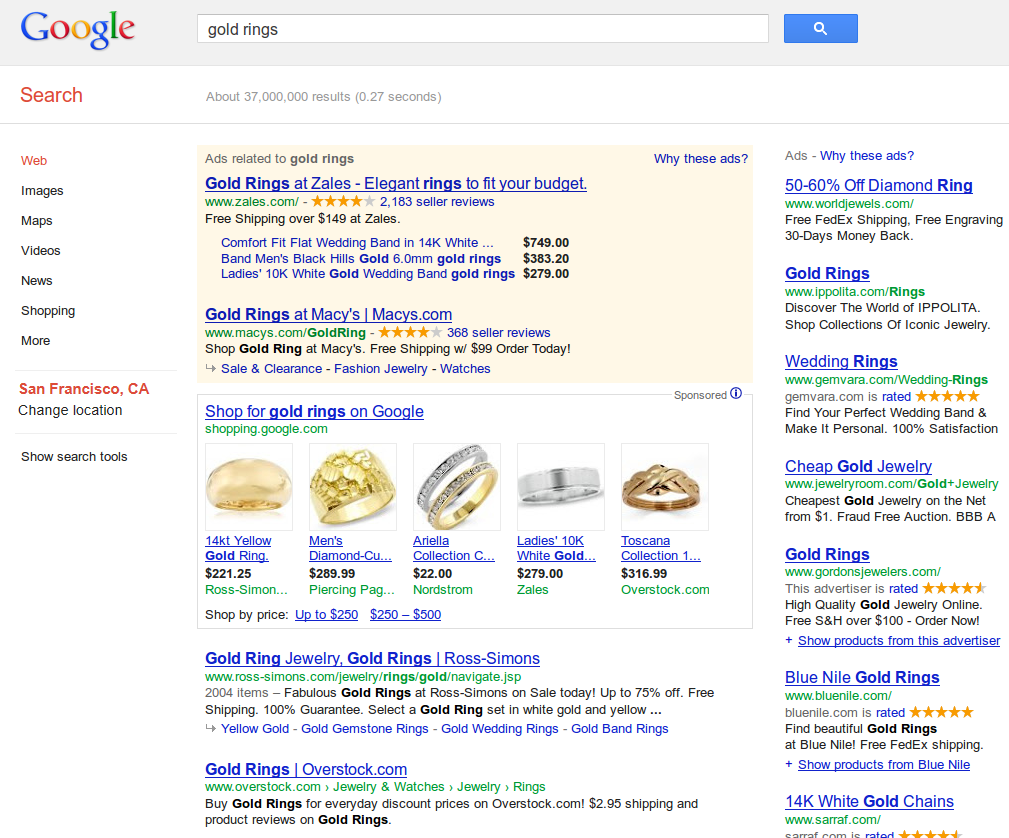
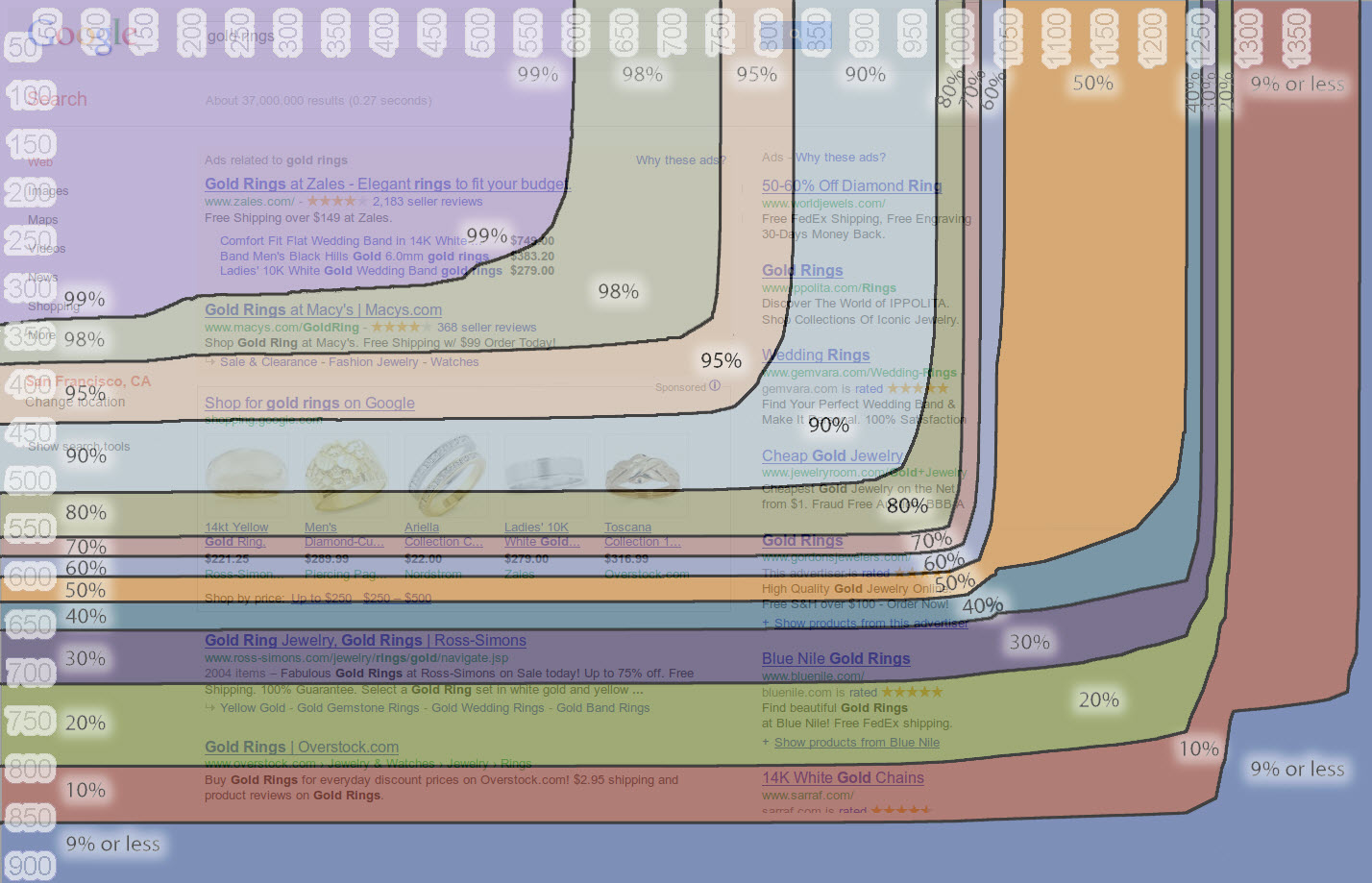
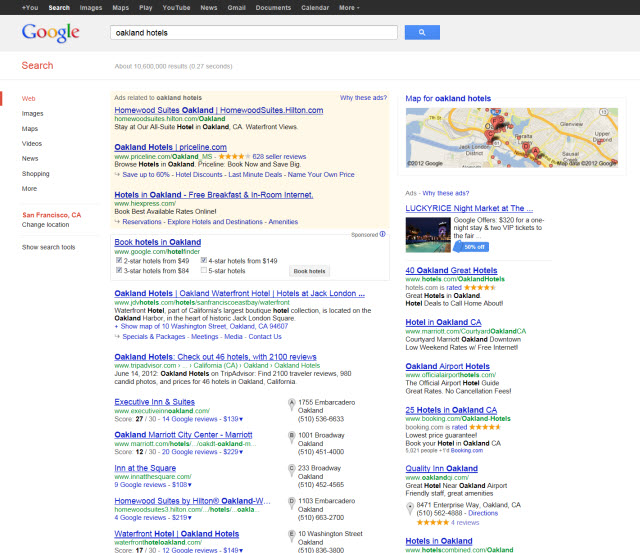
It's getting harder to breathe in the SERPS. We routinely point this out in various blog posts, but I thought now would be a good time to revisit this problem. As it continues to appear as if Panda was less about content farms and about something a bit more sinister the incredibly shrinking organic SERP is cause for concern as well:

Here you see one site with extended AdWords and organic sitelinks:

If you're not in the top 3, well then you're pretty much not in the game:

So much for SERP diversity:

A few key takeaways when looking at these results are that:

  • Competing and monetizing just on search traffic is probably not a good long term strategy (but can work short-mid term)
  • Google continues to layer on Google "stuff", becomes another competitor that is almost impossible to beat
  • You might want to explore PPC a bit more than you have in the past for more visibility, if the margins are available

It might make some sense to start evaluating the cost of your SEO efforts and figuring out how they could translate into getting your foot into other areas of traffic acquisition online via targeted advertising, media buys, monitoring blogs and forums for discussions about your market, keywords, or products. Spread the funds out to get maximum exposure in multiple areas (for both short term and long term positioning)

As you can see from the images, the long term viability of just relying on search engine traffic is likely to be a losing proposition.

Leveraging Your SEO Skills

SEO has long been more about marketing than making sure your title tags are perfect. A good SEO is a good marketer and it's been said on this blog over the years that SEO really should be part of a more holistic approach to an overall marketing strategy. However, many of you reading this might be in affiliate or Adsense camp rather than a full service SEO agency.

The good news for the SEO agency is that you have all sorts of ways to leverage your SEO skills. You can get into things like:

  • conversion optimization
  • email marketing
  • online media buys and adverts
  • analytics services
  • social media services
  • the venerable "design and development" market
  • offline advertising and tracking
  • local SEO and Google Places SEO as well as Yahoo! and Bing local

The options listed above are all items that can quite easily come up within the context of an SEO proposal or discussion and should make for fairly doable cross-sales or up-sells.

The problem with just selling rankings or traffic is that it's all too easy for the client to dismiss you after you've achieved rankings. What's worse, even if you achieve rankings there are no guarantees of results and going back to the client 4 months in to up-sell conversion optimization is usually a non-starter if the stuff you've delivered thus far is of little value ROI-wise.

No matter how effective your performance is, as an SEO you are working in someone else's ecosystem. Google may extend the AdWords ads or insert their own product search or local search or video search results right at the top and push your work down.

Part of your SEO career planning, if you are in it for the long haul, should involve you starting to take a serious look at some level of client work and/or refine your product offering to a more holistic one rather than one with a singular focus.

Affiliates Feeling the Squeeze

Since Google has clearly shown its true colors with respect to how they view affiliates on the AdWords side is it that hard to believe that is how they view affiliates on the organic side? In fact, one of our members received this email when applying their AdWords credit:

Hello Aaron Wall,
I just signed up for the Get $75 of Free AdWords with Google Adwords. After receiving an e-mail stating that I was to call an 877 number of Google Adwords, I was told in my phone call that affiliate marketing accounts were not accepted. I guess I confused by this statement. Is this in error? Or am I not understanding the Tip #3 for setting up an account for Google Adwords for promoting a website?
Thank you in advance for your time.
Sincerely,
Carole

Do you remember this video where the body language suggests AdSense is ok but OMG YOU'RE AN AFFILIATE (at approximately 0:38)!

Diversity, Diversity, Diversity

To counteract being viewed as a "thin affiliate", I'd suggest reading up on SugarRae's blog, specifically her affiliate marketing section.

Clearly you can build a quality affiliate site that is quite profitable, but how many can you reasonably expect to build out into thick, market leading sites without scaling high on internal costs to the point where margins become an issue or until Google monopolizes your SERPS?

Diversity is still key with respect to revenue streams but diversity between different revenue types (affiliate, adsense, client, product) is what you should be aiming for rather than just your garden variety diversity in revenue (just different sites of the same monetization method)

Where Do You Go From Here

The best thing you can do for your business is to stay out of debt. This is much easier said than done, especially if you live in the US where debt slavery is the norm and gets pretty ugly before you even have a chance to earn real money.

Being mostly debt free with some savings put away not only puts you in a better spot than most consumers but it also allows you to be less subjected to the whimsical nature of Google. Also, you can afford to be more patient, invest in new opportunities, and be less stressed out if some of your stuff turns down for a bit.

I'd venture to say that debt is probably a major reason why some folks went out of business after the Panda update and being debt free with some backup savings and income diversity helped keep some folks in the game.

Taking the First Steps

I would suggest that you take stock of your personal financial situation, your current revenue streams, your skill sets, and your feeling on the overall landscape of the industry and then start to make some decisions on the future of your career. With any update or change there are usually new opportunities that arise from the ashes of Google's scorched earth policy (or policies).

Now that Google is overtly spamming their own "organic" search results to try to capture the second click, riding as a parasite posting content on their own parasitical platforms is likely going to be an extremely profitable strategy in the coming years.

You might not make as much money posting content to Youtube as you made posting it to your own site, but you NEVER have to worry about Youtube disappearing from the search results.

The barrier to entry is getting much higher and rising fast. You need patience, capital, reliable/trusted information sources, and a bit of luck to succeed going forward. Within the span of a couple years it's gone from (mostly) the wild west to survival of the fittest. How do you plan on surviving?

Pages