


Examining Wikipedia's Bias
Some people are up in arms about the idea of Wikipedia adding ads to their site. The issue is not that ads are hated. The true issue with the Wikipedia and advertising is this:
The issue is not targeting or relevancy... the issue is that some will feel it is bait and switch. That something they thought was pure and easy to believe in now suddenly is part of the real world.
The truth is that the Wikipedia has always been chuck full of ads. I am not talking about the link spam that people sneak in, or when people promote their own brands, I am talking about the mindset with which Wikipedia articles are drafted. Lets look at the search engine optimization article.
Classification:
First of all, lets start with the classification and associated fields:
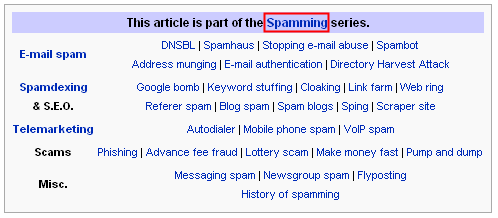
Even Google's guidance on hiring an SEO, which is quite biased (and self serving) in nature, probably is not as biased as the Wikipedia's classification of SEO.
Now lets compare that frame of reference to the opinion of Google's lead engineer in charge of search quality. From my interview with Matt Cutts, where I asked Is all SEO spam? His response was:
Absolutely not--I need to do a post about this on my blog sometime. Lots and lots of search engine optimization is white-hat and not spam at all.
The way Wikipedia classifies SEO is an advertisement biased against the entire field of SEO, and thus acts as an ad for search engines and pay per click marketing.
Accepted Types of Information:
I knew that directly linking to my site or directly marketing myself on Wikipedia was not going to go to far with them generally hating the field of SEO so much. On the other hand, I knew their vile hatred of the field meant that me mentioning Traffic Power and linking to articles about Traffic Power that link to my site would stay in that article forever. And they have stuck thusfar.
Framing:
The Wikipedia states:
When discovered, search engines may take action against those found to be using unethical SEO methods.
Why is ethics even tied to SEO techniques? Machines can't have ethics. When their results are inaccurate that must be the fault of some external third party with low ethical standards? What is that?
Participation:
"Wikipedia hasn't been a real 'wiki' where anyone can write and edit for quite a while now." A few months ago, in the wake of controversies about the quality and reliability of the free encyclopedia's content, the Wikipedian powers-that-be - its "administrators" - abandoned the work's founding ideal of being the "ULTIMATE 'open' format" and tightened the restrictions on editing. In addition to banning some contributors from the site, the administrators adopted an "official policy" of what they called, in good Orwellian fashion, "semi-protection" to prevent "vandals" (also known as people) from messing with their open encyclopedia.
There is a bias toward those who want to talk down or shine a negative light on the field of SEO while true topical experts are driven off. Google founders Sergey Brin and Lawrence Page mentioned Danny Sullivan in some of their early research, and yet Wikipedians ran him out of the topic. Danny is probably the single most authoritative voice on search.
Incentive:
If I know my words are probably going to get edited out of the Wikipedia where is the incentive for me to put effort into editing there when my work is much more likely to be respected and profitable if I put it on my own site?
Staleness:
Not only does the classification and writing within Wikipedia reinforce the worldview pushed by the most powerful associated commercial entity (Google), but the types of things that are reference worthy are "famous" SEOs, which is going to be inherently biased toward people who established strong brands many years ago.
Which of the listed famous SEOs have entered the field this decade? None of them.
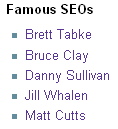
I have no doubt in my mind that many people newer to the SEO market than I know far more than I do.
Also as fields and language itself evolve will the large cross referenced content base that is the Wikipedia even be able to keep up with rapidly changing markets or linguistic changes?
General Factual Errors:
The SEO article on Wikipedia also states
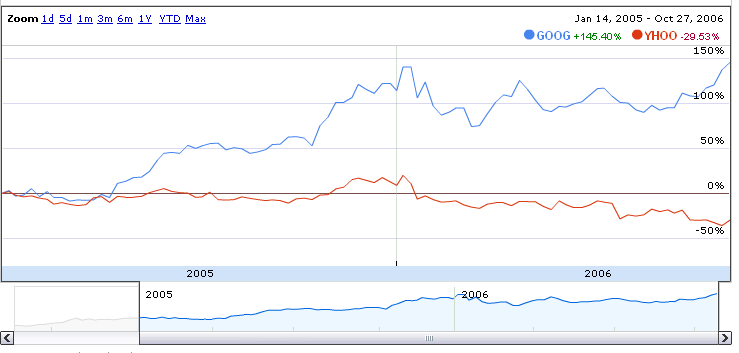
Yahoo! and MSN Search do not automatically punish entire websites for small amounts of hidden text. Google's market share of daily searches has fallen rapidly from 75% to 56% over the past few years, as other search engines find many web pages that Google has banned and cannot display due to Google's severely limited index.
One would have to live under a rock, having no access website referral logs, the news, or financial markets to believe that Google has been drastically losing market share to competing search companies.
The ease with which people can edit the Wikipedia creates a bias toward quickly adding incorrect factoids, while discouraging true topical experts from participating, especially if their opinion is likely to get edited out if it does not conform to the flavor of the day group-think.
One simple fact that must be accepted as the basis for any intellectual work is that truth "whatever definition of that word you may subscribe to" is not democratically determined. And another is that talent, whether for soccer or for exposition, is not equally distributed across the population, while a robust confidence is one's own views apparently is. If there is a systemic bias in Wikipedia, it is to have ignored so far these inescapable facts.
Conclusion:
I know one article is a small sample, and am not saying that I think the Wikipedia is a bad source for everything, just that in rapidly changing fields of commercial interests the Wikipedia is one of the last sources I would trust for an accurate view of the market. It is more representative of an advertisement that the most powerful sources in a market tell people that they should be thinking about.



Comments
Wiki is good for one thing and one thing only, link drops.
Lets face it, governing by the masses has never worked throughout history.
That is all.
Information about "Relevant" or "Famous" people are being added to Wikipedia.
In the case of the SEO Article is it a valid arguement to say that it is not relevant to the article itself and should be kept separate (like creating a category "Famous SEOs", attach the Artricles about the SEOs to it and only reference the Category in the Article.
Regarding the title "Famous SEOs". What title would be more appropriate in your opinion?
"Celebrity SEOs", "Influencial SEOs"? Hey, the Title can be changed in no-time if it makes sense.
Its funny to see people complain about the content and what is wrong and missing. Instead of complaining and posting about it, press "edit" on the article you have a problem with and change it.
Stop talking and do something. It's not the case that you can't do anything about the issue that bothers you like in most other cases of your life.
If the change is being altered or reversed (its still available in the history, no rewrite necessary) then you know that somebody (or multiple people) disagree's with you. The Issue can then be discussed at the Talk Pages. If no consensus is reached, other means to come to a decission are available at Wikipedia.
Well so much about the theory. I read an interesting post today that talks about some of the problems.
http://daveydweeb.com/2006/10/30/fixing-wikipedias-public-image/
It depends on who is judging whether it is a spam or not. They delete a lot of links which are actually not spams but are to commercial websites which have the best content written by the best people.
"Deleted the external link" - the reason.
Certainly I do not expect wikipedia to provide the best information but some information to start with. It is concept widely accepted as people found it new and fascinating.
Hi Aaron,
Come on over and help editing. Its an uphill battle and a lot of burocracy to deal with.
There are only a few SEO professionals or marketers (like me) doing something there and contribute some content.
The Topic is not very much liked by a lot of Wikipedians. The SEO Article is a tough article to start with as new Wikipedia Editor. You should not work on it anonymously (what you could, technically), because it might gets reverted by accident. It's a Hot Spot. Bill Slawsky from SEO by the Sea learned it the hard way and blogged about it. http://www.seobythesea.com/?p=178
You can get a good Idea what's going on with this article by looking at the Articles "Talk Pages"
http://en.wikipedia.org/wiki/Talk:Search_engine_optimization
The Talk Page has already 3 additional archive pages, which you should also check out.
Another Page to look at is the Articles Edit History.
http://en.wikipedia.org/w/index.php?title=Search_engine_optimization&act...
Finally, when it comes to Famous SEOs.
Go and create articles or extend the ones that are there already!. Shoot me an EMail for a Wikipedia 101, if you want to.
I started the Bruce Clay Article
http://en.wikipedia.org/wiki/Bruce_Clay which made me write a post at Search Engine Journal about it (and other stuff I stumbled upon when I was looking for references)
See: http://www.searchenginejournal.com/?p=3925
I hope I got you interested a little. Based on what I heart and know about you, am I sure that you would probably like the challenge. :)
Sorry for the duplicate comment. The first submit took very long and looked like a timeout. I added the comment again, but used preview first, noticed the non conversion of plain urls to links, changed it and posted it. I noticed then that the first submit was successful.
Anyway, I wanted to point you to additional resources about WIkipedia.
1) Wikitruth.info http://www.wikitruth.info
2) my user page at Wikipedia. Especially the Links Section. It's where I keep links to important or usefull pages/areas at Wikipedia.
http://en.wikipedia.org/wiki/User:Cumbrowski#Wiki_Links
Cheers,
Carsten
I don't like all this "Famous SEO's" crap - why famous?
I know little Mom and Pop SEO's that really know their stuff yet don't like the word famous bandied around.
Next "visualize" some Famous SEO walking through the airport with a "Famous SEO" baseball hat surrounded by security.......
Anyone who thinks they are famous is a wanker in my book.
Hi Aaron,
Bias on Wikipedia? Yes there is abuse and sometimes the contributors are more eager to delete or scoff at additions rather than stop and ask is this improving the overall wiki. But the wiki is now so large with so many contributors that i wonder if it has reached a critical mass where it would take a lot of time to really deteriorate in quality.Where else can you really get such a large and free resource? When you get away from some of the commercial areas and start to dig into controversial areas, for instance look up Richard Wagner and see the talk page, then you can use the articles to get a feel for the ideas & controversies.See the arguments etc
Famous SEO's? Another version of the rich get richer formula.
So overall i guess as long as you keep an open mind then Wikipedia is probably one of the best places to start searching for information.
The way I see it in the "The article is part of the spamming series" is that while it does say SEO and spamming in the same box, it does not mean that SEO is spamming. It means SEO can be spamming, and there is a type of spamming that is also SEO.
...humans are not a subset of left-handed people.
Is the page on Google AdWords categorized as a subset of identity theft strategies, brand hijacking & methods for promoting illegal pharmaceutical products? No.
Are Android or Google Chrome categorized as a subset of spyware? No.
The mis-categorization goes in one direction. And that is the direction preferred by the most powerful player in the category which...
Add new comment