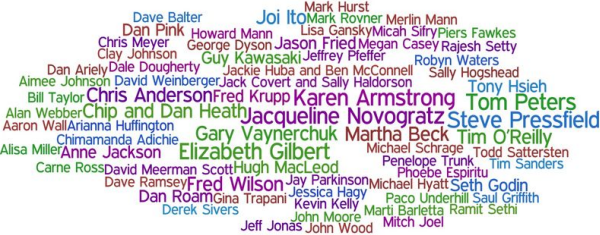
I am still behind on a couple major writing projects, but one of the writing projects that was hardest for me was trying to write something for Seth Godin's new project - What Matters Now. A killer PDF full of ideas from some of the leading thinkers in technology*
*and me ;)
When I got started online I ended up having to get a job because I had plenty of debt and no experience. But I learned somewhat quickly, and had a habit of taking pictures of things that I thought were interesting. After reading Andrew Goodman's guide to AdWords I saw he referenced Seth Godin, and so I devoured almost every (marketing) book Seth had published to that point and noticed there was the ability to buy a bunch (20?) of his Purple Cow book as an admission fee to see him speak live at his office.
I did the bulk purchase. So late after work one night I drove most of the way to Seth's place and slept in my car at a rest station about 20 miles from his business. When I woke up in the morning I went to his office a bit early, finished reading another book while anxiously sitting there, and then finally everyone showed up. His enthusiasm was great. And he taught just how much marketing is becoming art.
But what he did (that really made my day) was he grabbed a bunch of products that he thought were great examples of marketing and put them on a table. One of them was a Yorkie candy bar. I had just took a picture of one of those on my camera, and somehow when I saw that on Seth's table it made me think that maybe I knew what was going on. It was like some sort of validation or test. Like scoring an A on a pop quiz. That and reading his books really made a lot of things just click on the marketing front.
That night there was also a Red Hot Chili Peppers concert back up near where I lived (silly that I had money for concert tickets when I was broke...but I think I needed inspiration more than anything back then), so I had a long drive ahead of me...but on the ride to the concert I think I was far more excited about feeling like the web and marketing were falling into place than about going to see the great live music.
I was on salary and my boss viewed extra hours from me as free labor. And I was trying to learn online stuff while working about 70 hours a week at my job. It was going to Seth's office that helped give me the confidence to put in my notice that I was going to quit my job to play on the web. I did it way before I had enough cashflow to do so, but it worked out ok in the end :D
6 years later, to have seen Seth speak at Elite Retreat this year was great because it was a reminder how far I had come since I first started out. And to have him ask me to contribute to his new project was totally killer, and a bit humbling. It was so hard to write though because of the awe factor. It was too hard to condense SEO into 200 words, and then when you think of similar topics how can you write on hyperlinks when you see David Weinberger wrote a killer entry on that front. So I had to think long and hard about what to write about...and finally decided that the best thing to write about would be how you don't have to be perfect to get started online. I certainly was not, and still have a long way to go. ;)
Please check out What Matters Now and let me know what you think!
One of Google's leading marketing secrets is to appeal to power users. When describing how they designed Gmail, Google's Todd Jackson stated:
We started with the early-adopter crowd. That was on purpose. We wanted to build a product for people who were getting hundreds of e-mails a day, because we believe by focusing on the power user, you're designing the product the rest of the market will want in a couple years when everyone's usage habits catch up to the most active users. We pay most attention to seven-day active users (those who use Gmail at least once every seven days) and usage--the amount of actual engagement with the product. Something that Larry and Sergey (Larry Page and Sergey Brin, Google's co-founders) are always, always telling us is to focus on usage rather than users. That's what matters more. You get better feedback and you are properly kept more on the leading edge if you're focusing on the people who are using the product all the time, using the product all day, than just the casual users.
This is why marketing to developers and designers is so important...they use the web more, and the stamp they leave on it is much deeper than the average user. But they also tend to be sensitive to marketing messaging, especially when it becomes a bit hypocritical.
Eric Schmidt On YOUR Privacy With Google
Recently in an interview Eric Schmidt made the awesome statement "Judgment is important ... If you have something that you don't want anyone to know, maybe you shouldn't be doing it in the first place."
That approach to privacy from a search engine intent on personalizing the search experience is horrible for a number of reasons. It is bad enough that it encouraged reactions from security professionals and open source advocates, who like to remind us that Google is *always* trying to spy on you and collect more data.
"Everyone knows that every site you visit and all address bar searches in Chrome go to Google, right?" - Christopher Blizzard
Why did Google create an operating system? So they can spy on you. Why does Google care about speed so much that they created a DNS service? It was a convenient excuse to use...so they can spy on you. Why is Google launching their own cell phone? So they can spy on you.
Mozilla makes most of its money from their search syndication partnership with Google, and yet Mozilla's Asa Dotzler wrote about how to switch your search provider to Bing. Explaining why he favors Bing, he wrote:
Because search is broken like browsers were broken in 2002. No competition means that Google can do what ever it wants and you have to like it. Bing's search is pretty good, in the US at least, and their privacy policy is so much better (they don't, for example, connect your Microsoft email or office accounts with your search results like Google does so search data they collect isn't personally identifiable.)
For if we are observed in all matters, we are constantly under threat of correction, judgment, criticism, even plagiarism of our own uniqueness. We become children, fettered under watchful eyes, constantly fearful that -- either now or in the uncertain future -- patterns we leave behind will be brought back to implicate us, by whatever authority has now become focused upon our once-private and innocent acts. We lose our individuality, because everything we do is observable and recordable.
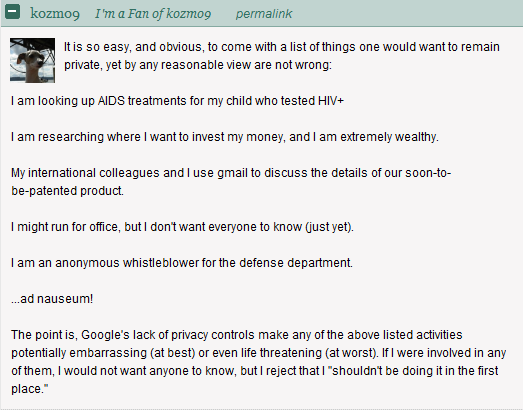
The following comment also reveals how this sort of tracking + philosophy on privacy can go astray
Why does Eric Schmidt dismiss your privacy?
money
Exploiting User Flaws for Maximum Profit Potential
Google collects more data than they need to (putting you at greater risk), so they can better exploit your mental weaknesses for profit. Eric Schmidt is betting big on exploiting YOUR privacy for profit:
Even better, the device knows who I am, what I like, and what I have already read. ...
Some of these stories are part of a monthly subscription package. Some, where the free preview sucks me in, cost a few pennies billed to my account. Others are available at no charge, paid for by advertising. But these ads are not static pitches for products I'd never use. Like the news I am reading, the ads are tailored just for me. Advertisers are willing to shell out a lot of money for this targeting.
In a world where democracy is getting more participatory, it's very important that people are informed over a neutral medium so they can connect to whoever they want. Another issue that is very important is snooping. I don't want any snooping on my Internet traffic.
You can do things to ensure that my Internet runs smoothly, but when I am doing something which is perhaps very intimate: when someone looks up something to see if they have cancer, or a teenager wonders if they are homosexual or not and wants to go online to find answers, this should be private. So systems that monitor every click and build a profile of me are very damaging.
The things we do on the Internet are so intimate that they are much more valuable to others and damaging to me than having a permanent TV camera in my living room. I don't want my health premiums to go up if I look up health information; I don't want to be a suspected terrorist if I do research on chemicals, I don't want to get leaflets from gay rights groups if I look up something on sexuality.
At least we know why Eric Schmidt says "Advertisers are willing to shell out a lot of money for this targeting" and why he thinks you don't need to worry about it.
But maybe Mr. Schmidt is right. Lets look at how Google operates...
With Nearly Unlimited Privacy & Secrecy
What happens when Google gets search personalization or search suggestion wrong and your spouse wants to divorce you because of a Google error? Judgment is important, after all. Well Google wouldn't make such errors, they are perfect. Or are they?
Google's Data Privacy Strategy is a Leaky Boat
Google wants you to trust them enough to store your data with them in the cloud. Eric Schmidt said that the cloud was their most important focus in 2010. Well what happens when your internal data is exposed publicly due to a Google bug? Couldn't happen? Well guess again and again.
Is Eric Schmidt suggesting that businesses simply shouldn't consider using Google Apps because Google has a track record of not caring about user privacy & being sloppy with private data? How should we judge Google based on their current business practices? Judgment is important.
Google Promotes Lambasting Content
A few weeks back while watching CNBC I remember seeing reporters mention that if you want customer service from airlines that you should complain on Twitter. Google has since integrated such messages directly in their search results. So now any bad customer experience (or envious competitor) becomes part of your brand. And you can't make money while making everyone happy. As the web gets more competitive the markets will only get nastier, where more people try to cash in on established brands.
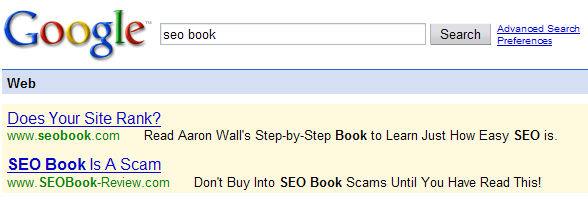
In fact, running AdWords ads asking if (or exclaiming that ) product or service x is a scam is one of the most popular AdWords affiliate strategies. Google doesn't let brand advertisers opt out of such messaging on their brands, and if you don't buy your brand they will be glad to sell that ad slot to someone else.
How should we judge Google based on their current business practices? Judgment is important.
Google Uses Limited Ad Disclosure
Google has frequently talked up the importance of publishers disclosing ads. And yet in some cases Google removed the "Ads by Google" notification with a little "I" button that you have to scroll over to see that it is an ad.
INT [interviewer]: “Why do the results on top have a yellow background, did you notice?”
TP [tester]: “I didn’t notice this.”
INT: “What does it mean?”
TP: “It definitely means they’re the most relevant.”
Google did not use this feedback to beef up their clearly confusing disclosure...they stuck with what was working well for them.
How should we judge Google based on their current business practices? Judgment is important.
Google Funds Manual Information Pollution
I was looking through some of the suggested article titles for some of the garbitrage websites, and came across gems like "Miley Cyrus Did What? Celebs who Make Bad Decisions and How to Teach our Kids Right"
Could that title be any more leading? And Google is funding that sort of garbage - right now.
How should we judge Google based on their current business practices? Judgment is important.
Google Funds Automated Information Pollution
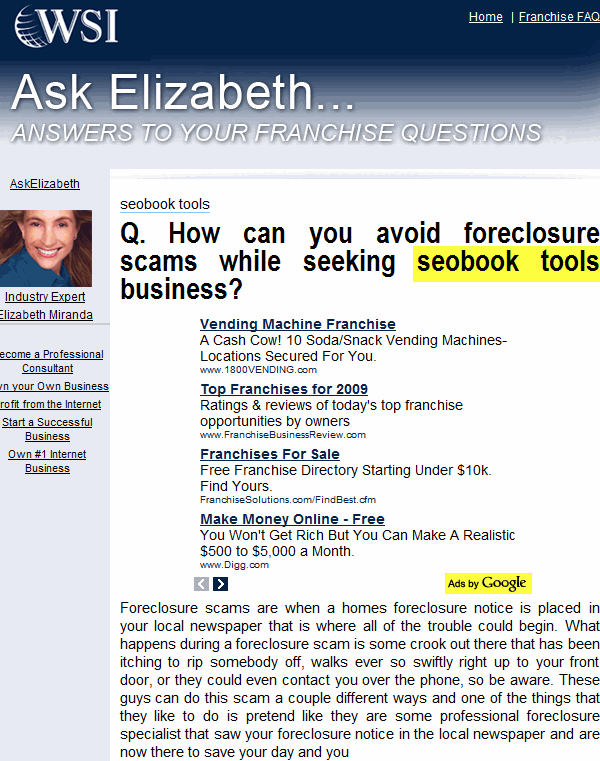
And there are sites with automated content generation built around arbitraging brands. A few months ago I saw the following automated crap ranking for some of our branded keywords...trying to arbitrage our brand & associate it with foreclosure scams
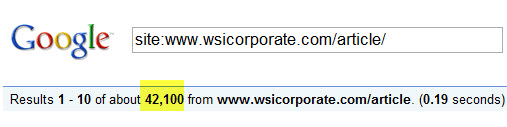
And that was not a 1 off article...Google is paying to have 10,000's of such gems created, and is indexing them with glee
What does it say about the Google brand that their ads support this automated generation of trash? What message does that send to online consumers and business owners? How should we judge Google based on their current business practices? Judgment is important.
Google's Enjoyment of Privacy (aka Black Box Pricing)
Are you a Google cell phone partner who built a phone on Google's Android OS? If so, did they tell you that they were going to thank you for the cross marketing by creating a competing product? I doubt it.
Are you a Google partner who syndicates their ads? Want to know what percent of the click price you are earning? Screw you, you can't. Go eat crow.
And in the markets where Google is dominant they not only pass arbitrary judgment without care, concern, or explanation...but they also use their market position to exert monopoly pricing powers. They frequently state that the market sets the prices on the ads, but for one of our sites we did some brand ads on informational searches where there are no competing sites buying AdWords ads.
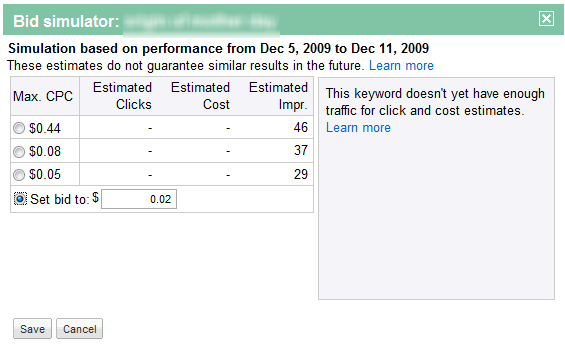
Our ad is so relevant that even the broad matched version of the ad is pulling in a 12%+ clickthrough rate (with phrase match more than doubling that clickthrough rate). Searchers love our ad and website. But if we bid less than a nickel Google won't even display the ad (in spite of the high relevancy and complete lack of competition in the marketplace).
Google sets arbitrary floor prices and shows you that if you want more clicks you need to pay more, even though the only competitor in this auction is Google. It is no better than the shill bidding SnapNames got in trouble for.
And yet you often hear Google talk about the power of democratic marketplaces. Something they clearly don't believe in. What message does that send to business owners? How should we judge Google based on their current business practices? Judgment is important.
What is YOUR Judgment on Google?
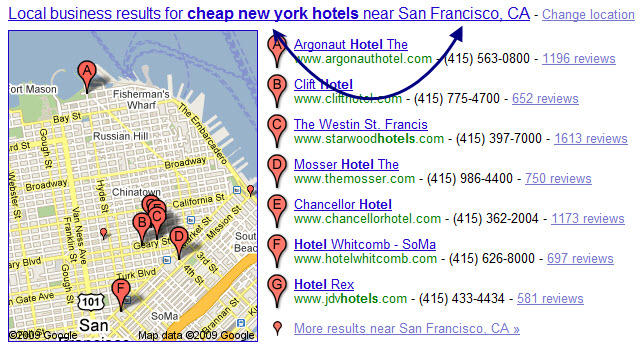
Anytime you see Google do something stupid make sure you blog about how stupid Google is, and compare their errors to what sort of results are available on Microsoft Bing. Feel free to leave your examples in the comments AND blog them. I'll share one of my favorite examples from today, showing me New York hotels near San Francisco :D
I still use a lot of Google products and write the above knowing that they have been pretty good to me, but seeing nonsensical garbage absolutist statements from the top of their company scares me.
Careful what you enter into a search box. And be careful when choosing your web browser. I would rather pay $50 more upfront and not get spied on. How about you?
Watching the big co. media vs Google interaction has been entertaining, largely because they claim search is an either/or game.
Matt Kelly, from the Daily Mirror, exclaimed how SEO was a dead end and how they were only able to grow by not worrying about SEO:
three months ago, we launched two new websites - and actually stripped out from Mirror.co.uk two of our core drivers of traffic; showbiz and football. Creating two new niche websites, built on very different platforms designed especially to show each off in their best light. And the hell with SEO. We we're chasing passion, here, not page impressions.
In the case of MirrorFootball, it is the ideal platform to combine our brilliant coverage of the British football with a unique collection of photographs and pages stretching back to 1903 - definitively the greatest British football archive in the world. With 3am, it is taking a unique brand and attitude of showbiz gossip and giving it the best possible platform online.
With these two new websites, I believe we have taken a very important first step - a very difficult first step - to put that sense of brand and value and character back.
How? By putting SEO in its rightful place as a tool to be used when appropriate
Brands Should Align With Interests, Not a Secret!
He claims the reason for the growth was not worrying about SEO, but nearly *any* smart & sophisticated SEO will tell you that if you have a couple sections of your site that are root drivers of traffic & repeat visits it might make sense to leverage your brand strength to create niche brands built around that passion.
Passion = readers + links + loyalty.
This is not some sort of new secret finding...it is why there are PROFITABLE magazines on water and running, and this is why passionate niche sites have done way better than many mainstream media sites IN SPITE OF Google preferring to promote the broad media oligarchy via promotion in Google News and the Google onebox.
SeoBook.com in it's original form was a blog in the bowels of another site. After our blog started gaining just a bit of traction I realized that it was worth turning into a separate brand and running with. I got on the web (commercially) in 2003, and making that shift was something I figured out...back in 2003.
Niche is the Easiest Way to Win Online
And anyone who cares and is passionate can own a niche. Maybe a small one to start, but over time it can grow. And even people with limited social skills can pull in quite a following if they can sell the illusion of success to others. On the announcement of his Open Angle Forum I told Jason Calacanas (which he didn't publish)
Nice strategy. I don't always agree with your public relations tactics, but (outside of being hypocritical) they are effective, and this launch is a good way to really start stamping a big footprint into the start up market. :)
If you own (or have interest in) the surrounding media ecosystem you can pump your own interests after investing in them. A sure way to ensure they get the right types of exposure & adequate public relations + PageRank.
You pick the market you want to play in, work at it for a few years, and you can do well enough to make a living. There are literally a million markets waiting for you (and more being built every day). And software keeps getting cheaper and more powerful. :D
Sharing Free Content Provides Social Proof of Value
Any doubt or uncertainty is a tax on profits. Nobody wants to do something stupid, and sites that have a public portion show social proof of value which lowers perceived risk. And if attention follows what is publicly accessible, then it is typically better to be the person commoditizing competing business models by giving something away, than to be the one getting commoditized. ;)
Paywall + General Purpose = Fail
When general purpose / unfocused media companies put up paywalls they will just commoditize their position on the link graph. Even if you are a paying subscriber AND you chose to link to content behind a paywall, most people reading your website would rather read your accounts and link at your accounts. On a large viral network content behind paywalls doesn't typically go viral.
In addition to the glut of competition for the "news" topic, the other reasons the media suck at making a business from SEO tend to be a lack of canonical topical sections (which focus domain weight and authority against core keywords), a slow & bloated business structure, and them treating business as though it is deserved (rather than earned).
Many Media Companies *ARE* SEO Savvy
This is not to say all media companies are stupid. Much of the anti-seo talk is just a combination of misdirection & posturing for self promotion. Deep down inside Rupert Murdock understands this, which is why he invested in leading media brands like the Wall Street Journal.
It looks like Matt Kelly, who wrote the above nonsense about putting SEO in its place, just got promoted. Also not a coincidence that his company (which claims not to care about SEO) actually employs outdated SEO techniques (like keyword stuffing) on the sites which are allegedly not concerned with SEO!
Some of these companies that claim SEO is somehow bad are not only doing SEO, but are also using spammy hyped up headlines which promise steak but deliver dog food. Headlines are the new bubble. How is that any better than pulling in traffic through the use of a relevant page title?
"The only thing worse than being talked about is not being talked about." - Oscar Wilde
Google also understands the importance of being in the news and the importance of blocking news coverage of competing business interests. You can see their fondness for public relations in how...
The first of those is a non-starter for any serious business enterprise. If you don't host it then it is much harder to control the business built around it (especially while leaking your intellectual property to a direct competitor).
Exploiting User Flaws for Maximum Profit Potential
Even better, the device knows who I am, what I like, and what I have already read. ...
Some of these stories are part of a monthly subscription package. Some, where the free preview sucks me in, cost a few pennies billed to my account. Others are available at no charge, paid for by advertising. But these ads are not static pitches for products I'd never use. Like the news I am reading, the ads are tailored just for me. Advertisers are willing to shell out a lot of money for this targeting.
In a world where democracy is getting more participatory, it's very important that people are informed over a neutral medium so they can connect to whoever they want. Another issue that is very important is snooping. I don't want any snooping on my Internet traffic.
You can do things to ensure that my Internet runs smoothly, but when I am doing something which is perhaps very intimate: when someone looks up something to see if they have cancer, or a teenager wonders if they are homosexual or not and wants to go online to find answers, this should be private. So systems that monitor every click and build a profile of me are very damaging.
The things we do on the Internet are so intimate that they are much more valuable to others and damaging to me than having a permanent TV camera in my living room. I don't want my health premiums to go up if I look up health information; I don't want to be a suspected terrorist if I do research on chemicals, I don't want to get leaflets from gay rights groups if I look up something on sexuality.
At least we know why Eric Schmidt says "Advertisers are willing to shell out a lot of money for this targeting."
In the past I have vented email frustrations in many ways (and truth be told I am still way behind on email to this day) but I thought it would be worth sharing why forums are a way better business model than personalized emails for helping people.
I am not sure if all my thoughts and analysis are 100% spot on, but this is why I like private forums so much.
Instant Feedback on Value Perception
One of the first reasons is that you instantly have a yes/no answer on if the person values your time. If you are answering questions via email then the transition to paid support via email gets to be a bit weird...with people pushing for as much as they can possibly get for free, and you being the bad guy if you charge. By deciding to answer virtually no questions via email you help them understand that your time and your knowledge *ARE* your business model, and that if they value them they can pay for them.
Sure you can answer questions on if you might be a good fit, but anytime you here something that starts off with "have a quick question" followed by some very specific requests about their exact situation and website then that person will rarely convert....they are just trying to squeeze as much free information as they can.
Reciprocity = No Pikers Please!
A second major advantage of running a forum vs trying to help people via private email is that it filters out the pikers. Back when I would try to help people via email, I would get lots of questions like these...
Hi Aaron
I want to do something really spammy that could easily generate 6 or 7 figures of income. I want you to guarantee it will work, (and to be able to cast the blame on you if it does not).
Hi Aaron
Google just banned our site. I gave you $79. Fix it now.
Hi Aaron
I bought your book and was too lazy to read it. But since I gave you $79 I need to see at least $100,000 in returns. Map out my strategy. Oh and I have a $0 budget...as I already spent my $79.
Hi Aaron
I have a spammy direct marketing 1 page salesletter website that I need to rank #1 for "mortgage". I have no budget and am unwilling to improve the site or add value in any way possible, but this is no problem since you are an SEO.
Hi Aaron
I don't have very much money (or knowledge for that matter) but I took on some clients that I am charging a lot of money to and I need you to do the work that I am charging them a lot of money for.
Now most people wouldn't be quite as direct as the above...there would be flowery language to try to cloak the bluntness and absurdity of the proposition.
But the cool thing about our current business model is the above people have disappeared from the equation.
We can point people right to their areas of need if they are in need, and the people who would have the never-ending general stream of irrelevant questions don't exist. And the people who are reselling services (but want you to do ALL!!! the work) don't exist either.
I think the reasons for those are mainly reciprocity.
The person who is a no value add vulture will presume that others are just like them, and would be afraid to mention specifics in a community (where others see it). And if they are too generic then the answers can't be as specific as they otherwise would be.
The person who is too lazy to study would be too embarassed to ask the same questions over and over again without listening to your answers. And those who ask for general reviews are highly receptive toward feedback. There is the community element of it, to where if a person asks you to review their same site 4 different times and they haven't done a lot of the tips from review #1 or #2 people will tell them about it.
Another such example of the type of piker (who was around in our old business model, but no longer exists today)... one guy emailed me about how broke he was and how he needed his spam hype garbage single page salesletter sites to rank and he had already paid $79 for my ebook... etc etc etc
The SAME GUY was in a book my wife read a year later as a case study of a self-made internet multi-millionaire who made his money doing info-marketing. So he was a fellow info-marketer and he wanted 10+ hours of my time for under $80.
He didn't like it very much when I told him I could use some $8 an hour help in his profession!
Answers With In Depth Context
Via email people sometimes try to quite literally write chapters to me. And OFTEN then don't even listen to my responses...so it just ends up going astray. People don't respect what they don't pay for. They usually start off with "a quick email" but after 3 or 4 hours of work on my end the perception of "quick" often changes.
With email the only way to respond to email overload is to be short (and maybe sometimes blunt). Such interactions often lead to more confusion and/or some incorrect assumptions where people feel insulted in such. The community setting of the forum prevents that issue for me. Out of close to 100,000 forum posts we have only had anyone feel insulted less than 5 times (so far as I am aware anyhow, and I read every post).
The interactive dialog ensures questions get not just answered, but understood. Further, sometimes you are good at explaining something to person B but not so good with explaining it to person C. But if person B understands you then sometimes they can do a better job of conveying the issue to person C.
Have a Lotta Help From My Friends
Since the forum is closed to the public the incentive to spam it is lessened, while the quality of membership is increased (because people pay to be there).
There have been technical topics covered in the forums where I am not the right guy to answer them - AT ALL. And, because our community is diverse and has lots of helpful members, the people asking those questions get much better answers. And since many people are there questions are typically answered far faster than a person can do via email.
And as people invest more time into participating they only want to help more. Putting people in a social setting really helps the user/abuser types self-select out of participation whereas those who realize that they get more when the give more and participate more are able to learn so much more from it and get a great bargain, creating a virtuous cycle.
A Searchable Database of Answers
Over time the forums get better at collecting questions and answers in a variety of formats...which makes its internal search become more relevant over time.
Selling an Interaction
With my old ebook model I was selling something that could be copied. With the new model there is always change happening and always new things to talk about...so it is selling more of an interaction than a static product, and people only pay as long as they find value in being a member.
Less Reliance on Search
Anytime you have recurring subscription income then you are not so reliant on using search and other forms of push marketing. Sometimes just giving a really good customer experience is enough to help market your website.
And the Negatives?
There are not a lot of negatives to private forums as far as I see it, but there are some things worth thinking about, as no business model is 100% roses.
The first big risk is not hitting a critical mass. If you do not build it out to self sustaining then anytime someone joins they feel like they made a bad decision (since there is no/low activity).
Back when I had my ebook model I remember taking a two week European vacation. While I can still travel, it is much harder for me to unplug because there is work I have to do everyday. And it is tricky balancing what to do. Shall I participate heavily in the forums, write the newsletter, work on planning out some new SEO tools, create more training modules, etc. There really is an endless array of things to be done.
In some cases maintaining account permissions can be time consuming as well...especially if you discount the time it can take and under-price services. A couple ways to get around it are to try to charge enough to limit your size such that you don't have to worry about it too much, hire on help, add a support section to your site, and try to get people to sign up for longer periods of time.
The last tricky part is managing growth. If you grow too quickly it could lower the utility and quality of your site. If you grow too slowly then you risk the site fading into an eventual obscurity. How can you grow too slowly? Every type of membership site has a growth rate (and things that influence it) along with a decay rate (and things that influence it). If you are not improving the value of your site then eventually the decay rate overtakes the growth rate. So you keep needing to try to add more value.
Some people try to make membership sites seem like a set and forget revenue stream. If they aim to offer real value that can't be any further from the truth. The tricky part then is trying to maintain or grow the earnings of the business while also trying to maintain or grow the quality of the members. It can be quite challenging because most things that inspire quick growth also lead to a higher churn rate. And if you focus too highly on customer quality you can end up missing some of the better potential customers in the beginner portion of the market. That is a big mistake because
the beginner piece of the market is typically the biggest market segment in most markets
beginners tend to be more likely to spend (it is easier to deliver perceived value to a person who is unaware of everything that is out there than to a person who knows their options quite well, and this is especially true in markets with many software products)
the people who are experts today were once beginners (and are likely sticking with learning from many of the people they took too when they are beginners)
Google recently announced their fade in homepage. From a marketing perspective I think it is interesting to try to figure out why they did that. Marissa Mayer wrote:
the variant of the homepage we are launching today was positive or neutral on all key metrics, except one: time to first action. At first, this worried us a bit: Google is all about getting you where you are going faster — how could we launch something that potentially slowed users down? Then, we realized: we want users to notice this change... and it does take time to notice something (though in this case, only milliseconds!). Our goal then became to understand whether or not over time the users began to use the homepage even more efficiently than the control group and, sure enough, that was the trend we observed.
I think there are 3 big reasons to consider such a test
it is now impossible for any competitor to win by being viewed as more minimalistic (on the homepage, anyhow)
as Google noises up their search results with various verticals (from their universal search) they want to remind searchers how beautiful and minimalistic and elegant Google is
to get people to pay more attention to the ads below the search box (making them appear a second later makes them POP much more than if those directed ads were there right off the start...and as Google enters more verticals with new features they will use that announcement area on the homepage much more often)
The blank page conveys simplicity even as Google dominates new verticals by becoming more complex.
Such initial perceptions matter a lot in marketing. You see people quote your site as being advanced or basic or some such, and when some such statements skew in the direction that is opposite reality that comes down to mis-perceptions.
We are planning on doing a new site design soon(ish) because while our site design was perfect for what it was back then (a personal blog about SEO) as our site has bolted on so many pieces (training + community +newsletter + tools) that I think the design doesn't fit all the stuff we have added to it. If you shift with the market but do not shift your design it is a bit of mixed messaging, and anything that increases doubt or confusion is a tax on conversion.
Recently on Twitter a couple people mentioned that we should create tools similar to our Firefox extensions for Google Chrome. Then on TechCrunch there was a comment "As soon as I see the SEO Book toolbar for Chrome, I’ll be glad to uninstall Firefox." I read that and thought news to me.
First of all I think it is a bad idea because if Google owns the search engine and the browser then maybe that is not the best spot to have your SEO research stuff hooked up, but even beyond that I don't think we would make $1 more by creating those tools. Why? Because the people who use Google Chrome for SEO research are not the type of people who want to pay for anything related to SEO (outside of buying links perhaps).
My buddy Patrick from BlogStorm mentioned 'Imagine all the links you would get from people writing about the "Top 10 Chrome Extensions for SEO"' but when you think about it, what kinds of "customers" would those links bring? Entitled demanding and rude non-customers who pollute our sales funnel and waste our time. Eh...not really worth it.
Today a person running a COMMERCIAL SEO company told me "One of my employees loves the hubfinder and is now distraught that it's not free anymore. What would it take to get access to that tool?" And I responded with "if they are distraught over $300 then frankly they are quite pathetic, IMHO." He wants to CHARGE his clients, PAYS his employees, and then wants my time FOR FREE to ask how he could get FREE access to the fruits of our labor.
Distraught? Really? I couldn't imagine having the audacity to send that message.
And the truth is...that is 99%+ of the SEO market...everything should be free except whatever they sell. But we have to PAY $1,000+ a month for a web host, PAY for our vBulletin license, PAY for our SupportSuite license, PAY to license data from other sources, PAY to create tools to collect data, PAY to create new tools, PAY to maintain tools, PAY to advertise, PAY for a design + redesign, PAY for additional servers working creatively on future projects, PAY for the risks associated with being a well known public SEO, PAY to fly out to speak at SEO conferences & share information, PAY for upgrades to the site, SPEND lots of time on creating content for the blog, PAY PAY PAY etc etc etc
We have subscriptions with services like Compete.com and WordTracker because to us they are worth it.Which is why we buy AdWords ads, certain links, access to other sites and services, desktop software like AdvancedWebranking, etc. I have easily spent $100,000's on consulting, tools, and info-products. Was every purchase profitable? No. But in aggregate, there was plenty of profit to be had.
The people who are selling stuff but who are afraid to spend any money themselves often sell trash. They are not convinced in the value of what they sell (often because it is lacking). Or as Seth puts it...
Money is more than a transfer of value. It's a statement of belief. An ad agency that won't buy ads, a consultant who won't buy consulting, and a waiter who doesn't tip big—it's a sign, and not a good one.
You don't create a real business by being the free infrastructure for someone else's business while giving it away AND providing 1:1 support. That is why open source works so well...give away the software, but if they want 1:1 support from the source theypay for it. $$$
Yes we could use more links, but that is not a weakness in our business right now...we have something like a quarter million people using our stuff. If anything, I would love to donate some of this site's links to a few of our affiliate websites. ;)
Imagine having a quarter million+ non-customers. If you are at that scale your problem is not finding a way to get more people at the top of the funnel. At that scale the issue more becomes filtering out the bottom portion of the market without offending the people who might potentially become customers. Assume 5% of the 250,000 people are entitled ___holes. Assume another 5% of them are great people who just happened to have a minor issues in the conversion process (forgot their username, picked the wrong username, registered under the wrong email address, didn't get the welcome email, etc.). Could you imagine handling 25,000+ personal emails a year? Add in paying customers & media inqueries and now your up above 30,000. And that doesn't even include making close to 1,000 posts a month in our member forums and reading the nearly 100,000 posts that have been made there! I love the work I do (and love helping people), but I think this really expresses the sentiment nicely.
I had to add the following to our support feedback section to help make the pollution from non-customers more manageable
Free SEO Tool Issues?
A Polite Warning for Non-customers
We run the best SEO website with the deepest and richest customer engagement. But our resources are finite and our time is valuable.
We Give Away Lots of Value, But Our Company is Small
At the same time we have given away some of our free SEO tools to over 100,000 webmasters. We can not provide 1 to 1 support to an audience that large while still providing the amazing customer experience that our paying customers have grown to appreciate and expect. If you are not a PAYING member then we expect you to read the installation and usage documentation before filing a ticket.
Did You Read The Usage Instructions?
Please note that if you are not a PAYING customer AND your issue is with our free SEO tools then we will NOT respond to ANY requests where you have not read the installation and operating instructions from the associated download pages.
SEO Tool Usage + Configuration Instructions
For your convenience here are links to the official resource centers for SEO 4 Firefox, Rank Checker, the SEO Toolber, & the download page. (The download page requires you set up a free account and login to it).
Need to Uninstall a Tool?
If you would like to uninstall something here are 2 ways to do that.
In his book Here Comes Everybody, Clay Shirky stated something along the lines of popularity being an imbalance between supply and demand of attention. Which is precisely why filtering is so important. If you don't filter out the laggards and freetards you are only holding back your own potential while giving your paying customers an inferior service to what they deserve.
Eventually it gets to where filtering through that noise becomes nearly a full time job. (Lucky for me I work twice as long as just about anyone I know), but anything that makes the sign up process more complex creates more noise (which potentially eats your time + harms your brand while creating 0 income). Plus the above quoted piece from our support section might turn off some potential clients...but it is always a game of filtering...help as many people as you can and hopefully try not to offend many people.
What we are scarce on is time. And that is also what many people new to SEO are scarce on. And what people who are willing to pay for correct information with rich context are short on.
Working through all the hype and misinformation and scammy offers can be a bit overwhelming. To a person who is new to SEO, it is already confusing enough to decide...
which tools offer real value
if they should use any software
if they should use free or paid tools
what combination of software to use
And if we duplicate our tools for many different browsers then that ends up increasing the maintenance cost WHILE harming conversion rates (because people don't know what they should chose, or why you have so many tools doing the same thing).
The capital and efforts spent creating (and maintaining) a second or third set of duplicative free SEO tools would be better spent creating more paid tool & content for our paying subscribers.
Update #2, September 8, 2016: After a developer was arbitrarily banned from the Google extension store, he found there was literally no customer support:
"I don’t think I will ever develop anything for the Google ecosystem again. ... I went on to search for a Developer Support page, but after half an hour of searching I found out that there is none. There is no support whatsoever for the developer besides Google’s own documentation. ... I just want you to think twice before creating a revenue stream based on the Chrome Web Store." - Zeno Popovici
I'll pass on creating a Chrome extension. And I'll pass on using Chrome. If you are an actual practicing SEO & have an IQ above 70, you'd skip both as well.
Google's relevancy algorithms have largely been driven by taking the "authority" shortcut. Have lots of other domains linking to your site? It must be good. Here is a golden ticket...your site ranks for everything.
That curbed some types of spam (by increasing the sunk cost needed to rank a new site), but it has taken brands only a few years to adjust to that hole in the algorithm. Witness the rise of answer spam, scraper re-purposing spam, social media recycling tools, freelance articles for a nickel spam, machine spun articles that are textually unique, etc etc etc
Increasingly, the biggest role of brand in search publishing is to legitimize stuff which might otherwise seemillegitimate and give them enough scale that it hopefully kicks off enough AdSense revenue that it matters to Google.
To appreciate the impact Demand is poised to have on the Web, imagine a classroom where one kid raises his hand after every question and screams out the answer. He may not be smart or even right, but he makes it difficult to hear anybody else.
The article (unlike most eHow articles) is well worth a read, but a quick summary...
buy up some aged well linked to sites (that were perhaps linked to when it was easier to get links with watered down content and before the web graph was as corrupted by $ as it is today)
create algorithms to mine their analytics data and Google's tools to estimate the earnings potential of any piece of content
pay freelancers crumbs to write write write based on whatever the algorithm spits out
run the content through a tool like Copyscape to verify it is unique
pay a reviewer ~ $1 to verify the article is (nearly) legible
keep refining and optimizing the above components based on feedback from earlier tests
create sister websites that are heavily cross-linked which host a second page about the highest earning topics
And in opening up their playbook to Wired, Demand Media likely created dozens of additional competitors who will aim to monetize the longtail of search via freelance articles of varying quality. Aol, headed by former Google executive Tim Armstrong, has been talking up a revolutionary media model to the media, which reads exactly like the Demand Media playbook:
The predictions, it says, are based on a wide swath of data AOL collects, from the Web searches people make on its site to the sites visited by subscribers to its Internet services.
The system is designed to track breaking news and trends and identify the best times to write about seasonal events, such as Halloween or Monday Night Football.
Based on these recommendations, the company's editorial staff, which totals about 500, will assign articles to a network of free-lancers across the country via a new Web site called Seed.com. AOL says it now works with about 3,000 free-lancers, but it is hoping to sharply increase that number through the Web site, which is open to anyone looking to submit a story. To cut costs ahead of its spinoff, AOL recently said it was cutting about a third of its total staff, or 2,500 employees.
If authors are going to get paid for performance on a freelance basis to churn out junk then they may as well spend a few months learning internet marketing, blogging, and Wordpress...if publishing is algorithm driven you don't really need to work for someone else to make a few Dollars per article. It is VERY easy to beat that, so long as you are willing to wait 3 to 6 months for your payout.
And the process of scaling automated low quality content generation is only going to make existing media channels reliant on search feel more pain. Dollars become dimes. Dimes become pennies. As traditional media companies go bankrupt companies like Demand Media and AOL will buy up the brands and fill the sites with more good content.
This not only will further harm traditional media models, but it will also pollute up the search results so much that...
it makes it hard to find quality information via search
private membership sites and paid niche content will become more popular
Google will either be forced to change their relevancy algorithms or make an example of a big company in the search (g)arbitrage game, or else searchers are going to have an awful experience over the next half-decade or so
I wish there was an Exchange Traded Fund which allowed me to place a bet on information pollution...until Google stops it, the profit potential will be too great for opportunistic "publishers" to ignore. It is a rare sure bet. And it is entirely up to Google to decide how big they want to let the bubble get before they deflate it.
Here is what the content revolution Tim Armstrong speaks of looks like:
Imagine 8 of the top 10 search results for every longtail query looking like THAT. And yet, it is about to become reality.
Those who know the least yell loudest. And Google is colluding with the likes of Demand Media and Aol to ENSURE every idiot has a megaphone. Ignorance is powerful.
Sorry I haven't made any posts in a while...as we recently took on a big project AND moved hosts on SEO Book (currently on a speedy quad core), and I wanted to have minimal activity around the time of the move.
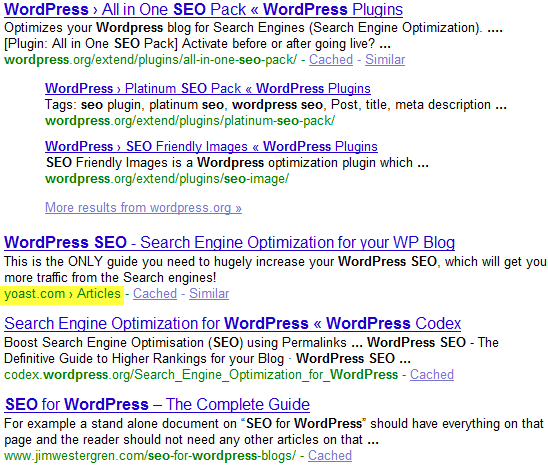
Google recently announced adding breadcrumbs to the search results for some sites which offer hierarchical breadcrumbs in their navigation. The display looks likeso:
Each breadcrumb is a clickable link to the associated page (which could increase traffic to the target site in some cases), but the initial implementation is a bit sloppy for a couple reasons
Google initial implementation shows the hierarchy (and places more emphasis on hierarchy) rather than listing the current page...this has a net effect of making the result look less relevant UNLESS the breadcrumbs are really tightly associated with each other and/or the site covers a small tight niche
when people look at the search results they scan them and match patterns. the lack of showing the current page hurts perceived relevancy, and even when a search keyword is in the breadcrumb it is not highlighted
As an example of how far astray the above 2 points can go, check out the following listing for Joost's great Wordpress SEO guide.
While seeing the site structure might be nice...the exact reason people are using search is because they don't want to have to drill down through someone's site structure...they want the most relevant thing shown in the search results.
So did Google do this for relevancy? It is hard to believe they did given that they don't list the current page and employ no bolding.
Perhaps they want to make the results harder to scrape? Or they wanted to give advertisers even more options with the ads (many new ad formats hit the organic search results first)? Or maybe, as John Andrews mentioned, "Google would LOVE to eliminate the URL altogether. Just another try..."
Do I recommend using breadcrumbs? Historically I have, but if Google does not fix the above issues it will likely end up costing publishers some perceived relevancy, and in some cases I might not recommend using them except for on small sites or those with tight and descriptive breadcrumb structures. And on larger sites they might make more sense on category listing pages rather than on item detail pages.
After about 11 weeks or so of being closed to new members, I have caught up on a number of projects and we have decided to re-open again. We increased the price again to try to help manage demand, as it is far easier for me to keep adding more value to x members than to have 2x customers. There are so many ways to profit from search, but it is too easy to get bogged down doing administrative work if we were to have thousands and thousands of customers. Plus increasing price tends to increase customer quality (keeping any pikers out while encouraging more successful people to join) and make doing the work that much more enjoyable. Current members are locked in at their current rates, but new members have to pay the current rate.
If you are at Pubcon I am flying out in about a half hour to speak a couple times today. First up is links at 1015, and then immediately following that at 1130 I am speaking on contextual ads. Many people probably know that I am a bit of a link hound, but what is lesser known is that I probably know way more about AdSense than most the people who have wrote books or ebooks about it. Like many other AdSense publishers I even have my own favorite layout + strategy which maximizes earnings without sacrificing linkability.
Budweiser says drinkability is the difference. Nonsense. It is all about linkability. ;)
Both sessions should be fun and I look forward to seeing you if you are there. If you aren't there I look forward to seeing you in our community. :D
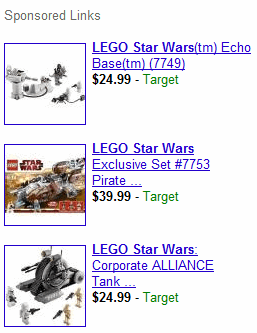
Google announced product listing ads today, a cost-per-action ad program that shows images in the search results:
Product Listing Ads is part of our effort to simplify the advertising process for merchants with large product inventories. Some of the key features of Product Listing Ads include:
Pay only for results: Product Listing Ads are charged on a cost-per-action (CPA) basis, which means that you only pay when a user clicks on your ad and completes a purchase on your site. Because Product Listing Ads is charged on a CPA basis, it offers a risk-free way for you to reach a larger audience on Google.com.
List your entire inventory: Product Listing Ads requires no keywords or additional ad text. Whenever a user enters a search query relevant to an item in your Google Merchant Center account, Google will automatically show the most relevant products along with the associated image, price and product name. Product Listing Ads makes it easy for you to promote your entire product inventory on Google.com.
At this time, Product Listing Ads is still a beta feature and is only available to a limited number of retail advertisers. Over time, we'll increase the number of users who see Product Listing Ads as well as the number of advertisers able to participate.
Along with this launch, Google is also pushing product search harder in the organic search results. If you look back at our last post, it is not beyond the realm of possibilities that those product listing ads and product search could eventually blend (to some degree) and appear as part of the AdWords ads above the organic search results.
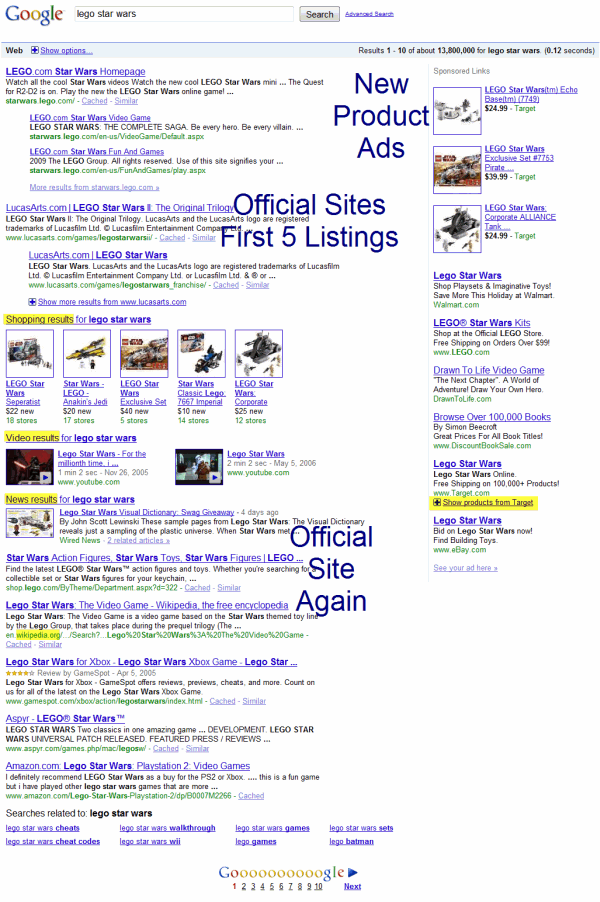
Given that only launched today, the current impact on the search results of the new product ads is quite noticeable.
The big problem with this vertical data is that it is not as fuzzy as general search is...so none of the above products are the popular video game. But in time Google will collect lots of click data and use it to help determine if they should broaden or narrow the exposure for a particular product, product class, or vendor. And if they are collecting conversion data on the back end it makes it that much easier to measure customer satisfaction - just look at what adds the most money to Google's bank account.
In a recent interview Marissa Mayer stated that universal search results appear on about 25% of search results pages, and they would like to keep increasing that number:
When we launched [universal search], it was showing in about one in 25 queries. Today, it shows in about 25 percent of queries. And we think there are probably times when those auxiliary [file] formats could actually help, and we aren't triggering them on our results page. That's something we need to continue to strive to do.
As Google collects that data they can expand this stuff at will. It becomes a simple game of math. And even while charging CPA Google will still be able to increase yields because there will always be some new funded project, ambitious brand manager, or CEO looking to increase stock volatility to drive up share price to where "the company" wants to buy customers without profit to increase marketshare. Some non-sense metrics beyond lifetime customer value will be used to justify the expenses, because it is so easy to do nothing and let Google do all the work - even though that strategy yields no long-term competitive advantage.
Matt Cutts said that Google will wait on caffeine (though pieces of it might already be implemented), but I seriously doubt that any short-term changes to the search results under caffeine would present anywhere near as big of a concern to webmasters as Google becoming (roughly the equivalent of) an affiliate in ecommerce, local, and lead generation - while using their search results to aggressively push into market leadership roles in those new markets.
Question: Who cares where they rank algorithmically if the algorithmic #1 result is below the fold?
Answer: Nobody!
And yet for certain search types that is the world we are increasingly living in.
I am not sure how sloppy and aggressive searchers (and competitors) will let Google get with pushing verticals...but I am betting that the limit is probably even worse than the above. And remember that it can get far more aggressive while not appearing so to the end user. As Google collects data they will make the vertical insertions more relevant. And each time searchers see search results with more banner-like junk in them, they are being conditioned to expect more of it in the future.
Google realizes that if they want to keep increasing profits from search they have to drive down the organic search results with either
more ad units in different formats
other filler (like Youtube)
Increasingly these types of shifts in the search results will drive affiliate SEOs (or at least the ones that care about product quality and customer satisfaction and long-term profit margins) to create their own products & services rather than marketing someone else's. If you own the product you have the fattest margins and can partner directly with Google for distribution, rather than fighting for scraps of scraps as the organic search results keep disappearing.
The upside for searchers (and publishers) is that as Google aggressively pushes to become a back-door algorithmically driven portal it leaves a market opening for Blekko and other search players which would be happy to make just a few billion here or there...the same hole AltaVista and Yahoo! left for Google. :D