Social Media: The Need For Measurement

Following on from my our "Social Media Guruism: Mostly Harmless" yesterday, we received the following comment:

On the surface, this seems like a great article...until you realize that it's really just like most tweets--a total waste of time. If you wanted to really provide something valuable, you'd show me how you directly measure your social marketing campaign...Oh wait, you can't. Why? First, cause you've probably never run one and you're just regurgitating what other people have told you. And second, because ROI really doesn't translate for most Internet campaigns. There's just no way to directly measure it because there are so many random variables. And I challenge anyone to prove that it can be

Thanks for the response, Fearless Advisor!

Really, social media marketing is no different to other forms of marketing in that it must eventually demonstrate value and be accountable.

The "Why" Question

One of the points I made in the previous article was that a lot of people seem to confuse the medium with the message. They are using a communication channel - in this case Twitter & Facebook - without first deciding why they are doing it.

Sometimes, the answer might be no more complicated than "because it's new", "because it sounded good" or "because everyone else is doing it". However, if a marketing campaign is to be successful, and repeated, it must be measured. How would you know if it was a success, or be worth repeating otherwise?

The fist step should be to ask "why"? The same question applies to any marketing campaign, be it search marketing, radio, television, or anything else. Why does this website exist? Why am I doing this and what result am I trying to achieve?

Is it to boost traffic? Is it to make more money? Is it to cut costs in other marketing activities by replacing one with another? Is it to grow the RSS subscriber base? Get more links? Grow the mail list? A combination of all these things? And how do these relate back to the purpose of the site?

Without that knowledge, the exercise is one of faith.

Demonstrate Value

The top social media marketers, just like the top search marketers, can create enormous value. And they can show it.

If clients aren't demanding it now, they soon will. Back when I was doing search marketing for clients, I was in a sales meeting with a large mobile telecommunications company. I was doing my best to sell them on the benefits of search marketing and from the nods I was getting, I thought I was doing ok. At the end of the meeting, they said I was the first search guy who had talked to them in terms they could relate to - i.e. I was talking marketing, as opposed to hype and technology.

Social media marketing is going through the same growing- up phase that search marketing did. As search marketing clients got more savvy and gained experience with the new channel, they started to demand more traditional metrics - meaningful metrics related to the underlying business objectives - that could be analysed alongside their other marketing campaigns.

Measurement Ideas

Measurement depends on the aims of the campaign.

Here are a some common measurements used in marketing campaigns, and apply equally to social media as they do other marketing channels. Not all these measurements are appropriate, or achievable, but should serve as a starting point when considering measurement.

1. Increased Revenue

This measurement is straightforward. What was the level of business the client was doing before the social media campaign, and what is the level they are doing afterwards? Has it dropped, stayed the same, or risen?

2. Competitive Advantage

Has the client gained competitive advantage?

Do a before/after comparison against competitors. Is the client doing better in Compete/Alexa/etc than their competitors after they ran the social media campaign?

Have the competitors run social media campaigns? Can you do a similar before/after comparison on their success, or lack thereof?

3. Increased Visitor Numbers

Are there more visitors now than there were before the campaign started? Break the visitors down by channel using referral data. Who are they? Where are they from? Are they the right demographic?

4. Reach/Spreading The Word

Perhaps the most difficult aspect to measure. Research companies, like Neilsen, use Buzz Metrics and Blog Pulse to measure how many people are talking about a brand or company.

Similarly, Google Trends can be used to pinpoint spikes in attention across the net. Is your message/brand mentioned more often after the campaign? Are there more mentions across blogs, Twitter, Facebook, mainstream media?

5. Search Activity

Do more people search on a clients brand after the social media campaign? Do they use queries relating to the clients message, products or services?

6. Primary Market Research

Big companies tend to do this more so than smaller companies. Run field studies, focus groups, and interviews to determine the level of brand awareness.

7. Links

Has the client received more links? This is one of the huge value propositions of social media, especially when combined with SEO. Social media can be such a powerful link building method, second to none.

Yeah, But How?

Perhaps the social media gurus can tell us? :)

These are the types of metrics clients will demand. If I were buying social media marketing services - and might well be in the near future - these are the metrics I'd demand. No one, except the clueless, will be impressed by follower numbers.

There is no one tool that can measure and track all this data. Hey, perhaps there is a market opportunity for someone! But while we're waiting for such a tool to emerge, measurement is a multi-disciplinary approach, combining both tools and techniques.

Consider analytics, behavior tracking, dedicated tracking codes for links, coupon codes that can only be seen on Facebook or Twitter, unique phone numbers used to track just that one campaign, customer surveys after they have bought something.

I'm sure social media professionals have got a wealth of techniques and tools they use. It would be great if you could share your knowledge with the community in the comments :)

Why A Social Media Marketer Should Do This

The end result is that clients will spend more, on an ongoing basis, if they can see demonstrable value.

A company may do a one-off campaign for fun, as an experiment, or because they think it is trendy to do so, but they'll soon move on to the "next big thing" unless social media can demonstrate how it helps them achieve their marketing goals.

Some of the above is easy, some is difficult. It depends on the client and their goals. There will always be intangible rewards when it comes to brand building and raising awareness, but you can't know if you're winning the game if you don't keep score.

I know some social media marketers already do this. Like the top search marketers, they will be the only ones left standing, and prospering once the hype dies off.

And it will.

Google & Bing Annouce Real Time Search Deals With Twitter

Marissa Mayer announces that Google has reached an agreement with Twitter to include Twitter updates in Google's search results.

We look forward to having a product that showcases how tweets can make search better in the coming months. That way, the next time you search for something that can be aided by a real-time observation, say, snow conditions at your favorite ski resort, you'll find tweets from other users who are there and sharing the latest and greatest information.

Hmmm..."product"? Obviously something a bit smarter that simply providing raw indexing and display.

This move follows Bing's recent announcement - today, in fact - they would do likewise.

We’re glad you asked that. Because today at Web 2.0 we announced that working with those clever birds over at Twitter, we now have access to the entire public Twitter feed and have a beta of Bing Twitter search for you to play with (in the US, for now). Try it out. The Bing and Twitter teams want to know what you think.

Microsoft has pulled off a similar deal with Facebook, which has six times as many users as Twitter.

With two competing deep pocketed players signing up, how long can Twitter remain unsold? Will Google build a competing version of Twitter? Much easier to crunch link data and index in real time if you can backend updates with your own systems, rather than making sense of third-party date, like Twitter, which is probably a nightmare. Some cosy integration arrangement is probably part of the deal, of course.

Read-Write-Web made the valid point that Google grew when they signed a similar deal with Yahoo. Now Twitter is doing likewise, serving their stuff to Google's massive audience. However, given Twitters notorious fail-whale flakiness, it remains to be seen if their system is ready for the roar of traffic that will soon come their way.

What Does This Mean For SEOs?

Go where the search engines do. Link to your content from Twitter. Publish excerpts and link-backs. Monitor real-time search trends, using Google's Hot Trends and trend data tools, such as TweetStats. Supply content to match demand.

It will be interesting to see if real-time search, on a Google scale, produces new business models. The traffic bursts should ample reward for being seen first for popular real time queries.

The news business relies on immediacy, and they just got a whole new wave of unpaid competition.

Wow, It's Too Good to Be True

Marketing taps into our emotions, as Rory Sutherland shares in this great TED speech

Online any good idea that works well is quickly cloned by competitors. Both the larger competitors with piles of money AND those who are driven by money so much that they would sell their own mothers for a nickel.

This fierce competition for attention forces continuous (perceived) value add. Some of that is created through innovation and/or branding. But it also encourages sustainable margin creation by criminals through outright fraud. As long as there is an optimized conversion funnel, someone will step in and connect supply and demand. Take, for instance, the rise of fake security software:

"They'll take your credit card information, any personal information you've entered there and they've got your machine," he said, referring to some rogue software's ability to rope a users' machine into a botnet, a network of machines taken over to send spam or worse.
...
TrafficConverter.biz, which has been shut down, had boasted that its top affiliates earned as much as $332,000 a month for selling scam security software, according to Weafer.

I am not so sure if earned was the right word. Stole, maybe? But when the product is layer upon layer of fraud, it is easy to pay out a high bounty for customers, especially when you use their computers to set up bot nets to further spread spam.

Worse yet, any level of popularity or credibility you gain with a legitimate business needs to be protected because people will trade off it. Yesterday in our support section Brian Menhennett wrote

Hello
Do you know or know of a Mr ____ ___ who claims to be associated with seob____.net and takes money for search engine optimization in your name
If you do can you please advise me of a contact email address.
Kind regards

And, after hearing my response that I did not know the guy, I got this back

Thank you for your reply.

Unfortunately if I cannot find or contact ____ ___, whom I paid $10000 to do a SEO job that was not completed, then I have no alternative than to spread the word on a campaign of facebook, twitter, myspace and other social media pages and blogs to advise potential customers of the situation. Again, unfortunately, as your company name was used to procure the $10,000 contract so your company will be included in the campaign.

If you have any information on this person it would be greatly appreciated.

So people register similar domain names, point them at legit sites, and then start selling to people who can't tell the difference. And then rather than taking the opportunity to learn from the honest person, such ignorant people want to smear your brand for their own ignorance and stupidity. As though lashing out at me will get him his money back or cure him of his ignorance.

For every person who wants to learn to earn and become an expert there are hundreds or thousands looking for free money. And so they buy hyped scams from career con men...the only people willing to service them selling a "dream" package (with no substance) at the price they are willing to pay.

A similarly polluting marketing strategy that harms legit sales strategies is the sell the "anyone can do it" angle. When you sell the story of "mentally ill blind grandmother who just got an 8080 computer last week accidentally unlocks unbelievable secret blueprint to make millions per month, working 1 hour per day, printing cash from the nursing home, with one hand amputated" there is a segment of the population that will buy into such pitches. And that type of desperate / gullible / greedy / intellectually lazy person is often the easiest to influence by advertising.

They are the 8% of the web that clicks 85% of display ads. And once they buy one scam they will buy another. And then another. They are caveman clickers who buy buy buy. They tend to have thousands of Dollars of revolving credit card debt and a pile of useless junk they don't need. Debt slaves thinking that "this time is different."

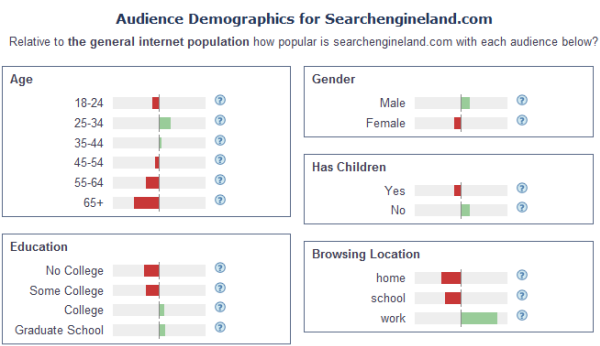
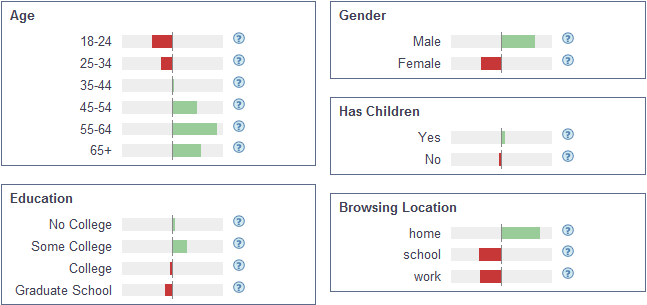
This is why Bing traffic converts better than Google does. And this is why AOL traffic often converts better than Bing does. Stereotypes can be bad, but demographics are visible in conversion statistics, just like they are in ad click-through rates. See the following chart built from millions of ad impressions and hundreds of thousands of ad clicks

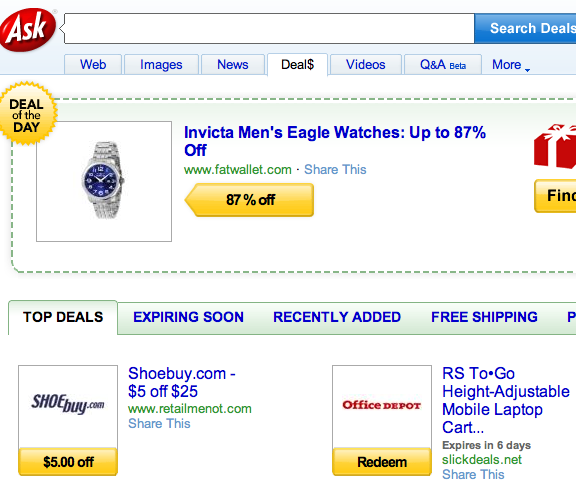
Automated ad networks syndicate whatever ads have the highest yield. When a product is layer upon layer of fraud it is easy to pay out a high bounty for customers - so ads promoting scams deliver a high yield, and are thus distributed everywhere. This is why the Fox News article blasting SEO as a scam carried the following wonderful advertisements by scumbag affiliates who set up fake newspapers to carry fake advertorials

Where this becomes a problem for marketers is when you come up with an unbelievably good promotion that is honest. Why? Well people are going to become more skeptical of the altruistic offer, especially if they do not know you. We did one such promotion recently that failed because affiliates pushing offers like the above "security software" simply polluted the space with junk. A once remarkable formula now creates something that is either unremarkable or unbelievable - due to a proliferation of scams that (at first glance) look somewhat similar. A friend who launched a cool free software tool recently had the same problem - people asking "what's the catch?"

The modern day robber baron bankers and slimy affiliates who whore out anything that makes a Dollar create an economic environment where people become more cynical and less trusting. Which makes it that much harder to give away value and hope for eventual returns to come in. If the publicity never comes then you just end up giving away money and getting nothing in return - a failed business strategy.

Years ago a professor did not want to link to one of my sites because he thought it was too pure with no ads. It was simply too good to be true. If I dirtied up the site with ads it would have been more linkworthy to him! And in the years to come, as the lines between media and advertising continue to blur, many people will become more like that savvy professor.

What is the solution? There are a couple options IMHO. You either need to dirty up your strategy to make it look less altruistic OR you need to be well known by the community BEFORE you launch a major promotion. Publishing becomes more about developing and maintaining relationships in the industry.

Online marketers will need to be good at 1 or more of the following to remain profitable...

  • promoting scams (or carry ads from 3rd party networks that promote scams)
  • building an economic reward system directly in the distribution channel (like the often hyped internet marketer product launches)
  • leveraging ego-bait marketing (a type of payment that costs ~ $0, except for when it backfires!)
  • mastering conversion and value-add sales techniques
  • becoming publishers who own media brands with strong user loyalty + affinity + distribution (even Google is recommending this, BTW)

Social Media Guruism: Mostly Harmless

One of our commenters, WebsterJ, recently made the astute observation:

So Derek calls out SEO as a scam while touting social media - a field that is quickly cornering the market on snake oil. Fast talking social gurus charging boring clients with nothing interesting to say big $$$ to make Twitter profiles, blogs and Facebook pages that will bring in zero return. They just make the client feel like they are "doing social media."

Heh. Indeed.

Social Media Guru Snake Oil

Social media, used as a means to make money, is - mostly - useless.

Now, before a gaggle of unemployed social media gurus accuse me of doing the same thing as Powazek, I'm going to hedge my rant.

But first, let's have some fun.

Why $ocial Media Doesn't Work

Social media - and by social media I'm mostly talking about Facebook & Twitter - doesn't work for many businesses, and never will, because the medium is not the message.

Yet that is how a lot of social media marketing is approached.

Companies are being encouraged to create Facebook pages and open Twitter accounts to announce to the world they have nothing to say. Well, that would happen if anyone was actually listening.

Which they're not.

People aren't listening in the same way they're not reading email newsletters they signed up for a few years back and can't remember why. They'd unsubscribe, only that would require effort.

Highlight. Delete.

Likewise, most Tweets and Facebook entries dissolve into the ether, unread and unloved.

Obviously, just using the medium is not communicating, building brand, or creating engagement. That requires reflection, strategy, focus and having a story worth listening to. If a person or company has nothing to say, then creating a social media channel isn't going to help.

First, they must have something worth saying. Then they must say something people want or need to hear, and say it in a way that resonates with the audience.

The problem is....

Many People Have Nothing To Say And Few People Are Listening

In the past few minutes, I've seen the following tweets:

"Head hurts. Going to bed early..."

"Trying out tweetie2"

"hehehehehehehehe"

Riveting stuff, certainly.

Sure, I'm being facetious. Selectively pulling out the personal stuff. So how about people doing social media business?

If you're a masochist, or a psychologist examining the growing problem of delusions of grandeur amongst generation Y, you could do a lot worse that following a few social media gurus on Twitter:

"Marketing is a vulgarized concept. That's why we see so many brands lacking credibility in the digital world. Windows, not mirrors folks"

Huh?

That's almost as bad as some of mine! And to think, some people are worried that Twitter will get innane when it becomes mainstream.

Here's a good example of implementing a social media channel with seemingly little thought given to the message or the audience: huskerchevrolet.com

Twitter. Check.

Facebook. Check.

Something worth saying? Erm....

There's not a lot of strategy behind much of this stuff.

Show Me The Money

Count up the hours you spend on Twitter or Facebook, then figure out how much money you made for each of those hours of effort. I'm guessing the result for most people is somewhere around zero. Now deduct your hourly rate - and other opportunity costs - for each of those hours.

But wait, I hear some people say. "Social media is about attention! About getting noticed! Getting on radar!"

They didn't really say that. I just made that up. The only person here is me. But it sounds like something a social media guru might say, especially if they were charging by the hour at the time.

People place a lot of importance on getting attention. They point to the number of followers as if that metric means something. It doesn't, of course. The important metric is how many of those followers are paying attention and then engaging in a way that contributes to the bottom line.

How many social gurus are measuring the bottom line, I wonder?

Argument By Selective Observation

But wait, some imaginary social media guru interjects, pausing only to push his sunglasses onto the top of his head:

"What about Spunk2PointZero.com? They killed with their recent social media campaign that netted $1,000,000,000,000 in two hours!"

No matter how inane, publicity stunts can work. Once. Early adopters can benefit from being first - they are remarkable simply because they are first. But once the followers arrive, the stunt is no longer remarkable, and the technique is no longer repeatable. The medium was the message, but not for long.

Social media has grown past the stage of being remarkable for its own sake.

Also, what works in one area may not translate to other areas. Wired companies can use leading edge communication channels because that's where their customers are. These communication channels might not work so well if you're selling cheese to housewives. I know this sounds weird, but they probably still listen to the radio.

The rule "go where your customers are" still applies.

Join The "Conversation"

Is it possible to have a conversation in Twitter or on Facebook?

Perhaps, on a superficial level, but mostly it's quick blast of - and I use this phrase loosely - information.

A lot of people who wrote some really interesting, deep, valuable stuff in forums and on blogs migrated to Twitter, used it a bit, then stopped. I think that happened because there was no value in it for the writer. Conversation didn't happen. Relationships weren't being built.

A temporary shot in the dark.

Perhaps that is why people update social media channels so often. Social media only exists in the now, and if you're not posting right now, you don't exist.

But is there anything worse than the compulsive updater? "Going to Reno tonight! Feeling pumped!". Millions of people saying nothing to millions of people who aren't interested.

Unfollow.

Pretending To Work

Social media is mostly a waste of time.

And that's exactly why I have a Twitter account :)

We all do. Why? It's fun. It can be fascinating. Useful, even. But for most people, even most business people, it's not really about doing business and making money. It's about being, well, social and pretending to work.

When Social Media Works

Ironcly, social media works wonders when combined with that other well-known scam, SEO.

Brent Csutoras, in a comment on SEOWorld put it well:

When you have content that becomes popular on sites like Digg, Reddit, or Delicious, you get in front of the largest body of linking individuals on the web. Most journalist, media, and bloggers/webmasters watch the front page of these top social news and bookmarking sites to get current and popular content to use for their own site, magazine, newspaper, or show.

By having your content in front of this group of people, you are likly to get a lot of natural links to your content. Sometimes you can get links up to a PR9 level such as TBS, MSNBC, AOL, Wired, Huffington Post, all of which i have personally received off of successful campaigns.

How many social media gurus talk about this angle?

Ever listen to Chris Winfield speak? That guy can create a brand from scratch. And that is the other area social media works well: brand building.

Much social media theory is nothing new. It's regurgitated brand theory. You create value by recognition and having customers engage and spread the word. It helps get the message out. Driving brand awareness, particularly with youth and wired demographics.

Building brand, and the benefits that come from that - engagement, word of mouth, connection - are where social media can excel if executed as part of a coherent strategy. It's cheap. It's cheerful. It's fun.

All good stuff.

The trick is to....

Measure it

Find out how social media translates to your bottom line. If your social media guru can't demonstrate that, s/he is a waste of space. Social media must either increase sales, or cut costs, or both. If it doesn't, it's not business, it's just time wasting. If it can't be measured, then there's a good chance it isn't happening.

Agree? Disagree?

Do you measure your return on social media?

Abuse, constructive or otherwise, in the comments please :)

We Are Just a Search Engine, Honest Guys ;)

The WSJ reports that as soon as next week Google will begin selling music in the search results:

Google Inc. will soon let users buy songs or listen to them for free, right on its main results page, as part of a broader push to enhance the offerings on the leading search engine, according to several people familiar with the matter.

The music offerings, from four online music services, are to be packaged in what Google calls a "one box" at the top of a results page, similar to the site's presentation of weather and financial results.

To lock up these sorts of deals, some of the largest players in dying markets are given a sweetened deal where Google does not directly generate revenue. But after the deal exists for a few years (and Google becomes a leading destination for that type of media) look for a sharp re-negotiation on pricing. And at that point smaller players better cough up the cash if they want to play.

This is why search is such a powerful market position. Google can wedge themselves at the top of any industry with instant, free, and massive distribution. And they can experiment with the business model and integration while starting off free until they have something that works.

Meanwhile the contracts behind such deals often have a strict NDA. So as long as you trust Google it should end up maybe ok. Except for when it doesn't. In the next couple years this partnering with rights holders and market leaders will hit dozens of markets - further consolidating them. You are either big enough to be #1 or you are #10. If your business model gets crushed when Google starts competing directly against you then it might make sense to invest in other traffic distribution channels and/or other points of differentiation which they can't clone.

Brands vs Query Refinement: Is Google Using The Second Search?

Patrick Altoft highlighted how Matthew Trewhella (from Google) may have tipped Google's hand a bit about what was known as the Vince / brand update:

Matthew [said] the brand update is about Google minimising the number of times people have to search to find the products or information they are looking for. Every time a user has to perform a second search Google regards it as their failure for not bring up the right result the first time.

So what Google is doing is testing which results are going to give the least number of secondary searches and displaying those. In the past somebody might have searched for “travel insurance” and found a few good sites before remembering that the Post Office does travel insurance too and searched for them to get a comparison. For Google this is regarded as a bit of a failure because they didn’t bring up the Post Office in the first place.

Understanding the bold part above also highlights why Google dislikes many affiliate based business models. Google views itself as the affiliate, and if Google sends the searcher through an affiliate page which does not add significant value (ie: no coupon, no in depth original editorial review, no value add comparisons, etc.) then they feel the extra click was a failure.

Microsoft's ad lab offers a search funnels tool which allows you to view what searches occurred prior to or after a search for a particular keyword.

If you look at some of the above branded keywords associated with credit cards you will see those brands ranking in Google's search results for credit cards.

About 3 weeks ago Dave Peiris highlighted a similar set of theories about the Google update, noting how some of the related searches seemed to be driven in some cases by the next search query. If user satisfaction remains constant or increases slightly (as one might expect it to, since brand is in part driven by exposure, and we tend to like & trust things that we are aware of more) with such algorithmic changes then you can expect Google to keep pushing them on more and more keywords (at least until it starts to harm relevancy slightly). Why?

  • Google would prefer to police a few thousand companies rather than policing millions of individuals (this is equally true for organic search and AdWords)
  • AdWords is approaching a natural price ceiling in many markets based on direct advertiser ROI (and perhaps some related measures like lifetime customer value)
  • as Google's display ad network grows they will get more taste of the branding ad dollars (from when you try to advertise to build a brand right on through when they are cashing in on your branding efforts by selling ads against it)
  • promoting brands helps promote irrational and wasteful and abstract advertising campaigns that can only attempt to be justified when thinking about (and guesstimating) the broader branding impacts of the additional exposure
  • advertising creates search volume. with fewer and fewer people clicking traditional display ads (8% of the Internet user base accounts for 85% of all clicks) Google needs to find a way to ensure that publishers are still getting some credit AND as Google plasters ads over 75% of the web they want to can claim such ads indeed did help drive conversions to further help justify the ad spend (hence the recent view-through conversion AdWords data-point)

Many thin website models (unremarkable thin affiliate, AdSense publisher with thin keyword-targeted content, etc.) will slowly get chipped away at by such algorithms if Google moves this down the query stream (though they can't go too deep into the longtail with it or they would start impacting relevancy in a negative way).

As an SEO, this query recycling concept (if expanded) means that you not only want to rank, but you want to deliver ***an experience*** remarkable enough that people actively search it out by name. And you want to be one of the first couple brands that people think of for your core target keyword.

Search is already heavily influenced by a rich get richer effect and the concept of cumulative advantage. And with search engines potentially feeding search query chains back into the relevancy algorithms, it gets that much harder to come from behind in saturated markets unless you change the model or target different keywords. If you are late to the game and a #10 player it might make sense to brand yourself against the second largest keyword rather than being an after-thought in a more saturated keyword market.

News Alert: SEO is a Scam

Derek Powazek - no, I hadn't heard of him until today either - is, according to the blurb: "one of the top 40 "Industry Influencers" of 2007 by Folio Magazine..has worked the web since 1995 at pioneering sites like HotWired, Blogger, and Technorati".

A designer, apparently.

He doesn't care much for SEO.

The fact we may never heard of him just goes to show that the web is a big place. It is quite common that the rockstars in one niche can be unknowns in an adjacent niche. It is therefore no surprise that those who spend a lot of time in separate niches may not understand each other particularly well.

Derek understands little about the value of SEO.

Read the anti-SEO rant entitled "Spammers, Evildoers, and Opportunists".

I'm sure you'll find it amusing.

If Someone Charges You For SEO, You Have Been Conned

Search Engine Optimization is not a legitimate form of marketing. It should not be undertaken by people with brains or souls. If someone charges you for SEO, you have been conned

Uh-huh.

Well, I'm sure some SEO is undertaken by people without either brains or soul, but the same could be said of web designers.

It is true to say some web designers are clueless about the web, seemingly only interested in crafting pretty pictures. In Flash. They charge clients a fortune for it, and have no idea whether their self-indulgent nonsense will add any value to the clients business. It's barely even a consideration.

That's rather misleading. It might be true, but it's still misleading. Some web designers, just like some SEOs, are pointless. That doesn't mean all SEOs or web designers are pointless. Unfortunately, Derek thinks the entire SEO industry is a con.

Judging an entire industry by what some bad actors do is wrong.

And so, like the goat sacrificers and snake oil salesmen before them, a new breed of con man was born, the Search Engine Optimizer. These scammers claim that they can dance the magic dance that will please the Google Gods and make eyeballs rain down upon you.
Do. Not. Trust. Them

Yawn.

Of course a good SEO can "make eyeballs rain down on you". We do it every day. A good SEO can take a site where a "designer" has indluged in what loosely passes for an adult version of finger painting and get it ranking under appropriate keywords. SEOs do this by identifying keyword traffic (demand) and ensuring pages (supply) meet that demand. We untangle messes made by designers and developers and we implement web marketing strategy where there was none.

Whilst Derek is wrong about SEO on a number of levels, he says some stuff I agree with, stuff we often talk about on this blog.

Make something great. Tell people about it. Do it again.

That’s it. Make something you believe in. Make it beautiful, confident, and real. Sweat every detail. If it’s not getting traffic, maybe it wasn’t good enough. Try again.

Then tell people about it. Start with your friends. Send them a personal note – not an automated blast from a spam cannon. Post it to your Twitter feed, email list, personal blog. (Don’t have those things? Start them.) Tell people who give a shit – not strangers. Tell them why it matters to you. Find the places where your community congregates online and participate. Connect with them like a person, not a corporation. Engage. Be real. Then do it again. And again. You’ll build a reputation for doing good work, meaning what you say, and building trust."

Seth Godin says the same thing. We often quote Seth.

But the problem with "making something great" is that the search engine may not think it is great. This is because a search engine is stupid. It's a machine. And like any stupid machine, it may not recognize greatness, especially if it can't crawl it, or if that greatness doesn't exist in a form it finds palatable.

SEOs help make sure the search engines don't miss greatness.

Derek appears to think SEO is mostly about crawling and hacking. Competent SEOs know that crawling is one part of the puzzle, and most have never hacked to get links. SEO is mostly about the publishing and marketing strategy that comes out of keyword research. Most designers don't understand this concept and therefore misinterpret how SEO works.

As for publishing content for Google, then - yes - guilty as charged, By making content Google wants, Google rewards you. Don't, and it won't. Content can satisfy both Google and humans. It is false to suggest content that appeals to Googles algorithms isn't what humans want to read. Google wouldn't be a business if their results didn't satisfy humans.

Web Design Is Mostly Unimportant ;)

Here's a quote Derek makes lower down in his comments section:

Also, I didn’t call SEO people “fucktards” because that wouldn’t be fair to actual retarded people.

For a "influencer", the guy sure is mature.

Let's try that with web designers to see if it is any less vacuous:

Also, I didn’t call web designer people “fucktards” because that wouldn’t be fair to actual retarded people."

Nope. Still vacuous.

I have nothing against the web design community. I use web designers - good ones - who understand a little about SEO. Good designers who understand a little about SEO are as rare as hens teeth. And even though they do understand a little about SEO, that still leaves the real SEO work to do, which is identification of traffic streams, content creation and link building.

SEO plays, like eHow and Mahalo, attract hundreds of millions in venture capital funding. SEO play About.com sold to the NYTimes for $410 million. Microsoft and Yahoo employ inhouse SEOs to advise their staff and maximize traffic to their content.

Meanwhile, content management systems are free. Great looking templates are cheap. The worlds most valuable web properties don't use "designery" design. They place most emphasis on function. The web is evolving from the crafted, fixed brochure into a platform. Perhaps custom design just isn't as important as it once was. Design has become commodity.

Now, I know that web design is about a lot more than making pretty pictures. It's about structure and interaction. Defining design narrowly as "picture making" is just as stupid as Derek's implied narrow definition that SEO is about crawling, hacking and generating low quality content intended only for Google. Such narrow definitions can lead to false assumptions and conclusions.

Danny Sullivan has also dissected Dereks rant.

Search Keeps Innovating

Steve Balmer on Search Innovation

In the above interview Steve Balmer states that search innovation has slowed down over the past 5 years compared to the 5 years prior. While committing to pouring billions of Dollars into the search market, Steve Balmer does not think that search has kept up its rate of innovation. But this perception is actually a fib. A lie. One that Steve must tell himself AND the media in order to try to gain press coverage for Bing and justify what will amount to a very expensive competition in the search marketplace. And it is a lie the media mush push to be able to write about / hype THE NEXT GOOGLE!!!!!!

Search Innovation is Speeding Up

The reason I know that search keeps speeding up is that I write about it. We offer subscribers a monthly newsletter, have forums that we participate in daily, and blog about the latest developments in search. This past month I have done a week of traveling and 2 conferences, but I have absolutely struggled to keep up with the all the changes recently (in spite of closing our site off to new members). Frankly I am amazed at how Danny Sullivan is able to put conferences together and still keep up with everything!

To understand the search game you must first understand that Google is first and foremost a public relations driven company which sells itself as a technology company. This is precisely why they market their browser/operating system as a browser and not an operating system...to avoid the regulations on (and comparisons with) Microsoft.

Recently Googlers have felt threatened by the media, Bing, Twitter, Facebook, and Wolfram Alpha. You can see this by looking at how Matt Cutts posted a 30 day challenge not to use any Microsoft projects, by all the daily innovations and releases Google is offering, by their promotion of a vaporware micropayment system, and by reading the recent 5 part interview of Eric Schmidt, Udi Manber, Amit Singhal, Scott Huffman, and Matt Cutts they did with BusinessWeek to remind the world how innovative Google is.

Google has went as far as advertising their advanced search tips on many search queries and even SELLING SEARCH AS A LIFESTYLE!?!?!

Now some of the changes may not be noticeable to the average searcher because Google has become more refined over the years. But it does not mean that the market lacks innovation. I thought it would make sense to put a post together to highlight some of the ways search has changed so far this year.

Under the Hood Innovation

Google stated they plan to support their rel=canonical tag across domain names and let you set URL parameters for them to ignore.

A few months back Google announced their new caffeine index, but some of the algorithmic changes are far more subtle. When Patrick Altoft tried to dissect some of the ideas behind the Vince/brand update he quoted this killer post from the always impressive Tedster

Here's my current idea. I believe that Google's staff contains more statisticians than any other specialty. The algo is, more and more, driven by statistics and probability. These statisticians watch query data as well as backlink data. That's what jumped out at me while re-reading this patent: backlinks PLUS queries.
....
This is my current brainstorming area, and it's why I recommend the idea of ATTRACTING backlinks more than "building" them. Backlinks alone cannot create a statistically correct footprint for a growing, thriving website. Even though such a "dummied-up" impression has been a working tool for improved ranking in the past, it's a tool whose future is getting more and more cloudy.

Creating a legitimate looking link profile by doing nothing but push marketing keeps getting harder as Google refines what they are looking for as a natural link building profile based on better statistics. If your link building efforts revolve around public relations, publicity, and brand then you are good to go. But if they are mechanical and aggressive you can use fairly similar link building strategies on 2 parallel sites and see one rank while the next is stuck somewhere in Google hell. From the above linked 5 Googler interviews you can see how Google is constantly working to improve localization, word relationships, indexing, and spam detection. QDF + universal search further complicate the search results.

Filtering Information

Beyond the core ranking algorithms there are also new ways to sort through information.

Google has added many options / filters / lenses to view search through, including links to...

  • vertical databases (like Videos, News, Blogs, Books, Forums, and Reviews)
  • results within specific time frames
  • ways to navigate related searches (via Related searches, Wonder wheel, Timeline)
  • additional filters (like displaying images from the page, more text, fewer or greater shopping sites)

Thinking through those type of filters with universal search in mind (and Google's new caffeine index in place) you could see how Google can further alter the search landscape on a query by query basis. Give me something fresh, give me old trusted stuff, give me at least 1 authoritative review, etc. In select markets this can be further refined by editorial partnerships like the health onebox.

Here are recent SEO results. And when authoritative SEO related sites (like SEO Book, Search Engine Land, SEOMoz, SE Roundtable, Search Engine Journal, Search Engine Watch, etc.) publish fresh posts they quickly get mixed into the top 10 to 20 search results (similarly to how Google News results get mixed in). As Google tests mixing in different types of results they can track user response on a per query basis, and bucket different related keywords together.

Inspired User Interface Innovation

A lot of the innovations come from competing search services. Consider that

  • Google's SearchWiki (and SideWiki) were heavily inspired by Wikia Search.
  • Yahoo! implemented search suggestion features widely before Google did.
  • Ask 3D pushed about a lot of the universal search sort of ideas.
  • Google tried to clone Youtube, right up until they were forced to buy it.
  • Bing launched a new visual search service.
  • Wolfram Alpha forced Google to create and evolve the Google Squared service.
  • Yahoo! SearchMonkey pushed microformats, which are now becoming more popular across competing search services.
  • One of Microsoft's best Bing innovations was putting the ads closer to the organic search results - which was quickly copied by Google.

Single Listing? Double Listing? Triple Listing? Quadruple Listing?

In the past sometimes sites would be able to get a double listing and/or sitelinks. Recently I saw a quadruple listing

Google is better surfacing forum posts in search results, has tested displaying breadcrumb navigation in the search results, and is returning internal link anchor page-links directly in the search results.

Google has made results from site: searches extensible

Search Business Model Innovation

Paid search is so easy to grasp that Google's test case is LITERALLY a pet stick!

In spite of the ease of marketing Google is not happy leaving that as is.

Google is testing using machine learning algorithms (and current Google AdWords advertiser data!!!!!!!!!) to set flat rate search ad pricing for small local businesses. And they are rumored to be launching a LendingTree clone.

Google ***is*** the competition, and they keep taking more of the web for themselves.

They are also ramping up their ad exchange. Traditionally Google has tried to credit the last click with most of the value since they are the #1 search company. But brand advertisers buy branded display ads based on mushy feely impulses...and so search can't keep taking all the credit forever if Google wants to expand the online ad pie to become a $100 billion company. As display ad clickers fall off a cliff, Google is beginning to show view conversions (conversions where an ad was viewed but not click) to further justify fuzzy brand spend. Hey if they have ads on 80% of the WWW then you are going to think those ad views created some conversions, even if they were ignored.

It doesn't matter what regulations appear, advertisers feel the need to buy those ads because that is where the distribution is. Currently Google (and Facebook) have such domination over advertisers that they can mass ban them and shut them down overnight as desired, in spite of the economic climate.

There is going to be continued innovation in the online advertising space as marketers better test / recommend / track / explore / learn how to better automate blending ads and content.

Google is testing ads tied to location pages and product ads directly in the search results.

Further marketers are studying how ads sometimes sell something other than what they were created to sell, and there is research being done on ad fatigue and relevancy.

Media Innovation

Google has been buying maps marketshare through cross promotion, a fairly flexible API, collecting user data, and clever promotional tie ins with the likes of Monopoly. China might crack down on Baidu's music piracy, and Google has distribution deals to buy marketshare as long as China allows it to happen. Increasingly Google is procuring the source of record for a greater and greater number of classifications of information types. They are already pushing their power meter, have Sony distributing their browser, and patenting some types mobile consumer reviews. Alas everything is information!

Google is learning to read more content in new formats like AJAX and is getting better at spitting content back out via a quick view of PDFs and mobile printing devices.

Google has begun trying to tie search volumes to economic activity, with their economist claiming that the economy is improving. Others, like Kayak, have followed suit by sharing their data in an easy to reference format.

All this additional content creates more competition and lowers profit margins for web publishers. And affiliate marketing will continue to grow harder. Increasingly successful media is going to need to bake self-promotion in its core, and profitable media will become more of an interactive service.

Why Write a 5 Page Blog Post With ~80 Links in It?

3 reasons...

  • to help me collect my thoughts and share them with you, our readers! :D
  • to point out that anyone talking about a lack of innovation is search is speaking from ignorance, hyping public relations messaging to the media, and/or lying
  • to help push to save Yahoo! Boss. By some measures it might be bigger than Bing AND it if it stays around it will help ensure that search keeps innovating at faster and faster rates with healthy market competition

Click Economics: The Last Click

Sorta an old post that I forgot to publish until today! Having the site closed to new members has given me time to start working through a few of my almost done posts that were never published yet. It's hard to have time to do everything while growing a few businesses...and thus the blog needs a little TLC ;)

Media has traditionally been afforded a wall between editorial and advertising due to limited marketplace competition. But, as Jim Spanfeller stated, the perception of value in "last click marketing" where search gets most of the credit for the entire demand creation and fulfillment cycle, is killing the value of online content:

A publisher can and should price their inventory at levels that will meet the market expectations and drive their business model. What they should not do is allow some sort of invisible hand (or should I say hands) to price their inventory against a backdrop of objectives that can and often does change at a moment’s notice. This practice has fundamentally driven pricing down across the web and, perhaps more importantly, changed the success metrics from ones based on “demand creation” to ones driven by “demand fulfillment.”

Worse yet, the leading metrics most closely track how the poorest members of society interact with media, creating a media ecosystem designed to exploit the poor. The above linked article states "we now know that 16% of web users generate 80% of clicks and that this 16% represents the lower income and education segments of the total user base."

It may have cost Google 1 day of revenues to create the default analytics tool, which by default has a last click wins behavior that few people know how to edit. They can even add more features like tracking SEO rankings without risk because they know few people will use them.

Google's web domination is so impressive that experienced and well trained journalists writing for publications like Wired mistake Google's mission statement as the goal of the web. Literally...

The Internet’s great promise is to make the world’s information universally accessible and useful. So how come when you arrive at the most popular dating site in the US you find a stream of anonymous come-ons intermixed with insults, ads for prostitutes, naked pictures, and obvious scams?

Gary Wolf should know that was actually Google's mission statement, not the goal of the web. ;)

Sure data mining and sentiment analysis can be parts of the web, but the best bits are often scattered messes and weird stuff we accidentally bump into.

Business.com Promo Codes for Business's Web Directory - Save $50 Today

Updated 5/13/2013 + a few other times

For the $299 recurring that business.com charges for links that are nofollowed (thus not counted by search engines) & hidden in the sidebar (thus rarely seen by end users) on pages that are sometimes not even indexed (adding invisibility to the further lack of visibility), there are far better options BOTW charges a $299 one-off (non-recurring) listing fee. Some other good directories that do not charge recurring fees would include: JoeAnt, GoGuides & Gimpsy. Curlie is free, though it is hard to get listed in promptly as it relies on volunteers.

Update on 4/15/2013...Be Careful!

Since Business.com has been bought out by Resource Nation, I get the sense that things have went downhill over there in terms of customer service.

In the past there was a feature in the interface where you can set renewals to manually or automatically renew. That feature disappeared. When that feature disappeared & I wanted to cancel a few listings (client projects we were no longer engaged in, sites that were sold off, sites that were not performing as well as hoped, loads of things change online over the years, etc.) I was told that feature would be coming back soon.

That feature has not come back.

I manually emailed listings I did not want to renew & that was that, or so I thought. Yet some of those that had a 9-month lead time asking that they not be renewed were still renewed!

Recently there was the second round of automated renewals on listings I previously asked to be canceled. Being frustrated with repeated recharges on our credit card (in some cases for sites that were sold off or client projects we were no longer engaged in) I put a gift card in the place of my credit card. I was willing to let all our listings expire rather than be consistently charged against my will on listings I no longer wanted to be active, have no automated way to disable them, have them often still renew even after sending an email asking they not, then having to catch the charge & wait weeks to months for a refund sorting things out through a customer service solution that is so bad that you wished you had a telecom oligopoly on the other end.

They finally did send a refund for that second round of charges, but they sent it to the non-rechargable gift card. And so that was another hour of my life they wasted.

Anyhow, exercise extreme caution when giving your credit card number to Resource Nation. Only do so on projects you think you'll will be aggressively push marketing for 5 years down the road, or give them payments via gift cards or disposable credit cards.

If/when they fix their listing management interface to allow you to manually cancel listings I might recommend them again, but I can't in good faith recommend them without the above warning until they do that.

Below is the old post I wrote before I had this "charge you forever" experience. It no longer reflects my current view of what they are doing.

The Old Post

I generally do not do too much affiliate promotion on the blog here, but when there is an offer that I use that saves our readers money I am all over it. Why not share it? Just as I once promoted the Microsoft adCenter coupon (which has since went away) I am glad to have come across another sweet promotional code - this time for Business.com directory inclusions.

Google Approved Links

In 2009 there are few places where you can buy links without making a Google engineer frown. The Yahoo! Directory, BOTW, and Business.com are 3 of the most trusted web directories that have rigorous enough editorial policies which Google likes. They have been around a long time and Google trusts them.

For our community members I scored a Business.com coupon about a year ago, and surprisingly, Business.com just recently got on CJ offering public discount codes. I have not yet bought any of their PPC product, but I have been a BIG buyer of their directory listings...we literally have dozens of them! It is part of our SEO process for the sites we care about most and really invest in.

So if you have not yet submitted to Business.com, now might be a good time to submit your site while this coupon is still available publicly. This link is a great link, especially for new websites and websites that have not yet reached the top of the search results. And for larger businesses you can also submit key deep links as well.

$50 Directory Listing Coupon

link removed

Pages